Strategically the decision of High Court to turn to #Parliament for a debate on #Brexit is to advantage for the #UK negotiations with the #EU, going through a profound political transformation during 2017.

Strategically the decision of High Court to turn to #Parliament for a debate on #Brexit is to advantage for the #UK negotiations with the #EU, going through a profound political transformation during 2017.

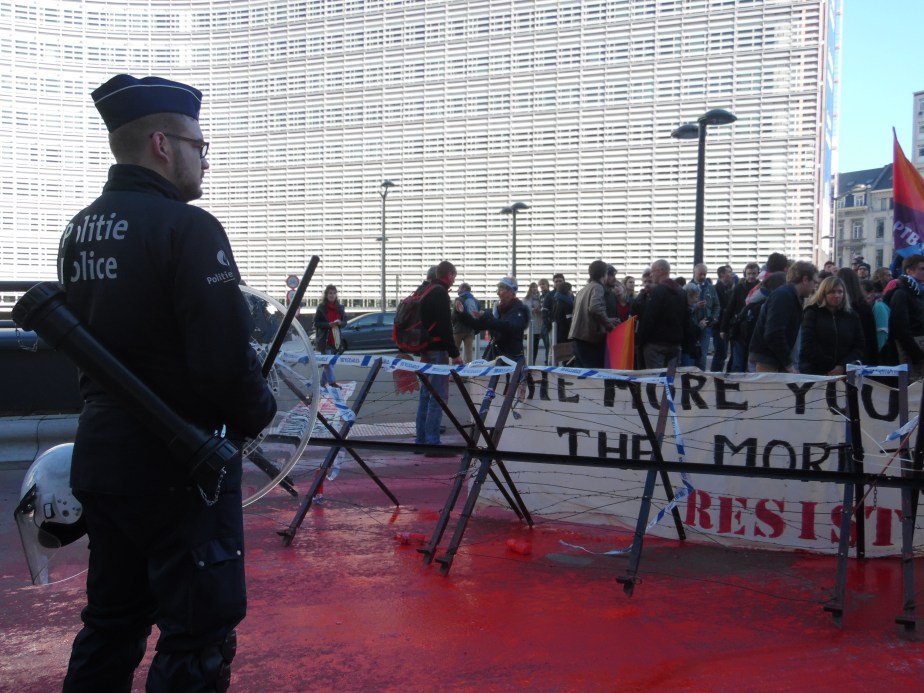
Brussels. Schuman square. Awaiting Canadian Prime Minister Justin Trudeau for the EU-Canada Summit, police questioned 16 protestors, who were among those who came to express their profound discontent with the signature of the EU-Canada comprehensive economic and trade agreement (CETA). Symbolizing assassination of democracy, activists pored red paint and even tried to enter the Council building.

According to EU diplomats the discussion at dinner moved towards Russia. However it is #Brexit, and Prime Minister Theresa May who attract the lion’s share of mass media attention. Hopefully she will come out for a first press conference tonight, or early morning hours to exchange with an international press corps. There is no tradition for #UK PM to held a conference after a first day of a #EU Summit, however his last visit to Brussels David Cameron changed the habit and appeared in front of press to say good buy. There is some hope in the air that PM Theresa May would not miss a chance to establish direct contact with an international press corps and will step out with her message tonigh.
Today’s May’s doorstep before enterning the meeting has been impressive: a ‘bolo punch’ to Russians, condeming air strikes in Syria. Apparently there are no air operation at the moment, however it served as a good maneuvre to switch attention from #Brexit problems to international politics challenges. One can guess that Syria’s conflict is not the most pressing issue for British political agenda, but after all political rethoric can’t be compared to a pshychiatrist’s couch, no one expects sincerity from heads of goverments:)
From Justus Lips, Consilium, Brussels, EU October Summit night

Caring about freedom of Afghan women looks quite ironic amid an attempt to curb freedom of Polish pani to have a say over abortion. However the conference on Afghanistan (4-5 October) in Brussels paid special attention to the development of freedom and rights of Afghan women, and came up with ‘impressvie’ donor’s amounts to be invested in security and economy.

The Article 50 timing to evoke a process of negotiations for #Brexit fixed by Prime Minister Teresa May for the end of March 2017 is suspiciously coinciding with a date of Dutch parliamentary elections announced for the ‘Ides of March’ – the 15th.
It has been a long time the UK leads as a number one destination of Dutch investors, and for Britons it is the second. However the once declared role of Dutch as a promoters of the EU for the UK is not relevant any more and the broadening gap between Eurozone and the City of London doesn’t leave an opportunity to sit in two chairs – there is time to chose.
Previously Dutch Eurosceptic politician Geert Wilders said that he hoped for Britain to leave with a ‘knock-on” effect on his countrymen. Taking into consideration the symbiosis of the UK and The Netherlands in economy and finance, historic and cultural ties, one can agree with Wilders prediction of a considerable influence of #Breixt on the whole of the Dutch society.
Subsequently, in #Brexit aftermath Wilder’s party PvV has already enjoyed a spectacular raise in polls, reflecting growing deception in the EU. Only 14% of Dutchmenbelieve that the EU contributed significantly to economic growth in their country.
Summer holiday break showed some decline in Wilder’s popularity, however it remains high enough
to cease the majority of the seats in the Parliament. Notorious or popular, dependent on a point of view, Wilders firmly stays in the limelight of Dutch politics, and expression ‘Prime Minister Wilders’ is becoming increasingly current in European political debate.
Choosing for a politician promising a return of national sovereignty is no more a ficiton, but reality Brussels might face in a half-a-year, subsequently #Nexit referendum might follow by the end of 2017, bringing an ally to the UK at negotiations table with the #EU.
As follows the UK timing for a start of #Brexit procedure isn’t a game of chance, but a well considered strategy, aiming at achieving the best possible deal in talks with #EU27 reduced to #EU26.
The sinister prediction of Nigel Farage for Brussels Mandarins might come true soon: the UK will be not the last country leaving the crumbling Union.
Abussus abussum invocat!
Book review.
Massive waves of refugees and migrants fleeing ISIS ravaging failed state of Libya cause the EU grave security concern. Dabbed as ‘Afghanistan at European doorstep’ it became a den of an international terrorism and challenge to the European political leadership, once promising a quick fix to an internal conflict with help of the NATO iron fist.
Five years after the collapse of the Libyan state followed the assassination of its ultimate Guide, Colonel Gaddafi, 20/10/2011, the solution of the conflict if more of a ‘mirge in a desert’ than a tangible political project. However experts insist that the path to reconstituting lies through an objective assessment of the past decisions, actions and strategies leading to the catastrhopie.
In ‘L’Assassinat de Kadhafi’ (in French) Belgium journalist and expert on Africa, Dominique Ugeaux (65) shares his vision on the causes of the Libya disintegration,, poining at the murder of Colonel Gaddafi’s as a fatal error, leading the chain reaciton of events beyond control of Western powers.
In five years passed after the assassination no light was casted on the abhorrent end of Muammar Gaddafi that shocked the world confronted with the frames from videos of tortures in his last hours. Although immediately denoucnced by some high officials as a ‘war crime’ it was never properly investigated.
Insisting that this crime opened a ‘green light’ to ascendance of international jihad in Libya, and beyond, expanding to the whole of African continent, and further, tormenting the East and the West, Ugeux claims justice for the slain Colonel for the sake of Libyans and… Europeans, namely French, who played an imminent role in Libyan tragedy.
Without failure Domingique Ugeux is a firm believer in international law as the universal tool of progress, and ideals making the world turn round.
Reminiscent of his father a humanist and a man of principle, who inspired him to pick up a pen, Ugeaux dives into memories of events, and encounters month before Gaddafi’s death, evoking of his sherpa role in engaging legal defence to conoured by Western powers Colonel.
In vain, the abrupt and violent end of Gaddafi’s, shrouding his death in mystery, left efforts of legal defence of Jacques Vergés unsolicited.
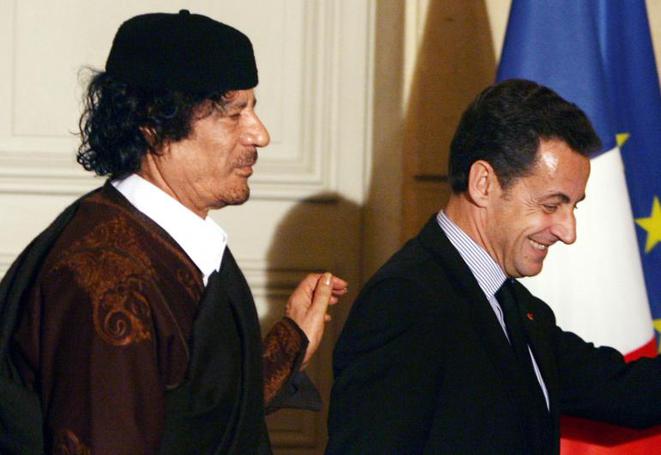
However Ugeux does not accept the crime scene as an epilogue to Gaddafi’s rule: he insists on an objective investigation of political actions of responsible at power internationally – NATO, interpreting UN ‘resolution 1973’ protecting civilians, and nationally, especially addressing questions to former French President Nicolas Sarkozy, discarding African Union diplomatic achievement to convince Gaddafi to step down, while misleading public opinion in France pointing at military actions as an ultimate solution.
The role of the opinion leaders is of a special attention in the author’s narrative, revealing the intrigues around the destruction of the Libyan leader – Ugeux blames philosopher Bernard-Henry Lévy (BHL) for de facto replacing the minister of foreign affairs, not a petty misdemeanor in a democratic country as France. While mixing into political discourse with his own perceptions, BHL initiative to engage as an activist to travel to Tripoli meeting opposition played not the least role in Gaddafi’s tragic fate.
Raising questions to former president Sarkozy, and his loyal friend BHL on consequences of the Libyan adventure the author is not just exercising in rhetoric, but is determined to raise public awareness that only with bringing responsible of breaching laws to justice one can attempt to construct better future for Libya and for all.
Festinatio justitiae est noverca infortunii…
‘Assassinat de Kadhafi’ Dominique Ugeux, Editions Surprendre, 2016

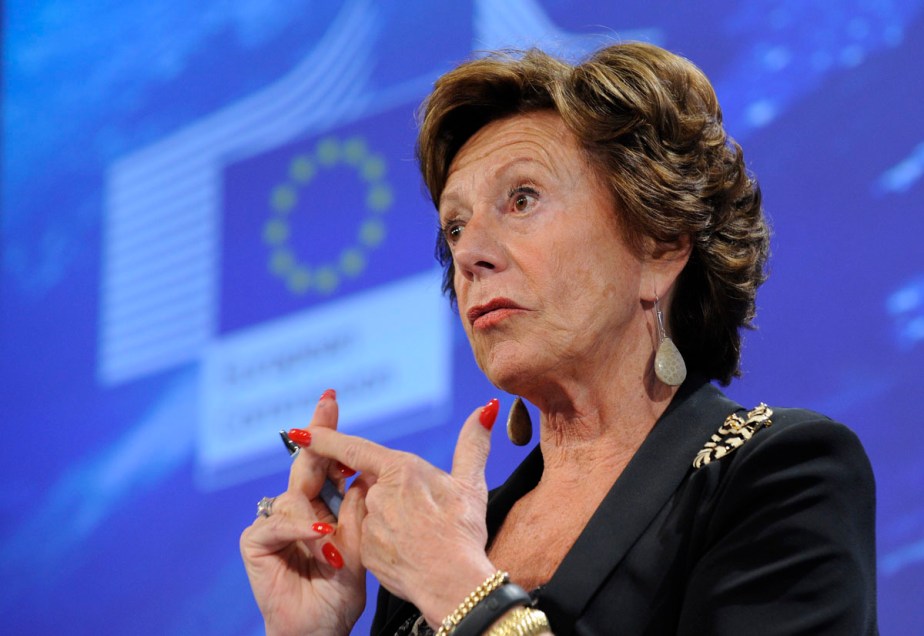
#NeelieKroes engagement with Bahamas offshore is even greater blow to the EU bureaucracy in crisis of confidence than #Barroso’s Goldman Sachs employment.

Assessing the perspectives of informal #Bratislava Summit #EU27 Roadmap one has a difficulty to see any light in the end of a tunnel. Paradoxically the first Summit of #EU27 without the #UK appeared to be tumultuous, marked by disagreements, pessimism, and blame-games between the leaders, who with astonishing frankness have drawn new dividing lines among European nations.
A symbolism of a common Roadmap requested by #Merkel can hardly mislead anyone by its highly illusionary nature within a new dynamic situation while polarizing groups of states with conflicting interests created among EU members .

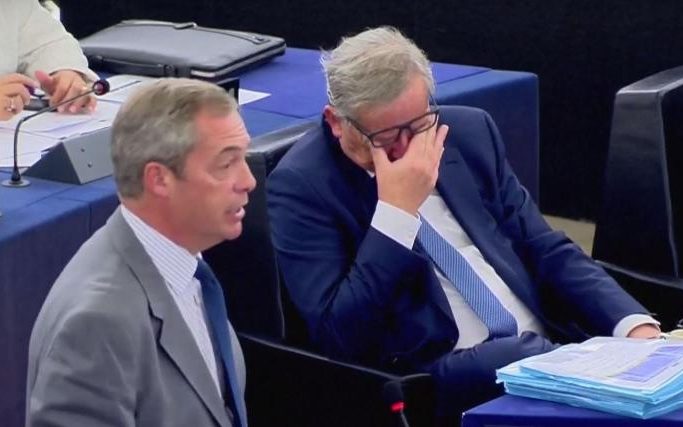
The State of the Union speech (#SOTEU) of president Jean-Claude Juncker resembled himself – pale, drained out of energy, contrasting with confronting him triumphant Euro skeptics Nighel Farage and Syed Kamall. Behalf of the entirely new context there was hardly anything new to the usual mantra of ‘more-more-more EU’ as if it can be a magic remedy to a project in decay.

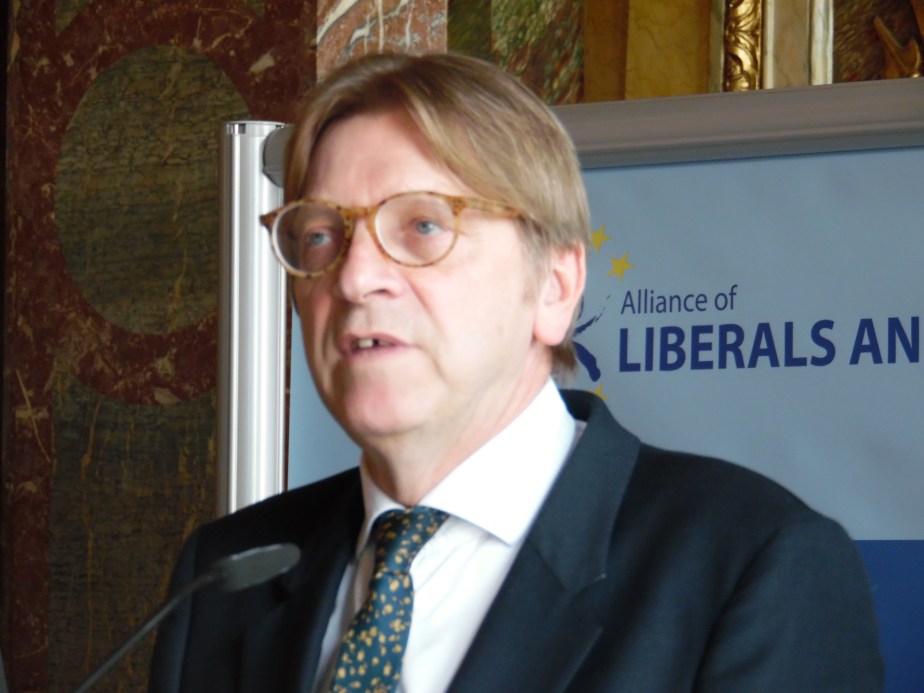
Unlike the UKIP and Conservatives in the European Parliament (EP) suggest, Liberal group leader and former Belgium PM Guy Verhofstadt is not such a terrible choice as pictured in outburst of emotions over his appointment as the EP #Brexit negotiator.