Zelensky NATO performance

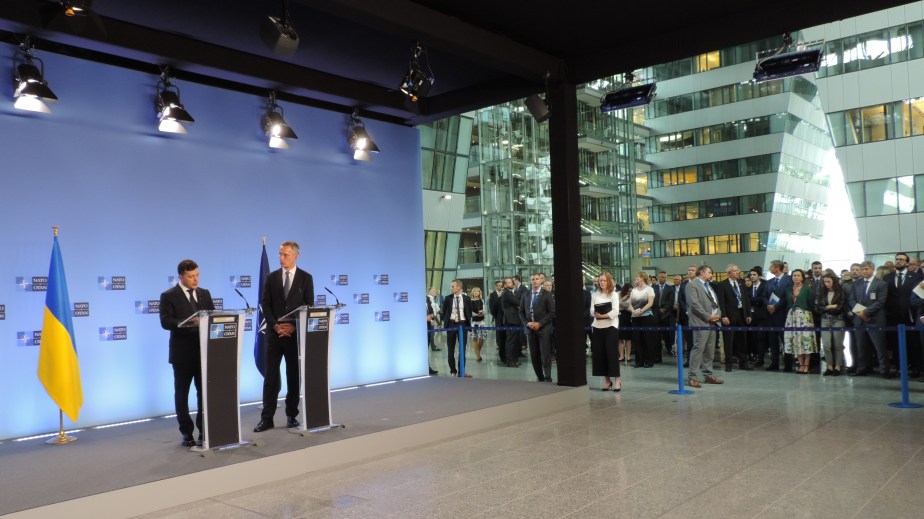
Anna van Densky OPINION UkrainePresident Volodimir Zelensky declarations at NATO headquaters could be hardly considered as good news for inhabitants of Donbass – joint drills in July with Alliance vessels in Black Sea can not be mistaken for a flight of a dove with an olive branch.

Zelensky is ready to negotiate Donbass conflicts, but only in the context of NATO integration. It means to continue imposing on Russians in Donbass the vector of development they had initially rejected – to choice a camp of Russia’s foes. But not only, it means the complete submission to a totalitarian Ukraine language law, stripping Donbass of their minority national and linguistic rights, destroying their identity.

National identity became a huge problem for ethnic Russian on the terrotries of the former USSR, when a number of former Soviet Republics have chosen for openly anti-Russian policy, eradicating Russian language and identity in contradiction with international law, and European values. Ukraine has taken an aggressive stance against Russian minority, who voted for its independence unaware it would be the beginning of the end of their national identity profile.

President Putin promise to facilitate the procedure of issuing Russian passports to Ukrainian citizens of Russian origin, based on widely used practiced of jus sanguinis, accepted by the majority of the NATO allies, has caused concerns of the Secretary General Jens Stoltenberg. He said it would ”destabiliseUkraine, omitting the fact, that the opposite, namely the attempt to eradicate Russian identity is behind the political turbulence of Ukraine, degrading into an armed conflict.

The denial of the fact that the Ukrainian state, being composed in different political contexts from different territories with autochtone populations, causes tensions fueling into conflict. In rejection of human rights, identity rights, linguistic rights of Russian, Hungarian and other minorities, Ukraine weakens the state, wasting a great deal of time and energy for suppressing the justified claims.

The declared by Jens Stoltenberg Ukraine-NATO drills in Black Sea in July, will serve as demonstration of power to Moscow, senseless and dangerous, enhancing Russia, the nuclear superpower to protect its borders, and assume it role as a guarantor of psychical survival of Donbass populations, threatened to be exterminated by Ukrainian neo-nazi as it happened in Odessa massacre (2014),  where they cremated Russians alive.

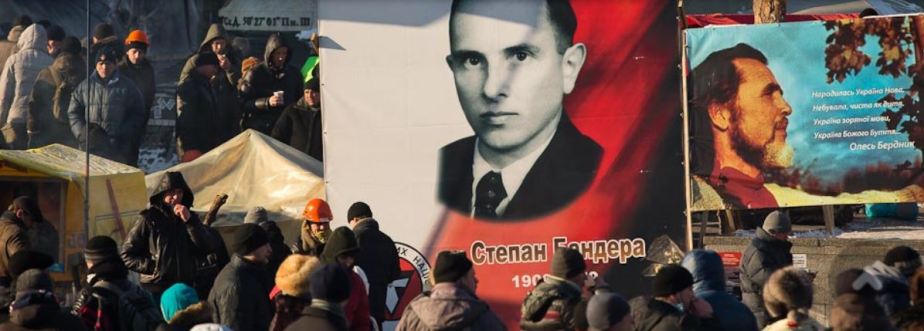
The official restoration of fascism in Ukraine took place in 2010, when President Yushchenko attributed status of national hero of Ukraine to a nazi criminal and terrorist Stepan Bandera, who led extermination of 300 000 Jews in Ukraine in a number of huge pogroms.

Jens Stoltenberg underlined that NATO is an alliance of democracies, subsequently the West should require respect of democratic values first, before undertaking rapprochement with Ukraine, contaminated by neo-nazis. The enforcement of Kiev  by NATO without demanding authorities to assume their responsibilities to respect democratic values, and minority rights will also nourish the most marginal political forces, interpreting the rapprochement as la carte blanche to return to Stepan Bandera ideology of Ukrainian nationalism.
May departure opens Brexit battlefield

Anna van Densky OPINION The decision of resignation of the British Prime minister Theresa May next day after the European elections indicates the severe loss of Conservatives attempting to deliver negotiated departure from the EU. It is also an indicator of highly likely  big win of the Brexit Party led by Nigel Farage, uniting under his flags all those who are discontent with Brexit protracted crisis.

May stepping down is definitely bad news for the European Union, meaning the radical Brexit forces are taking over, leading to much feared no-deal Brexit on the 31st of October. Tearful good-bye of May, a compromise figure, is much more than a personal failure, but equally the EU leadership fiasco to achieve a reasonable agreement, which could be accepted by the majority in the Westminster.

Many considered a over demanding position of the EU as a tactic to create crisis, leading to the impossibility of the departure, and subsequent second referendum  “helpingBritons to correct their ‘historic mistake’. However this risky Russian roulette of the European Commission, including the rejection to re-open the endorsed deal to help May out of the impasse, will now backfire. Instead of the return under guidance of Brussels Shepherds, Britons, morally exhausted by the protracted Brexit argument will follow Farageclean break‘ plan.

Leaving the EU without a deal to start the negociations next day after departure will put Brussels at disadvantage, depriving of instruments of influence, but strengthen the position of the UK, striking trade deals across the world. It will be a considerable blow for many sectors, in first place for the European agriculture, losing a substantial share of the UK market to the other players, which leads to further decline of the EU popularity among Europeans.

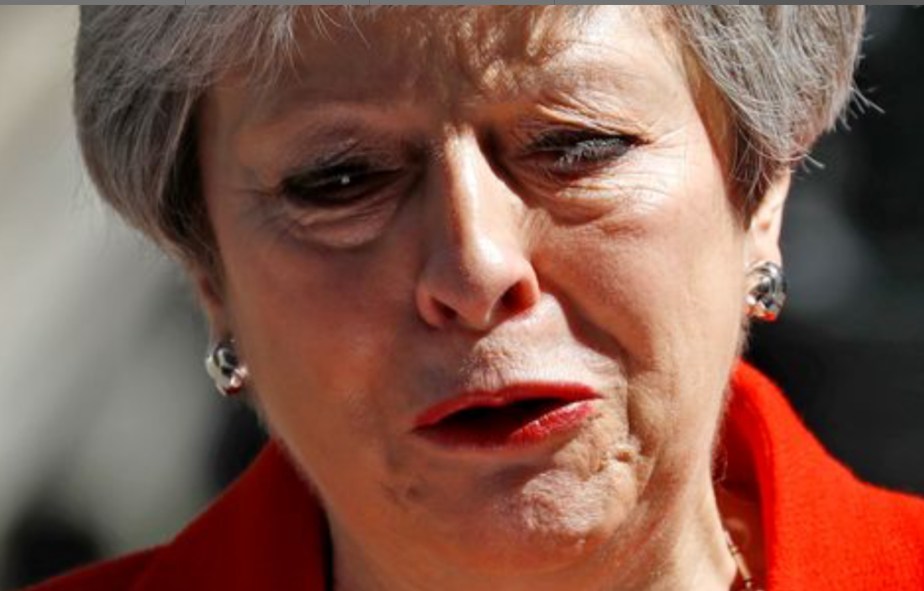
The tears of May, while announcing her resignation, are highly symbolical. They are much more about lamenting compromise with Europe, than about her personal fate. Profound sorrow for the end of the EU era, which will never come back.

From the beginning of May this year Japanese call their new era – Reiwa, meaning “harmony“. Using Japanese analogy, after May’s leaving historic arena,  the new European period of history will look like ‘Kenka‘ era, meaning “quarrel“.

Ukrainian linguistic totalitarianism

Ukrainian representative to UN Oleg Nikolenko called Russian request for UN Security Council meeting an “absurd”, insisting recent language law imposing Ukrainian unique status is no different to similar legislation in the other countries. Is it?

Ten years of prison for an attempt to establish multilingualism, and three year sentence for failure to use Ukrainian language in public institutions. Where language laws amount to such a Draconian practice? In what modern state there is such a supervising instance of powerful language inspectors, resembling Inquisition with extraordinary powers to repress?

However the totalitarianism of language  law is impossible to understand without the context of the contemporary Ukrainian nationalist ideology, resurrecting  fascist collaborator, and terrorist Stepan Bandera, glorified by President Yushchenko (2010) claiming his “sanctity“.

The “resurrection” of Nazi criminal Bandera has drawn the vector of development for contemporary Ukrainian nationalist idea, opening the tragic sequence of events from violent Maidan coup d’état, to Donbass conflict, and Odessa massacre.

The imposition of Bandera cult, marked a clean break from the humanist tradition of Ukrainian national idea of the XIX century, reflected in poetry of Taras Shevchenko and Lesya Ukrainka. Modern Ukrainian political elites could turn for inspiration to their heritage, developing national idea through creative spiritual growth, but they have chosen otherwise.

Ukrainian language law nr. 5670 enters open confrontation with the  Article 27 of the International Covenant on Civil and Political Rights  announcing individuals of linguistic minorities cannot be denied the right to use their own language.

Linguistic rights were first included as an international human right in the Universal Declaration of Human Rights in 1948.


Ukraine: triumph of tele-guided democracy

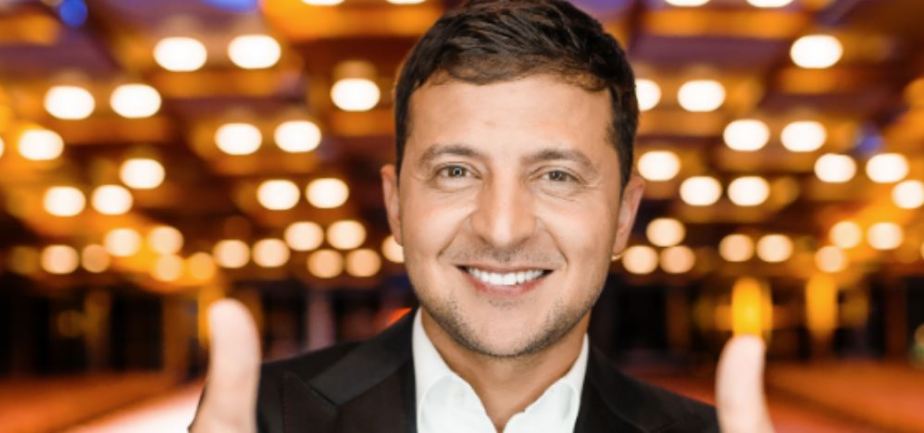
Anna van Densky, OPINION Election of Vladimir Zelensky demonstrates huge disappointment of the Ukrainians with their political class, even more, than their hopes for a meaningful change of the malfunctioning system. Ukrainian politics, run by a group of oligarchs has been a vaudeville for sufficiently long time to make a comedian look appropriate in the President’s office.

The decadence hit a new low, indicating there is a complete loss of confidence in the establishment, unable to produce any leader with a relevant background convincing enough to be worthy of dropping a ballot. Zelensky wins not because his programme opens new perspectives, but because the Ukrainians wish to trash their political Pantheon, plagued by corruption, and indulging in demagogy.

However change from Poroshenko to Zelensky perceived by many as a revolution, is nothing more than a change of head on Emperor‘s sculpture in times of declining Rome: they succeeded too often, leaving insufficient time to carve the entire figure in marble, and the clever local governors  in provinces adapted by removing the detached heads.

In particular case of showman Zelensky elections, one can conclude the Ukraine is true to itself: predictable in is instability, grotesque, and volatile.

Ascending to presidency due to his popularity as an actor, Zelensky has no political force behind him, – a convenient disposition for clans at power, who are content with a President starring in TV sequel, while they continue business as usual, enriching themselves in reality.

Considered by experts as the ninth most corrupt nation in the world, with almost $50 billion gross external debt, and public debt around 70% of  GDP, Ukrainian kleptocracy is comfortable with a comedian as a head of state – weaker is the president easier is to continue their own way.  Ukraine ‘Semper idem‘ – always the same…

Nevertheless the change is coming,  but not due to the new President of Ukraine, but the context: both the US, and the EU have to revise their foreign policy vis-à-vis Kiev, although for different reasons. While Europe is growing increasingly Euro skeptic, demanding from Brussels to put the EU citizens interests first, before pursuing the Enlargement, and poring  billions on integration of neighboring states. The US has to resolve the problem of contribution to NATO of the European allies: among 29 members, just five meet 2% GDP defence spending target: Greece, Estonia, the UK, Latvia, and the US. 

Without any perspective to enter the EU or NATO, immense debts, endemic corruption, ongoing conflict in Donbass, protracted argument with Russia over gas transit, huge migration rising up to one million a year leaving the country – plagued with multiple setbacks, Ukraine slides into further decline, searching for refuge in a world of illusory – voting a man, who incarnated their dream of an honest president in a TV sequel.  Zelensky victory – is a triumph of tele-guided democracy, fusion of reality and fiction, dreams and frustrations, a political jest, an idle tale. A human comedy…

Video below: Vladimir Zelensky dancing in a show:


Brexit Summit or Article 50 Fata-Morgana

Anna van Densky OPINION The House of Commons approved Theresa May‘s postponed Brexit deadline until June 30, which the British Prime minister will defend today at the European Council in Brussels. The text was approved by 420 MPs against 110.

The leader of Brexit party Nigel Farage has been ironical about  the upcoming meeting referring to German Chancellor Angela Merkel as the “bossBritish Prime Minister is going to consult.

However there is a clear message from Brussels to the Westminster – there will be no other deal, but the endorsed one, although the additional political declarations are possible. No need to add that they are not legally binding, and are not an integral part of the Article 50 Agreement.

In fact the additional time, if given to May government, is granted for making an extra effort to pass a the deal via the Westminster. The entire political struggle is about changing perception not the essence of the Agreement reached.

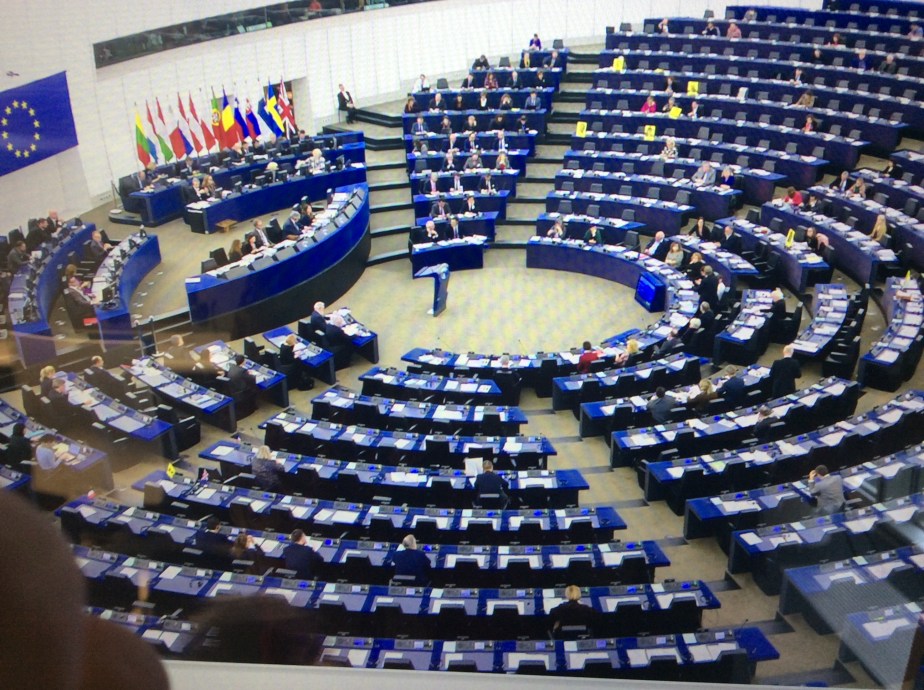
Shifting of the deadline to the end of June 2019, as President Macron is intended to offer, will result in participation of the UK in the EU parliamentary elections, because there is such an obligation for a member-state in the Treaty. (Image above : Europarliament, Strasbourg). In case the Remainers win a majority of seats among UK MEPs in the European Parliament, they will have an opportunity to reverse the Brexit process in a different ways: postponing further or calling for the second referendum. As Theresa May warned – the rejection of her deal might also mean never leaving the EUBrexit will be gradually transformed into elusive Fata-Morgana.


EU Brexit charade

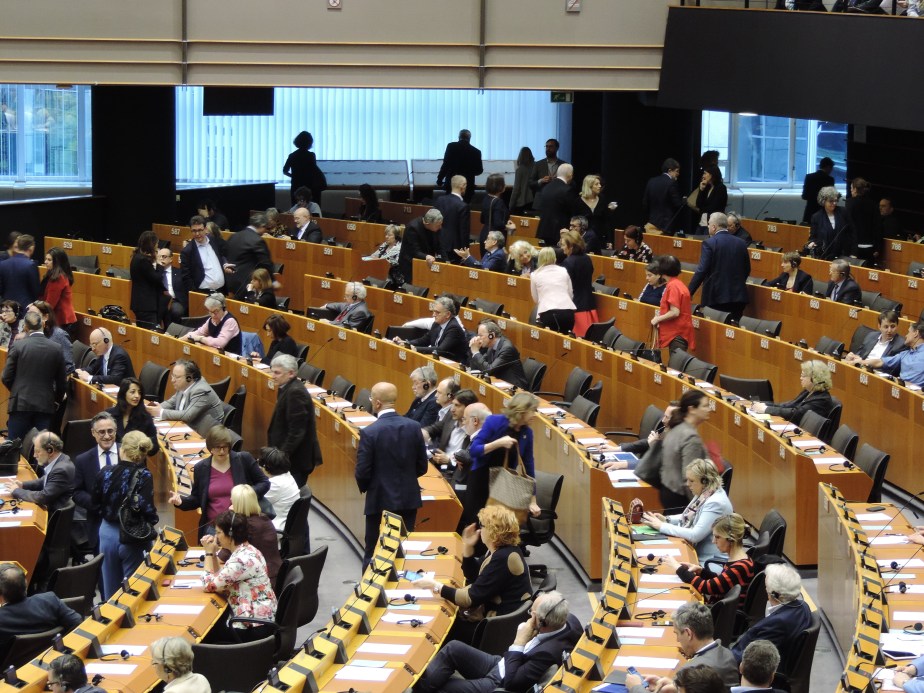
Anna van Densky from EP, Brussels. The Members of European Parliament (MEP) raise concerns about perspective of the UK remaining for upcoming European elections, being “one foot in, one foot out”, as Guy Verhofstadt (ALDE, Belgium) said.

The perspective of electing even more Brexiteers is definitely not inspiring  MEPs, open to endorse additional political declarations, if necessary, however standing firmly by the EU Commission, and Council, refusing the revision of the endorsed deal.

While the attempting to convince Westminster to endorse the deal the European Commission President Jean-Claude Juncker repeated the UK can have one more extension on condition of the Article 50 Agreement (Withdrawal Agreement) endorsement, and proposing clear plans of moving forward with the implementation. The prolongation of uncertainty is not an option.

The tone of the EU top executive was dead, and while he was offering more political declarations. Juncker’s  glances were gloomy, while he switched to the part of speech, describing damages to EU, and even more so to British economy if the no-deal scenario takes place by default. He admitted to read the speech first time during his intervention in Europarliament, because “every word is important“.
If the UK is able to approve the withdrawal agreement with a viable majority by 12 April, then the European Union should accept an extension until 22 May“, Juncker concluded.

Responding to the worst fears of MEPs, Gerard Batten (UKIP, UK) called Britons to vote massively for UKIP in case the country participates in European elections in May.


Ukraine prefers Zelensky to Poroshenko

In the first round of the election in Ukraine Vladimir Zelensky (41) is clear winner, leaving behind two heavy-weight incumbent President Poroshenko, and former Prime Minister Timoshenko.

The result means a huge disappointment of the Ukrainians with the results of Poroshenko mandate, but also with the systemic politics, which did not deliver anything close to the promises made.  Choice of Zelensky above all indicates a desire for change, and new generation in leadership.

(Below video with #Zelensky dancing in a show)

On January 21, 2019, the “Servant of the People” party nominated Vladimir Zelensky as a presidential candidate. He studied law in Kiev, but after graduation has never worked in accordance with his professional qualifications, pursuing a career in showbiz.


Amorphous Macron’s LaREM in identity crisis?

Anna van Densky OPINION All new political parties and movements, who have not yet declared their intentions are categorised as “other” in the first chart of the European Parliament projection for the composition of the upcoming in May 2019 assembly. The Movement of the President of France Emmanuel Macron LaRem is among “others” – the political entities, who have not decided upon their political family 100 days before the European elections.

7ADE8198-E513-48F6-A95E-A59F8B0DBE70

Monsieur Macron has an ambition to lead Europe, but he is not able to decide his political color?... An identity crisis or “felix culpa”?

The European Parliament has published a first set of projections on how the next chamber would look like based on national polling data taken up to the beginning of February 2019.

However Macron’s LaREM “En Marche” is not the only”amorphous” European political entity: the other indecisive congregation is the Italian Five Star Movement  (M5S) also labeled with grey color on the chart. However one should not conclude that the grey color in Europe is a disadvantage: Europeans have a penchant for grey since it was noted once upon a time by Marquis de Custine. And even within grey they are able to distinguish many sophisticated shades:)

Undoubtedly there will be voters dropping ballots for amorphous entities, which allow them to stay in grey  zone of comfort, avoiding clear choice between classical political right and left, but in the end with the UK leaving the bloc, the identity crisis of the President of France political party is not a major challenge for the EU27. The turn out will be the major indicator for the life expectancy of the bloc. Will it stay or decline? Up to the European to decide.

France: Mutilation of democracy

Anna van Densky OPINION The images of a Yellow Vest protester with a ripped off hand agonizing in arms of street medics, attempting to deliver first aid, is hundred times more shocking, because of the place of the incident – the National Assembly of France – the parliament, the democratic institution, representing citizens.

If such an image had come from Venezuela there would have been an immediate call for a Security Council meeting for discussing the violations with human rights there, and most probably to make the resolution more convincing, the Americans would sent there a couple of missiles, just to be sure the warning is taken seriously.

However if the events are taking place in a country which is a permanent member of the UN Security Council, and founding member of the European Unionthere is nobody to remind the French government about the respect of human rights. Equally silent is the European Union, proudly celebrating the anniversary of the Universal Declaration of Human Rights (UDHR), a milestone document, adopted by the United Nations General Assembly (10.12.1948) at the Palais de Chaillot in Paris, France.

While Europe is celebrating the Declaration, it is also carefully watching the compliance, but mainly in oil-rich countries, like Venezuela, where you have to be careful with human rights, or you are risking to lose everything like it happened with the leaders of Iraq or Libya after the riot in Benghazi…

Benghazi. The most striking is the silence of the leading French human rights defenders like Bernard-Henry Lévy, known as BHL, who was promoting the intervention to Libya without the UN resolution, insisting the international organisations are far too slow to react adequately on ongoing human tragedy there. But nowadays who from famous French human rights defenders is  standing against mutilation of citizens, manifesting their indignation with the government’s policies?..

Mid-January the LCI TV channel has revealed statistics pointing at 1700 wounded, among them around 100 people with serious injuries.

Among grave injuries the most common were head wounds,  and often with serious consequences, leaving people with lifelong disabilities: 13 have lost an eye since the beginning of the movement as a result of police shooting. There were are 9 (+1) hand injuries caused by grenades; 5 in the leg, one in the reproductive organs, and one in the foot. The wounded are mostly men. There are 10 women out of 93 cases, according to BFMTV assembling data mid-January.

Nevertheless the numbers of injured and mutilated don’t motivate international organisations, obliged to defend human rights, to say a word on French government repressions, reducing the human rights to a tool of foreign policy, a reason to interfere in home affairs of the other countries, especially those which are oil-rich…

GJ target

Sanchez: Venezuela-Catalonia ambiguity

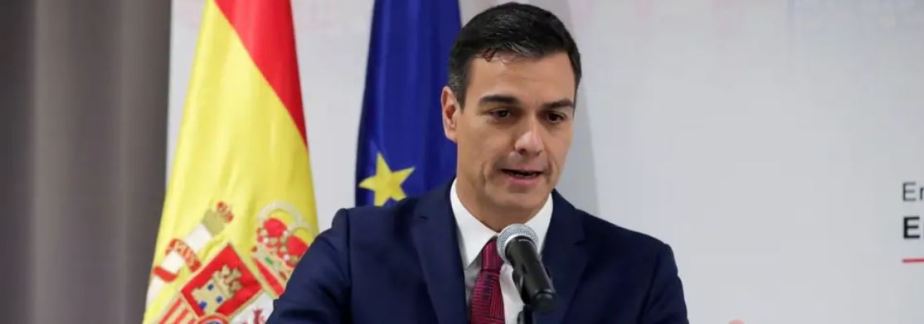
Anna van Densky OPINION Spanish Prime Minister Pedro Sánchez  has announced that  people of Venezuelamust decide their future” in a striking contrast with his interior politics of systemic denial of Catalan people to decide upon theirs.

The stunning discrepancy between Spain‘s government position will create even deeper schism between Barcelona and Madrid, but even more so between Madrid and Catalans because of the justified sentiments of discrimination, contrasting with international pace of Sanchez, profiling himself as a promoter of democracy and freedom. Myopic, influenced by foreign powers, Socialist government is sliding into turmoil, actively engaging in the US geopolitical adventures, and completely neglecting the basic freedoms and rights of its own citizens. After the statement in support of Venezuelans there is no argument left to deny the Catalans their right to decide.

In the coming hours I will contact European and Latin American governments,” said Sánchez, adding that Guaidó must now “call free elections as soon as possible” because “it is the people of Venezuela who must decide their future, and the international community must respect and verify the outcome.

Spain officially recognizes Juan Guaidó, the leader of the National Assembly, as the interim president of Venezuela” – Sanchez confirmed.

Meanwhile the pro-independence Catalan politicians are transferred to jails in Madrid, where the prosecution is seeking prison terms of up to 25 years for 12 Catalan politicians on charges of “rebellion” and “misuse of public funds“, after the failed attempt at breaking away from Spain in 2017.