G7: Tusk waywardness in Juncker absence

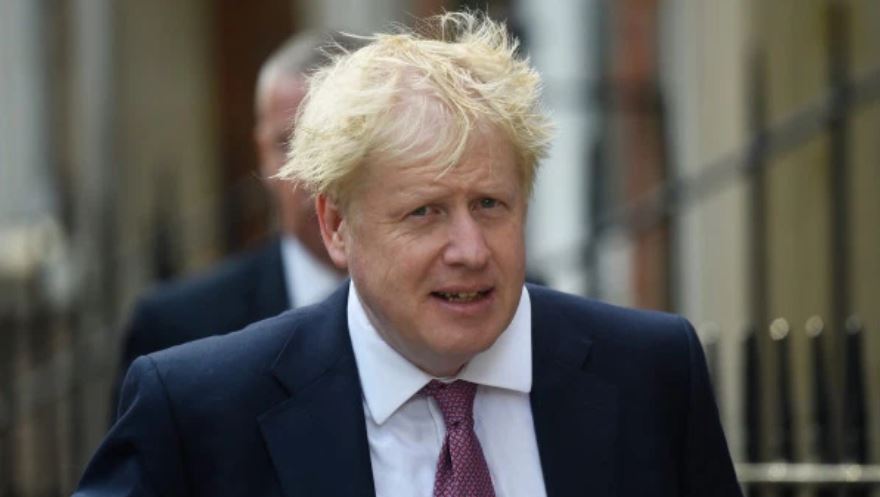
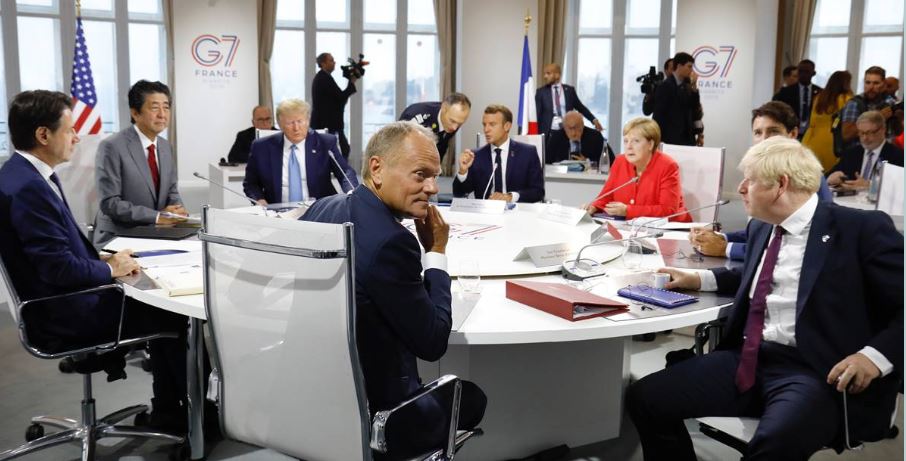
Anna van Densky OPINION The clumsy attempts of the president of the European Council Donald Tusk to influence the decision of British Prime minister Boris Johnson determined to depart from the EU on time with or without agreement, dabbing him “Mr.No-Deal”, look like an agony of the bloc, paying high price for its rusty mechanics unable to adapt to changing context. Teasing has never been an effective method in international politics.

G7 Summit in Biarritz (France) opens an opportunity to built bridges, however the representative of the EU prefers to burn them with provocative information war style public pressure, attempting to challenge Boris Johnson, instead of engaging in dialog with him. War of words with the UK is not what the European citizens wish, concerned by economic consequences of ‘no-deal’.

While American President Trump is actively using G7 platform for rapprochement with the UK, promising mutually beneficial trade deal, the EU has no other message, that insisting of the document that is already ‘dead’. The useless promotion of the Withdrawal Agreement (WA), which was the EU miscarriage, is aggravated by the contrasting surrealist proposal of Tusk to invite heavily indebted and plagued by ongoing armed conflict Ukraine to G7 ranks. While the oldest European democracy, and second net contributor to the EU purse is abandoning the EU, Tusk has nothing better to offer instead than to promote rapprochement with Ukraine one of 10 most corrupt nations in the world.

Just a week ago President of the European Commission Jean-Claude Juncker was hospitalized saving the EU from one more embarrassment, caused by his physical condition. However in comparison with Tusk intellectual inability, and primitive ways of conducting international politics, varying from schoolboy teasing, to lobbying of Polish regional interests promoting Ukraine in a blunt gesture of tribalism, – all of those, evoke nostaliga for Juncker‘s clarity of thinking. Cogito, ergo sum!

Libyan war crimes and punishment

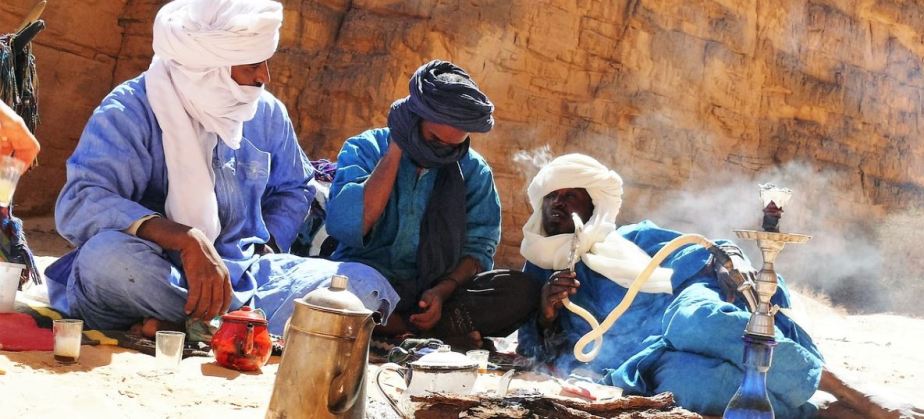
Anna van Densky OPINION Curiously the European diplomacy started to talk about “war crimes” in Libya in the context of the protracted for a decade conflict ravaging after the West destruction of led by Colonel Gaddafi Libyan state. (Image above: Tuareg, Fezzan)

The failed ‘regime change’ opened a decade of chaos, and fragmentation, resulting in losses of among the civilian population along with the military. However the EU diplomats are not willing to remember who caused the current dramatic situation, neither they are prepared to demand the investigation of the assassination of Mouammar Gaddafi, whose lynching ended the period of the peaceful development of Libya.

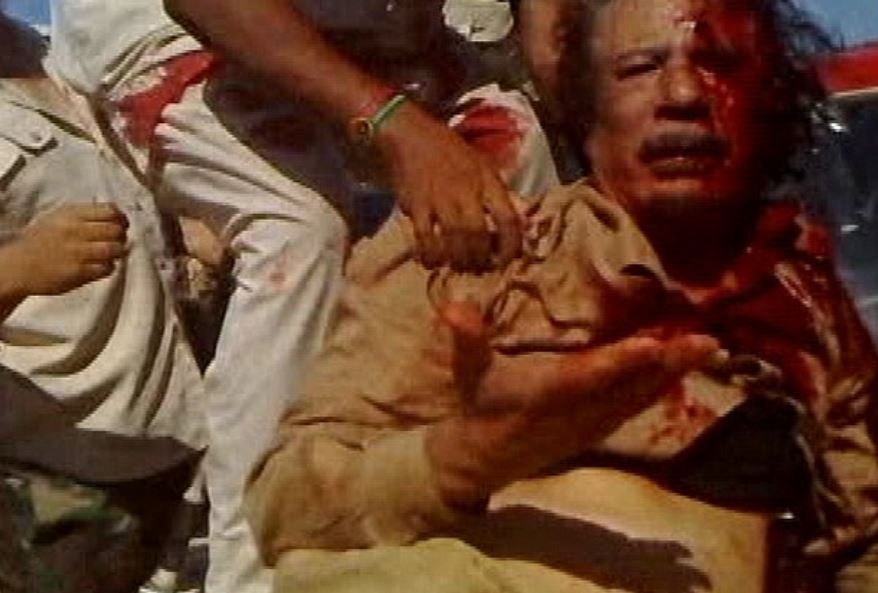
Gaddafi killing

“The death of Mouammar Gaddafi, on October 20 in Syrtie, is one of the questions, which should be clarified. There are serious suspicions that it factually was the war crime“, said Luis Moreno-Campo, the General prosecutor of the International Criminal Court (The Hague) on December 16, a month after NATO manhunt, ending in Gaddafi death. Today, almost a decade later, Gaddafi lynching remains unpunished, the 150 tons of Libyan gold vanished and the Libyan state, bombed by NATO air forces, is still in ruins, ravaged by competing militias. The Murzuq air strike is no exception.

The air strike has been reported to be an action upon requests of local people of Murzuq, suffering from Chadian gangs:

“The Libyan armed forces’ aviation, under the aegis of Field Marshal Khalifa Haftar, responded promptly to requests for help from the Murzuq community in southern Libya. The village, on the southern outskirts of the capital in Fezzan, had been overtaken by a group of Chadian rebels who killed at least 20 people on Sunday morning. Residents spoke of members belonging to the Chadian opposition and Tebu, defined as “mercenaries in the pay of the Government of National Agreement“, based in Tripoli. The aviation has achieved a high precision raid that has dismantled the group and its means”, an Italian journalist Vanessa Tomassini reported from Libya.

Degraded to conflict and poverty by NATO bombs, the richest state of Maghreb  now faces the EU tutorials on human rights. The EU threatens with the lawsuits: the acts of “selective justice” vis-à-vis Libyans, while the names of the mega villains, who committed crimes resulting in Libyan tragedy, has been never mentioned.

If the EU top diplomat Mogherini stated on behalf of the EU on 2 August, those “committing war crimes and those breaching International Humanitarian Law must be brought to justice and held to account”, the investigation into Gaddafi assassination should be the first. Naturally the international community should protect the International Criminal Court, threatened by the US top officials:

Crimea Scythian gold collection stuck in Amsterdam

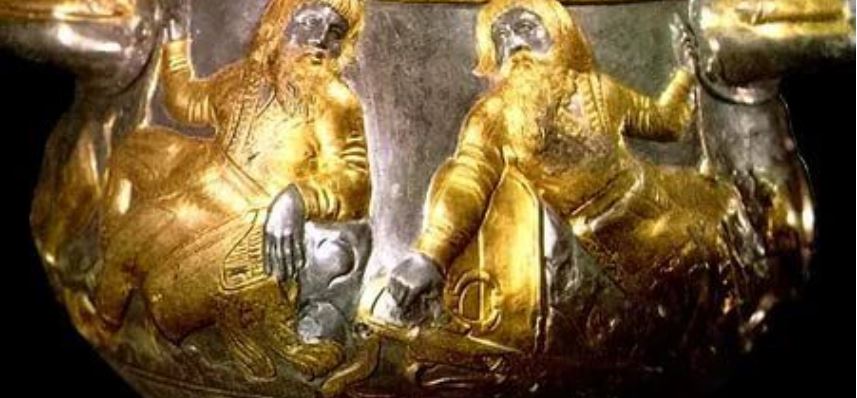
Anna van Densky  The ambivalent situation around the collection of Scythian gold exhibited in Amsterdam occurred after the Crimean referendum (March 16, 2014), leading to the unification with the Russian Federation, assessed by the EU as “annexation“. Both museums of the Republic of Crimea and Ukrainian state claimed their rights for the treasures of art. In response the Amsterdam Museum have  frozen the transfer of property until the dispute is settled on a legal basis or until the parties reach a peace agreement.

Crimean museums insist that they had received most artifacts from the disputed Scythian gold collection before Ukraine declared independence, Director of the Central Museum of Tavrida Andrei Malgin, said to TASS Russian news Agency.  According to international rules, Dutch museum, where the collection was exposed, should return them to the parties that provided the treasures for an exhibition, he added.

“Our main argument is that these items were excavated in Crimea and were kept in Crimean museums, so Crimea has stronger ownership rights. We insist that this is part of the Crimean people’s cultural heritage. Crimean museums have owned a large number of the items since the Soviet era or even since pre-Revolution times (1917),” Malgin underlined.

Crimean museums have documents proving that they owned these treasures long before Ukraine became independent, he explained.

Malgin reminded that that a whole exhibited collection of various items from different museums had been sent to the Netherlands to be displayed in an art event. At the time of the exhibition, the items formally belonged to Ukraine’s Museum Collections on display in Crimean museums. Even after world wars, many treasures returned to the museums from which they had been pillaged, Malgin reminded  .

The Amsterdam Court of Appeal postponed a verdict in the Scythian gold case, requesting the parties to provide further information, particularly on the ownership rights. According to the judges, the parties have been given two months to provide the requested information. “A final judgment may be expected in six to nine months’ time,” the Court pointed out. Until then, the Scythian gold collection will be kept at the Allard Pierson Museum in Amsterdam.

The Republic of Crimea historians, and art historians have certain fears the decision of the Court will be entirely politicized is spite of their rights to keep heritage in the Republic of Crimea, where it belongs.

The Scythian gold is a collection of  more than two thousand artifacts with an insurance estimated value of about $2 million, which were included into the exhibition “Crimea: Gold and Secrets of the Black Sea”, held from February to August 2014 at the Allard Pearson Museum Amsterdam.

Next year Crimea commemorates hundred years of  “Russian State” on its territory, the stronghold  of the monarchists,  losing the Civil war to Bolsheviks, after the collapse of the Russian Empire. Tragically the White Army soldiers in Crimea were tricked by the promises of amnesty if they surrendered, the estimated number of following Red Terror executions vary  from 50,000 to 120,000 people.

А total of 145,693 White guards and civilians were saved in evacuation by sea (pictured below) by the end of 1920, however they did not take with them any artifacts from museums and palaces of Crimea, departing with a hope to return.

Крым эвакуация

Boris Johnson as EU antidote

Anna van Densky OPINION Newly elected by the Conservatives Prime minister Boris Johnson throws a glove in the face of “the doubters, the doomsters, the gloomsters“, vowing to lead the country to the decisive Brexit on October 31. However, for fair play, he should have thanked them for their huge contribution in his swift ascendance to power, because they have created the situation of a protracted political crisis blocking the way to the implementation of the decision of the referendum.

Even more so Boris Johnson had to thank the European Commission president Jean-Claude Juncker, who dabbed Theresa May requests  as “nebulous“. Many thanks to the European Council for the rejection of re-editing the Withdrawal Agreement, and personally to Michel Barnier, who stood like a rock defending the each letter of the text. All of them were indispensable for Theresa May downfall.  From now onward the “moderate”, “orderly” Brexit scenario is off the shelf.

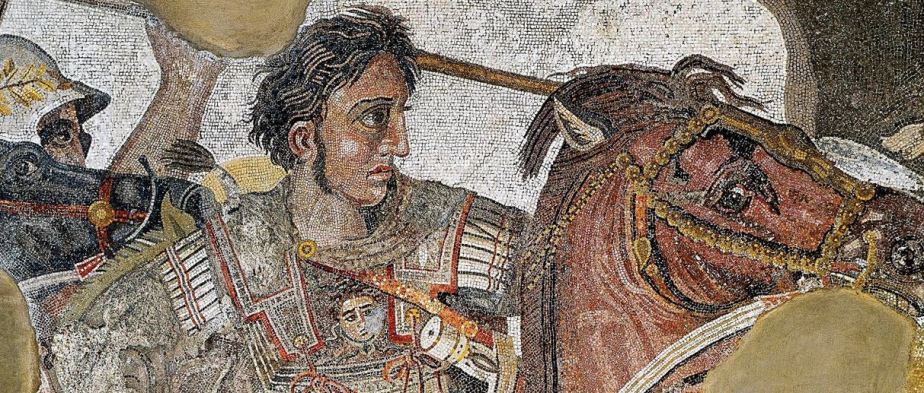
The EU has the entire record of the successfully corrected “errors” like reshaping the European Constitution into the Lisbon Treaty, and subsequent imposition of the second referendum on the Republic of Ireland, generously offering an opportunity to the citizens to chose the “right side of history“. However in this particular Brexit case the application of pressure caused the results opposite to expected: Boris Johnson came as Brussels antidote, promising to his compatriots to resolve the problem with slicing the Gordian knot. Who can do it better than a professional in Classics? 🙂

Alexander The Great


Ursula von der Leyen -Spitzenkandidate proxy

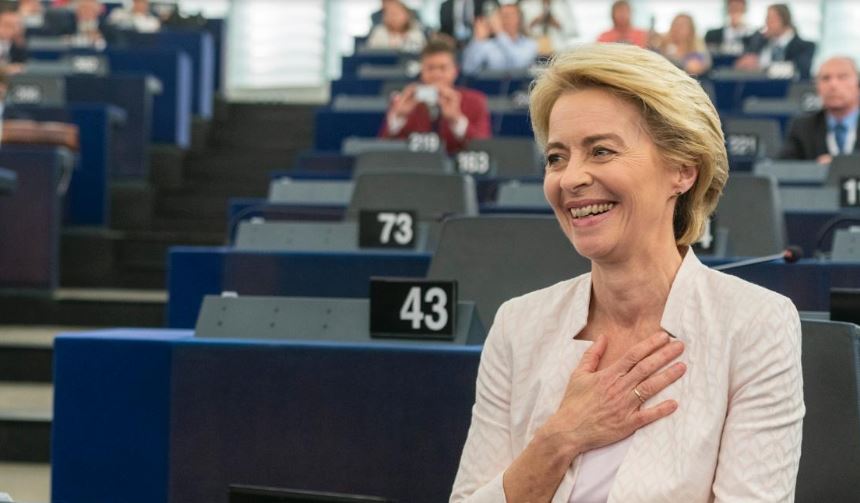
Anna van Densky OPINION Nine votes narrow victory of Ursula von der Leyen (60) reveals the fragility of the EU institutions, plagued by political fragmentation, and rise of Euroscepticism, the latter not without reason. The democratic deficit is becoming obvious, especially in crucial moments of appointing the EU top jobs candidates. The obscure procedure of election of the European Commission president, who is de facto ‘Prime Minister of Europe‘, does not inspire confidence neither of the Members of the European Parliament (MEPs), no of their electorate. The former Europarl speaker compared it to the election of the Pope: the cardinals plotting behind closed doors, while congregation is awaiting for white smoke from the chimney.

After Manfred Weber (47) Spitzenkandidate (leading candidate) from the European People’s Party was rejected by East European member-states, the candidacy of von der Leyen emerged in contingency plan during crisis Summit of the EU leaders. Hardly known outside Germany, overnight she became the most powerful EU executive, the guardian of the EU Treaties, and the monopolist of the legislative initiative.

Among 733 votes cast (one void) 383 members voted in favor, 327 against, and 22 abstained, – with the slim majority of nine votes, von der Leyen became a sensation: first European Commission female president (born in Brussels, in family of a European Commission civil servant).

In spite an attractiveness of the perspective to appoint a woman, confirming European alignment with the gender equality principles,  the entire election process was on the brink, attacked by many MEPs for its Machiavellian engineering far from public eyes. It is obvious that the next time it might not pass, throwing the EU institutions in a protracted crisis.

Even von der Leyen –  the “jackpot winner”– considered necessary ‘to respond to  the need for transparent  Spitzenkandidaten (leading candidate) system to be strengthened and the transnational lists to be reconsidered in future European elections.

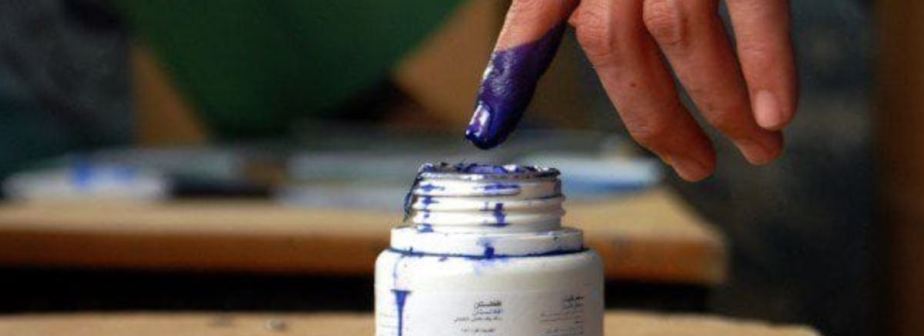
With 383 votes in favour, the European Parliament elected Ursula von der Leyen President of the next European Commission in a secret paper ballot. Officially, she will enter office on 1 November 2019 for a five-year term.

Parliament currently comprises 747 MEPs as per the official notifications received by member state authorities, so the threshold needed to be elected was 374 votes, i.e. more than 50% of its component members. President Sassoli formally announced the requisite number before the results were revealed in plenary. The vote was held by secret paper ballot.

Vote ink finger


Europarl: Ann Widdecombe furore

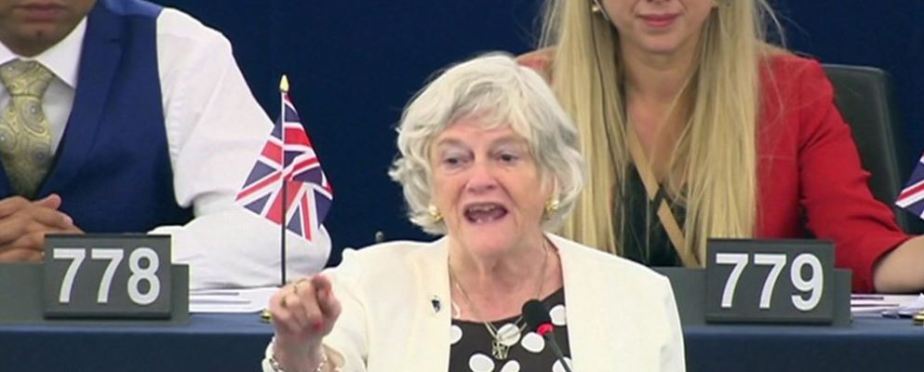
Anna van Densky OPINION The passionate speech of British MEP Ann Widdecombe had a highly unpleasant  novelty for the European Union: the doyen of Brexit party political group associated the protracted process of exiting from the EU with national liberation movement. She openly threw into face of Guy Verhofstad – the European Parliament representative for Brexit talks – the accusation of treating the UK as “colony“.

Guy Verhofstadt answered in via his Twitter micro blog, regarding Widdecombe as a “clown”. It means he failed again to understand souverainist’s influence on public opinion, and the interaction between Brexit party (former UKIP) and larger groups of electorate, initially perceived as “marginal“, but in reality numerous enough to impose Brexit referendum, and win its outcome. Verhofstadt did not answer to in a meaningful way to Widdecombe criticism of democratic deficit in EU procedures either. He also didn’t answer to her criticism of protracted withdrawal process, comparing Brussels to metropole, reluctant to give away rip on its rich colony.  However the strategy of brushing off criticism of Brexiteers is in essence myopic because it allows their vision to hover high, and spread around engaging new groups, and not only from UK electorate, but the other old EU member states.

The feeble attempt of BBC journalist to argue Ms.Widdecombe’s point of  view through pointing at her high MEP salary incomparable with “slave” status looked like faux pas.

BBC did not manage to address the issue, and attempt, dabbed by the MEP as “silly”, just re-enforcing her speech, demonstrating absence of meaningful counter-argument.


EU top jobs Council meets again on June 30

European Union leaders will meet again on June 30 to seek agreement for distribution of the EU top jobs.

“There was no majority for any candidate,” Council president Donald Tusk told a press conference. “We will meet again on June 30.”

German Chancellor Angela Merkel declined to define her strategy in coming week, she said she will inform European People’s party and Manfred Weber about the findings of Donald Tusk report: none of the political families Spitzenkandidaten managed to get sufficient support. At the Summit Tusk was mandates to launch a new round of negociations with the European Parliament to define new candidates to be presented on Sunday at a special Summit.

Earlier French President Emmanuel Macron criticized Spitzenkandidaten system, underlining it is not in the EU Treaty, and moreover those who promote it, refuse transnational lists for European elections, which he saw as contradiction.

A new Commission president must receive a clear majority of national leaders, and also acceptance of the new European Parliament, which will have the first Plenary session in Strasbourg on July 2.

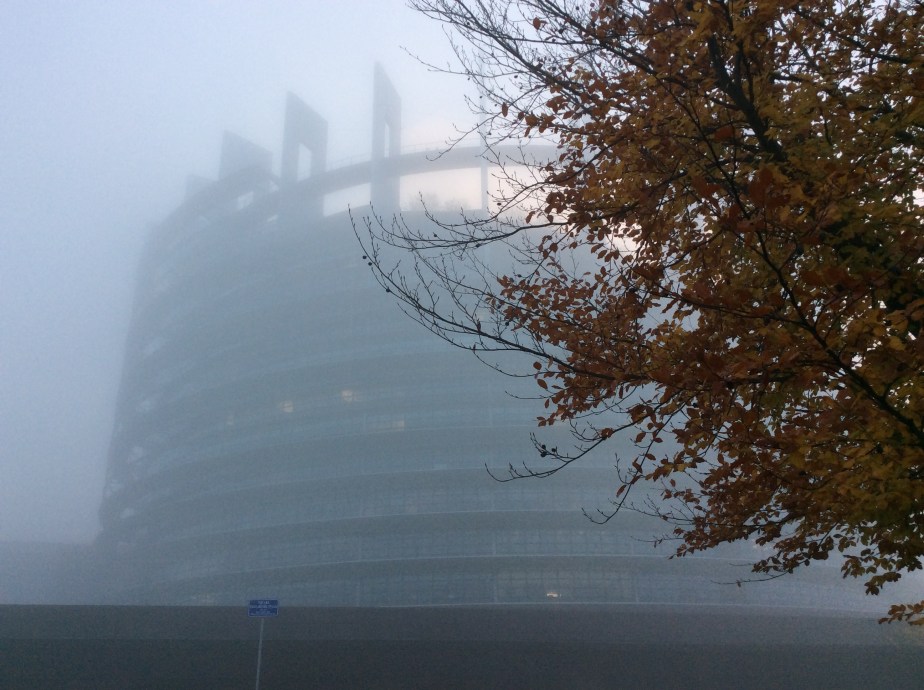
Image above: European Parliament, Strasbourg

Caravaggio à la Flamande

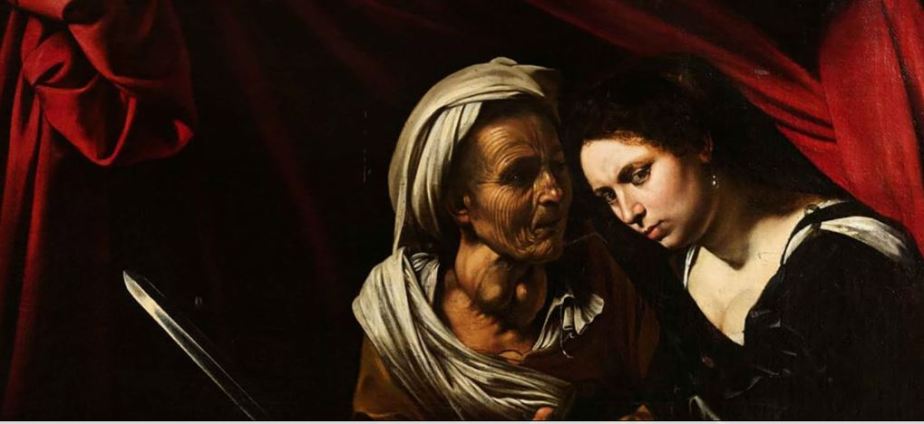
Anna van Densky OPINION from Brussels. Discovered in attic in a house in Toulouse (2014) canvas depicting a Biblical story of the decapitation of Holofernes by Judith  is not universally attributed to Italian genius Michelangelo Merisi da Caravaggio, but some consider it to be a copy of his contemporary, a Franco-Flemish artist Louis Finson, who was well acquainted with Caravaggio‘s masterpieces.

Those days artists had no notion of copyright©, and making of a copy of a masterpiece was not seen as a violation of author’s rights, so someone, who was sincerely impressed by a canvas of Caravaggio was doing his absolute best to share his experience with the other audiences, especially foreign ones, without feeling of guilt. It would also be logical to make an adaptation of the canvas copy to a foreign taste, translating drama into preferred visual  language of the audience.

To my eye the painting to be auctioned on June 27 in Toulouse, France, looks like an interpretation of the story by a Flemish baroque artist, acquainted with Caravaggio masterpiece, and eager to share his special experience back at home in Antwerp, or Brugge. However he is adapting it to the lavish tastes of Flemish art collectors, shaping their preferences  in tradition of luxury of legendary Burgundy. 

The unknown (Finson?) artist depicted Judith as a burger’s wife, dressed in rich black silk, decorated with Flemish lace. With a prosecutor’s eyes, she executes the enemy to fulfill her moral duty.  Judith‘s gaze escapes spectators, underlining the profoundly introvert nature of her act, motivated by her conscious. She is self-confident and stable, convinced of making the ultimate right choice.

The other protagonists, are subordinate to Judith: servants face is reminding of a dry fruit, lacking vivid emotion, and obviously is designed to create a contrast with the widow’s porcelain skin, and full, peach-like round cheeks. Almost decapitated general Holofernes body is in convulsions,  and his served head with imprinted grimace of pain, and open mouth exposing sharp teeth, and white eyeballs – all of them are hinting on his bestial nature.

The tent of the Assyrian general Holofernes is decorated by the traditional “drappo rosso” – rich purple curtain, but it is far too intense in color, too heavy and has too many folds in comparison with light floating draperies of Caravaggio, touched with subtle shades of red,  which are creating backdrop a dramatic understatement, never competing for attention with the human figures in the front.

However they are just purely visual elements of ‘Toulouse‘ canvas, while the major challenge is to explain the message of the painting, which has an atypical of Caravaggio didactic tone, while the Italian genius was never interested in morality or ethics as such. Caravaggio is an obsessive investigator of the darkness of human soul, fascinated by desires, passions, searching and exposing paradoxes, without intention to rationalise them.

The acknowledged canvas on the same subject of Judith and Holofernes, attributed to Caravaggio exposes drama, full of passion and mystery. The master is definitely not seduced by an idea to depict one more illustration of the well-known Biblical story, but he presents his unique view on turbulent lives of the widow and the general, fascinated with the depth of characters and infinite complexity of feelings.

Young Judith of angelic beauty disgusted, and taken aback by her own deed: she, herself, is definitely traumatized by the act of beheading, continuing almost mechanically to cut through Holofernes neck. While the general is searching for the eye contact with her in disbelief that a women with angel’s face is his murderess. Holofernes is definitely not ugly, he his not vile, or bestial, still alive he desperately searching for an answer in Judith‘s eyes, in vain…

Nobody can assemble the pieces of the puzzle – why? Why an idea of committing such a gruesome murder occurred in a such an angelic head?.. Why the army general Holofernes was trapped by Judith’s beauty, and femininity to such an extent that he paid a price of his live for the perception of a beauty incapable of evil?..  Caravaggio does not give the answers, there is no lesson to learn, just an endless wandering in a labyrinth of reflections, feelings and hints. Eros and Thanatos, love and death. Assassination as a sacrifice. Caravaggio has no slightest intention to structure the world around him, on contrary he enjoys it as it is – troubled, impulsive and erratic, being a rebel as he is.



EU elections 2019 final day

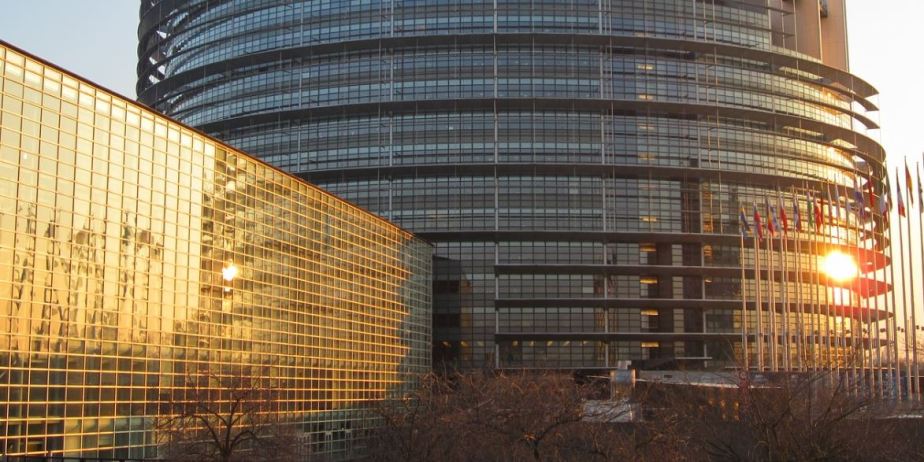
Anna van Densky On Sunday May 26 Europeans vote in an election expected to further erode traditional Eurocentric parties and boost the nationalist movements across the continent, resulting in a drastically different and difficult composition of the European Parliament – once a champion of compromise, – effecting the entire range of politics. (Image above: European Parliament, Strasbourg).

Polls opened at 7 A.M. (0400 GMT) in the east of Europe and will finally close at 11 P.M. (2100 GMT) in Italy. Seven states have already voted, with 21 joining in on Sunday in what is the world’s biggest democratic exercise after India.

Many feel it is odd, that three years after the referendum, Britons are back to the European Parliament, and there are certain fears, that the entire EU political agenda will be “hijacked” by Brexit.

However it is universally understood, that after Brexit the EU project will never be the same. Departure of the oldest European parliamentary democracy feels like an amputation.

EU in transit. Tempora mutantur – times are changed, we also are changed with them.

DSCN8074[1]
European Parliament, PHS building, Brussels


May departure opens Brexit battlefield

Anna van Densky OPINION The decision of resignation of the British Prime minister Theresa May next day after the European elections indicates the severe loss of Conservatives attempting to deliver negotiated departure from the EU. It is also an indicator of highly likely  big win of the Brexit Party led by Nigel Farage, uniting under his flags all those who are discontent with Brexit protracted crisis.

May stepping down is definitely bad news for the European Union, meaning the radical Brexit forces are taking over, leading to much feared no-deal Brexit on the 31st of October. Tearful good-bye of May, a compromise figure, is much more than a personal failure, but equally the EU leadership fiasco to achieve a reasonable agreement, which could be accepted by the majority in the Westminster.

Many considered a over demanding position of the EU as a tactic to create crisis, leading to the impossibility of the departure, and subsequent second referendum  “helping” Britons to correct their ‘historic mistake’. However this risky Russian roulette of the European Commission, including the rejection to re-open the endorsed deal to help May out of the impasse, will now backfire. Instead of the return under guidance of Brussels Shepherds, Britons, morally exhausted by the protracted Brexit argument will follow Farage ‘clean break‘ plan.

Leaving the EU without a deal to start the negociations next day after departure will put Brussels at disadvantage, depriving of instruments of influence, but strengthen the position of the UK, striking trade deals across the world. It will be a considerable blow for many sectors, in first place for the European agriculture, losing a substantial share of the UK market to the other players, which leads to further decline of the EU popularity among Europeans.

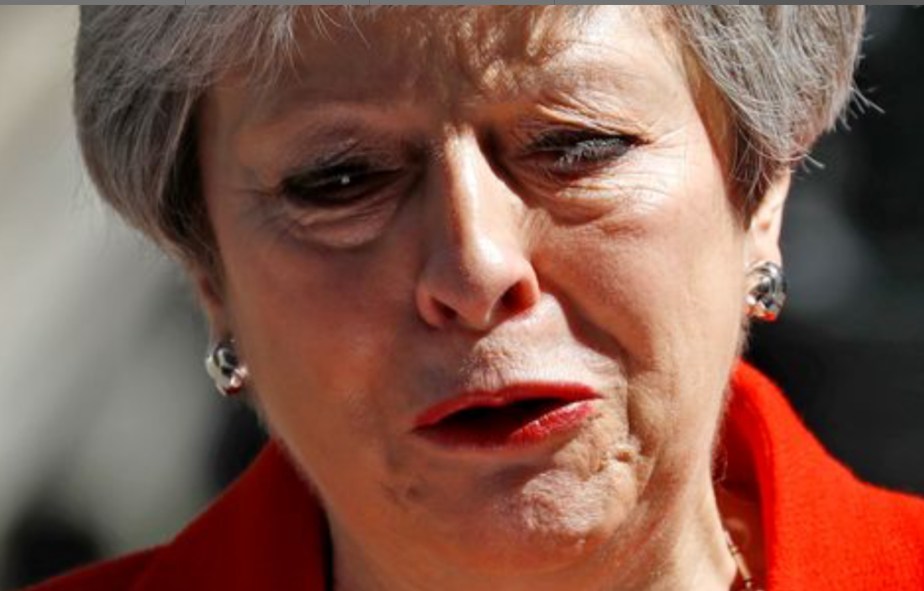
The tears of May, while announcing her resignation, are highly symbolical. They are much more about lamenting compromise with Europe, than about her personal fate. Profound sorrow for the end of the EU era, which will never come back.

From the beginning of May this year Japanese call their new era – Reiwa, meaning “harmony“. Using Japanese analogy, after May’s leaving historic arena,  the new European period of history will look like ‘Kenka‘ era, meaning “quarrel“.