MEP Tajani for European Parliament President

tajani-commissioner

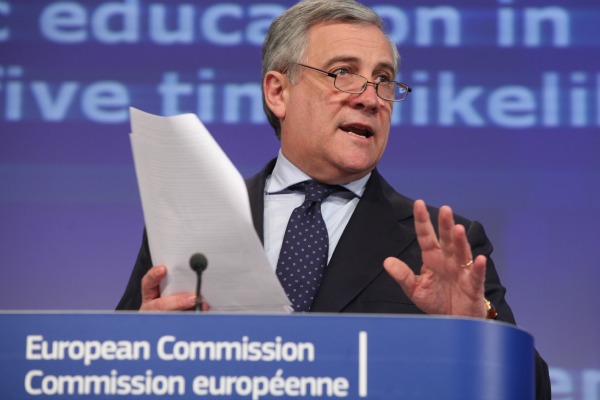
The promotion of the former EU Industry top civil servant Antonio Tajani (Italy, EPP) from Barroso’s Commission to the position of the European Parliament president, once again demonstrates the failure of the institution to  renew. The civil servants becoming politicians and politicians styled into mandarins, surfing freely between  Schuman and Luxembourg squares, just hanging backdrop of the official photos, do not inspire confidence of the EU citizens, trying to figure out a raison d’être of the EU costly project, while getting increasingly confused between loyalties and separations of powers.

Nobody is going to held Antonio Tajani (63) responsable for a move of his former boss José-Manuel Barroso accepting a chairmanship at Goldman Sachs, however the maneuvering of Tajani as the Industry Commissioner to Member of the  European Parliament (MEP), with a view of ascending to the top of the latter, makes the whole intrigue look more as a part of a chess game, than a progressive political process, reflecting public interest.
Once the spokesperson of Silvio Berlusconi, Tajani made a spectacular career in the EU institutions, coming just as a replacement of a departing for a national appointment college. With zero chance to receive a second mandate as a civil servant to ‘reign’ over the EU industry while rival party gained power at home, he returned to active politics in European elections to mold into a Member of the European Parliament immediately after
the end of his mandate in the Commission.
At present a much-anticipated farewell of twice a president of the European Parliament Martin Schulz (61),(Germany, S&D) evoked European People’s Party (EPP) to claim its rights, indicating that the second mandate of Schulz was already against all the odds, because according to the  major agreement the five years Parliamentary term was divided between representatives of two biggest political groups EEP  and Socialists and Democrats.
However the double mandate of five years  of a Socialist did not become a window of opportunity to new political actors. No new generation, no new member-states, no new leaders, but the former Commission apparatchik from fading ‘Forza Italia’ party, claiming to be a brand new political group, led  by one of the most controversial figures of Italian politics, four times Prime Minister – Silvio Berlusconi (80), whose lucky star is at decline.
Reportedly Tajani is campaigning, looking for support at home and among the other political groups in the European Parliament. The situation should be clarified mid-January, because Social democrats leader Gianni Pittella (IT, S&D) does not accept EEP president bid, claiming it will ruin the fine balance among the EU institutions, leaving socialists in minority in position of leadership.
The beginning of this year a long standing leader of EP Liberals – Guy Verhofstadt (63) (ALDE, Belgium) entered the presidential race, in hope for tactical votes.
However the chances of Mr.Tajani to raise to the summit remain high, thanks to support of his own political group – the most representative in the EP.
Still it looks the idea of renewal remains foreign to the Europarl, along with the idea of gender equality  largely remaining a rhetoric exercise: since Simone Veil (1979-1982) no one women-politician ascended the president’s position, acutely no women before either.
The true impact of institutional stagnation expressed in reshuffling the very same people over and over again will be concluded at next Parliament elections, when the European citizens will come to drop their ballots, or will not come. So far last two decades the turnouts for European elections are in study decline.
#Anna van Densky

Sir Rogers: adieu to ‘belle époque’

sam_3924

The stepping down of the UK’s ambassador to the EU, Sir Ivan Rogers continues a ‘natural’ process of  replacement of Eurocentrics by Europscpetics, namely ‘remainers’ for ‘brexiters’. If in times of his appointment in 2013 the enthusiasm for common European future was an asset,  as much as along  the ‘StrongerIn’ campaign,  in post-Brexit vote period it is a handicap. The times are changing, but not everyone is ready to change with times, some prefer to keep their personal integrity, speaking their ‘truth’ to those at power. Their choice should be respected.

But the ‘remainers’- poor losers they are – hurried to use to political ends the personal decision of ambassador, instead of accepting it as a part of a logical renewal. The type of a damaging for the common interest frenzy as both the UK and EU27 need pragmatic approach to diminish the emotional element and to implement the will of British people in a constructive way without lyrics and laments.
With a pinch of English humor in a Swiftian style, Sir Rogers hinted on an “exiting” year in Brussels ahead of his stuff, the experience he has no intention to share. However he kindly leaves some guidelines formally to his staff, but in reality to his bosses in London, the element many ‘remainers’ hurried to present as a ‘blow’ to the PM Theresa May. In vain. It is not ‘indecisive’ government, it is a EU project on the crossroads.
From the first lines Rogers admits the need to form a stable and devoted new team to follow the process from evocation of Article 50 through the negotiations to the end.
He also advises the replacement of his deputy to create an entirely new leadership for the diplomatic crew to engage fully in the future negotiations as one team.
Complaining about absence of clarity for Brexit negotiation objectives, the same time Rogers looks beyond his Brussels ‘situ’ to acknowledge the fact of changing political environment the UK is facing while departing from the project.  Indeed, the UK government has no crystal ball to guess the outcome of the multiple elections taking place in EU27 in 2017. The national elections that might create a political environment  from ‘favorable’ to ‘fair’ for Brexit negotiators. Why hurry to push the Article 50 button?..
Sir Rogers departs in a firm belive that the future of his country depends on skills of technocrats, negotiating every detail in trade agreements, but the history shows that the future is sculptured by multiple factors, among which the political will has a prior place. Europeans have witnessed a whirlwind of changes since the collapse of the fall of Berlin Wall, reminding that treaties can be abandoned not only by negotiations but also under clausual rebus sic stantibus,   or because of  a total change of the context.
The European institutions employees made us think that the threads for the future are in eurocrat’s hands. One of the evaporating myth of  ‘la belle époque’ of the EU, that will never come back, because its beauty and glamour touched just a few, and made unhappy too many.

Merry Christmas!

memling-madonna

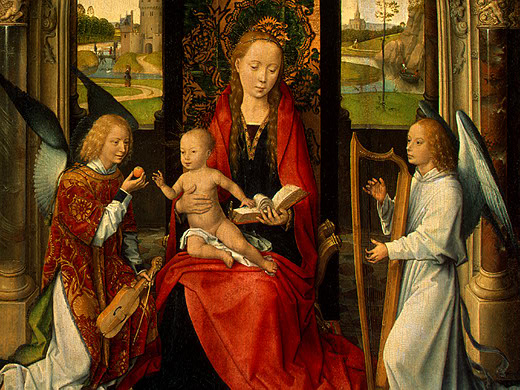
Hans Memling (Memlinc) (c. 1430 – 11 August 1494) was an Early Netherlandish painter, born in Seligenstadt/Germany, who was the last major fifteenth century artist in the Low Countries, the successor to Jan van Eyck and Rogier van der Weyden, whose tradition he continued with little innovation. Born in Seligenstadt, near Frankfurt in the Middle Rhein region,  it is believed that Memling served his apprenticeship at Mainz or Cologne, and later worked in the Netherlands under Rogier van der Weyden (c. 1455-1460).

(Hans Memling source: Artmight)

Iran nuclear deal in calamity

Federica Mogherini

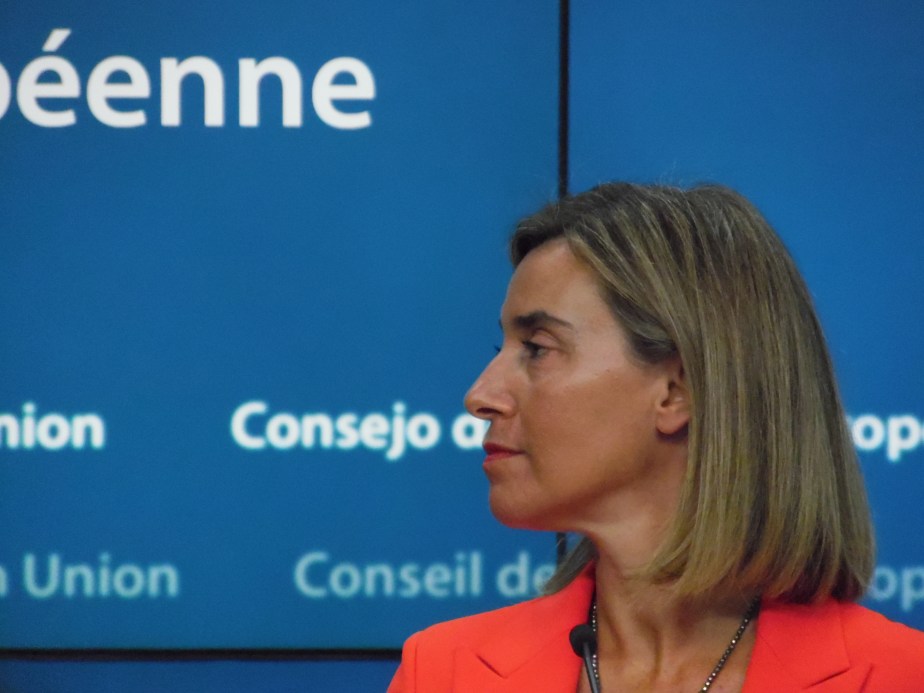
The Joint Commission of the Joint Comprehensive Plan of Action (JCPOA), composed by the E3/EU+3 and Iran, will convene on 10 January in Vienna. The meeting will review the implementation of the agreement and discuss the issues raised in the letter Foreign Minister Zarif addressed on 16 December to the High Representative, Federica Mogherini, as coordinator of the Joint Commission. The Joint Commission will be preceded by a meeting of the sanctions working group, – according to the European External Action Service (EEAS) announcement.

Many experts relate the interest in the upcoming assessment of the Iranian nuclear deal with the recent statements of the upcoming US administration, indicating it will attempt to abandon the  multilateral agreement and reinforce the US nuclear capabilities.

Communicating via Twitter, the president-elect Donald Trump declared his intention to “expand” US nuclear arsenal.

A number of previously classified documents were published on the site of the International Atomic energy agency (IAEA) as a gesture of increasing transparency necessary to convince general public in validity of the agreement. The move came after a wave of criticism of the agreement by the USA Republican congressmen.

The agreement allows Iran to  possess only low-enriched uranium, limited to an amount inferior to 300 kilograms at any moment in time.


Dutch Parliament to decide EU future of Ukraine


dutch-tulipe

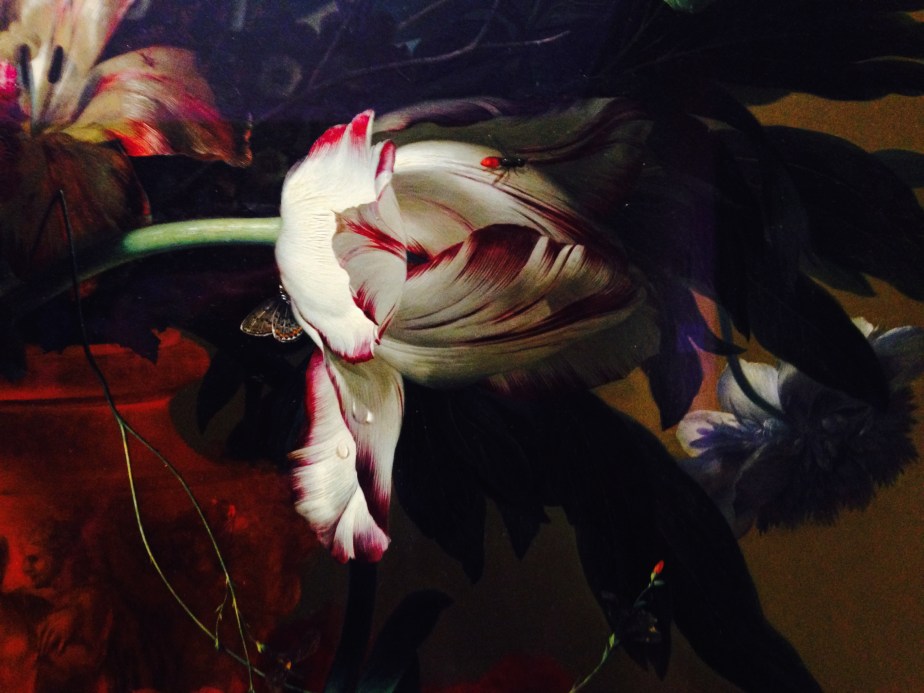
The awaited decision on the fate of the EU-Ukraine Association Agreement is now at the hands of the Dutch Parliament. The European Council stated that they ‘noted carefully’ the   referendum outcome in The Netherlands, however following the existing legal procedures the Agreement has to be endorsed/adopted by all 28 member states according to national relevant procedures. In case one of the states denies the ratification, the entire Agreement dissolves.

The debate and vote in Dutch Parliament will take place before the election on 15th March 2017.

‘The European Council notes that the Decision set out in the Annex is legally binding on the 28 Member States of the European Union, and may be amended or repealed only by common accord of their Heads of State or Government. It will take effect once the Kingdom of the Netherlands has ratified the agreement and the Union has concluded it. Should this not be the case, the Decision will cease to exist’  (Source: European Council Conclusions on Ukraine 15 December 2016, Brussels).

#Mogherini vs Russia: change of tone


sam_4115

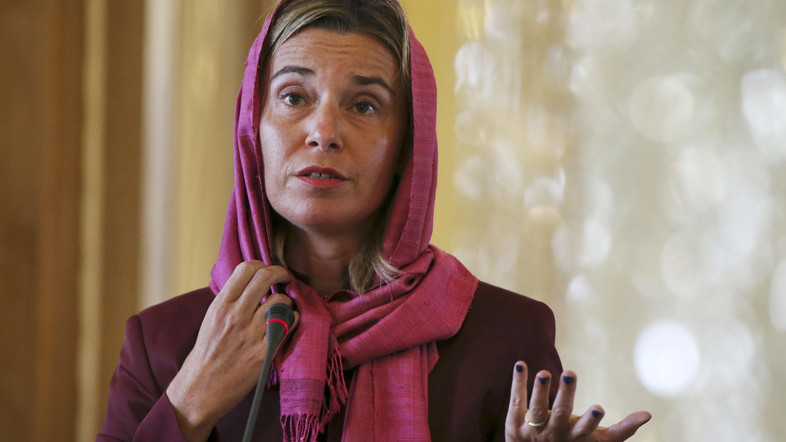
Comment on the arrival and doorstep (in English) by Federica MOGHERINI, High Representative of the Union for Foreign Affairs and Security Policy and Vice-President of the EC.

The wording of the top #EU diplomat has changed in absence of any evidence of so called ‘Russian atrocities’ in #Aleppo. Swifly she shifted from condemnation of fictitious crimes of #Assad troops backed by Russian to an appeal to ‘protect’ civilians.

Clearly once again the hellish machine of the Western propaganda failed to smear Russians for their struggle against #Islamic State attacking Syria. Instead of saying ‘thank you’ to Russians for fighting #IS the West did everything possible during the entire conflict in Syria from the day One to cover the real atrocities of the Islamic fundamentalists. John Kerry was trying again and again to convince Sergey Lavrov to give the Islamists a halt. The Cold War is over, but its rudiments are still in the minds of politicians, fighting for sphere of influence in the Middle East at cost of human lives.

The European Union prefers to see the Middle East and North Africa to be seized by bearded fanatics slaughtering people, than co-operate with Kremlin on fighing Islamic fundamentalism. Europe participated in destruction Iraq, they destroyed Libya, covering #Gaddafi assassination with a figue leave of the UN resolution on no-fly zone; the West degraded Libya to a giant playground of terrorist groups from Al Qaeda to Boko Haram, – now each assembly of villains has there its active branch.

Thanks to Russians the Syrian secular state survived attacks of fundamentalists, backed by Americans and Europeans, the way they did it with #Taliban in #Afghanistan using them as a weapon against the USSR. Russians left when the USSR collapsed, however now the West has a problem in Afhanistan that is unsolvable for generation to come. Radical Islam claimed thousands of lives, and will continue to claim more. The EU and their allies did not learn from their lessons in the past. Unfortunately, the price for their mistakes will be paid by the regular citizens, who will face the need to defend themselves against the real, not ficticious atrocities of the Islamists, their politicians so tenderly cared about. In spite of their efforts during five years of Syrian conflict the ‘moderate opposition’ did not manage to separate from the #jihaddi. Looks suspicious, doesn’t it?


Sakharov Prize to IS slaves


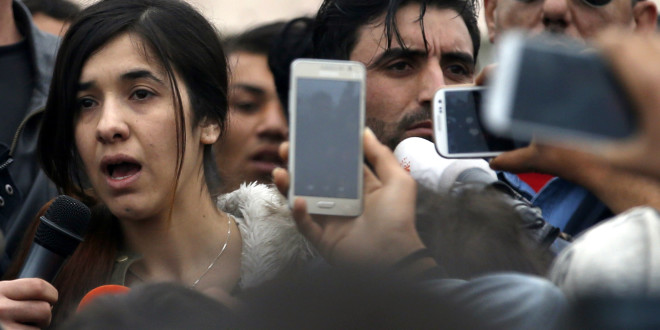
Sakharov Prize for freedom of thought 2016: Nadia MURAD BASEENadia Murad (pictured) and Lamiya Aji Bashar, public advocates for the Yazidi community in Iraq and survivors of sexual enslavement by the so-called Islamic State, will receive the European Parliament’s Sakharov Prize for Freedom of Thought in a ceremony on Tuesday at noon.
‘On #HumanRightsDay, I call on you to #StandUp4HumanRights. If we all do our small part, in every corner of the world, I believe we can end genocide and mass atrocities against women and children. If we have the courage to stand up and fight for those we don’t know – who live thousands of miles away – we can make a difference. The world is one community and we need to act as such”, – says Nadia Murad post on her page in social media.

A joint press conference with Parliament’s President Martin Schulz will take place immediately after the award ceremony at 12.30.

Also shortlisted for the prize were Can Dündar, former editor-in-chief of the Turkish daily Cumhuriyet, and Mustafa Dzhemilev, former chair of Mejlis of the Crimean Tatars People from Tatar Parliament, a former Soviet dissident and a Ukrainian MP. They will both attend the ceremony.

 The Sakharov Prize for Freedom of Thought, named after Soviet scientist and dissident Andrei Sakharov, was established in December 1988 by the European Parliament to honour individuals or organizations who dedicate their lives to the defence of human rights and freedoms, particularly the right to free expression.

#Hollande: bows out

hollande-hand

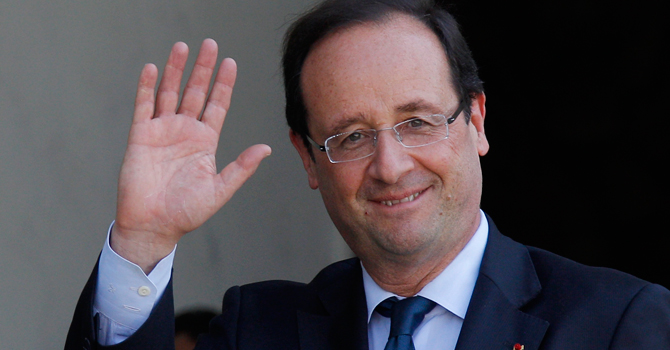
The decision of French President Francois Holland to give up the contest for the second mandate is everything but a good news for the European Union, indicating profound crisis of Socialist ideology unable to deliver prosperity to French citizens.

The so-called European values, especially cult of Socialist’s ‘solidarity’ meaning opening purse of taxpayers of wealthy EU-members to new member-states will inevitably come to an ordeal with a new French presidency, shifting to the right.
The unprecedented move is caused by an exceptionally low popularity of Holland, sometimes reduced to 7% of respondents, supporting his policies. The current state of affairs suggests the shift of the mainstream policy to the right, indicating Francois Fillion, Les Republicains, centre-right and Marine Le Pen, Front National, right* (*deriving from far-right party of her father Jean-Marie Le Pen) as the favorites of the second round of the presidential elecitons in May 2017.
If Marine is openly declaring a referendum of the EU membership as a part of her presidential campaign, the centre-right candidate Filllon does not mince his words about a need of a reform of the EU, although not questioning his country’s membership. He also criticized the position of Hollande accusing him of giving up to Germany’s Angela Merkel, in spite of the diverging interests.
Fillion also calls for a ‘new Schengen’, with real border guard, pointing at EU’s failure to protect its frontiers.
With Socialists abandoning the summit of French politics, the European Union will face a necessity to reform and adjust to new requests of a founding member run by right-wing, less interested to patch differences in name of ‘solidarity’, more flaunting its national identity.
The departure of President Hollande co insides with end of term of another high ranking European Socialist – European Parliament’s president Martin Schulz, serving his second mandate against all the odds and rules of the institution, previously practicing rotating presidency every two and a half years.His decision to refuse the third term was also appreciated by many, especially those who thought that it was unfair to break the rule to get the second term.
Altogether, the ‘winter of Socialism’ is not an unexpected political climate change – the French failed presidency of Holland only confirmed the status quo, concluding the public sentiment, and announcing upcoming change in political trends on the continent.
Caesar non supra grammaticos!

EU-Ukraine: simply in limbo

sam_5578

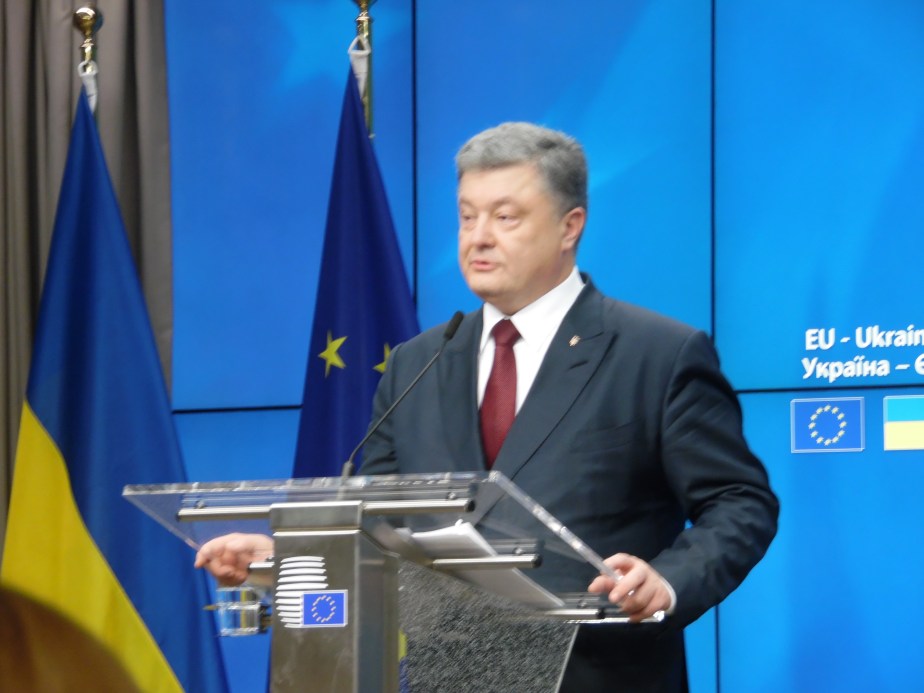
The atmosphere at the EU-Ukraine Summit press-conference was between dull and gloomy, the presidents looked mostly down in their papers, the regular wooden language clichés on democracy and solidarity were distributed generously, probably in attempt to disguise a poor outcome.
President Petro Poroshenko goes back home almost empty handed: one can’t consider 15 million euro for an anti-corruption project and 104 euro for public administration as a big deal for a 43 million strong population of Ukraine (for comparison Georgia received at donor’s conference one billion euro).
However the financial aid for Ukraine is not on the table for the EU in crisis and serious economic problems of Mediterranean member-states criticizing austerity policy.
The visa-free regime would be a absolute maximum the EU can grant to Ukraine for good ‘home-work’ in promotion of reforms and good governance. But it is only a theory.
In spite of promises of the EU’ presidents #Tusk and #Juncker to conclude the issue by the end of the year, it is a clear understanding at the institutional back-stage that granting visa-free for 43 millions Ukrainians will mean a opulent gift to Eurosceptics.
Neither at the moment of Maidan revolution, no today the EU has a plan of an integration of such a big country into the block.
The galloping enlargement policy, neglecting Copenhagen criteria, already bore bitter fruit: the UK voted #Brexit largely in disagreement of a perspective of authoritarian Turkey to join the EU.
The negative outcome of the Dutch referendum on Association agreement with Ukraine  showed the state of mind in one of the key countries of the Union, awaiting the general elections in March. The agreement of visa-free to Ukrainians, notorious for its endemic corruption with the similar to Nigeria index, would push the votes in democratic countries flee the Union, becoming just an assembly of countries based on geographic, but not values orientated principle.
Giving a eulogy to European Parliament’s president Socialist Martin Schulz, President Poroshenko just aggravated a sentiment of a foul game, going on
behind closed doors of European institutions making arrangement with third parties without the EU cititzens’ consent. It is up to the European Parliament to give an approval to visa liberalization until the end of this year,  and certainly  it’s president has influence to exercise.
Taking into consideration Schulz’ decision to leave the EP, the visa-free for Ukrainians might be his last contribution to what he calls ‘the biggest civilization project of the past centuries’. A helping hand to president Poroshenko, and also to Eurosceptics Geet Wilders and Marine Le Pen in coming elections in The Netherlands and France, not least Schulz’ compatriot AfD’s Frauke Petry, whose stakes are also at raise.
Surely it is possible to liberalize the visa regime for Ukrainians until the end of this year, in a certain way it will even facilitate the prediction of the national elections outcome next year. No polls needed. Anyway they didn’t show to be accurate so far.

#Fotyga: propaganda toxic substance

fotyga-ep

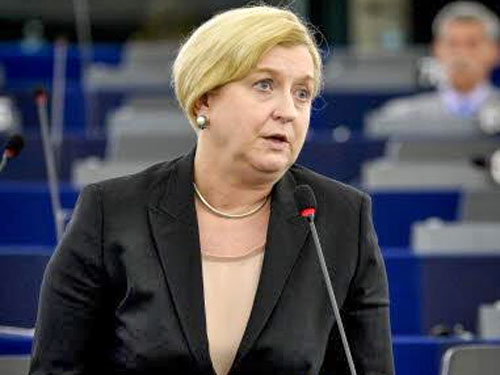
The MEP Anna Fotyga’s report on ”Russian and Islamist propaganda” debated in European Parliament is one of the most surrealistic documents produced by an assembly in modern history. Even from a first glance it looks exotic resembling a hybrid of a Nile crocodile and a red-tailored hawk – a monster from Middle Ages artist Jeroen Bosch paintings of Hell.

Certainly it is reflecting a personal animosity of Ms Fotyga – a former Polish #Kaczyński Foreign affairs minister – towards Kremlin, degrading Russian mass media undertakings to Islamic state information warfare against the West.

One can question a rational behind the choice of the rapporteur who has not been able to abandon Cold War modality in 25 years after the fall of Berlin Wall,
confusing Russia with the USSR, as if still an existing entity along with the Islamic state.

Knowing the slow pace of the EU institutions one can guess that the idea of the report was conceived in a firm believe of the continuation of the US Democrat’s policy of sanctioning Russia. Within a new political situation, when president elect has declared Russia as a ‘partner’, the Fotyga’s report looks not only dramatically outdated, but also phantasmagoria.

An obsessive wish to degrade Russia’s mass-media, namely #RussaTodayTV to propaganda machine of the Islamic state (IS) deprived the report of substance, because neither problems of the communication streams from Russia or from IS to the EU was properly addressed.
One could say that it would have been a regular piece of ‘brining sand to beach’ institutional work, if not unforeseen dangerous by effects.
Today the US election results  ensuring a change in the Western foreign policy is a key factor, making Fotyga’s report outdated, however it is more than about looks.
The presidential elections process in France indicated two major favorites: the Republican Francois Fillion and Front National Marine Le Pen – both declaring Russia as a natural partner of France. The inevitable upcoming change of the foreign policy course of the founding member state of the EU, will have a profound influence on the EU-Russia relations confronting the East European countries with a necessity to abandon chronic Cold War modus vivendi.
The reluctance to change attitude vis-à-vis Russia would create additional divides in relations between EU old and new member states, already existing in the issues of migration.The rejection of Poland to take fair share of migrants from Italy and Greece completed with the rejection of accepting a pragmatic approach towards Kremlin might be too much for the Union to bear: these cracks will start a tectonic shift between Eastern (Vicegrad group) and Western Europe,signifying its end of the status quo EU27+UK earlier than #Brexit happens.
Turning to a really burning issue of finding an anti-dot for the perilous ideology of Islamic state, Fotyga reports does not break through the standard kit of wooden language formula, already proven to be pretty useless in protecting youth from terrorist recruiters. Subsequently it would make sense to convey the preparation of such a report to a representative of a country having the most extensive experience with the IS recruiting victims – Belgium.
Concluding, one can propose two separate reports on effects of communications, offering IS to a Belgium politician and experts, and to a Latvian, where the biggest Russian community in Europe lives, to relay on first hand experience and advice.
However ending shameful practise of Russian non-citizens in the EU, namely in Estonia and Latvia would be at most effective promotion for the European values without any ‘counter-propaganda’ strategies to invent. It is hardly makes sense to invest money in development of virtual projects, describing wonders of Europe to the EU Russians who continue stateless existence long after the collapse of the USSR.
Finally, the simple arithmetic shows the malaise of the European politicians voting the controversial Fotyga’s report converted into a resolution: 304 MEPs for, 179 against, 208 (!) abstentions.
‘EU strategic communication to counteract propaganda against it by third parties’ drafted by MEP Fotyga passed, the toxic spilled, collateral damages to be estimated later.