France voting for the future

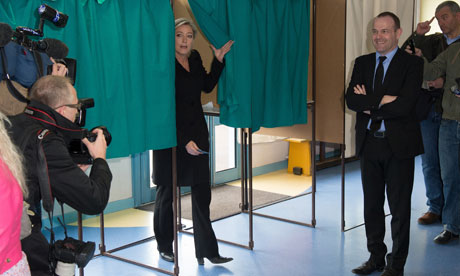
Marine Le Pen votes

France goes to the polls on Sunday for the first round of a dramatically polarized presidential election, crucial to the future of the European Union, and the destiny of the continent.

Nearly 47 million voters will choose between a pro-EU centrist newcomer breaking away from the incumbent Socialist government, a scandal-ridden veteran conservative eager to slash public spending, while accused in indulging himself in public funds spending for private gains, a far-left eurosceptic, exercising a classic repertoire to blame all the misery of the world to the rich, or France’s first woman president, promising a U-turn from globalism to nation-state.

The  latest polls indicated the two major contestants: Emmanuel Macron et Marine Le Pen, with a real battle promised at the second round of elections, while struggling to attract the electorate of the other candidates, fallen out of the race.

The rivary for the crown of the French ‘elected king/queen’ will be for the senior electorate, increasingly numerous in aging France. Remarkably seniors vote more than average,  and subsequently are over-represented among voters. The attraction of the older generation of the voters, who are characterized by specific political choices, will become a real challenge for both Le Pen and Macron. However it would not be easy for the latter, as the senior citizens have an inclination to vote a conservative political programme, and are closer to traditional values.

So far Marine Le Pen showed more understanding for the needs of the senior citizens; on the strong side of Macron  is contact with the youth, and diasporats/ immigration, especially from Muslim countries, who see in him a solid ally.

However any chosen candidate will face the  need to conquer the parliament –  Assemblée National, and the mega-challenge of dealing with French syndicates – powerful trade-unions, who keep under control economic development in the country, and the endeavours of  presidents, irrespective their political convictions.
Tillerson’s visit as a glimpse of hope

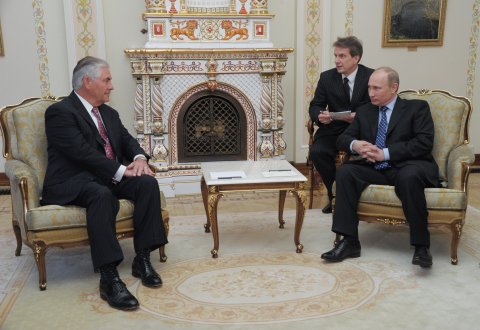
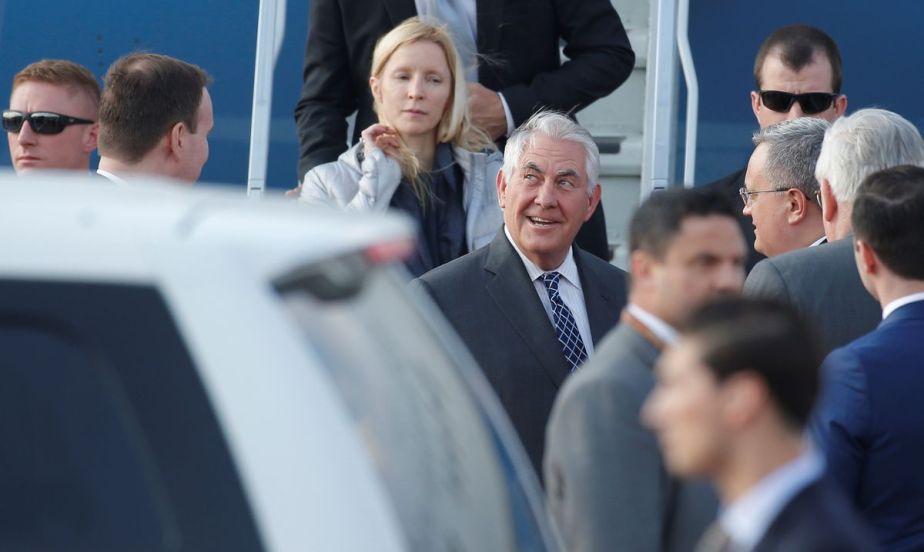
Tillerson Moscow

The reception of State Secretary Rext Tillerson in Kremlin gives hope that the superpower leaders are prepared to assume their responsibilities towards global community, and stabilize the rapidly deteriorated US-Russia relations.

The high expectations of Russians did not come true – the change of the administration did not bring a major change in foreign policy. Whoever is the master of the White House, it is the  US military-industrial complex having the last say.  In this way Trump’s presidency will not become any different. Bowing to the Pentagon, Trump had to retreat into admitting that NATO is ‘not obsolete’. Acceding power, he had to follow the path of his predecessors,  meaning to stay in a rut of the US expansionist foreign policy.  We all have to come to the terms that none of his revolutionary anti-war proposals, captivating the moods of his electorate, can be transformed into reality,  and both Russian and American people have to live with that sinister truth.

In spite of the economic crisis the US launched without blinking a missile offensive on Syria – the firing a shot worth USD 88 mln  demonstrates that there will be no savings on military adventures. The offensive that also left in ashes the Kremlin hope of ‘peaceful coexistence’ of the nuclear superpowers.  Syria and Ukraine as the frontlines set ablaze.

Putin and Tillerson

However the pressure of the international terrorism still might push even those the most reluctant into a coalition with Russians. The rapidly spreading network of jihadists worldwide has no other solution, but a united effort.

Although the agenda of almost two-hour discussion between Putin and Tillerson was not revealed, it is certain that the anti-terrorist coalition proposal had its prominent place.

(Photo: illustration)

Brexit day: farwell to Larry…

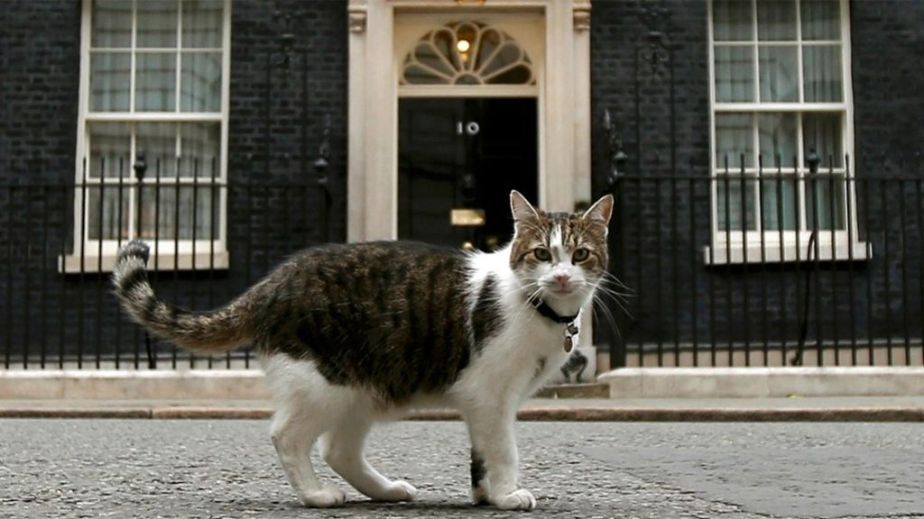
Larry the cat


In Brussels the triggering Article 50 day is a sunny for Sir Tim Barrow, who handed the letter, for the UKIP MEPs, for all those who voted #Brexit, and quite a grim experience for those who laments the departure of the UK, venturing how to remain in the European projet without its avantgarde.

The word whispered in Brussels corridors of power is the one Nigel Farage articulates aloud: would the European project exist in two-years time? And even if it does, how far its mutation goes?.. With Marine Le Pen as a front-runner of the French elections, and Geert Wilders promise to get 300 000 signatures to launch #Nexit referendum initiative for Dutch…

Whatever the way the project goes,  the moral blow of leaving the EU by Brittons is not to be recovered: feeling unwanted by the nation of so many virtues, the European adventure loses its glam and glitter, converting the remainers  into “down-shifters” on the ruins of the great ambitions, resembling the bunch of herders on the antiquities of Ancient Rome.

It looks like Europe once again remainers failed to get together into a powerful entity, so many times desired through its history, falling apart into ‘multi-speed’ congregation, looking different directions, without a rotational axis, replaced by spindles.

Me, I just suddenly realised that the moment Sir Tim handed The Letter, that my Brussels ‘capital of Europe’ habitat has been downgraded to a provincial one, with époque d’oré bygone.

But even worse than losing  the UK financial contribution, it will be a loss of British great sense of humour. It looks like without funny #Larry’s (pictured) tweet participation I have to get used to exist in quite bland space surrounded by the functionaries, devoted keepers of the acquis communautaire with a penchant for grey,  pushing our lives into the Procrustes bed of regulations and directives…

#Anna van Densky (this is a highly personal, apolitical note without any relation to my professional activities as a political commentator:)


To celebrate the EU that humiliates?..

sam_6367With Polish Prime Minister Beata Szydlo rejecting to sign the EU Council conclusions over a bitter argument of the second mandate of the Polish official Donald Tusk, the approaching celebrations of the Treaty of Rome become less of a festivity, and more of a challenge. An obstacle to overcome. Is there anything left to celebrate?..
With the looming Brexit talks one might think it would be better to opt for a compromise accepting Polish concerns, and respecting the idea of the rotation, initially conceived for the Council president seat. It will not be so difficult to select another candidate among some many member-states, eager to engage in European construction, however the EU leadership has not been looking for the easy ways and common sense. From all scenarios is was a dramatic one that prevailed, and so a couple of weeks head of the celebrations of the Treaty of Rome we observe the eruption of one more conflict in what is already largely considered the European Nations Union going through its decay.
Beata Szydlo said all the EU crisis have a reason to be analysed. But some prefer to create new ones to forget about the previous. Indeed with new chronic conflict between the EU and Polish government, the Brexit negotiations shifted to the mis-en-scène. Just a few noticed the UK Prime-Minister Theresa May made a shortcut to the meeting room, avoiding the press. Each new conflict makes the previous one less painful. With Beata Szydlo, challenging the EU establishment as Calvin of our days, all the rest falls out of focus.
If not this argument she would not a have reason to stand tall, and we, as the public to feel ourselves so small, awaiting for the smoke to come out of the chimney to scream ‘Habemos Papa!’
A good reason to reflect upon in coming days before the celebrations of The Treaty of Rome. It the EU that humiliates the one we are ready to celebrate?..

Juncker “melancholic” on the EU future

US-ECONOMY-IMF-WORLDBANK-SPRINGMEETINGS

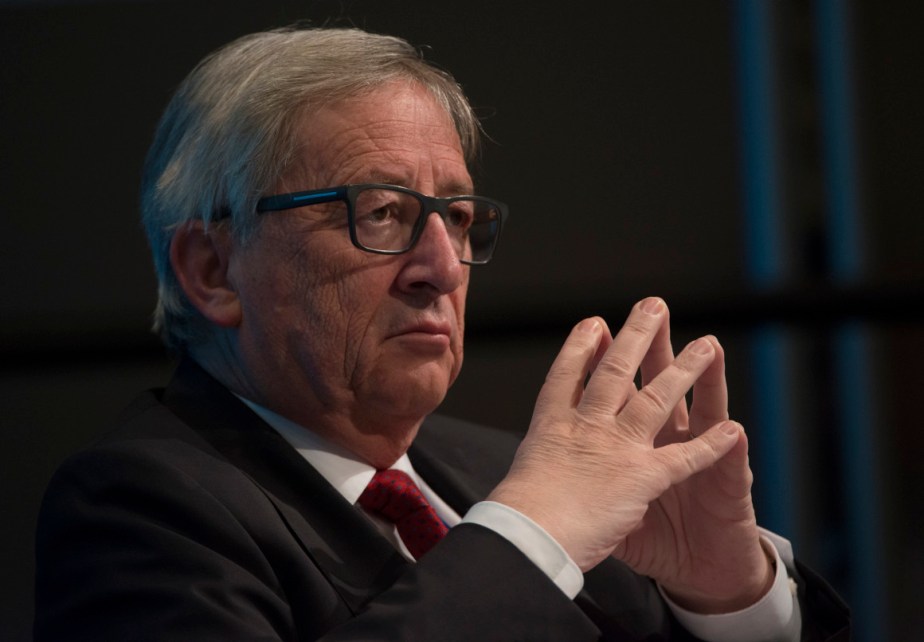
Launching a debate on the future of the European Union, and subsequently the entire continent, Jean-Claude Juncker (pictured) – the president of the European Commission – has offered Five scenarios (5S), however none of them even hinted on a ‘catastrophic’ one – the  case of French or/and Dutch citizens would follow #Brexit way.

The front-runner for the presidency of France, the member of the European Parliament (MEP), the leader of Front National party – Marine Le Pen has integrated #Frexit – the referendum on France’s membership in the EU, – into her political project. So did her Dutch counterpart the leader of Dutch Party for Freedom (PVV) Geert Wilders, who is enjoying high esteem of the electorate, foreseeing strong presence of his party in the Parliament in The Hague after the upcoming 15th of March general elections, opening the way to #Nexit referendum.
It is not that as press we want you to say “bad things” about MEP Le Pen, as you suggest, Mr.Juncker, it is about your readiness to continue to lead the #EU26, or even  #25, if Dutch and French follow #Brexit, preferring freedom to the EU institutional cage, prescribing everything from shape of cucumbers to open door migration policies, flooding streets of European cities with strangers from the violent cultures. The policy of open doors so dear to the institutions you are not going to give up at any cost, disguising it in ‘solidarity’ – the fundamental EU virtue. More migrants, less believers in cultural relativism, nostalgic about the times ante-Schengen with well-protected borders…
However, some things have changed already. Most probably, the European Commission mandarins understood that it would be better for everyone, if they concentrate on ‘important’ issues, leaving the details to the member states – the ‘efficiency’ option nr 4 among the 5S plan? They understood it or, they do  it is because the ‘instinct of life’ dictated them to do so, hoping to survive the period of low tight?..
Too much disappointment has accumulated into a toxic mass: with the south of Europe in lethargic misery under austerity policy, and the industrial north of ‘lenders’ unable to develop as fast as they wished to, obliged to level their pace with all the other EU members in a ‘solidarity’ name. Is Juncker’s nr.3 ‘mulitspeed’ Europe an answer? Hardly so, as the creation of the sub-unions would lead to ‘structured dismissal’ of the initial EU bankrupt project – promising prosperity it lead to poverty too many; promising peace, it set its neighbourhoods in blaze…
Finally the EU scenario nr 5 – ‘Doing Much More Together’, but after #Brexit it sounds even more fiction, that four previous ones all together. How many believes in  the EU ‘togetherness’ one can count in the beginning of 2017?.. How numbered will they be by the end of the year after the elections in the member states? The Netherlands, France, Germany, Italy…
Juncker’s striking ‘melancholy’ look replacing his personal warmhearted and extrovert style did not escape the MEPs, questionning his personal beliefs, but the president has every reason for melancholy – the l’époc d’oré of the European project is bygone, and discussing the EU obsucure future is not a euphoric exercise, especially knowing that the 6th scenario cenzored:  ‘no future’.
(Initailly published in @BrusselsDiplomatic)

Pence visits EU

mike-pence-flags

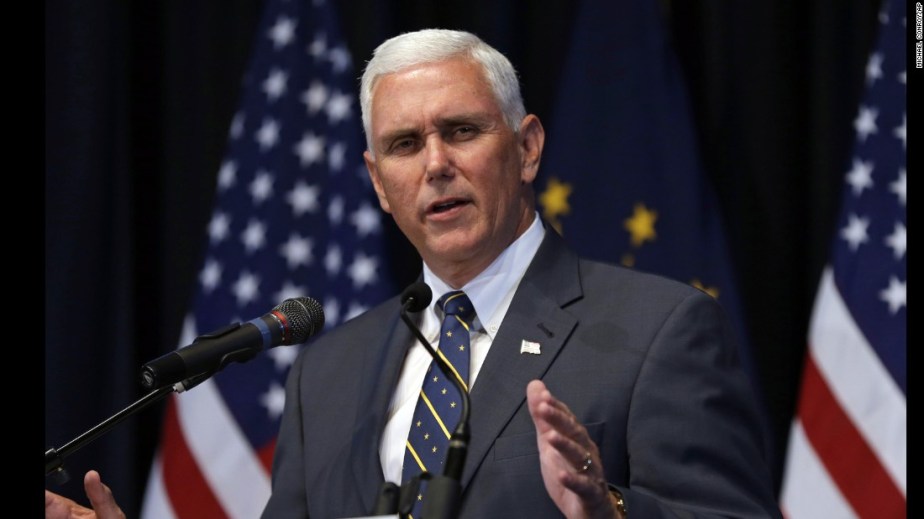
Anna van Densky, OPINION   Taking into consideration the anti-Trump rethoric of president Donald Tusk naming the new US administration an ‘existential threat’ to the  EU one can not expect much from vice-president Mike Pence visit to Brussels.

The myopia of the EU leaders, from the moment of taking sides in the US elections, fiercely defending #Hillary, thus the US Democrats, and later going to ‘crescendo’ about the ‘threat’ President Trump represents for the EU, closed the window of opportunity for the current EU institutions officials to develop fruitful relations with the new US administration, subsequently the leading democracy and economy in the world.
The visit of Mr.Pence will be short, and the absence of press conference, replaced by brief appearances presenting statements clearly indicates there is no much common ground and hope after what the leaders of the EU institutions have done to offend the newly elected President of the United States of America, disrespectful to the democratic choice of American people. One can not co-operate with a ‘existential threat’, can he?..
Hopefully the US administration knows that there many citizens in the EU, who do no approve the anti-Trump position of the EU institutions unelected leaders, considering the President Trump ‘threat’ narrative fictitious, and they will go to ballot boxes soon. In view of the upcoming elections in The Netherlands, France, Germany and Italy, there is very little sense for the new US administration to build on sand with the current EU, rapidly losing grounds with public opinion in Europe, mainly as a result of mass-migration policies imposed on the citizens without their consent.
In case of accession to power French presidential candidate Marine Le Pen promised to organize the EU membership referendum within six month, meaning from next year the political landscape in the EU will go through fundamental change,  very favorable for the relations between the US administration and ensemble of the European nations.
Hopefully in the future Mr.Pence will have an opportunity to meet many European politicians respectful and sympathetic to the new US administration, making his contacts with Europeans as much optimistic and friendly as meeting US compatriots living in Europe 🙂


NL: Wilders enters election race

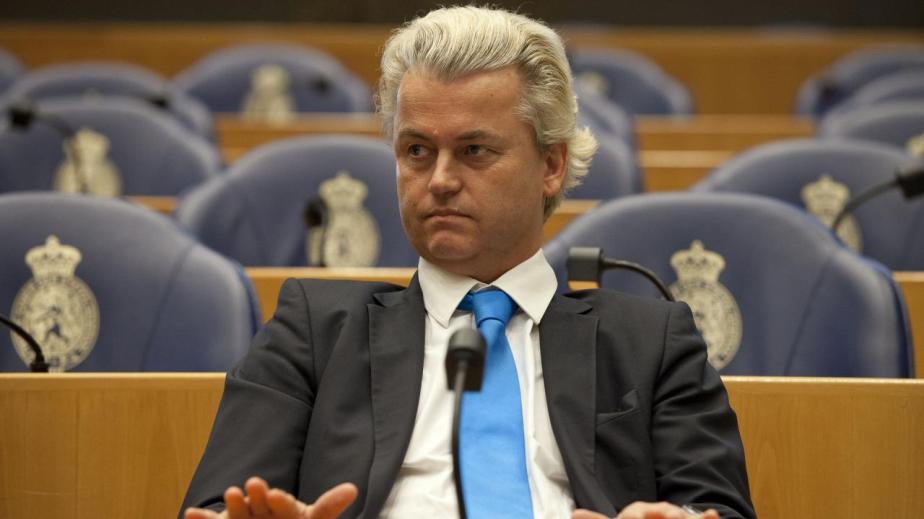
geert-wilder-2de-kamer

Today  Dutch leader of  Party for Freedom (PVV) Geert Wilders launches his election campaign, based on protection of European values, intention to ban Muslim mass migration, and close all the mosques in the Netherlands as entities incompatible with democracy and human rights, especially gender equality. Married to a Hungarian diplomat, Wilders is a consequent defender of women’s rights, and new age multiculturalism, based on shared values, and respect of democracy, and of rule of law. Wilders, being a half-Indonisian, never opposed an immigration as such, neither immigrants, who were settling in the Netherlands in different epochs, creating unique hubs of Amsterdam and Rotterdam, but specifically against Muslim mass migration leading to deterioration of security, steep rise of violent crime, and other well-known problems.

As the result of mass migration, the degradation of public life in one of the most liberal modern societies,  reflected also on political culture – the  extra security measures will be implied  to protect Wilders, obliged  to live under special protection programme after the 2004 assassination of  Dutch filmmaker Theo van Gogh, who criticised an ongoing abuse of women in Islam, and was killed in day light by a religious fanatic.

“I want us in government,” Wilders said. “The Netherland for the Netherlanders!” is the motto for his elections campaign running towards the 15th of March – the day citizens will be going to ballot-boxes. Lately polls showed Wilders popularity stabilized on the same level as incumbent Prime Minister iberal Mark Rutte (liberal). Dutch system of creating coalition in the Parliament, will not allow Wilders to become next Prime Minister, even if he wins the popular vote. However in case of victory, his influence on political and public life will grow substantially to impact the other political forces.

Swiss facilitate naturalisation

afriacn-children

The facilitation of the naturalisation of the third generation of migrants by 60.4% ov Swiss votes is far from being a revolution, and even less an open door policy .This reform aims at simplifying the administrative procedures for the descendants of immigrants wishing to obtain a Swiss passport. The doubt about obtaining a majority of the cantons disappeared as the results fell. Several cantons which had previously refused a similar project – Grisons, Zurich, Valais, Lucerne, Nidwalden – approved the initiative. In French-speaking Switzerland, the proposal was endorsed by all cantons.

The beneficiaries of the reform – 25,000 young foreigners of the third generation who could benefit from facilitated naturalization, the vast majority were born in a family whose grandparents immigrated to Switzerland to work. Nearly 80% of them come from an EU or EFTA countries: 58% are Italian, 7.7% Spanish and 4.8% Portuguese. To this group will be added an annual average of 2300 children who will be eligible for naturalization.

However, nothing is guaranteed, each canton has to decide upon granting  of the citizenship in an individual procedure. The request can be rejected without revelations of the reasons behind the decision.

Swiss vote to stay in ‘haven’

Wallis: Schlitteln im Kanton Wallis

No good news for the EU this Sunday from the Switzerland. Swiss voters overwhelmingly rejected plans to abandon the corporate tax system, leaving startled government in a stalemate confronted with the Europeans critics,  attempting to  convince rich neighbours to stop the regime of record low tax rates for thousands of multinational companies enjoying tax ‘haven’.

Switzerland agreed with the Organisation for Economic co-operation and development (OECD)  in 2014 to change by 2019 the special status, which has been a beacon of attraction for around 24,000 multinationals searching to maximize profits through minimising tax payments.  That provision will now remain in place past the original deadline.

Most Swiss voters recognized the country needs reform to avoid being blacklisted as a low-tax pariah. But new measures proposed to help companies offset the loss of their special status had created deep divisions.

Just over 59% of referendum participants – who have the last word under the Swiss system of direct democracy – opposed the plans, which the country’s political and business elite succumbed under international pressure.

The ‘no’ voters took into consideration the opportunity to employ 150,000 staff and contribute half of federal corporate taxes due to this special tax status.

Treaty of Rome: balance sheet


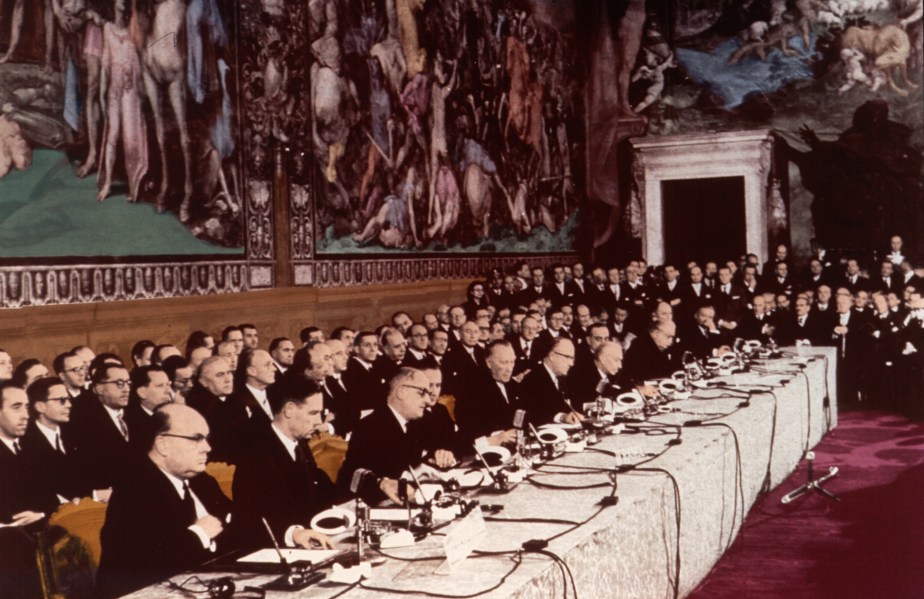
Signature of the Treaty of RomeNext month the EU leaders will gather in Italian capital , 26/01/2017,  to celebrate the 60th anniversary of the Treaty of Rome. However, in view of the UK imminent departure, and multiple crises the EU project suffers, one does  not expect any opulent festivities. The situation is aggravated by the banking crisis in Italy, considering the departure from the eurozone, and exhausted by invasion of illegal migrants from Africa.

According to the EU officials a new document expected to be signed by 27 EU leaders, committing them to a new concept for the bloc, without the UK. There is also some concern, or even fear of the UK government to trigger the #Brexit  article 50 the very same day to overshadow the symbolism of the date.

Initially anticipated as a huge celebration, the event will be reduced to a sober political meeting without red carpets and fireworks. No flamboyant declarations or promises will be made, awaiting the results of French elections in May with Marine Le Pen of Front National leading in polls, promising her electorate a referendum on the EU membership of France in six month after the ascendance to power.