Ukraine: accession and hurdles

Brussels 25.06.2024 The EU today held the first Intergovernmental Conference at ministerial level to open accession negotiations with Ukraine.

This follows the decision by the European Council on 14-15 December 2023 to open accession negotiations with Ukraine, and the approval by the Council of the Negotiating Framework for the negotiations with Ukraine on 21 June, in accordance with the revised enlargement methodology.

The EU delegation was led by Hadja Lahbib, Minister of Foreign and European Affairs of Belgium, accompanied by Commissioner for Neighbourhood and Enlargement Olivér Várhelyi. The delegation of Ukraine was led by Deputy Prime Minister Olha Stefanishyna.

The EU reiterated its resolute condemnation of Russia’s war of aggression against Ukraine and stated its readiness to continue to support Ukraine and its people against Russia’s ongoing war for as long as it takes and as intensely as needed.

The EU underlined that Ukraine is already a close partner of the EU.  Its Association Agreement with the EU, which also includes the far-reaching Deep and Comprehensive Free Trade Area, entered into force in 2017 and has been provisionally applied since 2014. It is the basis for extensive cooperation between the EU and Ukraine in a broad range of areas. The EU and Ukraine are closely aligned on foreign and security policy, and the EU encourages Ukraine to continue its positive trend towards full alignment with the EU Common Foreign and Security Policy.

The EU has now invited the Commission to continue to assess the state of preparedness of Ukraine for opening negotiations in specific areas and identify the issues that will most likely come up in the negotiations, starting with the fundamentals’ cluster which, in accordance with the Negotiating Framework, will be opened first.

As a future member state, Ukraine will be expected to continue to adhere to the values listed in Article 2 of the Treaty on European Union, namely the respect for human dignity, freedom, democracy, equality, the rule of law and respect for human rights, including the rights of persons belonging to minorities.

At present there are a number of questions regarding the human rights, namely the
The Treaty on European Union sets out the conditions (Article 49) and principles (Article 6(1)) to which any country wishing to become a member of the European Union (EU) must conform.

Certain criteria must be met for accession. These criteria known as the Copenhagen criteria were established by the Copenhagen European Council in 1993 and strengthened by the Madrid European Council in 1995.

They are:

    • stability of institutions guaranteeing democracy, the rule of law, human rights and respect for and protection of minorities;
    • a functioning market economy and the ability to cope with competitive pressure and market forces within the EU;
    • the ability to take on the obligations of membership, including the capacity to effectively implement the rules, standards and policies that make up the body of EU law (the ‘ acquis ’), and adherence to the aims of political, economic and monetary union.

Ukraine faces unprecedented challenges affecting gender equality and the enjoyment of equal rights and opportunites by women, particularly those facing multiple forms of discrimination. Structural discrimination of women persists in both the public and private spheres to varying extents in the country. The roots can be found in patriarchal attitudes and stereotypes, as well as deeply entrenched systemic gaps.
Clearly at present the human rights in Ukraine are not respected as declared by the EU Charter of Fundamental Rights which guarantees the EU citizens’ rights. The Charter lays down the fundamental rights that are binding upon EU institutions and bodies. It also applies to national governments when they are implementing EU law.

Ukraine faces unprecedented challenges affecting gender equality and the enjoyment of equal rights and opportunites by women, particularly those facing multiple forms of discrimination. Structural discrimination of women persists in both the public and private spheres to varying extents in the country. The roots can be found in patriarchal attitudes and stereotypes, as well as deeply entrenched systemic gaps.
MEP Donato husband found strangled in Palermo

Brussels 26.05.2024 The Italian MEP Francesca Donato husband – architect Angelo Onorato,54, – found dead yesterday afternoon in his car with a plastic band around his neck, blood stains were found on his shirt while there were no traces of a struggle inside the car.

According to the first body inspection carried out by the medical examiner, the entrepreneur died of suffocation. The autopsy, ordered by the deputy prosecutor Ennio Petrigni who coordinates the investigation, will provide more details.

There are currently two main hypotheses: murder or suicide. However, the latter is not taken into consideration by his family and friends.
“They killed my husband Angelo” Donato told her close ones when they called her to find out what happened.
Further in the evening when she was taken to the Flying Squad offices to be interviewed, she repeated “”Angelo didn’t kill himself”, insisting that the was not a suicidal type of character.

Even the people who were with Onorato at the start of summer party organized by the tennis club on Friday May 24 evening speak of a serene and happy person. However the hypothesis of suicide is not discarded by the operatives, for whom all hypotheses remain open during this stage of investigation. There is also an unconfirmed information about his debts.

Based on initial reports, the body was found by MEP Donato and her daughter Carolina. They worried about the cell phone silence, and found the car by GPS. They would have been the first to arrive at the site of the gruesome discovery, as reported by a witness who said he saw two women screaming next to the car with the door open, and that he recognized the MEP who is well known politician in Palermo.

Friends and family profoundly shattered by this sudden death of they speak of a happy family man with a lot of friends in various clubs. Francesca Donato married the entrepreneur in 1999 and on April 24th they celebrated their silver wedding.

The MEP, originally from Ancona, Marche, had moved to Palermo after her marriage, where she gave birth to Salvatore, 25, and Carolina, 21. Both spouses were involved in politics with the Democrazia Cristiana (DC) party, Donato joined after abandoning Lega which brought her to Brussels MEPs ranks.
Two years ago her husband also attempted a political career by running on the DC list in Palermo for the regional elections, obtaining 846 votes but not enough to be elected. Despite this, the entrepreneur was very active alongside his wife and participated in party meetings. Does this activity have anything to do with his death? Assumptions that some in the party put forward, thinking about the European elections on 8 and 9 June.

Ursula: MEP Garraud complaint to OLAF

Strasbourg 14.03.2024 Complaints against the President of the European Commission Ursula von der Leyen accumulate. This time the Member of the European Parliament joint the voices of discontent, pointing to her neglect of rules the EU institution is so eager to impose on others. Ursula von der Leyen start of the competition for the second mandate was marked with a “faux pas” or a misstep, evident to many. The EU top executive started to use the resources and possibilities at hand of her powerful position to engage in self-promotion for the second mandate.

Complain Garraud Ursula

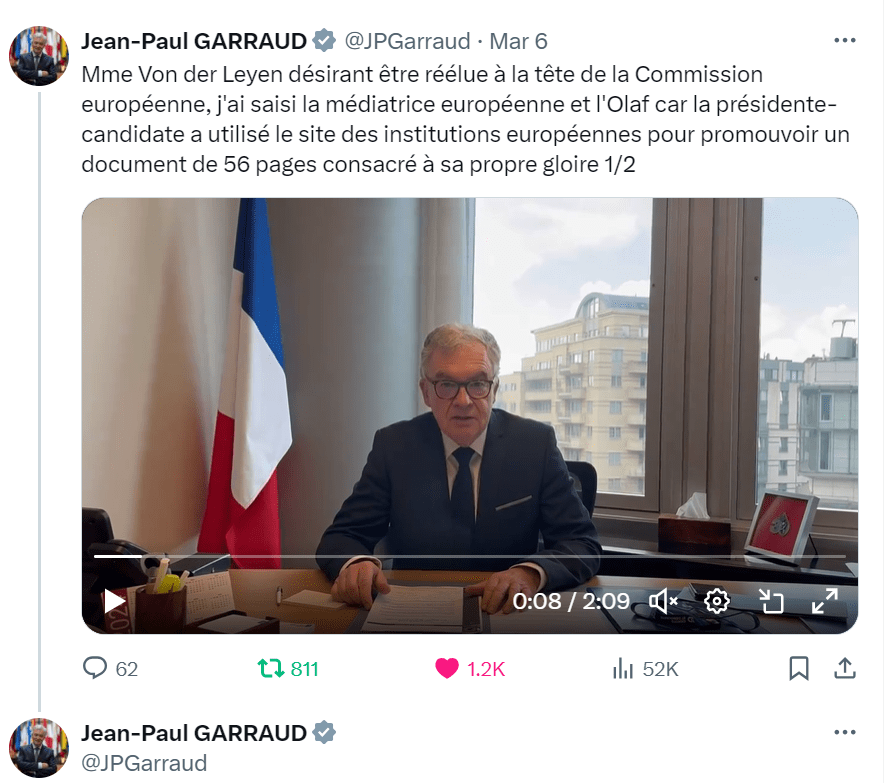
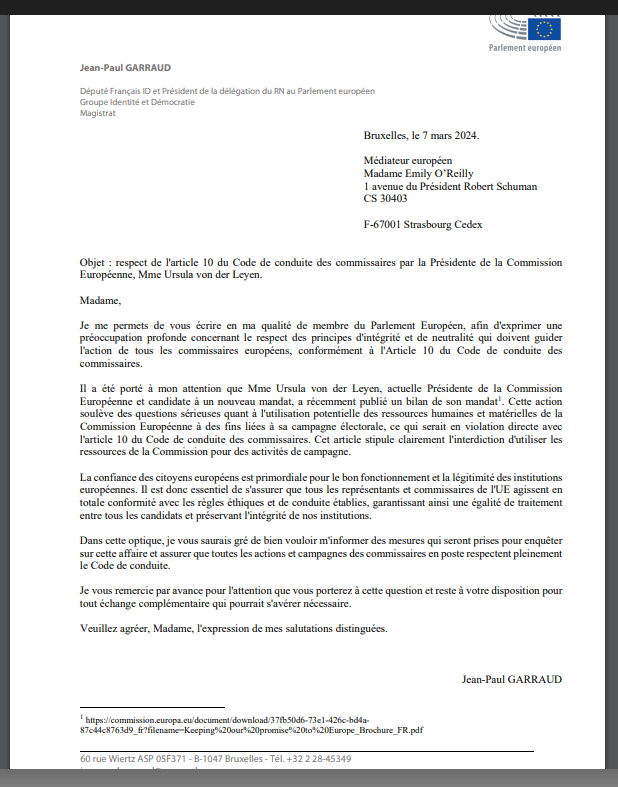
However the reality showed the opposite, and on March 7 a complaint from a French Member of the European Parliament (MEP) Jean-Paul Garraud was filed to European Ombudsman Emily O’Reilly on non-compliance with the “article 10 of the Code of Conduct for Commissioners by the President of the Commission European, Mrs. Ursula von der Leyen”. As a MEP, but also as a professional jurist, Garraud expressed his “deep concern regarding respect for the principles of integrity and neutrality” which had to guide the action of all European commissioners, in accordance with Article 10 of the Code of Conduct of
commissioners, but clearly in case of Ursula von der Leyen was ignored. (The original of the letter above).

Apparently Ursula von der Leyen, incumbent President of the Commission European and candidate for a new mandate put forward by the European People’s party, recently published a glorious assessment of her mandate on the site of the European Commission.
This self-gratification raises serious questions about misusing of human and material resources of the European Commission for “purposes linked to its electoral campaign”, which would be in direct violation of Article 10 of the Code of Conduct for Commissioners. “This article clearly states the prohibition of using Commission resources for campaign activities”, Garraud underlines. Wishing to be re-elected at the head of the European Commission the president-candidate used the site of the European institutions to promote a 56-page document “devoted to her own glory” as MEP ironically remarked.

Garraud Tweet

“The trust of European citizens is essential for the proper functioning and legitimacy of institutions
European. It is therefore essential to ensure that all EU representatives and commissioners act in accordance full compliance with established ethical and conduct rules, thus guaranteeing equal treatment
between all candidates and preserving the integrity of our institutions” the MEP continues.
The text of the complaint to OLAF (depicted) resumes in a request of the investigation of the matter to ensure that Ursula von der Leyen campaign for re-election is conducted within the frame of existing rules in full respect of the Code of Conduct.

Jean-Paul Garraud is a French politician who has raised to prominence in his status as an accomplished jurist. After a long and illustrious professional career within the French justice system, this native of Toulouse turned to political life. He earned his stripes in the UMP as a French deputy where he was distinguished for his work in the National Assembly as rapporteur of several significant bills.

Nowadays Commission President Ursula von der Leyen is being sued in the Belgian courts over controversial private text messages exchanged with Albert Bourla, CEO of pharmaceutical giant Pfizer. The President of the Commission stands accused of having acted subjectively, through private wheeling and dealing, without a mandate from the EU Member States. The Commission attempted to defend the boss while saying that the messages were deleted because they were deemed to be of a ‘short-lived and ephemeral nature’ and devoid of ‘important information relating to policies, activities and decisions of the Commission’. This attitude has disappointed many, demonstrating an absence of any inclination for co-operation.

In spite of the evident public concern the Commission explanations expose the serious lack of transparency surrounding these private negotiations, which led to a purchase of Pfizer products for an
amount of €35bn. The negotiations conducted via texts attracted also keen attention of the New York Times newspaper, which resulted in a lawsuit.

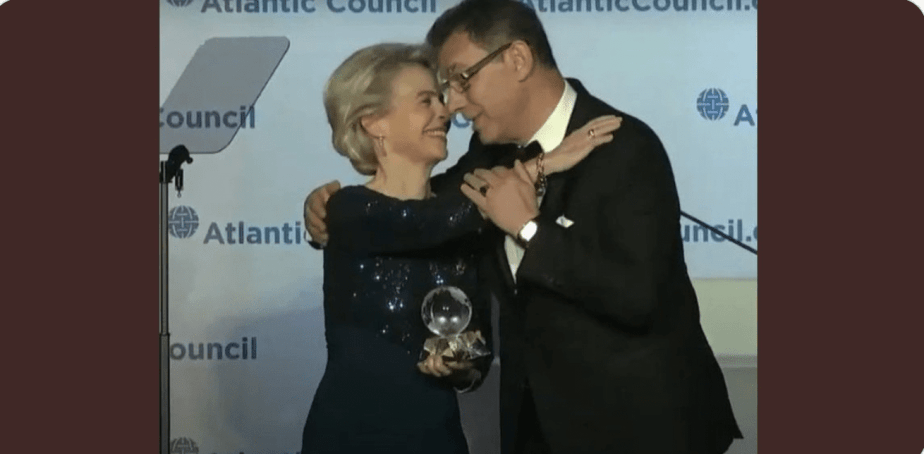
The request from the New York Times, the first media outlet to reveal the SMS affair in April 2021, was filed on January 25, 2023 and has been visible since February 13 on the public register of the Court of Justice of the European Communities . (Pictured with Albert Bourla)

Screenshot (89)

One more similar  lawsuit was filed by a Belgian activist who started legal action against Ursula von der Leyen for causing financial damage to the Belgian state by negotiating the joint procurement of COVID-19 vaccines by text messages, local media reported.

Frederic Baldan, a lobbyist officially accredited to EU institutions, sued von der Leyen for causing financial damage to the Belgian state when she secured a €35 billion ($38.4 billion) deal with pharma company Pfizer to buy 1.8 billion doses of COVID-19 vaccines for EU countries, Belgian weekly Le Vif reported.

Saint-Petersburg festivities cancelled

Brussels 07.10.2022 Traditional Christmas and New Year celebrations in Saint Petersburg will be cancelled and all previously allocated funds for the festivities will be channelled to finance volunteers and mobilised troops of the “special military operation” (SMO) in Ukraine, the municipal authorities said in a statement on Friday, October 7. (Image: Saint-Petersburg, Russia)

“During a session with Governor Alexander Beglov with members of the municipal administration it was decided to cancel previously scheduled events dedicated to New Year festivities,” the statement reads.

“All available funds will be channelled into a special Saint Petersburg stipulating extra outfit and gear for volunteers and mobilised citizens,” Beglov said.

It was previously noted that all mobilised people in Saint Petersburg would be paid a bonus of 100,000 rubles (over $1,600), while volunteers would get 300,000 rubles in bonuses (over $4,800).

Mayor of the Russian city of Nizhny Novgorod Yury Shalabayev also stated that previously scheduled New Year and Christmas celebrations, including music concerts and festivities, would be cancelled and all previously allocated financial means would be channelled to aid the families of mobilised Russian nationals.

“I have received numerous questions via social websites from our citizens about planned mass festivities, concerts and fireworks to mark the New Year. My response is no, although we planned them initially,” he said.

“However, we will still carry on with New Year celebrations for children and festive events in schools and kindergartens,” the mayor of Nizhny Novgorod added.

On September 21, President Vladimir Putin declared a partial mobilisation in Russia. Defense Minister Sergey Shoigu clarified that 300,000 reservists would be called up, who would undergo training before being sent to the special military operation zone.

The partial mobilization will not involve students and conscripts. Only citizens who have prior combat experience and military specializations needed for the operation will be mobilized. The defense chief emphasized that the call-up is being carried out first and foremost to support the territories liberated during the special military operation.

Borrell regrets Ukraine NATO membership promise

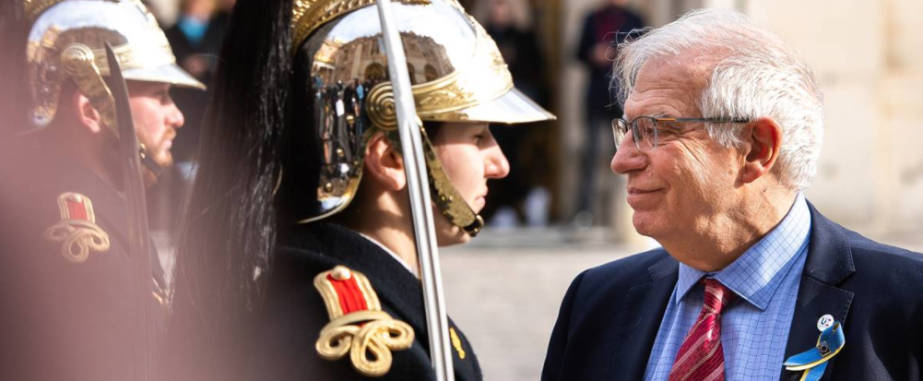
Strasbourg 13.03.2022 Anna van Densky The West made a mistake by promising Ukraine NATO membership, the EU top diplomat Josep Borrell said in an interview with LCI TV channel, France.

“There are moments in which we could have reacted better. For example, we proposed things that we could not guarantee, in particular Ukraine’s accession to NATO. This was never realised. I think it was a mistake to make promises that we could not fulfil,” the diplomat explained.

The head of European diplomacy also admitted that the West had made mistakes when building relations with Russia. “Thus, we lost the opportunity to bring Russia closer to the West in order to deter it,” Borrell continued.

Interviewed in Versailles just before the opening of the Summit of the 27, Josep Borrell said he believed that “Russia is bombarding indiscriminately”. According to him, “Mariupol is undoubtedly a war crime, but it’s not just that hospital. Russia is incapable of taking the cities, the Ukrainian resistance is very strong, so it is doing as it did in Syria or Chechnya, it bombs. The Russian army is an artillery army. So it bombs, it bombs, indiscriminately, sometimes a hospital, sometimes a pavement of a house.”

On February 24 President Vladimir Putin announced a special Russian military operation in response to a request for help from the heads of the Donbass self-proclaimed Republics. The head of state has pointed out that Moscow had no plans of occupying Ukrainian territories, but aims to “de-militarise and de-nazify” the neighbour. Later he added that one of Moscow’s key demands was that Ukraine remain neutral, and rejected plans to join NATO. As Director of the Russian Foreign Intelligence Service Sergey Naryshkin had earlier confirmed, it is critical for Russia because it is the “minimum territorial barrier” the country needs to preserve the existing security system.

EU elections 2019 final day

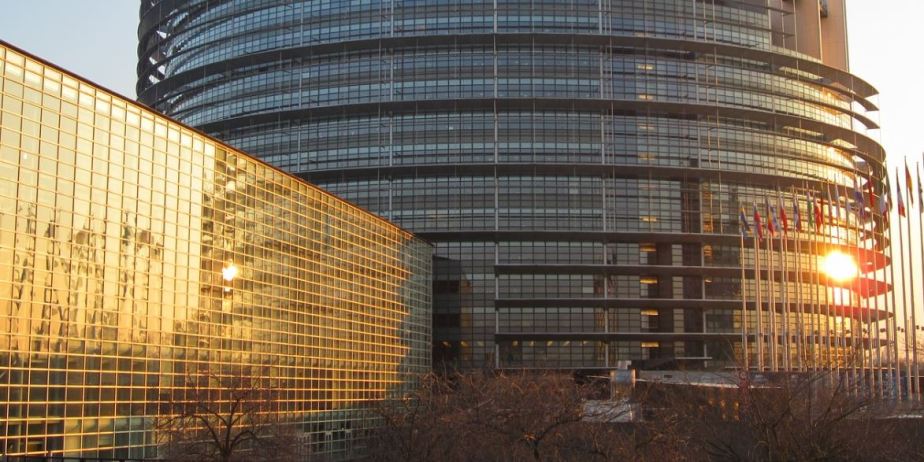
Anna van Densky On Sunday May 26 Europeans vote in an election expected to further erode traditional Eurocentric parties and boost the nationalist movements across the continent, resulting in a drastically different and difficult composition of the European Parliament – once a champion of compromise, – effecting the entire range of politics. (Image above: European Parliament, Strasbourg).

Polls opened at 7 A.M. (0400 GMT) in the east of Europe and will finally close at 11 P.M. (2100 GMT) in Italy. Seven states have already voted, with 21 joining in on Sunday in what is the world’s biggest democratic exercise after India.

Many feel it is odd, that three years after the referendum, Britons are back to the European Parliament, and there are certain fears, that the entire EU political agenda will be “hijacked” by Brexit.

However it is universally understood, that after Brexit the EU project will never be the same. Departure of the oldest European parliamentary democracy feels like an amputation.

EU in transit. Tempora mutantur – times are changed, we also are changed with them.

DSCN8074[1]
European Parliament, PHS building, Brussels


Asylum Convention from Colonial era

Anna van Densky OPINION European suggestion to arrange illegal migrant ‘disembarkation platforms‘ outside the EU is a stillbirth, rejected by all Maghreb countries, insisting that the creation of migrant camps in not a solution for existing problems of Africa ravaged by conflict and poverty, but a translation of an existing difficulties into another form of challenge – ever-growing refugee agglomerations. Meanwhile European leaders insist on delivery upon ‘obligations‘ given by their ancestors towards asylum-seekers, however they prefer to ignore the fact that the entire international legislation on refugees dates from Colonial era – Geneva Conventions on Asylum 1951.

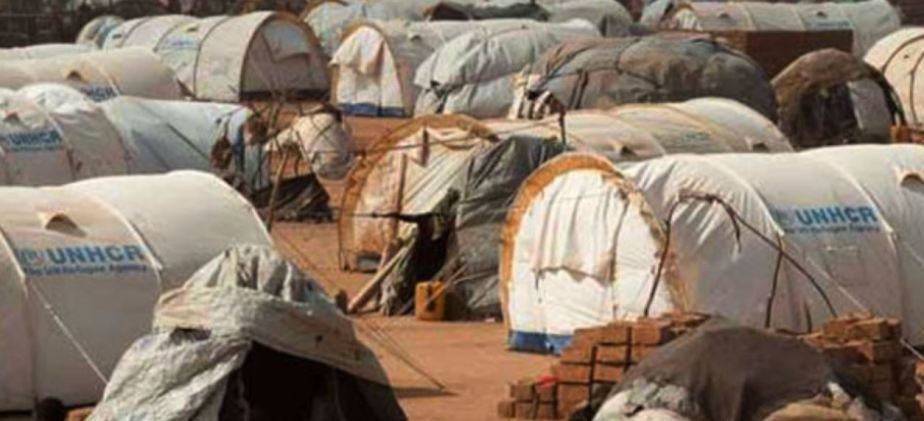
Looking at Kenya, one can imagine a scale of a problem of mass migration of population in modern Africa – huge numbers of people spending day after day,  year after year “camping” in tents. #Dadaab is an example of the failure even of the UN CHR to resolve problems of suffering from a conflict population through construction of permanent camps – the site hosting 300 000 Somalia refugees became an ever-growing hub attracting new arrivals, but failing to ensure return policies.

Refugee Convention 1951 is a genuine Colonial era document in the times when Africa had no single independent state, and the population of the entire continent was a half of European. Endorsing  Asylum Convention back in 1951 no one could imagine the entire populations of Africans would be moved to Europe, using the document created after the WWII for the devastated European continent. It was amended only once with a Protocol, declaring Convention ‘universal‘, but nobody outlined how the developed part of the world would host all asylum-seekers of the planet.

Refugee Convention 1951 remains a key legal document that forms the basis of international action. Ratified​ by 145 State parties, it defines the term ‘refugee’ and outlines the rights of the displaced, as well as the legal obligations of States to protect them.

The core principle is non-refoulement, which asserts that a refugee should not be returned to a country where they face serious threats to their life or freedom. This is now considered a rule of customary international law.

However with the spread of radical Islamic terrorism, and subsequently the threat to ‘life and freedom’ menacing the entire populations of African countries, opens a broad gate to migrant flows, claiming right to shelter in Europe.

Today African populations are the fastest growing, representing a huge challenge for the young states themselves, where deprivation is massive – half of the Africans live in poverty, without access to basic human needs, such as nutrition, clean water, shelter.

However the intense work of different aid, development, and charities, infant mortality is declining, leading to demographic explosion. With current trends – on average five children per woman – Africa will become the most populated continent, home to six billion people by the end of the century. The EU concept of hosting ‘all in need‘ is a total illusion, even with reforming the EU Dublin regulation, and relocation migrants all over Europe – the simple arithmetics shows that 500 million European have no capacity to deliver in accordance to obligations of their ancestors: African population has been growing from 221 million in 1950 to one billion in 2009.

Nowadays realties indicate to the only possible direction to resolve problems of Africa – in Africa, not outside. In cooperation with African governments, but not in waging wars against them, as it happened in Libya, where the Western “lesson of democracy” caused an ongoing tragedy, destabilising life of the continent.

#Dadaab, Kenya

Dadaab arial

France voting for the future

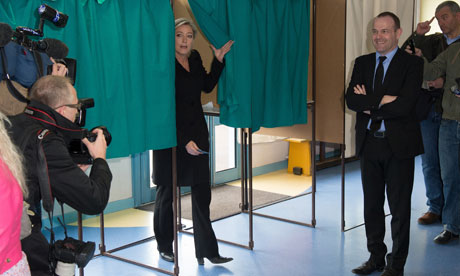
Marine Le Pen votes

France goes to the polls on Sunday for the first round of a dramatically polarized presidential election, crucial to the future of the European Union, and the destiny of the continent.

Nearly 47 million voters will choose between a pro-EU centrist newcomer breaking away from the incumbent Socialist government, a scandal-ridden veteran conservative eager to slash public spending, while accused in indulging himself in public funds spending for private gains, a far-left eurosceptic, exercising a classic repertoire to blame all the misery of the world to the rich, or France’s first woman president, promising a U-turn from globalism to nation-state.

The  latest polls indicated the two major contestants: Emmanuel Macron et Marine Le Pen, with a real battle promised at the second round of elections, while struggling to attract the electorate of the other candidates, fallen out of the race.

The rivary for the crown of the French ‘elected king/queen’ will be for the senior electorate, increasingly numerous in aging France. Remarkably seniors vote more than average,  and subsequently are over-represented among voters. The attraction of the older generation of the voters, who are characterized by specific political choices, will become a real challenge for both Le Pen and Macron. However it would not be easy for the latter, as the senior citizens have an inclination to vote a conservative political programme, and are closer to traditional values.

So far Marine Le Pen showed more understanding for the needs of the senior citizens; on the strong side of Macron  is contact with the youth, and diasporats/ immigration, especially from Muslim countries, who see in him a solid ally.

However any chosen candidate will face the  need to conquer the parliament –  Assemblée National, and the mega-challenge of dealing with French syndicates – powerful trade-unions, who keep under control economic development in the country, and the endeavours of  presidents, irrespective their political convictions.

Lavrov for union against IS

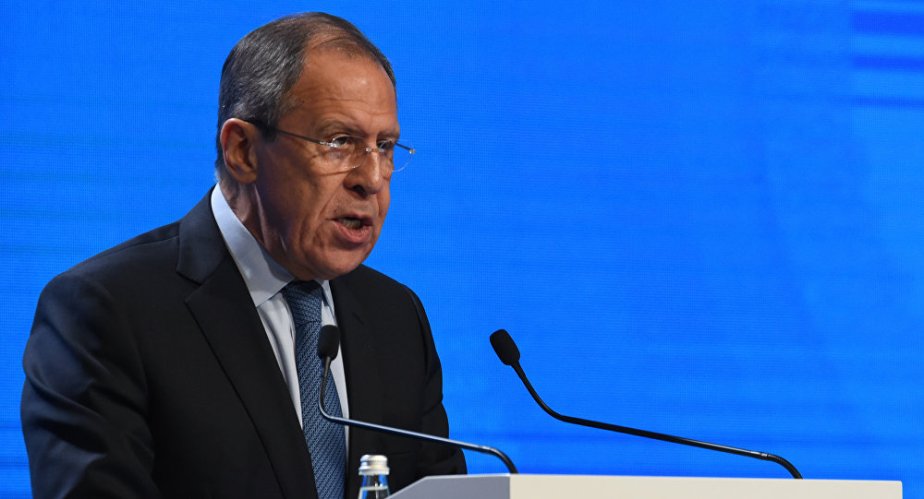
lavrov-blue-bd

“Unprecedented terrorist aggression has been seen in Europe, the United States, and the countries that are our allies under the Collective Security Treaty Organisation in Asia – all this presents a serious threat to international security”, said Russian Foreign minister Sergey Lavrov addressing MunichSecurity conference.


Russian minister expressed concern over the overall degradation of the situation in the Middle East and North Africa after ‘Arab Spring’, and migrant crisis in Europe, pointing at  the threat of terrorism to expand in Middle East, North Africa.

Lavrov claimed a  “certain success” in the fight against ISIS, al-Nusra Front, and the other terroristic groups, however he underlined that the international community has failed so far to create a “truly efficient anti-terrorist front”, blaming  “inability” to put aside nonentity matters, and curb geopolitical ambitions.

Lavrov called for a “true union” of the leading nations against international terrorism,  and also to prevent the collapse of Iraq, Libya, Yemen and Afghanistan, infiltrated by ISIS, using the lack of unified strategy to their advantage.

Kosovo: bleeding wounds

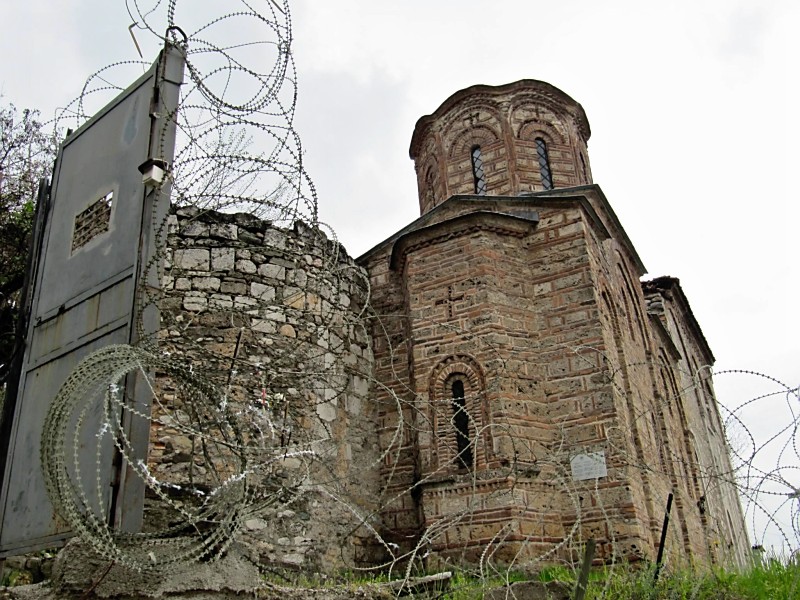
kosovo-church

“Many victims of the 1998-1999 war in Kosovo*,  in particular displaced persons, families of missing persons and victims of wartime sexual violence, are still trying to re-build their  lives, find out the truth about their loved ones and access justice.”

“The on-going political deliberations have not focused sufficiently on the needs of victims, leaving them with the feeling of abandonment and hopelessness. A paradigm shift is necessary in order to put the victims at the centre of the political dialogue, and prioritise their human rights,” – said today the Council of Europe  Commissioner for Human Rights, Nils Muižnieks, at the end of his four-day mission to Kosovo.

The Commissioner is concerned that more than 15 years after the conflict around 16 500 persons belonging to all communities remain internally displaced in Kosovo, while some 20 000 displaced persons from Kosovo to Serbia have not yet managed to return home despite their wish. About 470 displaced persons are accommodated in 29 collective centres throughout Kosovo, including the collective centre “Samacki dom”, in northern Mitrovica, that the Commissioner visited.