French hypocrites versus Yellow Vests

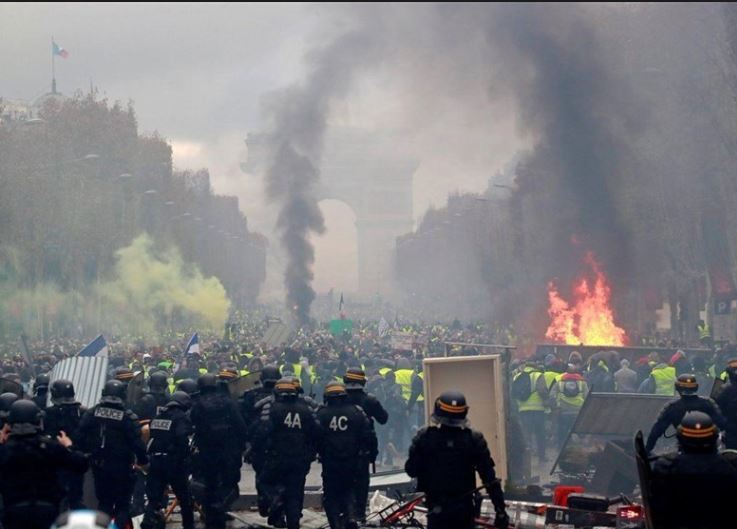
In prime time indignant Prime minister Edouard Philippe ensures audiences that hundreds of thousands of people in the streets would be not allowed to overthrow the French institutions. He called for new tough laws against the Yellow Vests protesters.

But why French  are so DOUBLE passionately supporting protest movements elsewhere, immediately blaming the leaders in oppression of their citizens? Why cheering at violence of Maidan revolution in Kiev, overthrowing the legitimate, but unpopular President Viktor Yanukovych? He was elected in the procedures, which were acknowledged across the world as democratic.  In Ukraine in the capital the uprising was performed by minority groups, who were actively supported by French government in their fight to overthrow the legitimate head of the state, and the government.  Subsequently the coup d’état in Ukraine was ‘legitimate‘ because it brought to power the pro-Western candidate.

It would be interesting to hear the comment of the oust President Yanoukovich on intention of French government to crush the protests of the Yellow Vests. Does he think the Ukraine history would have taken a different cause, if he had not listen the French hypocrites, applying double standards to themselves, and the rest of the world?..

Quod licet Iovinon licet bovi”,  Romans said, enshrining double standard for the God Jupiter, and his bull. But in XXI century this arrogance of playing Jupiter in guided palace will certainly not pass, serving as a seance of an aversion therapy vis-à-vis French leadership.

Macron-Philippe might scorn the grievances of people, and wrestle down the discontent of Yellow Vest, but they will certainly lose respect of European, despising pretensions hypocrites, claiming leadership: false democrats, false republicans, false human beings.


Congo: EU sanctions failed again

The expulsion of the EU Ambassador Bart Ouvry from the Democratic Republic of Congo is a serious blow to the image of already weakened by Brexit block. In multi-polar world Congo will be not short of friends and those, willing to co-operate with one of the richest African nations. The EU is losing again its positions, due to its outdated foreign policy, inclined to give unsolicited advise and tutorials on democracy and human rights. The price to pay is high – in face of one diplomat, Congolese government turns its back on 28 European states for at least a decay to come.

The EU insistence on prolongation of sanctions on Presidential candidate, Interior minister Emmanuel Ramazani Shadary,  who is the incumbent President’s chosen successor, shows a very poor analysis and judgement of the situation in Congo, especially in view of a broader trend of political longevity of African leaders. It is highly likely that Kabila‘s protégé will win the bid, and it is certain, that he will not forgive and forget the position of Brussels diplomacy.

“Africa’s future is also our future,” said the European Commission president Jean-Claude Juncker said recently at high level Africa-EU Forum in Vienna. However, if the course of the EU foreign policy remains unchanged,  and rigid, soon Europe will be excluded from African future without reverse, and Africa’  future will be shared with Chinese, Indians, and Arabs.

So far the EU politics of sanctions failed wherever it was applied conducted at costs of growth and jobs, leading to impoverishment of Europeans, whose despair erupted in Yellow Vests protests in France. But who will criticize French Minister of interior for an excessive use of force against the protectors?..  Who will apply sanctions against the Interior Minister?..  Quod licet iovi non licet bovi… (What is allowed to Jupiter is not allowed to a bull – Latin proverb).

Congo’s most important export partners are: China (24% of total exports) followed by South Africa (22%) and the European Union (4%). Main imports are: foodstuffs, fuel, textiles and machinery, and leading partners: Angola (15%), France (13%) and Singapore (10%).

EU Xmas without soul

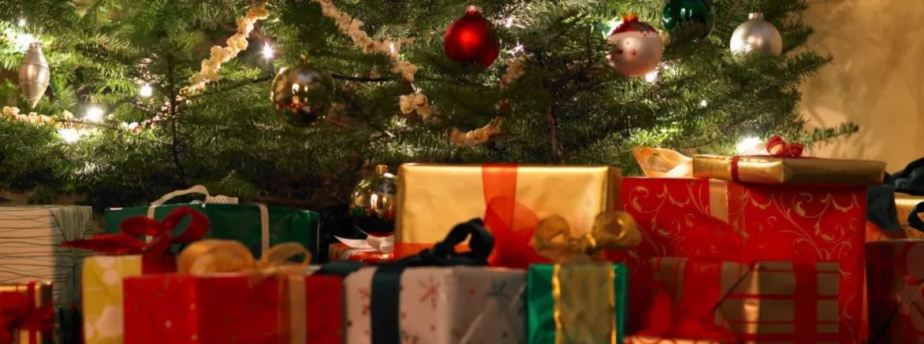
At present only for a split of Europeans Christmas is about a church going, but for the overwhelming majority, it is a family reunion, and a holiday time: sumptuous dinner, and presents with ribbons under decorated tree. The EU leaders have not much different from the citizens views on the ancient celebration of Jesus Nativity.

On Christmas Eve only one EU leader openly associated himself with the festivity – the president of the European Council Polish Donald Tusk, who even posted a video of him singing a carol on the occasion.

The European Parliament president Antonio Tajani mentioned the Nativity of Jesus celebrations in the context of Christmas shopping, while the president of the Commission JeanClaude Juncker did not mention it in his Twitter micro blog at all.

The attitude shows further detachment of the EU project from the original dream of Robert Schuman to create a “community of peoples deeply rooted in Christian basic values’.  The European project “can not and must not remain an economic and technical enterprise; it needs a soul, the conscience of its historical affinities and of its responsibilities In the present and in the future, and a political will at the service of the same human ideal’ he wrote.

Following Schuman‘s footsteps the president of the European Commission Jacques Delors  also openly practiced his Catholic faith, disregarding the EU secular nature. warning that the project has to develop a ‘soul of Europe‘ to inspire the citizens, because with material dimension only it runs high risk of collapse. The “game will be up” he said if the EU will not develop “spirituality and meaning”.

Next devote Catholics in position of leadership were Belge  Herman van Rompuy, the president of the EU Council,  who reportedly is a Jesuit regularly visiting to monasteries, and the speaker of the European Parliament Polish Jerzy Buzek, who also did no hide his devotion.

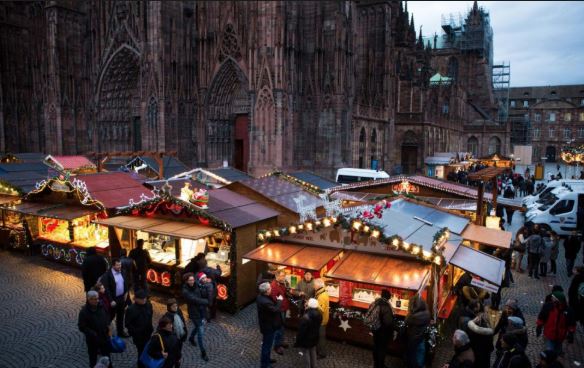
However the overwhelming number of the EU citizens identify themselves as Christians (76.2% Pew Research 2010), and most probably the majority of the European Parliament politicians too,  at least they made such an impression, when they welcomed the Argentinian Pope Francis (2014) in the European Parliament, Strasbourg. Although the visit raised brows of many critics questioning if the EU as a secular project should give a floor to a clergyman, especially after Lisbon Treaty, underlining the secular nature of the EU project.

The ongoing ambivalence is also reflected in the culture of political parties, because the leading political force in Europe is the Christian Democrats-Peoples Party. And it was Chancellor Angela Merkel, a daughter of pastor, who said:  “we don’t have too much Islam, we have too little Christianity”, responding to the citizens complaints. Curiously both  European most powerful leaders are daughters of clergymen: Merkel and May. British Prime minister confirmed during a radio emission that Christian faith ‘is part” of her. “It is part of who I am and therefore how I approach things’ Theresa May added. However she always preferred to keep her faith as a part of private life, strictly separated from politics.

While the EU leaders adapt their communications to secular trend, and modern vision of religion as a matter of private life, the Christians remain the most persecuted community in the world. The report issued the beginning of this year claimed 250 million of Christians are facing threats. According to the latest Watch List researchers estimate 1 in 12 Christians live where their faith is “illegal, forbidden, or punished.” 2018 World Watch List,  reported the previous year 3,066 Christians were killed, 1,252 abducted, 1,020 raped or sexually harassed, and 793 churches were attacked.

North Korea, Afghanistan, Pakistan, Eritrea, Iran, Libya, Somalia, Sudan, – a few to mention in a list of 50 countries across the world where Christians face threats, or are under extinction.

However, on Xmas Eve the EU strictly secular leaders prefer to keep silence, point to good shopping, or at maximum post a video of their own performance of a Christmas carol song, while the millions of people suffering the most outrages violation of their freedom of religion. Their unwillingness to pay attention to the problems of persecuted Christians looks like the worst of Jacques Delors nightmare – Europe without soul.
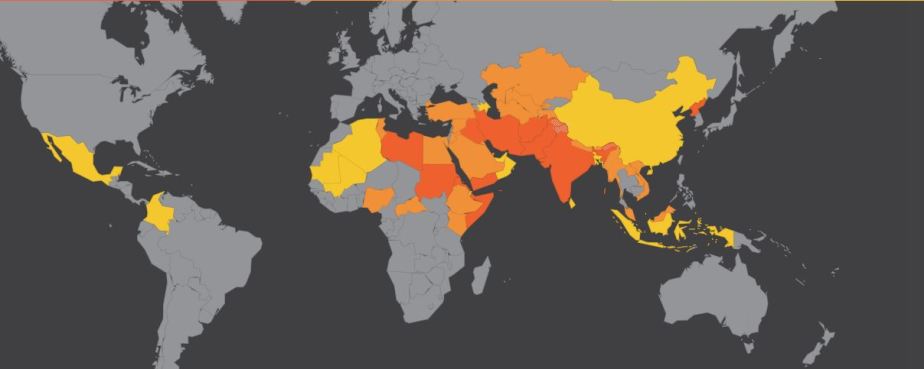
Christian map


#Imlil: Terrorist act in Morocco

Anna van Densky OPINION Club of Moroccan advocates called for a vigil (22.12.2018) for two decapitated Scandinavian tourists, expressing their profound sorrow and indignation about the abominable crime.

Undoubtedly, many Moroccans are shocked by the hideous act of the “soldiers of Caliphate“, serving Al-Baghdadi, but is the condemnation of the radical Islam sufficient to continue “business as usual” in Morocco, meaning uninterrupted flow of tourists from Europe? Fascinated by the exotic beauty, and the opulent historic heritage of the north African country , the European travelers bring 10% of PIP, with record 11,35 million of visitors in 2017, which means the hospitality industry constitutes a considerable wealth for the country, and some remote communities as the one in #Imlil, next to the highest peak of the Atlas mountains – Toubkal (4.167 m), – are entirely dependent on hikers like late Maren and Louisa. Will the tourists continue to follow the track, where two young women were tortured, raped and decapitated, to enjoy the belle vue?..

One can hardly blame the Moroccan authorities an immobility in fighting terrorism. Since 2015 Moroccan government launched an ongoing special operation ‘Hadar‘ (Vigilance), covering the major cities and touristic sites, in the frame of this operation the street patrols were reinforced with two military next to each policeman. The Central investigation office (General Directorate of Territorial Surveillance) reported 902 arrests, and 57 dismantled terrorists groups. But still in spite of all these efforts the barbaric act of beheading of Scandinavian tourists happened, and it would be too simplistic to blame the local community without placing the situation into the context of the dangerous transformations in Maghreb.

Since assassination of  Colonel Gaddafi (20/10/2011) and destruction of the Libyan statethere is hardly a terrorist group that is not represented in wast ‘no man land‘ of once a wealthy and stable country, protecting it borders, and fighting terrorism.  Subsequently the fragmented territory of  Libya represents a stronghold for export of radical Islam in the entire region. Between 2011 and 2014 a total of 1,105 acts of terrorism were recorded in the countries of Maghreb, and statistics shows that the phenomenon of radical Islam is at rise: in 2014 the number of terrorist incidents was almost 47 times greater than of recorded in 2011, and nine in 10 registered in Libya.

Libya as failed state creates an ideal grounds for exporting radical Islam to adjacent countries, and unless the international community, and namely the European Union, invest considerable efforts to unite the fragmented entities, and bring back stability, the warriors of Caliphate will make the maximum use of chaos.

23.12.2018 AMENDED:

Hundreds of mourners attended a vigil in Moroccan capital Rabat for a vigil next to Embassies of Denmark and Norway; flowers and candles were also laid in Marrakesh, and in the southern village of Imlil, near where the bodies of two young women were found.

Investigation released an opinion of experts from Norway, indicating they are no reasons to suspect the video of beheading is false. The post-mortem examinations will take place in retrospective countries.

#Strasbourg: EU commemorates slain reporters

The EU institutions and the International Press Association (API/IPA) paid tribute to two reporters, victims of the #Strasbourg terrorist attack.

The journalists in the press centre of the European Commission paid tribute to both reporters – Antonio Megalizzi  (29) and Bartosz Orent-Niedzielski  (35)– slain in jihad attack by a minute of silence.

The reporter Antonio Megalizzi (29) from Trento, Italy  was in Strasbourg to cover the European Parliament plenary session for radio network Europhonica.

His friend Barto Pedro Orent-Niedzielski (35) from Katowice, Poland, nicknamed #Bartek lived in Strasbourg, he was engaged in cultural life of the city, and also in promotion of the LGBT rights.


EU avoids speculations on II Brexit referendum

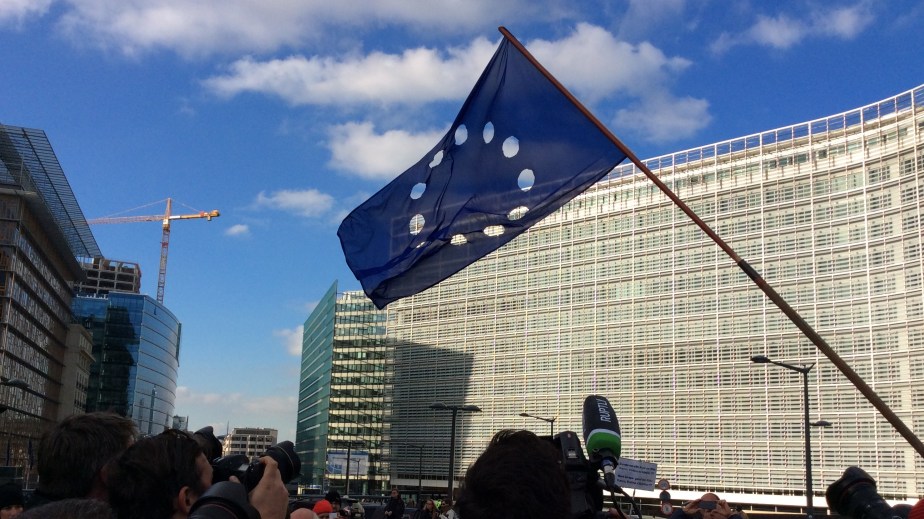
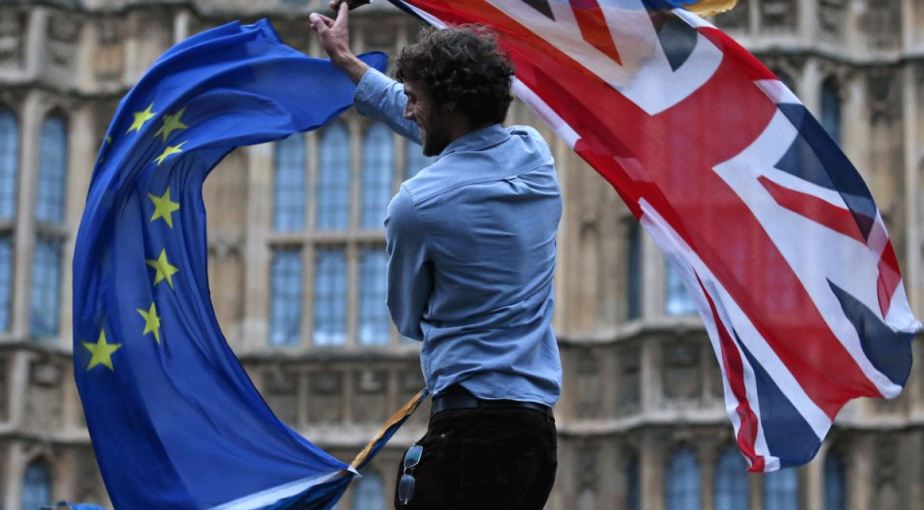
The carefully worded statement on possibility of the second Brexit referendum in UK reflects the cautions attitude of the EU institutions to possible repeated plebiscite, attributing to the first one a status of a ‘dressed rehearsal’.

First and utmost, the EU27 does not wish to make an impression of a player, influencing the cause of events, and especially its impact on the future of Britons, to avoid being blamed for interference in home affairs of a sovereign state. Although the grounds for retaining the UK in the EU are in place, ensured by the European Court of Justice (Luxembroug)  the further maneuvering are far too risky to be undertaken publicly.

Dabbing the UK  claims as “nebulous“, European Commission president Jean-Claude Juncker has already slipped, receiving an explosion of fury from both of camps: the Brexiteers and the Remainers.

The tough talk with Prime Minister Theresa May made headlines, but did not bright any sympathy to Brussels, blamed to exaggerate the demands over the notorious Irish-border guarantee – ‘backstop‘. For many British legislators the requests of an indefinite ‘backstop‘ will create the major controversy, risking to pull the Brexit deal down while voting in the House of Commons.

The rigid position of the EU27, and reluctance to introduce any amendments in the Brexit deal ahead of the ratification, can be interpreted as a wish of its failure, with a hope of a the collapse of May‘s government, subsequently leading to the II referendum. and cancellation of Brexit. However those who promote the scenario forget about the high risks to receive the second rejection, damaging beyond repair the image of the bloc already in a profound crisis. The EU is caught between a rock and a hard place…

Yellow Vests: downfall of ‘Jupiter’

Anna van Densky OPINION The fumes of riots of Yellow Vests don’t distort the clarity of the picture – the working France could not bear any more the policy of successive governments pressing them as lemon to fund their ambitious European and international agenda. The plans of the President Macron to go global came in clash with local: the gasoline tax became the last straw that broke the back of many, especially “working poor“.

Following their ‘Jupiter’, or like French say it, ‘the elected King‘, French people had to continue to actively participate in footing the EU cohesion of Eastern Europe, flows of migrants and refugees,  who have right to live in dignity, the aid to the other continents for their development, climate change, and many other noble causes in the world, sacrificing their own needs. “Americans First!” gave them some eyeopening ideas. Are French really responsible for all the grief in the world?..Don’t they deserve to benefit from the advantages of technological revolution?..

Doubtfully the EU aggressive foreign policy added a huge portion of combustible: the Enlargement shifting borders to the East came to its logical end in a Donbass conflict.  The following war of sanctions with Russia had negative effects on French economy, although not direct, but long lasting,  when the exports being replaced without reverse by the other countries like Turkey, Morocco, or Argentina. In spite of the shrinking agricultural exports, and related difficulties the President declared the increase of the 2019 defense budget by €1.7 billion – up five percent from the present year, the move made under pressure of the Pentagon hawks to meet NATO target military spending.

Detached from working France in his gilded office of the impératrice Josephine palace – Elysée in his rigid role of an ‘elected KingEmmanuel Macron looks archaic, like a relic of another epoch, next to the leaders of the other democracies in Europe, framed in their actions by national parliaments. The modernization of the Fifth Republic, shifting powers from President to Parliament could restore the coherence of French society, while conservation of the archaic forms of governance will  continue to provoke the archaic forms of answers – insurrections.

However the uprising of the Yellow Vests is just the first act. The real tectonic shift in politics will take place in upcoming elections to European parliament: the downfall of ‘Jupiter’.

Pedro Sanchez Gibraltar ‘Chandelier Bid’

Anna van Densky  OPINION  It would be utmost naive to believe Spanish Socialist Prime Minister Pedro Sanchez is eager to enter history books as a man, who derailed Article 50  deal, and destroyed the the EU27 collective effort to avoid ‘hard Brexit’ over such a ‘eternal‘ issue as Gibraltar ceded to  British crown in 1713. Even more so, the derailing of Brexit deal would be senseless facing the solid support of the leadership of territory unequivocally given to British government both by the Chief Minister and opposition.

However Spanish veto threats hanging as Damocles sword over the final draft deal to be presented for endorsement on the EU Brexit Summit just in a day is an ideal opportunity for Sanchez to raise his own stakes politically in Europe and gain a considerable capital at home, boosting his own popularity.  Virtuoso of public relations, formed in Brussels institutions, Sanchez mastered modern communication strategies and has no intention to miss an opportunity Brexit offers.

In profound need of electoral support,  Sanchez, whose ascension to power happened though elaborate parliamentary chess combination, but not the citizen’s vote, finds himself in a need of political capital,  and voters sympathies, he has been chronically missing. The struggle for Gibraltar status is a ideal subject to raise media and public attention in Spain to gain so much needed  for the Socialists popularity.

The other paramount issue is the Spain‘s shattered image within the EU over the Catalan  referendum oppression – the last minute compromise Sanchez will offer to the bloc will be undoubtedly  presented as an ultimate sacrifice on the alter of collective European good to be exchanged in the future on ‘carte blanche‘ in some sensitive issues and benefits  for Spain to obtain from Brussels.

Pedro Sanchez will definitely not bloc the EU27 Brexit deal, and destroy the fruit of Michel Barnier elaborate arrangement to be delivered at the historic EU Summit, however there is a price for Spanish generosity the Brussels will discover later when leaders gather for the final say. Meanwhile the Article 50 game of nerves will go on, reminiscent of classic ‘Chandelier Bid‘, in order to create the appearance of greater demand or to extend bidding momentum for a piece on offer – #Gibraltar, whose inhabitants have already  twice in referendums supported status quo.

This Millenium Gibraltar sovereignty referendum was held on 7 November 2002 within the British overseas territory on a proposal by London to share  the sovereignty of the territory between Spain and the United Kingdom. The result was a rejection of the proposal by a landslide majority, with only just over one per cent of the electorate in favour.

Russia barred Navalny visit to ECHR

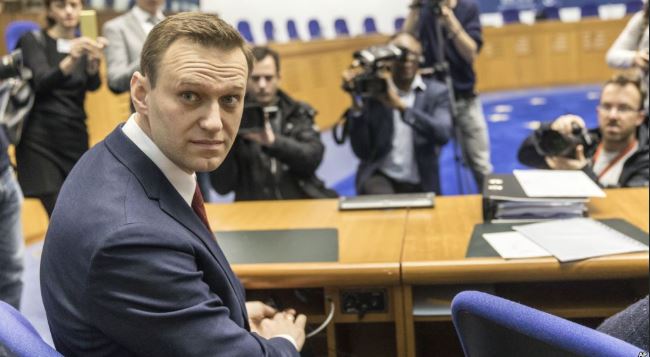
Russian opposition leader Alexei Navalny, says border guards prevented him from flying out of a Moscow airport to Strasbourg for a hearing at the European court of human rights in Strasbourg.

Border guards are saying that leaving is forbidden for me. There is some kind of letter that says I am prohibited from leaving, but there is no explanation why,” Navalny tweeted. The politician  learnt about the ban to leave Russia while  boarding a flight to Frankfurt and and from there further to Strasbourg, where the European Court on Human Rights is expected to rule on whether his detentions this year were politically motivated. The ban of to leave Russia of the appellate will not lead to any change in  ECHR scheduled hearing.

EU wrestles May into II referendum

The EU top negotiator Michel Barnier has put the cards on the table offering British Prime Minister Theresa May to postpone Brexit for one year. However one month would be suffice to launch the second referendum procedure in alliance with the Remaines in the House of Commons, including pro-EU Tory MPs in May’s own camp.

The frankness of Barnier brought certain relieve explaining the outstanding difficulty of the talks – the EU does everything possible to keep the UK ‘in’, making problem of every issue. #PeoplesVote is the ultimate goal of the Brexit talks, which follows the EU logic. If you vote ‘wrong’ you have to vote again until you aline with Brussels interests. Will May accept the EU27 ULTIMATUM tonight? She has 30 minutes of dinner speech to clarify her intentions. Afterwards the world will know if Brexit referendum was just a dressed rehearsal for a II one, or Britons really mean it.