Brexit Deal II fate in hands of Westminster

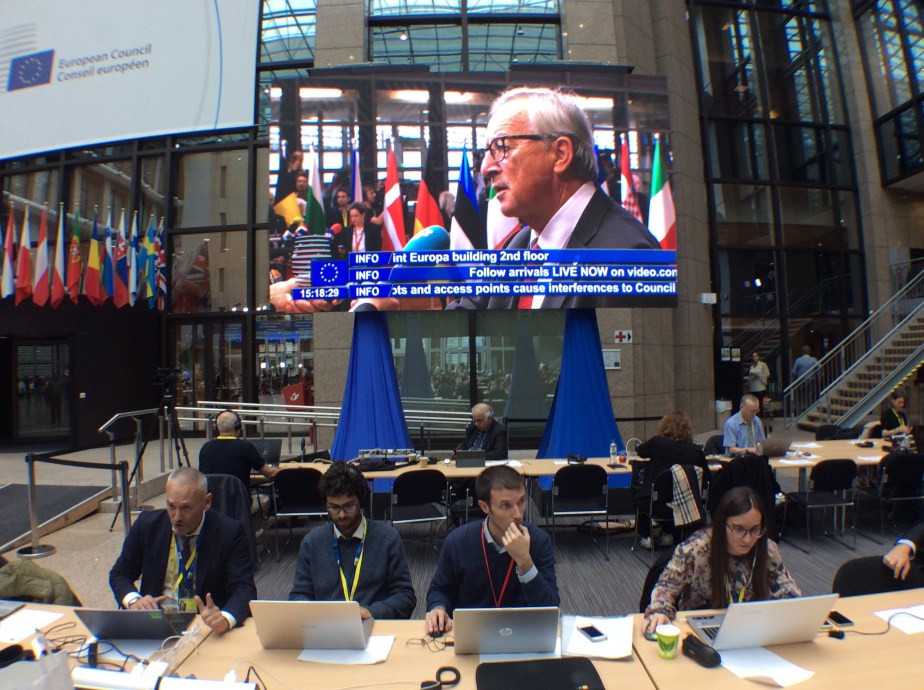
While British Prime Minister Boris Johnson and European Commission president JeanClaude Juncker consider the agreed Brexit deal “fair” outcome. There is no need to extend the Brexit deadline EU top executive added.

‘We have a deal so why should we have a prolongation?” Juncker raised a rhetoric question. However the biggest challenge is ahead in Westminster, where the the Democratic Unionist Party (DUP) of Northern Ireland declared its opposition to the reached Article 50 Agreement.

Prime Minister Johnson called Members of the Parliament to “come together” and “get this excellent deal over the line”.

Now is the moment for us to get Brexit done and then together work on building our future partnership, which I think can be incredibly positive both for the UK and for the EU” he underlined.

In spite of the enthusiasm of the EU leadership about the new deal, the experts consider the chances it is endorsed by Westminster on Saturday are slim because of opposition of Labor and DUP parties, who consider the deal to be even worse than Prime Minister May previous Agreement.

Jutta URPILAINEN: EU future Santa-Claus?

Undoubtedly Jutta URPILAINEN is exceptionally kind, generous and honest, and above it all sensitive to other people’s grievances. Mother of two adopted Colombian children, she is certainly an exceptional human-being. However are they the qualities to carry on the job of the EU Commissioner on International Partnerships? (Previously International Cooperation and Development led by CroatiaNeven Mimica #DEVCO).

During the October 1 hearing with Members of the European Parliament (MEPs), Urpilainen has successfully avoided all the burning problems of Africa – the major recipient of the EU development funds: CORRUPTION, TERRORISM, ETHNIC CONFLICTS, CHINA EXPANSION, DEMOGRAPHIC EXPLOSION, – none of them were addressed. Even Ebola!

The entire debate she stayed in shallow waters of wooden language of the EU politically correct: important ‘‘improvement”, “empowerment”, “transparency”, “equality”, “listen to people”, and the other “meaningful” cliches, favored by the EU Mandarines, dramatically lacking vision and imagination.

From time to time she was making a nod to MEPs, flattering them with reminding of her “unelected” status vis-à-vis their elected superiority. However these calculated maneuvers could not take away an impression of a dramatic lack of knowledge of the development portfolio.

At most ambivalent impression made Urpilainen  “asymmetric” answers to MEPs questions, clearly prepared in advance, and used without adaptation.

Finally, she promised to “learn”,  “listen”, and to “improve“, however the question remains if the EU needs an “apprentice-Commissioner”?

CONCLUSION: One can’t become pilot over night taking off plane w/ 300 passengers over Atlantic, but one can become aid Commissioner with  €20 000 a  month salary without a clue of international politics. What a soap!

October 1, European Parliament, Brussels Jutta URPILAINEN for International Partnerships Commissioner.

img_7894

Brexit forever!

Nothing is so permanent as temporary. From now onward this wisdom can be fully applied to Brexit process. The United Kingdom’s Supreme Court ruled on September 24 that Prime Minister Boris Johnson’s decision for Parliament prorogation while approaching Brexit was unlawful.

The Court decision will certainly influence the departure process, blocking the way to leave without the Withdrawal Agreement, widely known as “the deal”. The prediction of Theresa May is coming true: it may be that referendum result will be never honoured, and Brexit will not be delivered at all.

From today the EU has two special candidats: one, Turkey, is “eternally” attempting to enter, while the other is permanently at the threshold, intending to leave. As Pisa Tower – forever falling, and still there. Brexit Forever!

Dutch Fauna party leads largest Europarl Intergroup

In the framework of the September Strasbourg Plenary the Animal welfare Intergroup of the European Parliament has elected Anja Hazecamp, Dutch MEP as president of the biggest cross party congregation.

Anja Hazekamp (51) is a prominent Dutch politician, a member of the Party for Animals (PvdD), and a member of the group of the European United Left – Nordic Green Left (@GUENGL).

The PvdD is the first political party across the  world to gain parliamentary seats, including three seats for Senate, with an agenda focused primarily on animal rights, and animal welfare. At her election Hazekamp said she expects from Ursula von der Leyen ‘real change” in animal welfare issues.

Hazekamp was elected unanimously as the only candidate put forward by the MEPs. The former president of the group Sirpa Petikainen has been elected as an Honorary president.

The Intergroup is providing a forum for debate, and initiating actions for animal welfare-related issues in the European Parliament.  An entire spectrum of activities as issuing  reports, resolutions or amendments, formally asking parliamentary questions and sending letters to authorities, organising public awareness events, – all of them resulted in graduate improvements in the animal welfare situation in the EU.

 Next meeting of the Intergroup will take place in Strasbourg during October Plenary to discuss problems of exotic pet trade in the EU (Thursday 24 October, 10:00 – 11:00).

Memorial to Strasbourg Grand Synagogue

Modern IT technologies will help to give a second life to a destroyed by Nazi Grand Synagogue, this time in a form of a bronze monument, established at the original place at Quai Kléber. The Jewish community, IT scientists, historians, and lovers of history have  collected a significant amount of information, allowing to restore the exact model of the demolished building.

DSCN9824[1]
IT reconstruction model of Grand Synagogue Quai Kléber
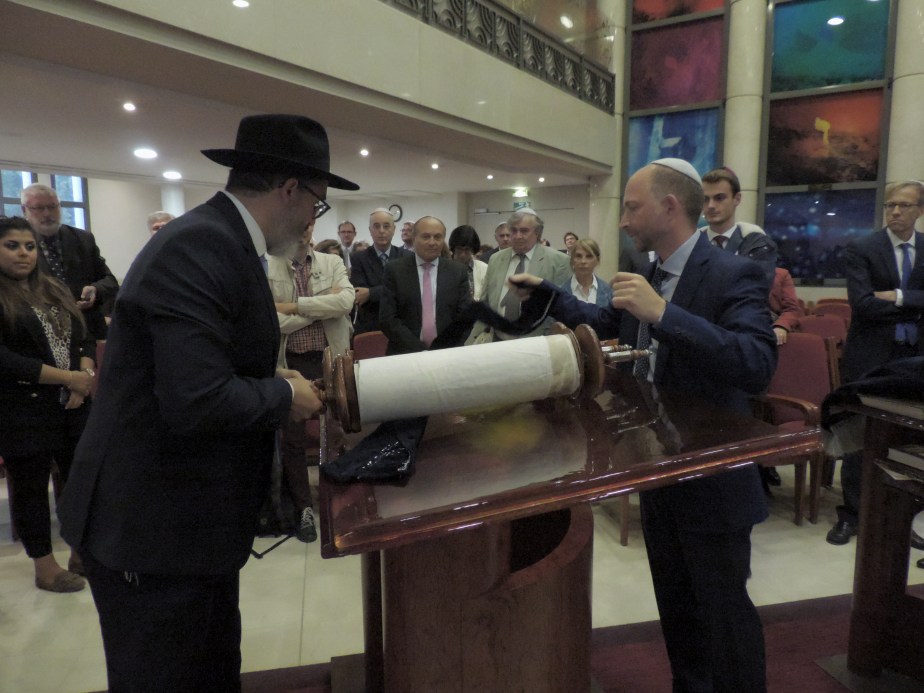
On 18th of September, during the European Parliament Plenary week the Jewish Consistory of Bas-Rhin invited to the Synagogue of Peace  Members of the European Parliament (MEPs) and Strasbourg politicians to celebrate in a cultural event the upcoming Rosh Hashana (New Year) festivities. The excursion in the building of New Synagogue preceded the assembly.

DSCN9833[1]
Rabbin Mendel Samama (right) and Thierry Roos of Consistoire israélite du Bas-Rhin (left)
The collection of the artefacts and historic objects exposed as precious pieces of mosaic restore the picture of the spiritual past of the  Jewish Community in Alsace  – one of the most ancient in Europe, traced to the Middle Ages.

DSCN9826[1]
Grand Synagogue de la Paix historic objects collection on display

After the World War II  the Jews who survived the Holocaust, reformed the Jewish community of Strasbourg, meeting in the Holiday Palace until 1948, because the Grand Synagogue, situated at Place Klèber was destroyed.

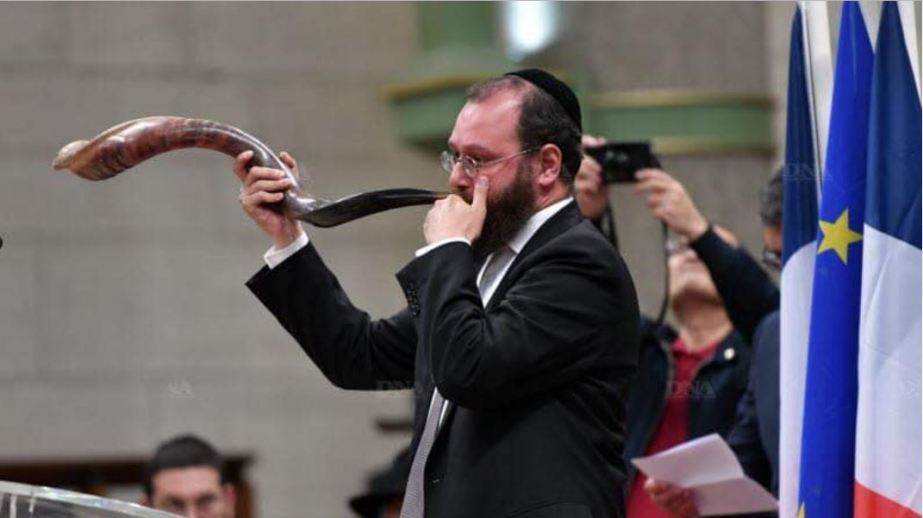
Levi horn
Rosh Hashana sound of Shoffar Image: courtesy of Levi Matusof (pictured).

Following the talks with the city of Strasbourg in 1948, the Jewish community agreed to exchange the grounds of the old Synagogue against the site of Contades area, where the new monumental building was erected, by the  architect Claude Meyer-Lévy. The synagogue, called “Peace” replicating its location Rue de la Paix,, and was inaugurated in March 1958.

DSCN9834[1]

The new synagogue also includes the Judaica radio headquarters, a youth center, and the headquarters of several movements, in addition to the four oratories.

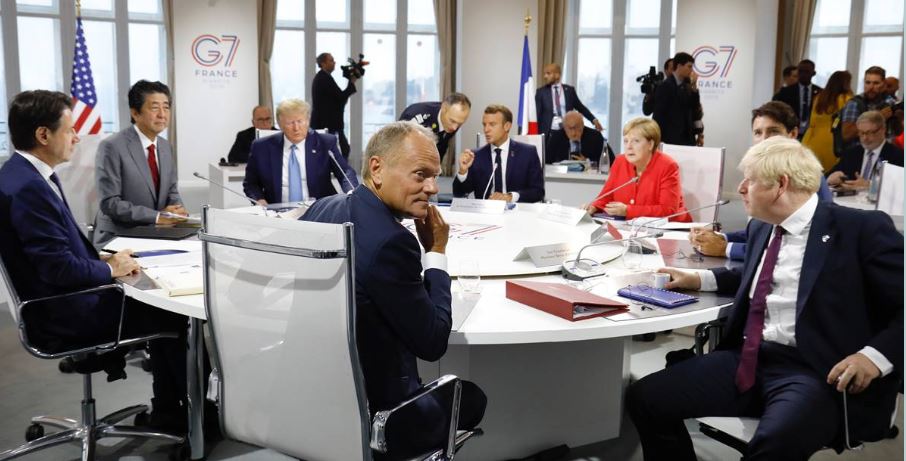
G7: Tusk waywardness in Juncker absence

Anna van Densky OPINION The clumsy attempts of the president of the European Council Donald Tusk to influence the decision of British Prime minister Boris Johnson determined to depart from the EU on time with or without agreement, dabbing him “Mr.No-Deal”, look like an agony of the bloc, paying high price for its rusty mechanics unable to adapt to changing context. Teasing has never been an effective method in international politics.

G7 Summit in Biarritz (France) opens an opportunity to built bridges, however the representative of the EU prefers to burn them with provocative information war style public pressure, attempting to challenge Boris Johnson, instead of engaging in dialog with him. War of words with the UK is not what the European citizens wish, concerned by economic consequences of ‘no-deal’.

While American President Trump is actively using G7 platform for rapprochement with the UK, promising mutually beneficial trade deal, the EU has no other message, that insisting of the document that is already ‘dead’. The useless promotion of the Withdrawal Agreement (WA), which was the EU miscarriage, is aggravated by the contrasting surrealist proposal of Tusk to invite heavily indebted and plagued by ongoing armed conflict Ukraine to G7 ranks. While the oldest European democracy, and second net contributor to the EU purse is abandoning the EU, Tusk has nothing better to offer instead than to promote rapprochement with Ukraine one of 10 most corrupt nations in the world.

Just a week ago President of the European Commission Jean-Claude Juncker was hospitalized saving the EU from one more embarrassment, caused by his physical condition. However in comparison with Tusk intellectual inability, and primitive ways of conducting international politics, varying from schoolboy teasing, to lobbying of Polish regional interests promoting Ukraine in a blunt gesture of tribalism, – all of those, evoke nostaliga for Juncker‘s clarity of thinking. Cogito, ergo sum!

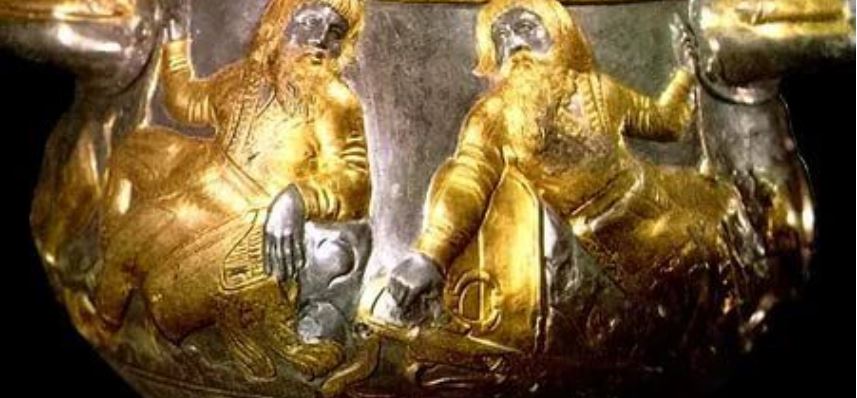
Crimea Scythian gold collection stuck in Amsterdam

Anna van Densky  The ambivalent situation around the collection of Scythian gold exhibited in Amsterdam occurred after the Crimean referendum (March 16, 2014), leading to the unification with the Russian Federation, assessed by the EU as “annexation“. Both museums of the Republic of Crimea and Ukrainian state claimed their rights for the treasures of art. In response the Amsterdam Museum have  frozen the transfer of property until the dispute is settled on a legal basis or until the parties reach a peace agreement.

Crimean museums insist that they had received most artifacts from the disputed Scythian gold collection before Ukraine declared independence, Director of the Central Museum of Tavrida Andrei Malgin, said to TASS Russian news Agency.  According to international rules, Dutch museum, where the collection was exposed, should return them to the parties that provided the treasures for an exhibition, he added.

Our main argument is that these items were excavated in Crimea and were kept in Crimean museums, so Crimea has stronger ownership rights. We insist that this is part of the Crimean people’s cultural heritage. Crimean museums have owned a large number of the items since the Soviet era or even since pre-Revolution times (1917),” Malgin underlined.

Crimean museums have documents proving that they owned these treasures long before Ukraine became independent, he explained.

Malgin reminded that that a whole exhibited collection of various items from different museums had been sent to the Netherlands to be displayed in an art event. At the time of the exhibition, the items formally belonged to Ukraine’s Museum Collections on display in Crimean museums. Even after world wars, many treasures returned to the museums from which they had been pillaged, Malgin reminded  .

The Amsterdam Court of Appeal postponed a verdict in the Scythian gold case, requesting the parties to provide further information, particularly on the ownership rights. According to the judges, the parties have been given two months to provide the requested information. “A final judgment may be expected in six to nine months’ time,” the Court pointed out. Until then, the Scythian gold collection will be kept at the Allard Pierson Museum in Amsterdam.

The Republic of Crimea historians, and art historians have certain fears the decision of the Court will be entirely politicized is spite of their rights to keep heritage in the Republic of Crimea, where it belongs.

The Scythian gold is a collection of  more than two thousand artifacts with an insurance estimated value of about $2 million, which were included into the exhibition Crimea: Gold and Secrets of the Black Sea”, held from February to August 2014 at the Allard Pearson Museum Amsterdam.

Next year Crimea commemorates hundred years of  Russian State” on its territory, the stronghold  of the monarchists,  losing the Civil war to Bolsheviks, after the collapse of the Russian Empire. Tragically the White Army soldiers in Crimea were tricked by the promises of amnesty if they surrendered, the estimated number of following Red Terror executions vary  from 50,000 to 120,000 people.

А total of 145,693 White guards and civilians were saved in evacuation by sea (pictured below) by the end of 1920, however they did not take with them any artifacts from museums and palaces of Crimea, departing with a hope to return.

Крым эвакуация

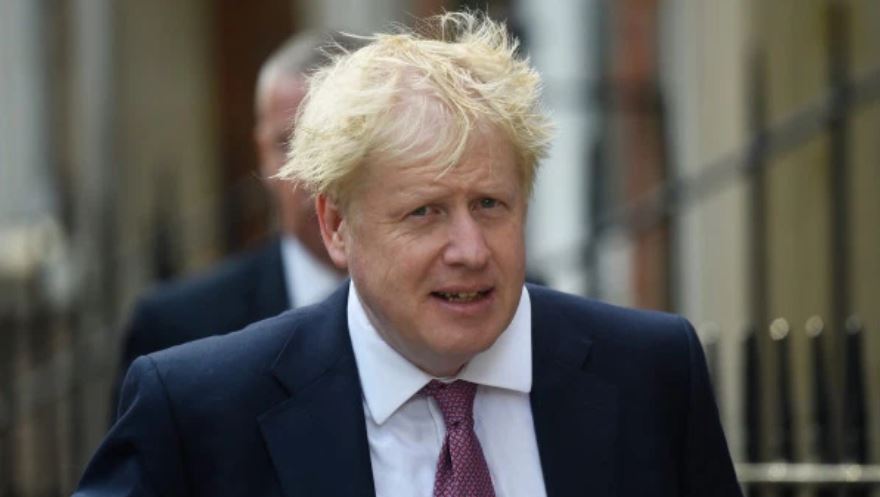
Boris Johnson as EU antidote

Anna van Densky OPINION Newly elected by the Conservatives Prime minister Boris Johnson throws a glove in the face of “the doubters, the doomsters, the gloomsters“, vowing to lead the country to the decisive Brexit on October 31. However, for fair play, he should have thanked them for their huge contribution in his swift ascendance to power, because they have created the situation of a protracted political crisis blocking the way to the implementation of the decision of the referendum.

Even more so Boris Johnson had to thank the European Commission president Jean-Claude Juncker, who dabbed Theresa May requests  as “nebulous“. Many thanks to the European Council for the rejection of re-editing the Withdrawal Agreement, and personally to Michel Barnier, who stood like a rock defending the each letter of the text. All of them were indispensable for Theresa May downfall.  From now onward the “moderate”, “orderlyBrexit scenario is off the shelf.

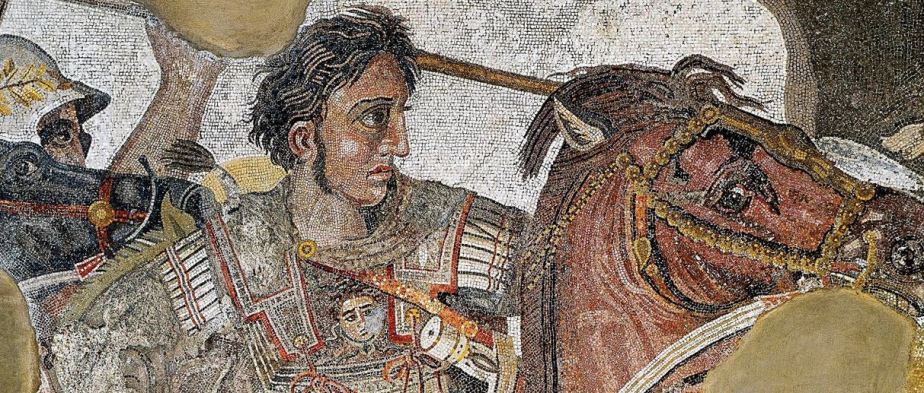
The EU has the entire record of the successfully corrected “errors” like reshaping the European Constitution into the Lisbon Treaty, and subsequent imposition of the second referendum on the Republic of Ireland, generously offering an opportunity to the citizens to chose the “right side of history“. However in this particular Brexit case the application of pressure caused the results opposite to expected: Boris Johnson came as Brussels antidote, promising to his compatriots to resolve the problem with slicing the Gordian knot. Who can do it better than a professional in Classics? 🙂

Alexander The Great


Caravaggio à la Flamande

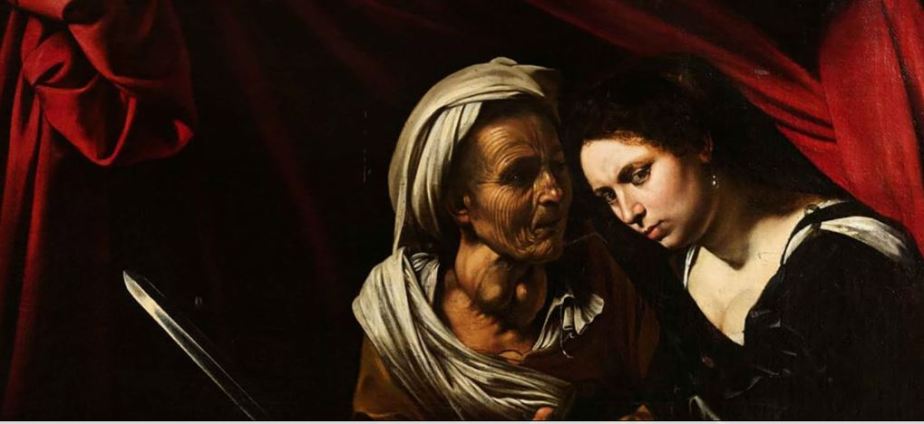
Anna van Densky OPINION from Brussels. Discovered in attic in a house in Toulouse (2014) canvas depicting a Biblical story of the decapitation of Holofernes by Judith  is not universally attributed to Italian genius Michelangelo Merisi da Caravaggio, but some consider it to be a copy of his contemporary, a Franco-Flemish artist Louis Finson, who was well acquainted with Caravaggio‘s masterpieces.

Those days artists had no notion of copyright©, and making of a copy of a masterpiece was not seen as a violation of author’s rights, so someone, who was sincerely impressed by a canvas of Caravaggio was doing his absolute best to share his experience with the other audiences, especially foreign ones, without feeling of guilt. It would also be logical to make an adaptation of the canvas copy to a foreign taste, translating drama into preferred visual  language of the audience.

To my eye the painting to be auctioned on June 27 in Toulouse, France, looks like an interpretation of the story by a Flemish baroque artist, acquainted with Caravaggio masterpiece, and eager to share his special experience back at home in Antwerp, or Brugge. However he is adapting it to the lavish tastes of Flemish art collectors, shaping their preferences  in tradition of luxury of legendary Burgundy. 

The unknown (Finson?) artist depicted Judith as a burger’s wife, dressed in rich black silk, decorated with Flemish lace. With a prosecutor’s eyes, she executes the enemy to fulfill her moral duty.  Judith‘s gaze escapes spectators, underlining the profoundly introvert nature of her act, motivated by her conscious. She is self-confident and stable, convinced of making the ultimate right choice.

The other protagonists, are subordinate to Judith: servants face is reminding of a dry fruit, lacking vivid emotion, and obviously is designed to create a contrast with the widow’s porcelain skin, and full, peach-like round cheeks. Almost decapitated general Holofernes body is in convulsions,  and his served head with imprinted grimace of pain, and open mouth exposing sharp teeth, and white eyeballs – all of them are hinting on his bestial nature.

The tent of the Assyrian general Holofernes is decorated by the traditional “drappo rosso” – rich purple curtain, but it is far too intense in color, too heavy and has too many folds in comparison with light floating draperies of Caravaggio, touched with subtle shades of red,  which are creating backdrop a dramatic understatement, never competing for attention with the human figures in the front.

However they are just purely visual elements of ‘Toulouse‘ canvas, while the major challenge is to explain the message of the painting, which has an atypical of Caravaggio didactic tone, while the Italian genius was never interested in morality or ethics as such. Caravaggio is an obsessive investigator of the darkness of human soul, fascinated by desires, passions, searching and exposing paradoxes, without intention to rationalise them.

The acknowledged canvas on the same subject of Judith and Holofernes, attributed to Caravaggio exposes drama, full of passion and mystery. The master is definitely not seduced by an idea to depict one more illustration of the well-known Biblical story, but he presents his unique view on turbulent lives of the widow and the general, fascinated with the depth of characters and infinite complexity of feelings.

Young Judith of angelic beauty disgusted, and taken aback by her own deed: she, herself, is definitely traumatized by the act of beheading, continuing almost mechanically to cut through Holofernes neck. While the general is searching for the eye contact with her in disbelief that a women with angel’s face is his murderess. Holofernes is definitely not ugly, he his not vile, or bestial, still alive he desperately searching for an answer in Judith‘s eyes, in vain…

Nobody can assemble the pieces of the puzzle – why? Why an idea of committing such a gruesome murder occurred in a such an angelic head?.. Why the army general Holofernes was trapped by Judith’s beauty, and femininity to such an extent that he paid a price of his live for the perception of a beauty incapable of evil?..  Caravaggio does not give the answers, there is no lesson to learn, just an endless wandering in a labyrinth of reflections, feelings and hints. Eros and Thanatos, love and death. Assassination as a sacrifice. Caravaggio has no slightest intention to structure the world around him, on contrary he enjoys it as it is – troubled, impulsive and erratic, being a rebel as he is.



Zelensky NATO performance

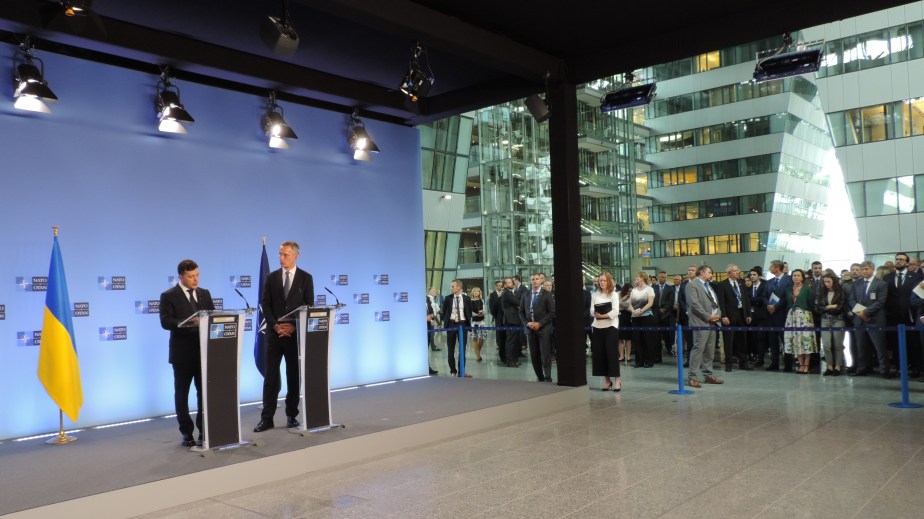
Anna van Densky OPINION UkrainePresident Volodimir Zelensky declarations at NATO headquaters could be hardly considered as good news for inhabitants of Donbass – joint drills in July with Alliance vessels in Black Sea can not be mistaken for a flight of a dove with an olive branch.

Zelensky is ready to negotiate Donbass conflicts, but only in the context of NATO integration. It means to continue imposing on Russians in Donbass the vector of development they had initially rejected – to choice a camp of Russia’s foes. But not only, it means the complete submission to a totalitarian Ukraine language law, stripping Donbass of their minority national and linguistic rights, destroying their identity.

National identity became a huge problem for ethnic Russian on the terrotries of the former USSR, when a number of former Soviet Republics have chosen for openly anti-Russian policy, eradicating Russian language and identity in contradiction with international law, and European values. Ukraine has taken an aggressive stance against Russian minority, who voted for its independence unaware it would be the beginning of the end of their national identity profile.

President Putin promise to facilitate the procedure of issuing Russian passports to Ukrainian citizens of Russian origin, based on widely used practiced of jus sanguinis, accepted by the majority of the NATO allies, has caused concerns of the Secretary General Jens Stoltenberg. He said it would ”destabiliseUkraine, omitting the fact, that the opposite, namely the attempt to eradicate Russian identity is behind the political turbulence of Ukraine, degrading into an armed conflict.

The denial of the fact that the Ukrainian state, being composed in different political contexts from different territories with autochtone populations, causes tensions fueling into conflict. In rejection of human rights, identity rights, linguistic rights of Russian, Hungarian and other minorities, Ukraine weakens the state, wasting a great deal of time and energy for suppressing the justified claims.

The declared by Jens Stoltenberg Ukraine-NATO drills in Black Sea in July, will serve as demonstration of power to Moscow, senseless and dangerous, enhancing Russia, the nuclear superpower to protect its borders, and assume it role as a guarantor of psychical survival of Donbass populations, threatened to be exterminated by Ukrainian neo-nazi as it happened in Odessa massacre (2014),  where they cremated Russians alive.

The official restoration of fascism in Ukraine took place in 2010, when President Yushchenko attributed status of national hero of Ukraine to a nazi criminal and terrorist Stepan Bandera, who led extermination of 300 000 Jews in Ukraine in a number of huge pogroms.

Jens Stoltenberg underlined that NATO is an alliance of democracies, subsequently the West should require respect of democratic values first, before undertaking rapprochement with Ukraine, contaminated by neo-nazis. The enforcement of Kiev  by NATO without demanding authorities to assume their responsibilities to respect democratic values, and minority rights will also nourish the most marginal political forces, interpreting the rapprochement as la carte blanche to return to Stepan Bandera ideology of Ukrainian nationalism.