Petroleum agent presides over Brussels press corps

Brussels 03.10.2025 The General Assembly of the International Press Association (API) endorsed a correspondent of the non-news media to preside over the journalisits’ organisation. Although officially Dafydd ab Iago @dafyddabiago (David Ferguson) has been “elected”, in reality he was endorsed because there were no competition for the position.

The situation is remarkable because he is the first chairman in half a century, who presides over the EU press corps, while working for non-news media, which means the UK company he represents as a Brussels correspondent has the following fields of endeavor: “advertising material publishing; On-line publishing of statistics and other information; On-line publishing photos and engravings; Photo and engraving publishing; Postcard publishing; Poster publishing: Printed matter publishing; Publishers (other than of newspapers, books and periodicals”. In its own words Argus Media (previously known as Petroleum Argus Ltd) is an independent provider of price information, consultancy services, conferences, market data and business intelligence for the global petroleum, and other types of energy.

https://platform.twitter.com/widgets.js

But where is journalism? Where is the construction of public discourse?
Where is prime target of journalism: serving as a forum for public criticism and search for a fair compromise, facilitating discussion and collective action for positive change?

How Argus “price information”, and “global petroleum data” ensures journalism’s watchdog function, in fact, the news media’s main role in political system? How does it increase accountability in the EU democratic governance systems? Obviously the non-news media are unrelated to journalism, while pursuing purely commercial purposes.

Subsequently the endorsement of non-news actor as the president of a the international journalist’s Association (API) manifests the state of Brussels press corps, drifting away from its original mission of Democracy’s Watchdogs.

Nowadays API unites 400 members among a thousand of the EU institutions-accredited journalists, being a specific organization for Brussels-based foreign correspondents. API claims to be first organization since 1975 to unite non-Belgian journalists of all categories and expertise based in Belgium and working for international media. The membership is open to journalists employed by one or more media outlets—whether as staff or freelancers—whose headquarters are located abroad, or who can demonstrate that their work is targeted at a non-Belgian audience, reads the introduction on the API site.

https://platform.twitter.com/widgets.js

As the representative group of non-Belgian journalists in the Kingdom of Belgium, API was created to facilitate connection between the foreign correspondents and the EU institutions on issues relevant to professional activities of the members. This includes the established set of rules, opening access to information, ensuring adequate working conditions at the EU press events, and equal access to the sources, and documents.

However during Ursula von der Leyen presidency of the European Commission which is the EU institution granting accreditation for the journalists, the access for the press-events and information has been severely restricted. The bunker mentality of Madame President is widely known, reflected in replacing press-conferences by read out of statements, “family” photos, and other photo-ops as shake hands, shifting from dialogue, answering to the questions of press to production of public relations material, and policies promotion.

This shift signifies a clean break with the previous presidencies of the European Commission, engaged in dialogue with press, and explanations of the initiatives, or decisions. The von der Leyen Commission has been systematically replacing them with advertising of the Commission’s activities, and public relations.

https://platform.twitter.com/widgets.js

Undoubtfully Brussels journalists are experiencing the global trends of transition from legacy media to digital multimedia, the process which has multiple implications. With the Digital revolution a Homo Sapiens, a product of written culture, is transforming into a Homo Videns for whom the word has been dethroned by the image. The image plays a decisive role, floating away from a text as an abstract form of thought to a visual representation. As a result the complexity of political process, democracy, and rule of law is substituted by shake hands, red carpets, and broad smiles of politicians, attempting to convince citizens that they are guided to a brighter future. Benefiting from the Digital technologies, the beau monde of politics is increasingly reliant on power of colorful, and often doctored images.

Within this global trend, while genuine discussion through traditional mass communication channels is replaced by the mosaic of optimistic edited images, the EU Commission does not miss opportunities to shape public debate upon its agenda. The Ursula von der Leyen Commission has successfully flooded the information field with the self-advertising, and promotions, while the gap between the Institutions, and regular citizens broadens daily.

In an exclusive new report for MCC Brussels — Brussels’s media machine: EU media funding and the shaping of public discourse — the author Thomas Fazi – revealed a vast, previously under-scrutinized system through which the European Union annually disburses nearly €80 million to media projects across Europe and beyond.

“The report contends that the EU’s financial leverage creates a ā€œsemi-structural relationshipā€ with major media outlets, particularly public broadcasters and news agencies, blurring the lines between independent journalism and institutional communication — and seriously compromising the media’s ability to hold power to account” Thomas Fazi writes.

The European Commission and European Parliament collectively disburse close to €80 million annually to media projects, including major news agencies, who are used by the other types of media as a prime source of news distribution. The MCC report concluded a conservative estimate of one billion euro (€1 billion) in funding during the past decade. This figure doesn’t include indirect funding streams — for example, advertising or communication contracts awarded to marketing firms who then redistribute funds to major media outlets.

The European Commission system of replacing journalism by public relations, and advertising was shuttered by Brexit, which revealed the immunity of a large part of the electorate to the efforts of the EU institutions to promote their agenda, disguised in “independent” media discourse. However it after the departure of the Brits, the EU institutions’ methods became more aggressive, adding active censorship. The EU citizens have especially felt it during the pandemic, and beyond, when the battle for freedom of speech climaxed in EU Commissioner Thierry Breton clash with Elon Musk. The owner of X (formally Twitter) platform dabbed former European Commissioner for Digital Affairs a “tyrant of Europe” for his relentless efforts to impose censorship on social media via the EU regulations of the digital platforms.

https://platform.twitter.com/widgets.js

The public battles for freedom of speech, and censorship are shifting Overton window, so do the other, less noticeable, but not less significant actions, for example including non-news agents into journalistic communities, and then promoting them to lead. The endorsement of non-journalist as a president of the Association of the International Press is one of these Overton shifts. The replacement of journalists by advertising, and other commercial publications agents is not only a precedent, it is decisive vector of development, which will allow to ditch the role of press as democracy watch dogs to favor the European Commission lap dogs, without attracting much attention of the general public to the surrogate.

“This latest episode simply confirms the disgraceful state of the EU press corps, and Brussels-based journalists more in general, which have forsaken their role of watchdogs a long time ago and today largely act as PR agents for the corporate-political interests which fund their operations, which happens to include the Commission itself, which funds a large number of media outlets across Europe, as I show in my report, – Thomas Frazi wrote, commenting on the situation.-With the non-news media agent, leading the Association of International Press. – The result is that there is basically zero real scrutiny from the Brussels media of the Commission and von der Leyen’s policies, as the latter’s embarrassing press conferences attest to. The good news is that more and more people are starting to realise just how corrupt the traditional media are, and no longer give much credit to what they have to say. So as the propaganda becomes more pervasive and blatant, it also becomes less effective”.

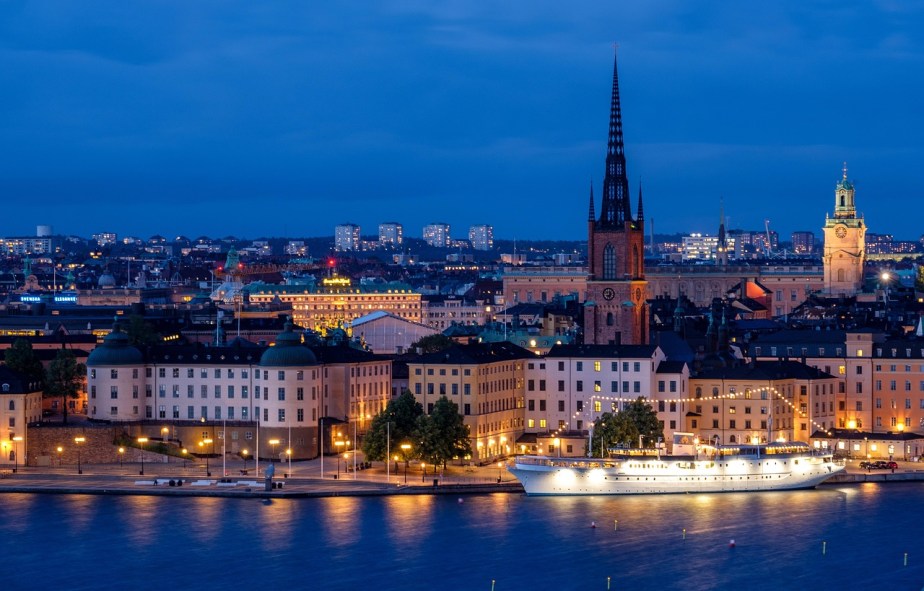
Stockholm hosts Bilderberg Club

Brussels 13.06.2025 The 125 high-profile participants attending this year’s Bilderberg Meeting, which began on Thursday 13 June in Stockholm and runs until Sunday June 15.
The exclusive assembly brings together political leaders, business executives, and academics from both sides of the Atlantic for closed-door discussions under strict confidentiality rules.

https://platform.twitter.com/widgets.js

The Bilderberg Meeting guest list reflects the forum’s enduring role as a nexus of elite transatlantic influence, with participants drawn from the highest tiers of politics, business, academia, media, and technology.

Roughly one-third of the guests hold or have recently held top-level government roles, including sitting prime ministers–such as Finland’s Alexander Stubb and Greece’s Kyriakos Mitsotakis–Cabinet ministers, European commissioners, and high-ranking military officers from NATO and the US armed forces.

The presence of multiple European commissioners and current or former finance ministers underlines the group’s strong interest in economic governance and geopolitical stability.

Alongside them, major players from global business, such as the CEOs of Microsoft, Spotify, Citigroup, Deutsche Bank, TotalEnergies, and Pfizer, signal the continued interweaving of political decision-making and private sector interests.

The tech sector is particularly well represented, with figures such as Demis Hassabis of Google DeepMind, Mustafa Suleyman of Microsoft AI, and investor Peter Thiel indicating a growing focus on AI and defence innovation.

https://platform.twitter.com/widgets.js
Several prominent journalists and editors, including from The Economist, The New York Times and Bloomberg, suggest media remains a valued lens through which these elites interpret global trends, though under the Chatham House Rule, their participation is private rather than performative.

The inclusion of figures like Applebaum and Stacey Abrams adds transatlantic political-cultural depth, while the involvement of Polish figures such as Sikorski and entrepreneur Rafał Brzoska reflects the region’s increasing visibility in Euro-Atlantic strategic discourse.

The only Russian invited is Alexander Gabuev, the head of the Carnegie Russia Eurasia Center at the Carnegie Endowment for International Peace, an institution banned by the Kremlin in 2022.

https://platform.twitter.com/widgets.js

The meeting is taking place at Stockholm’s prestigious Grand HĆ“tel, which has been cordoned off by police since Tuesday in anticipation of protests.

The hotel, owned by the influential Wallenberg family, has blocked reservations for the duration of the event, echoing similar security steps taken ahead of Barack Obama’s 2013 visit to Sweden.

This year’s agenda includes topics such as transatlantic relations, the future of Ukraine, the US and European economies, the Middle East, and the so-called ā€œauthoritarian axisā€ of Russia, China, Iran and North Korea.

Discussions will also explore defence innovation, artificial intelligence and national security, energy geopolitics, and global migration trends.

Founded in 1954, the Bilderberg Meeting aims to promote informal dialogue between Europe and North America.

Around two-thirds of participants come from Europe, with the rest from North America. Roughly a quarter are active in politics and government, while the majority represent business, media, academia, and other sectors.

All discussions are held under the Chatham House Rule, which allows participants to use the information shared but prohibits identifying speakers or their affiliations.
This year agenda includes:

12 June – 15 June 2025 Stockholm, Sweden
Transatlantic Relationship
Ukraine
US Economy
Europe
Middle East
Authoritarian Axis
Defence Innovation and Resilience
AI, Deterrence and National Security
Proliferation
Geopolitics of Energy and Critical Minerals
Depopulation and Migration

The private format, there are no press briefings, resolutions, or official statements, has long fuelled speculation and conspiracy theories about the group’s influence.

However, organizers maintain that the event provides a rare space for candid, off-the-record exchange among global decision-makers, and the guest list is publicly available on the group’s website.

Stockholm, 12 – 15 June participants list:

Abrams, Stacey (USA), CEO, Sage Works Production
Albuquerque, Maria LuĆ­s (INT),
EU Commissioner Financial Services and the Savings and Investments Union

AlcƔzar Benjumea, Diego del (ESP), CEO, IE University
AlverĆ , Marco (ITA), Co-Founder, zhero.net; CEO TES
Andersson, Magdalena (SWE), Leader, Social Democratic Party
Applebaum, Anne (USA), Staff Writer, The Atlantic
Attal, Gabriel (FRA), Former Prime Minister
Auchincloss, Murray (CAN), CEO, BP plc
Baker, James H. (USA), Former Director, Office of Net Assessment, Department of Defense
Barbizet, Patricia (FRA), Chair and CEO, Temaris & AssociƩs SAS
Barroso, JosƩ Manuel (PRT), Chair International Advisors, Goldman Sachs International
Baudson, ValƩrie (FRA), CEO, Amundi SA
Beleza, Leonor (PRT), President, Champalimaud Foundation
Birol, Fatih (INT), Executive Director, International Energy Agency
BotĆ­n, Ana (ESP), Group Executive Chair, Banco Santander SA
Bourla, Albert (USA), Chair and CEO, Pfizer Inc.
Brende, BĆørge (NOR), President, World Economic Forum
Brunner, Magnus (INT), European Commissioner for Internal Affairs and Migration
Brzoska, Rafal (POL), CEO, InPost SA
Busch, Ebba (SWE), Minister for Energy, Business and Industry
Caine, Patrice (FRA), Chair & CEO, Thales Group
CalviƱo, Nadia (INT), President, European Investment Bank
Castries, Henri de (FRA), President, Institut Montaigne
Chambers, Jack (IRL), Minister for Public Expenditure, Infrastructure, Reform and Digitalisation
Champagne, FranƧois-Philippe (CAN), Minister of Finance and National Revenue
Clark, Jack (USA), Co-Founder & Head of Policy, Anthropic PBC
Crawford, Kate (USA), Professor and Senior Principal Researcher, USC and Microsoft Research
Donahue, Christopher (USA), Commander, US Army Europe and Africa
Donohoe, Paschal (INT), President, Eurogroup; Minister of Finance
Dƶpfner, Mathias (DEU), Chair and CEO, Axel Springer SE
Eberstadt, Nicholas N. (USA), Henry Wendt Scholar in Political Economy, AEI
Ek, Daniel (SWE), CEO, Spotify SA
Ekholm, Bƶrje (SWE), CEO, Ericsson Group
Eriksen, Ƙyvind (NOR), President and CEO, Aker ASA
Feltri, Stefano (ITA), Journalist
Fentener van Vlissingen, Annemiek (NLD), Chair, SHV Holdings NV
Fraser, Jane (USA), CEO, Citigroup
Freeland, Chrystia (CAN), Minister of Transport and Internal Trade
Friedman, Thomas L. (USA), Foreign Affairs Columnist, The New York Times
Gabuev, Alexander (INT), Director, Carnegie Russia Eurasia Center
Hammer, Kristina (AUT), President, Salzburg Festival
Harrington, Kevin (USA), Senior Director for Strategic Planning, NSC
Hassabis, Demis (GBR), Co-Founder and CEO, Google DeepMind
Hedegaard, Connie (DNK), Chair, KR Foundation
Heinrichs, Rebeccah (USA), Senior Fellow, Hudson Institute
Heraty, Anne (IRL), Chair, Sherry Fitzgerald ana IBEC
Herlin, Jussi (FIN), Vice Chair, KONE Corporation
HernƔndez de Cos, Pablo (ESP), General Manager Elect, Bank for International Settlements
Hobson, Mellody (USA), Co-CEO and President, Ariel Investments LLC
Hoekstra, Wopke (INT), European Commissioner for Climate, Net Zero and Clean Growth
Hunt, Jeremy (GBR), Member of Parliament
Isla, Pablo (ESP), Vice-Chair, NestlƩ SA
Johansson, Micael (SWE), President and CEO, Saab AB
Jonsson, Conni (SWE), Founder and Chair, EQT Group
Karp, Alex (USA), CEO, Palantir Technologies Inc.
Klƶckner, Julia (DEU), President Bundestag
Kostrzewa, Wojciech (POL), President, Polish Business Roundtable
Kotkin, Stephen (USA), Senior Fellow, Hoover Institution, Stanford University
Kratsios, Michael (USA), Director, White House Office of Science and Technology Policy
Kravis, Henry R. (USA), Co-Founder and Co-Executive Chair, Kohlberg Kravis Roberts & Co.
Kudelski, AndrƩ (CHE), Chair and CEO, Kudelski Group SA
Kuleba, Dmytro (UKR), Adjunct Professor, Sciences Po
Leeuwen, Geoffrey van (INT), Director Private Office of the Secretary General, NATO
Lemierre, Jean (FRA), Chair, BNP Paribas
Letta, Enrico (ITA), Dean, IE School of Politics, Economics & Global Affairs
Leysen, Thomas (BEL), Chair, dsm-firmenich AG
Lighthizer, Robert (USA), Chair, Center for American Trade
Liikanen, Erkki (FIN), Chair, IFRS Foundation Trustees
Lundstedt, Martin (SWE), CEO, Volvo Group
Marin, Sanna (FIN), Strategic Counsellor, Tony Blair Institute for Global Change
McGrath, Michael (INT), European Commissioner for Democracy, Justice and the Rule of Law
Mensch, Arthur (FRA), Co-Founder and CEO, Mistral AI
Micklethwait, John (USA), Editor-in-Chief, Bloomberg LP
Minton Beddoes, Zanny (GBR), Editor-in-Chief, The Economist
Mitsotakis, Kyriakos (GRC), Prime Minister
Monti, Mario (ITA), Senator for life
Nadella, Satya (USA), CEO, Microsoft Corporation

Netherlands, H.M. the King of the (NLD),

O’Leary, Michael (IRL), Group CEO, Ryanair Group
Ollongren, Kajsa (NLD), Fellow, Chatham House; Senior Fellow, GLOBSEC
Ɩzyeğin, Murat (TUR), Chair, Fiba Group
Papalexopoulos, Dimitri (GRC), Chair, TITAN S.A.
Paparo, Samuel (USA), Commander, US Indo-Pacific Command
Philippe, Ɖdouard (FRA), Mayor, Le Havre
PouyannƩ, Patrick (FRA), Chair and CEO, TotalEnergies SE
Prokopenko, Alexandra (INT), Fellow, Carnegie Russia Eurasia Center
Rachman, Gideon (GBR), Chief Foreign Affairs Commentator, Financial Times
Rappard, Rolly van (NLD), Co-Founder and Chair, CVC Capital Partners
Reiche, Katherina (DEU), Minister of Economic Affairs and Energy
Ringstad Vartdal, Birgitte (NOR), CEO, Statkraft AS
Roche, Nicolas (FRA), Secretary General, General Secretariat for Defence and National Security
Rutte, Mark (INT), Secretary General, NATO
Salvi, Diogo (PRT), Co-Founder and CEO, TIMWE
Sawers, John (GBR), Executive Chair, Newbridge Advisory Ltd.
Scherf, Gundbert (DEU), Co-Founder and Co-CEO, Helsing GmbH
Schimpf, Brian (USA), Co-Founder & CEO, Anduril Industries
Schmidt, Eric E. (USA), Executive Chair and CEO, Relativity Space Inc
Schmidt, Wolfgang (DEU), Former Federal Minister for Special Tasks, Head of the Chancellery
Šefčovič, MaroŔ (INT), European Commissioner Trade and Economic Security;
Interinstitutional Relations and Transparency

Sewing, Christian (DEU), CEO, Deutsche Bank AG
Sikorski, Radoslaw (POL), Minister of Foreign Affairs
Şimşek, Mehmet (TUR), Minister of Finance
Smith, Jason (USA), Member of Congress
Stoltenberg, Jens (NOR), Minister of Finance
Streeting, Wes (GBR), Secretary of State for Health and Social Care
Stubb, Alexander (FIN), President of the Republic
Suleyman, Mustafa (USA), CEO, Microsoft AI
Summers, Lawrence (USA), Charles W. Eliot University Professor, Harvard University
Thiel, Peter (USA), President, Thiel Capital LLC
Toulemon, Laurent (FRA), Senior Researcher, INED
Uggla, Robert (DNK), Chair, A.P. MĆøller-Maersk A/S
Valentini, Valentino (ITA), Deputy Minister of Enterprise and Made in Italy
Vassy, Luis (FRA), Director, Sciences Po
Verhoeven, Karel (BEL), Editor-in-Chief, De Standaard
Wallenberg, Jacob (SWE), Chair, Investor AB
Wallenberg, Marcus (SWE), Chair, Skandinaviska Enskilda Banken AB
Weder di Mauro, Beatrice (CHE), President, Centre for Economic Policy Research
Weel, David van (NLD), Minister of Justice and Security
WilmĆØs, Sophie (INT), Vice-President, European Parliament
Zakaria, Fareed (USA), Host, Fareed Zakaria GPS
Zeiler, Gerhard (AUT), President, Warner Bros. Discovery International

EU Media: Ursula’s Colonial remnants

Brussels 30.03.2025 During the hearing on the European Commission self-glorification “propaganda” the MEP Elisabeth DIERINGER ( @E_Dieringer_MEP ) said that she is concerned with the accumulating of accreditation refusals for independent journalists, who are not allowed to enter the institutions press-events.
The problem manifested itself during the second term of Ursula von der Leyen in a way it became visible to broader public. Less than modest presence of journalists during press-conferences can be perceived by a TV spectator as a lack of interest, however if one takes interest in the EU Commission accreditation rules an alternative vision of causes of this feeble presence occurs. It is also useful to remind that accreditation is a form of public control of the institutions performance.

https://platform.twitter.com/widgets.js

To receive the annual accreditation to the EU institutions: the press-centers of the European Commission, European Council, and the European Parliament, a journalist should be compliant with three criteria: become a resident of Belgium, regularly cover the EU affairs, and… pass the financial screening.

The financial screening is described as follows: “journalism must be the main source of income”, meaning a candidate should submit the totality of financial documents for last two years to an anonyms Committee composed by an unknown criteria, who will consider the entirety of the income, and pronounce their judgement. Within these rules, imposed by Ursula von der Leyen Commission two elements are especially striking, the request to submit the financial documents without any frame to guarantee proper handling of the private financial information; and anonymity of the “judges”.
@MCC_BrusselsThese Commission financial screening demands are at odds with the rights of media companies to keep the information about the fees to freelances confidential. Paradoxically Ursula von der Leyen has been ultra defensive regarding the grants of the European Commission to media companies, keeping the information as top secret, although thanks to the MCC ( @MCC_Brussels) report signed by Thomas Fazi, it became clear that tens, and hundreds of millions of public funds are distributed in undisclosed procedures to ensure positive coverage of the EU institution’s activities.

On the flipside is the submitting of the entirety of financial documents to Ursula von der Leyen Commission anonyms Committee without any obligation from their behalf to guarantee a minimum discretion. On contrary to tax authorities the Commission’s Committee doesn’t establish any regulatory frame in treating this external financial information.

The other aspect of the unusual among organizations request for financial screening of the income of the journalist is the basis of this initiative is rooted in Belgium Colonial history. In 1963 King Albert II signed a law, which was officially was designed to protect the status of journalist in the society, but in reality this piece of legislation to transform journalism into a price prohibitive profession, unattainable for Africans, who broke away from Empire. Nowadays in Belgium the situation is unchanged, and preserving the legislation-remnant of the other era.
However the European Commission as an international organization is not obliged to follow the suit, and replicated the rules based on Colonial era frustrations, and inhibitions.

https://commission.europa.eu/about/contact/press-services/media-accreditation_en

Nevertheless the most egregious element is not the totalitarian impulse of Ursula von der Leyen Commission to inspect pockets of journalists as such, but establishing the correlation between earning, ana professional status, which allows those journalists who receive generous grants from the Commission to be in the first ranks in this shrouded obscure scheme. Commission distributes grants, and than grants accreditation to financially successful recipients of their own generosity. What a travesty! Ultimus hypocrita omnis…
.

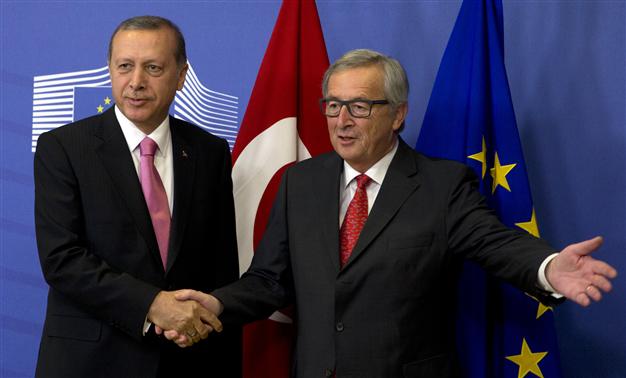
EU-Turkey: Adieu, membership!

juncker-erdogan

A long journey of Turkey to the European Union clearly came to a halt
– in the European Parliament’s plenary there were just a few MEPs to
suggest the accession process should continue in spite of the dramatic
developments in the candidate country after the failed coup d’Ć©tat.

The overwhelming majority of the MEPs called upon freezing the
accession process started back in 1999.They reiterated rhetoric
questions about honesty in evaluating current situation in Turkey as if
fitting the Copenhagen criteria of a democratic society. The
aftermath of the coup turned into tsunami ofĀ  outrageous violations of
democratic freedoms.

One doesn’t need to refer to the Amnesty International’s annual report
for the numerous evidences of torture, violations of freedoms of
speech, unfair trials, degradation of women’s rights. The laws
offering rapists to marry the victims scandalized the world, and
arrests of politicians and journalist became a left the most ardent friends
of Turkey speechless. The Kurdish issue has been set ablaze
with arrests of the co-leaders of the HDK party.

It looks the card of the significance of the Turkey NATO membership was
overplayed by president #Erdogan to such an extend that even the most
staunch supporters of accession process were running out of
arguments.

The major fear of accession talks haltĀ  is the galloping Islamisation
of the Turkish society, which will certainly continue even at higher
speed without the outside stimulus as the EU membership to keep the
society secular. However the accession talks didn’t proof to be
successful so far as a tool of promoting European values in
Turkey, and it make little sense to pretend that keeping accession
formally open would introduce a major change with an exception of loss
of credibility in the eyes of Turkish people, who expect solidarity
from Europeans.

The other issue which brings some hesitations over talks halt is
possibility of Turkey shifting closer to Russia, which is rather bleak
in view of ongoing Syrian conflict were positions of both countries
are difficult to aline.

There were also fears expressed that the freeze might solidify and become
permanent, meaning an end to an entire epoc of EU Enlargement policy.
These sentiments of regrets were challenged by MEP Charles Tannock (UK, ECR),
who reminded the fellow politicians that the accession of #Turkey played
a significant role in #Brexit vote. One can add that French
vote against EU Constitution (2005) was also influenced by an idea
of Turkey joining the EU.
Although overdue the move of taking distance from authoritarian Turkey,
increasingly reminiscent of the Ottoman Empire ruled by ‘Sultan’ #Erdogan,
it might still have a consolidating effect of the EU torn by multiple crisis es.
The decision to freeze the accession talks with Turkey is awaited
at the European Council in December.
End
Brussels-Strasbourg