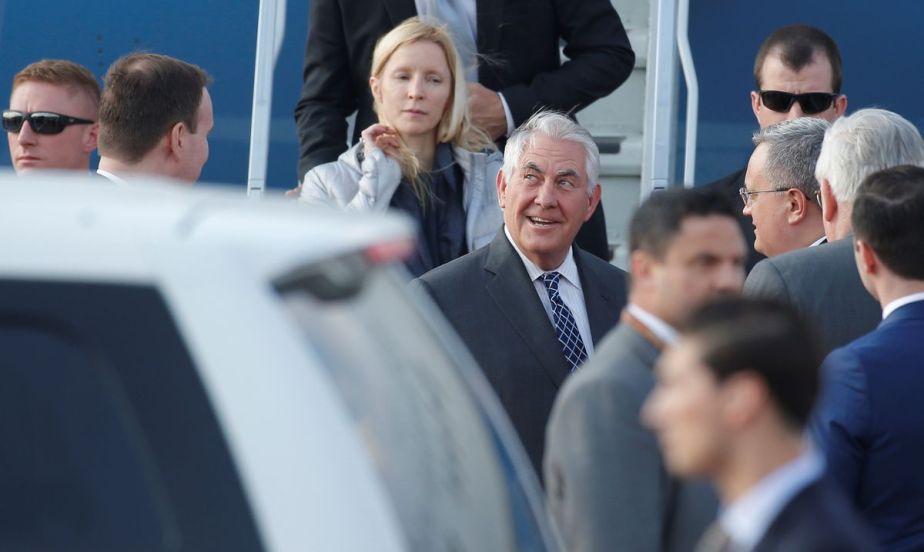
Tillerson’s visit as a glimpse of hope

Tillerson Moscow

The reception of State Secretary Rext Tillerson in Kremlin gives hope that the superpower leaders are prepared to assume their responsibilities towards global community, and stabilize the rapidly deteriorated US-Russia relations.

The high expectations of Russians did not come true – the change of the administration did not bring a major change in foreign policy. Whoever is the master of the White House, it is the  US military-industrial complex having the last say.  In this way Trump’s presidency will not become any different. Bowing to the Pentagon, Trump had to retreat into admitting that NATO is ‘not obsolete’. Acceding power, he had to follow the path of his predecessors,  meaning to stay in a rut of the US expansionist foreign policy.  We all have to come to the terms that none of his revolutionary anti-war proposals, captivating the moods of his electorate, can be transformed into reality,  and both Russian and American people have to live with that sinister truth.

In spite of the economic crisis the US launched without blinking a missile offensive on Syria – the firing a shot worth USD 88 mln  demonstrates that there will be no savings on military adventures. The offensive that also left in ashes the Kremlin hope of ‘peaceful coexistence’ of the nuclear superpowers.  Syria and Ukraine as the frontlines set ablaze.
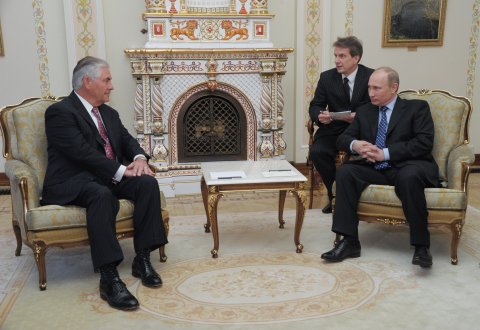
Putin and Tillerson

However the pressure of the international terrorism still might push even those the most reluctant into a coalition with Russians. The rapidly spreading network of jihadists worldwide has no other solution, but a united effort.

Although the agenda of almost two-hour discussion between Putin and Tillerson was not revealed, it is certain that the anti-terrorist coalition proposal had its prominent place.

(Photo: illustration)
Rome Summit: Tusk as EU symbol of strife

SAM_1713

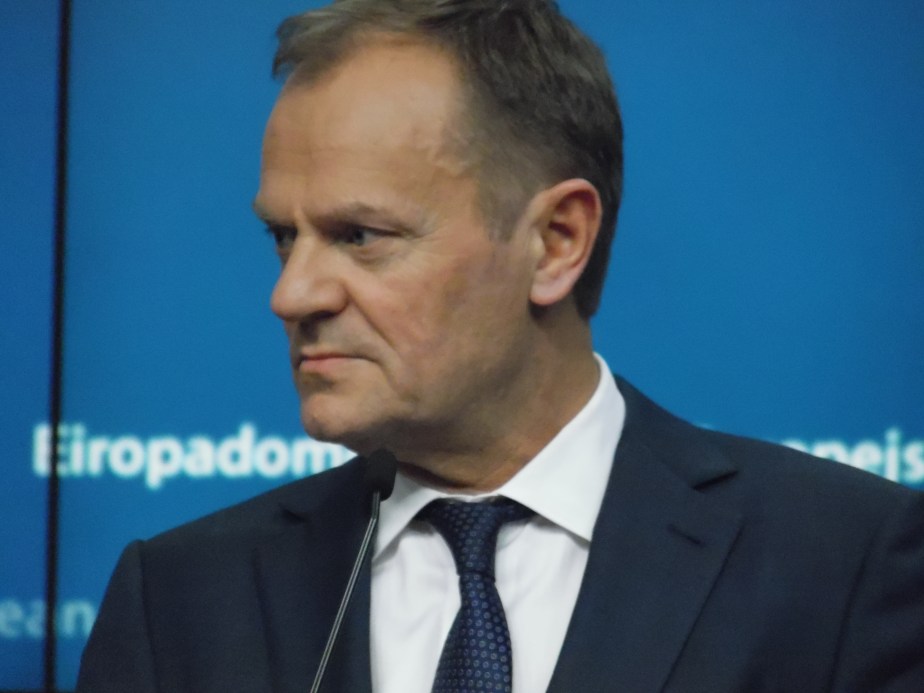
While EU Council president Donald Tusk (pictured) is preparing the anniversary  of the Treaty of Rome Summit (25.03.2017), focusing of the ‘unity’ message of EU27 in post-Brexit era, the argument over his own re-appointment ignoring Polish government’s  protest, remains open, poisoning the historic event.

Although the Summit is informal, the open confrontation with Poland over re-appointment of Tusk is a toxic issue, that would be impossible to play down or brush off. The EU diplomacy showed  poor judgment when suggested Prime minister Beata Szydlo (53) would have no choise but submit to the will the fellow EU members, openly imposing Tusk – an active political opponent of her incumbent government.   Szydlo, the miner’s daughter, showed a remarkable capacity to withstand punch, and audacity to retaliate, rejecting to sign the Council conclusions. If this pattern is chosen as a long-term strategy, it will mean, as long as Tusk chairs the EU meetings, Poland will continue to obstruct the outcome, not honoring a legal status to its decisions. This conflict over Tusk might not hinder the upcoming ‘informal’ Summit in Rome legally, but it will certainly harm its image politically.

While preparing the Declaration of the Summit in Rome, calling for ‘unity’ as a universal remedy from all kind of problems Europeans suffer, Tusk’s controversial chairmanship, weakens the message a priori.   “Taken individually, we would be sidelined by global dynamics. Standing together is our best chance to influence them, and to defend our common interests and values … Our Union is undivided and indivisible,” – Tusk’s draft declaration calls, making this words to haunt him like a bitter irony.

Being ‘an apple of discord’ between Poland and the rest of the EU, Tusk himself is a at most eloquent physical evidence of the profound crisis of the EU, and a symbol of strife and decline.

The draft, dated March 16 and prepared by the contraversial chairman of EU summits Donald Tusk, will pass by all the capitals  next week before being endorsed in Rome on the 25th of March.

Anna van Densky OPINION published in @EuropeDiplomatic

To celebrate the EU that humiliates?..

sam_6367With Polish Prime Minister Beata Szydlo rejecting to sign the EU Council conclusions over a bitter argument of the second mandate of the Polish official Donald Tusk, the approaching celebrations of the Treaty of Rome become less of a festivity, and more of a challenge. An obstacle to overcome. Is there anything left to celebrate?..
With the looming Brexit talks one might think it would be better to opt for a compromise accepting Polish concerns, and respecting the idea of the rotation, initially conceived for the Council president seat. It will not be so difficult to select another candidate among some many member-states, eager to engage in European construction, however the EU leadership has not been looking for the easy ways and common sense. From all scenarios is was a dramatic one that prevailed, and so a couple of weeks head of the celebrations of the Treaty of Rome we observe the eruption of one more conflict in what is already largely considered the European Nations Union going through its decay.
Beata Szydlo said all the EU crisis have a reason to be analysed. But some prefer to create new ones to forget about the previous. Indeed with new chronic conflict between the EU and Polish government, the Brexit negotiations shifted to the mis-en-scène. Just a few noticed the UK Prime-Minister Theresa May made a shortcut to the meeting room, avoiding the press. Each new conflict makes the previous one less painful. With Beata Szydlo, challenging the EU establishment as Calvin of our days, all the rest falls out of focus.
If not this argument she would not a have reason to stand tall, and we, as the public to feel ourselves so small, awaiting for the smoke to come out of the chimney to scream ‘Habemos Papa!’
A good reason to reflect upon in coming days before the celebrations of The Treaty of Rome. It the EU that humiliates the one we are ready to celebrate?..

Juncker “melancholic” on the EU future

US-ECONOMY-IMF-WORLDBANK-SPRINGMEETINGS

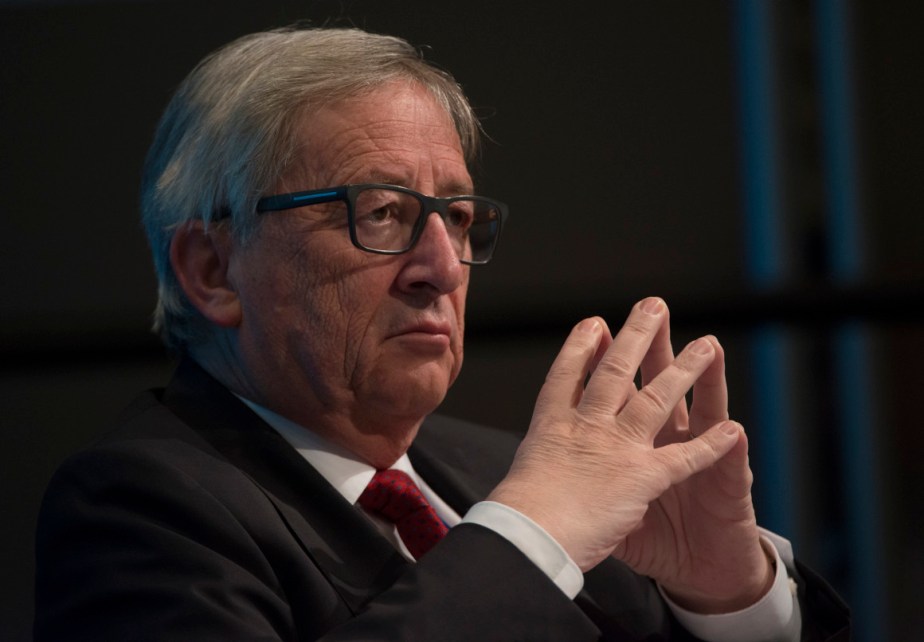
Launching a debate on the future of the European Union, and subsequently the entire continent, Jean-Claude Juncker (pictured) – the president of the European Commission – has offered Five scenarios (5S), however none of them even hinted on a ‘catastrophic’ one – the  case of French or/and Dutch citizens would follow #Brexit way.

The front-runner for the presidency of France, the member of the European Parliament (MEP), the leader of Front National party – Marine Le Pen has integrated #Frexit – the referendum on France’s membership in the EU, – into her political project. So did her Dutch counterpart the leader of Dutch Party for Freedom (PVV) Geert Wilders, who is enjoying high esteem of the electorate, foreseeing strong presence of his party in the Parliament in The Hague after the upcoming 15th of March general elections, opening the way to #Nexit referendum.
It is not that as press we want you to say “bad things” about MEP Le Pen, as you suggest, Mr.Juncker, it is about your readiness to continue to lead the #EU26, or even  #25, if Dutch and French follow #Brexit, preferring freedom to the EU institutional cage, prescribing everything from shape of cucumbers to open door migration policies, flooding streets of European cities with strangers from the violent cultures. The policy of open doors so dear to the institutions you are not going to give up at any cost, disguising it in ‘solidarity’ – the fundamental EU virtue. More migrants, less believers in cultural relativism, nostalgic about the times ante-Schengen with well-protected borders…
However, some things have changed already. Most probably, the European Commission mandarins understood that it would be better for everyone, if they concentrate on ‘important’ issues, leaving the details to the member states – the ‘efficiency’ option nr 4 among the 5S plan? They understood it or, they do  it is because the ‘instinct of life’ dictated them to do so, hoping to survive the period of low tight?..
Too much disappointment has accumulated into a toxic mass: with the south of Europe in lethargic misery under austerity policy, and the industrial north of ‘lenders’ unable to develop as fast as they wished to, obliged to level their pace with all the other EU members in a ‘solidarity’ name. Is Juncker’s nr.3 ‘mulitspeed’ Europe an answer? Hardly so, as the creation of the sub-unions would lead to ‘structured dismissal’ of the initial EU bankrupt project – promising prosperity it lead to poverty too many; promising peace, it set its neighbourhoods in blaze…
Finally the EU scenario nr 5 – ‘Doing Much More Together’, but after #Brexit it sounds even more fiction, that four previous ones all together. How many believes in  the EU ‘togetherness’ one can count in the beginning of 2017?.. How numbered will they be by the end of the year after the elections in the member states? The Netherlands, France, Germany, Italy…
Juncker’s striking ‘melancholy’ look replacing his personal warmhearted and extrovert style did not escape the MEPs, questionning his personal beliefs, but the president has every reason for melancholy – the l’époc d’oré of the European project is bygone, and discussing the EU obsucure future is not a euphoric exercise, especially knowing that the 6th scenario cenzored:  ‘no future’.
(Initailly published in @BrusselsDiplomatic)

EU foreign policy drama

migrants-bodies-on-coast

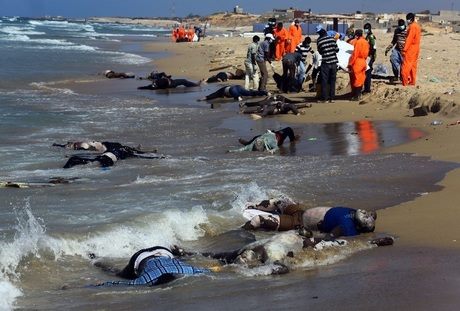
With flows of migrants from Libyan cost, the EU Southern Neighbourhood, ravaged by Islamic terrorists, and the defrozen conflict in the EU Eastern Neighbourhood with tanks moving along the vicinities in Donetsk, the EU foreign affairs Council, 6.2.2017,  finds itself in the worst situation in years, if not in decades, since the Balkan war.

Both problems have one element in common: the active involvement of the EU in shaping of the future of the neighbouring countries. The zeal of the implementation of the Neighbourhood policy in Ukraine led to the break of pro-European and pro-Russian populations, while the overthrowing of the Libyan ‘tyrant’ caused a turmoil on a half of the African continent.
Due to the EU efforts Libya from a donor became an acceptor, requesting funds to keep the flows of migrants on its coasts. 200 000 euro of taxpayers money were pledged to UN-backed Government of National Accord (GNA), while the destiny of Colonel Gaddafi’s fortune of 200 000 billion, as reported shortly before his assassination, remains obscure. However,  even if donated as agreed the major question remains if there are structures and institutions able of the implementation of the programme to improve the conditions of migrants, and fight against the smugglers.
GNA hardly controls Tripoli, where recently an explosion next to Italian reopened Embassy brought into focus grave security concerns for corps diplomatique, already shuttered by the tragic death of US Ambassador Stevens.
The EU mission on its page still calls it an ‘exiting’ time:
“It is an exciting time to be in Libya as the country is seeking its path towards democracy and stability. Just over two years ago (! -av), the Libyan people showed to the world that popular will could prevail over a ruthless dictatorship. For their courage and determination, Libyans gained the admiration of the whole world”, – although unlike Italians they prefer to watch if from the safe distance of ‘Prestige Business Center Bloc’ in Tunis.
Obviously impossible to compare ravaged by jihadists Libya with the  ‘Anti-terrorist operation’ (ATO) of President Poroshenko in Ukraine, the latest active fighting at the front line in Avdeevka, next to Donetsk endangered Minsk agreements, showing the fragility of the situation there and a huge ambition of Kiev’s leadership to conclude ATO, even at cost of the devastation of once wealthy industrial region of coal-mining.
Till present on contrary to the EU expectations the prolonged restrictive measures against Russia have not delivered an expected result to force Kremlin to abandon its support to two self-proclaimed Republics of Lugansk and Donetsk.
However the sanctions have an effect of the European agricultural sector and business, suffering losses as the result of this policy: the rise of the anti-EU forces in old member states is too obvious to ignore even for myopic bureaucrats of the European external action service, risking to lose their jobs soon, while the European nations demand referendums on EU membership from their governments, profoundly unsatisfied with the impact of  EU foreign policies on their lives.

PM May: UK surfs global

SAM_5363.JPG
In a comprehensive and inspirational speech Prime Minister Theresa May has sketched a framework for Brexit goals and future of the UK-EU relations. In a way she picked up a glove of those sceptics, including recently quit ambassador to EU Ivan Rogers, who were hinting the government had no plans, no clarity, and even suggested that it will take a decade to Brexit due to ‘mission impossible’.
However now there are concepts both for the post-Brexit UK surfing in the global world and relations with the EU as ‘strategic partner’, but no attempts to get anything close to membership. No Single Market, but an ambitious free trade agreement with the EU, and customs deal, ‘keeping open mind’. Indeed, no sense to start everything from a scratch.
Although May used as a refrain the suggestion of partnership  with the EU in many areas, she made it clear-cut, that no deal is better than a bad deal, which should go for endorsement by the UK Parliament in case of achievening a result.
For the EU institutions this means an additional bitter pill to swallow, because the UK departure without ‘a deal’ means not only leaving mandarins with a considerable hole in the pockets depriving of handsome British contribution to the EU budget, but a heavvy loss of workplaces related to trade and services, adding steam to Euro scepticism, already blaming EU austerity politics for sluggish economic growth.
The ‘hard’ #Brexit is on the cards, and ‘no deal’ is a real perspective in case British negotiators will be confronted with dogmatism which became a visit card of Juncher’s Commission, prescribing ‘more Europe’ as a universal remedy for all kind of problems to occur.
However it is an image of the UK ‘global’ which is the most catchy for many who aspire liberation from the EU ‘directives’ and ‘regulations’, ‘more Europe’ and ‘4freedoms’, which became inseparable like 10 commandments of Christ, without being so highly contribution to public mores, observing new realities of workers from different European member states receiving different salaries for the same job. Times of sweeping changes are coming. Who  is the next caught in the UK whirlwind of ‘global surging’?
Anna van Densky,  OPINION,  17/01/2017, Brussels
(Photo: illustration)

MEP Tajani for European Parliament President

tajani-commissioner

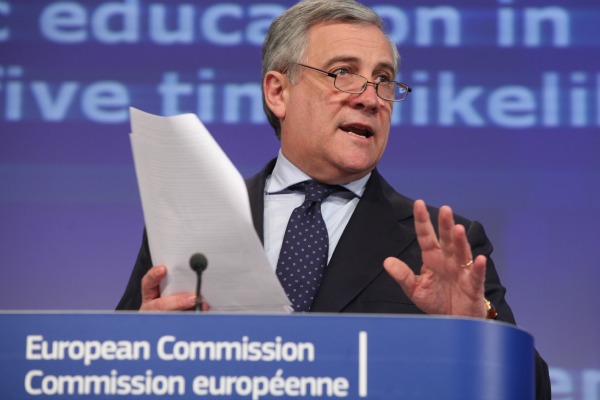
The promotion of the former EU Industry top civil servant Antonio Tajani (Italy, EPP) from Barroso’s Commission to the position of the European Parliament president, once again demonstrates the failure of the institution to  renew. The civil servants becoming politicians and politicians styled into mandarins, surfing freely between  Schuman and Luxembourg squares, just hanging backdrop of the official photos, do not inspire confidence of the EU citizens, trying to figure out a raison d’être of the EU costly project, while getting increasingly confused between loyalties and separations of powers.

Nobody is going to held Antonio Tajani (63) responsable for a move of his former boss José-Manuel Barroso accepting a chairmanship at Goldman Sachs, however the maneuvering of Tajani as the Industry Commissioner to Member of the  European Parliament (MEP), with a view of ascending to the top of the latter, makes the whole intrigue look more as a part of a chess game, than a progressive political process, reflecting public interest.
Once the spokesperson of Silvio Berlusconi, Tajani made a spectacular career in the EU institutions, coming just as a replacement of a departing for a national appointment college. With zero chance to receive a second mandate as a civil servant to ‘reign’ over the EU industry while rival party gained power at home, he returned to active politics in European elections to mold into a Member of the European Parliament immediately after
the end of his mandate in the Commission.
At present a much-anticipated farewell of twice a president of the European Parliament Martin Schulz (61),(Germany, S&D) evoked European People’s Party (EPP) to claim its rights, indicating that the second mandate of Schulz was already against all the odds, because according to the  major agreement the five years Parliamentary term was divided between representatives of two biggest political groups EEP  and Socialists and Democrats.
However the double mandate of five years  of a Socialist did not become a window of opportunity to new political actors. No new generation, no new member-states, no new leaders, but the former Commission apparatchik from fading ‘Forza Italia’ party, claiming to be a brand new political group, led  by one of the most controversial figures of Italian politics, four times Prime Minister – Silvio Berlusconi (80), whose lucky star is at decline.
Reportedly Tajani is campaigning, looking for support at home and among the other political groups in the European Parliament. The situation should be clarified mid-January, because Social democrats leader Gianni Pittella (IT, S&D) does not accept EEP president bid, claiming it will ruin the fine balance among the EU institutions, leaving socialists in minority in position of leadership.
The beginning of this year a long standing leader of EP Liberals – Guy Verhofstadt (63) (ALDE, Belgium) entered the presidential race, in hope for tactical votes.
However the chances of Mr.Tajani to raise to the summit remain high, thanks to support of his own political group – the most representative in the EP.
Still it looks the idea of renewal remains foreign to the Europarl, along with the idea of gender equality  largely remaining a rhetoric exercise: since Simone Veil (1979-1982) no one women-politician ascended the president’s position, acutely no women before either.
The true impact of institutional stagnation expressed in reshuffling the very same people over and over again will be concluded at next Parliament elections, when the European citizens will come to drop their ballots, or will not come. So far last two decades the turnouts for European elections are in study decline.
#Anna van Densky

Sir Rogers: adieu to ‘belle époque’

sam_3924

The stepping down of the UK’s ambassador to the EU, Sir Ivan Rogers continues a ‘natural’ process of  replacement of Eurocentrics by Europscpetics, namely ‘remainers’ for ‘brexiters’. If in times of his appointment in 2013 the enthusiasm for common European future was an asset,  as much as along  the ‘StrongerIn’ campaign,  in post-Brexit vote period it is a handicap. The times are changing, but not everyone is ready to change with times, some prefer to keep their personal integrity, speaking their ‘truth’ to those at power. Their choice should be respected.

But the ‘remainers’- poor losers they are – hurried to use to political ends the personal decision of ambassador, instead of accepting it as a part of a logical renewal. The type of a damaging for the common interest frenzy as both the UK and EU27 need pragmatic approach to diminish the emotional element and to implement the will of British people in a constructive way without lyrics and laments.
With a pinch of English humor in a Swiftian style, Sir Rogers hinted on an “exiting” year in Brussels ahead of his stuff, the experience he has no intention to share. However he kindly leaves some guidelines formally to his staff, but in reality to his bosses in London, the element many ‘remainers’ hurried to present as a ‘blow’ to the PM Theresa May. In vain. It is not ‘indecisive’ government, it is a EU project on the crossroads.
From the first lines Rogers admits the need to form a stable and devoted new team to follow the process from evocation of Article 50 through the negotiations to the end.
He also advises the replacement of his deputy to create an entirely new leadership for the diplomatic crew to engage fully in the future negotiations as one team.
Complaining about absence of clarity for Brexit negotiation objectives, the same time Rogers looks beyond his Brussels ‘situ’ to acknowledge the fact of changing political environment the UK is facing while departing from the project.  Indeed, the UK government has no crystal ball to guess the outcome of the multiple elections taking place in EU27 in 2017. The national elections that might create a political environment  from ‘favorable’ to ‘fair’ for Brexit negotiators. Why hurry to push the Article 50 button?..
Sir Rogers departs in a firm belive that the future of his country depends on skills of technocrats, negotiating every detail in trade agreements, but the history shows that the future is sculptured by multiple factors, among which the political will has a prior place. Europeans have witnessed a whirlwind of changes since the collapse of the fall of Berlin Wall, reminding that treaties can be abandoned not only by negotiations but also under clausual rebus sic stantibus,   or because of  a total change of the context.
The European institutions employees made us think that the threads for the future are in eurocrat’s hands. One of the evaporating myth of  ‘la belle époque’ of the EU, that will never come back, because its beauty and glamour touched just a few, and made unhappy too many.

Merry Christmas!

memling-madonna

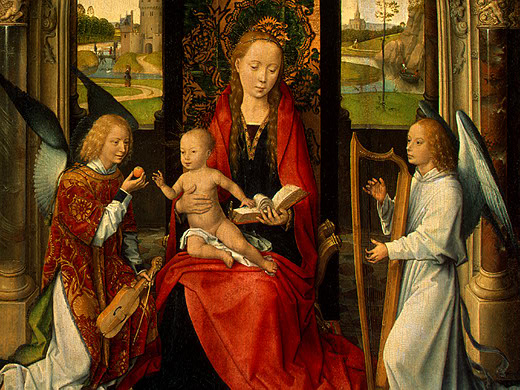
Hans Memling (Memlinc) (c. 1430 – 11 August 1494) was an Early Netherlandish painter, born in Seligenstadt/Germany, who was the last major fifteenth century artist in the Low Countries, the successor to Jan van Eyck and Rogier van der Weyden, whose tradition he continued with little innovation. Born in Seligenstadt, near Frankfurt in the Middle Rhein region,  it is believed that Memling served his apprenticeship at Mainz or Cologne, and later worked in the Netherlands under Rogier van der Weyden (c. 1455-1460).

(Hans Memling source: Artmight)

Iran nuclear deal in calamity

Federica Mogherini

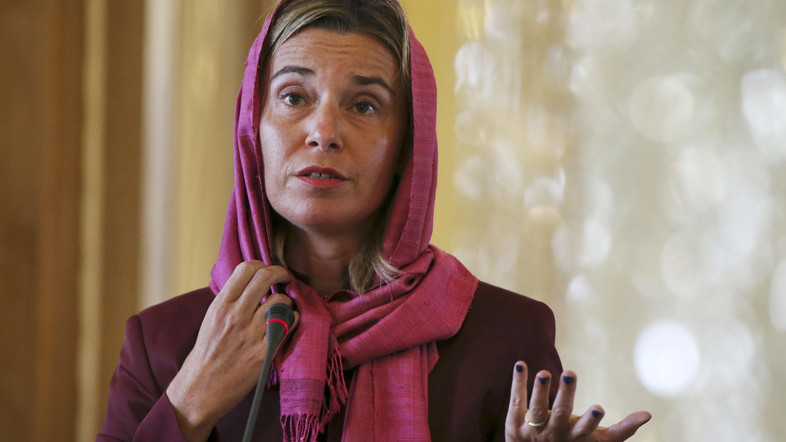
The Joint Commission of the Joint Comprehensive Plan of Action (JCPOA), composed by the E3/EU+3 and Iran, will convene on 10 January in Vienna. The meeting will review the implementation of the agreement and discuss the issues raised in the letter Foreign Minister Zarif addressed on 16 December to the High Representative, Federica Mogherini, as coordinator of the Joint Commission. The Joint Commission will be preceded by a meeting of the sanctions working group, – according to the European External Action Service (EEAS) announcement.

Many experts relate the interest in the upcoming assessment of the Iranian nuclear deal with the recent statements of the upcoming US administration, indicating it will attempt to abandon the  multilateral agreement and reinforce the US nuclear capabilities.

Communicating via Twitter, the president-elect Donald Trump declared his intention to “expand” US nuclear arsenal.

A number of previously classified documents were published on the site of the International Atomic energy agency (IAEA) as a gesture of increasing transparency necessary to convince general public in validity of the agreement. The move came after a wave of criticism of the agreement by the USA Republican congressmen.

The agreement allows Iran to  possess only low-enriched uranium, limited to an amount inferior to 300 kilograms at any moment in time.