UN: Borrell-Lavrov meeting in NYC

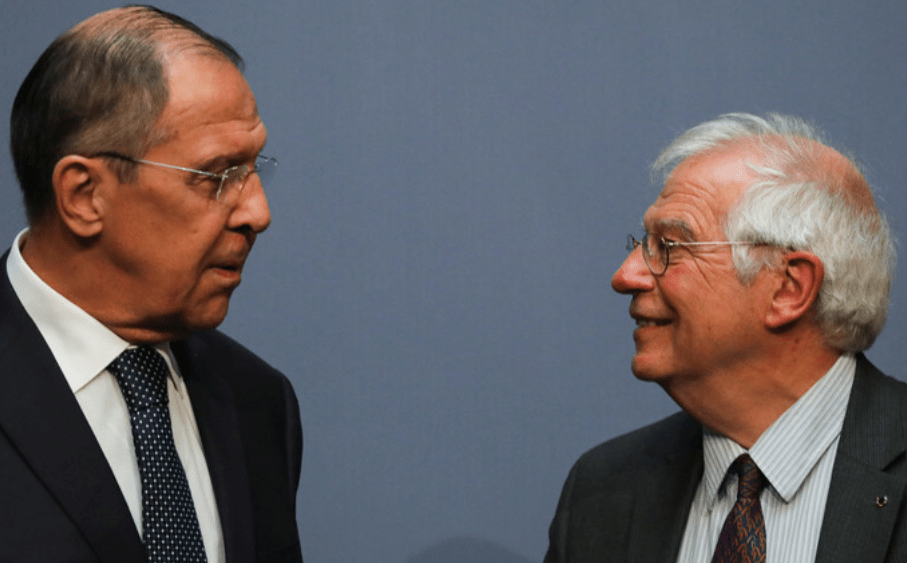
Brussels 24.09.2021 The EU High Representative Josep Borrell met with the Foreign Minister of the Russian Federation Sergey Lavrov, in the margins of the 76th session of the UN General Assembly on Thursday. They discussed EU-Russia relations as well as pressing international issues.(Image: archive)

High Representative Borrell addressed some of the challenges in EU-Russia relations, the objective being to aim at a more stable and predictable relationship. Disagreements persist, in particular in regards to Russia’s violations of Ukraine’s sovereignty and territorial integrity, in the area of democracy and human rights, as well as with regard to cyber, disinformation and other hybrid threats.

The discussion focused on international issues where the EU and Russia should continue to cooperate, with a view to addressing global security challenges such as the situation in Afghanistan, Libya, Mali, the Middle East Peace Process or the Joint Comprehensive Plan of Action (JCPOA).

NordStream II: Zelensky threatens with U.S. sanctions

Brussels 02.09.2021 The United States will impose sanctions against Nord Stream II in case other countries create energy problems for Ukraine, President Vladimir Zelensky said on Wednesday, September 2, after his visit to Washington.

“So far, we are at a stage when President Biden personally guarantees that if Russia or other parties to Nord Stream II after its commissioning … create energy problems to Ukraine, the United States guarantees it will impose sanctions against Nord Stream II,” he told at a briefing, which was aired by the Ukraina-24 TV channel.

Zelensky said it is a “big victory,” but the issue still needs further discussion.Ukraine’s position on Nord Stream II enjoys serious support in the U.S. Congress, he added.

Nord Stream II is an international project for the construction of a gas pipeline that will run across the seafloor of the Baltic Sea from the Russian coast to Germany bypassing transit states, such as Ukraine, Belarus, Poland and other Eastern European and Baltic countries.

The new 1,230-kilometer pipeline, basically following the same route as Nord Stream I, traverses the economic zones and territorial water of five countries, namely Russia, Finland, Sweden, Denmark, and Germany.

Works under the project were suspended in December 2019 after Allseas, a Swiss company laying the pipes for the Nord Stream II pipeline, suspended pipe-laying works over possible US sanctions and recalled its vessels. The construction works were resumed only a year later in December 2020 after an intense legal struggle.

On July 21, 2021, the United States and Germany published an agreement on the Nord Stream II project, where Washington recognised that sanctions would not stop the project implementation and Berlin undertook the efforts to ensure the extension of Russian gas exports via Ukraine. The United States however reserved the right to take measures in case Russia, as it put it, uses energy as a geopolitical weapon in Europe and in case of its “aggression” against Ukraine.

The Russian side has repeatedly stressed that Nord Stream II is purely a commercial project and is being implemented jointly with European partners under the WTO rules. Kremlin press secretary Dmitry Peskov expressed resentment over attempts of a number of countries to link the future of the project to political context and various circumstances unrelated to trade. Moscow has also repeatedly underlined that it has never used energy resources as an instrument of a political pressure, even providing Georgia with gas during the war.

President Biden recent promises to support Ukraine in its struggle out of economic difficulties, the endemic corruption is not the least factor,and reminds of his own son Hunter adventures in Ukraine entering the board of Burisma energy company without any relevant experience. It is also reminded about the impeachment documents failed by Representative Marjory Taylor Greene last year, clearly stating Joe Biden should be investigated over the conflict of interests caused by his son involvement in corruption scandal in Ukraine.

ex-President Ashraf Ghani brother joins Taliban

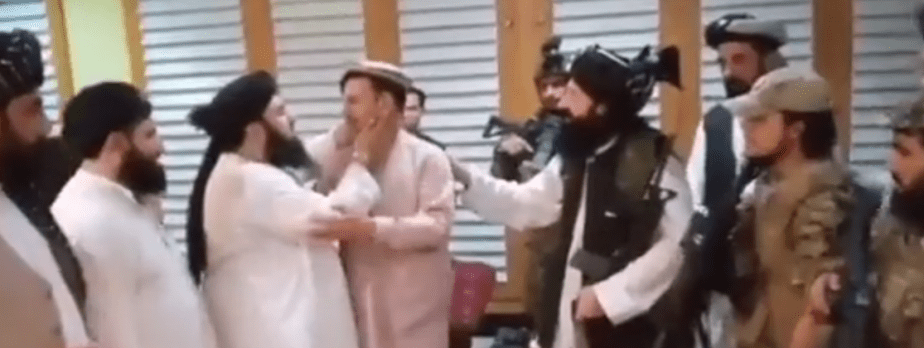
Brussels 21.08.2021 Ashraf Ghani’s brother joins Taliban, EHA News reports. Former President Ashraf Ghani’s brother Heshmat Ghani pledged allegiance to Taliban,the video of the ceremony was released on the social media.

Heshmat Ghani Ahmadzai joined the Taliban in the presence of Khalil al-Rahman Haqqani, a senior Taliban member, and declared his support for the Taliban.

Local Pajhwok news agency said on Saturday, August 21, that Hashmat Ghani, brother of former Afghan President Ashraf Ghani, had pledged allegiance to the movement. Heshmat Ghani, who heads the Kush (Bedouin) Grand Council in Afghanistan, held no official post during Ashraf Ghani’s eight-year presidency.
Heshmat Ghani appeared in a video pledging allegiance to Khalil Rahman, a prominent member of the Taliban movement, according to the Afghan agency.

Afghanistan’s Ambassador to Tajikistan has accused Afghan President Ashraf Ghani of stealing nearly $170 million while fleeing Kabul, and the diplomat is calling for international authorities to arrest him.

Ambassador Zahir Aghbar, during a news conference said said Ghani, who fled the country as the Taliban entered Kabul on Sunday, on August 15, and “stole $169 million from the state coffers,” according to The Associated Press.

He did not offer any additional details regarding his allegation.

Afghanistan: NATO Extraordinary teleconference

Brussels 19.08.2021 Extraordinary Meeting of NATO Ministers of Foreign Affairs – Brussels, 20 August 2021
An extraordinary virtual meeting of the North Atlantic Council (NAC) at the level of Ministers of Foreign Affairs will be held via secure teleconference on Friday 20 August 2021. NATO Foreign Ministers will discuss developments in Afghanistan.

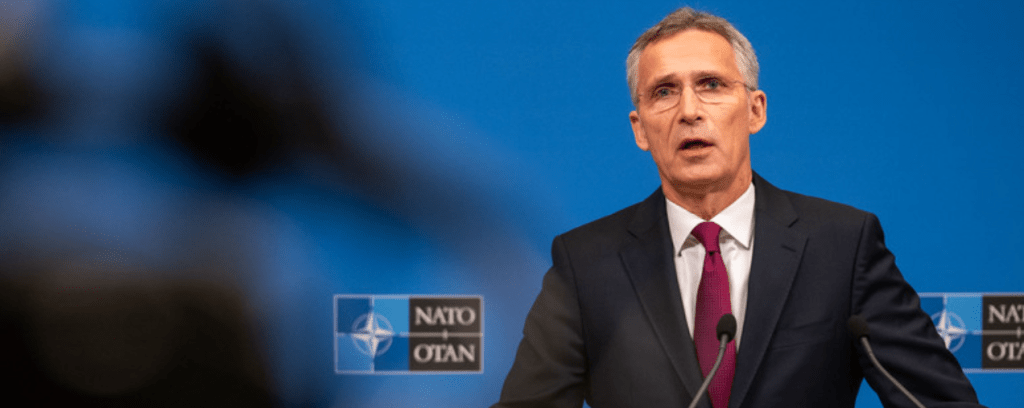
The meeting will be chaired by the NATO Secretary General, Jens Stoltenberg.
The meeting will start on 20 August 2021 at +/- 14h00 Brussels. The Secretary General is expected to brief the press after the meeting.

Previously at the press-briefing in NATO HQ Brussels on August 17, the Secretary General, Jens Stoltenberg said: “The North Atlantic Council has met to discuss Afghanistan.
“The situation is extremely serious and unpredictable.
Kabul has fallen, and the Taliban have taken control of most of the country.
I am deeply saddened by what I see unfolding in Afghanistan.

“NATO’s focus right now is to ensure the safe departure of personnel from Allied and partner countries, and of the Afghans who have helped us.
NATO has been working round the clock to maintain operations at Kabul international airport.
Around 800 NATO civilian personnel have remained to provide key functions under very challenging circumstances.
“Including air traffic control, fuel, and communications.
And I would like to thank them.
Let me also thank the military forces of NATO Allies, in particular Turkey, the United States and the United Kingdom for their vital role in securing the airport.
Operations at the airport are now gradually resuming.
And during today’s meeting Allies announced that they are sending additional airplanes.

“We have also maintained our diplomatic presence.
Our Senior Civilian Representative Ambassador Pontecorvo and his team have been working closely with Allies and the rest of the international community to coordinate and facilitate the evacuation.
And we remain committed to completing evacuations including of our Afghan colleagues, as soon as possible.
The Taliban must respect and facilitate the safe departure of all those who wish to leave.
The airport, as well as roads and border crossings, must be open.
All Afghan men, women and children deserve to live in safety and dignity.
There must be a peaceful transfer of power to an inclusive government.
With no revenge or retribution.

“A government that does not respect the fundamental rights of all Afghans and reinstates the reign of fear, risks international isolation.

“The United States agreed with the Taliban last year that US troops would withdraw by May.
And after many rounds of consultations, all Allies agreed to follow the US decision.
Ending our military mission was not easy.
We were faced with a serious dilemma.
Either leave, and risk seeing the Taliban regain control.
Or stay, and risk renewed attacks, and an open-ended combat mission.

“We never intended to stay in Afghanistan forever.
Over the past few years, from over 100,000 troops we went down to less than 10,000 – and now to zero.
But what we have seen in the last few weeks was a military and political collapse at a speed which had not been anticipated.
Parts of the Afghan security forces fought bravely.
But they were unable to secure the country.
Because ultimately, the Afghan political leadership failed to stand up to the Taliban and to achieve the peaceful solution that Afghans desperately wanted.
This failure of Afghan leadership led to the tragedy we are witnessing today.

“At the same time, we need to have an honest, clear-eyed assessment of NATO’s own engagement in Afghanistan.
Despite our considerable investment and sacrifice over two decades, the collapse was swift and sudden.
There are many lessons to be learned.

“But we should also recognise the gains we have made.
NATO Allies and partners went into Afghanistan after 9/11 to prevent the country from serving as a safe haven for international terrorists to attack us.
In the last two decades, there have been no terrorist attacks on Allied soil organised from Afghanistan.
Those now taking power have the responsibility to ensure that international terrorists do not regain a foothold.
Allies have the capabilities and the vigilance to address future terrorist threats from Afghanistan.

“Due to our military presence and the support of the international community, a new generation of men and women have grown up in a new Afghanistan.
Able to get education, take part in the political process, run their own businesses, and enjoy a vibrant media scene.
Today’s Afghanistan is very different to the Afghanistan of 2001.
So those gains cannot be easily reversed.

“The world will be watching.
And must continue to support a stable and peaceful Afghanistan”.

KABUL: Russian Embassy remains functional

Брюссель 15.08.2021 Russian diplomats are not preparing the evacuation of the Russian embassy from Kabul, the diplomatic mission is working in a quiet mode, we are in touch with the ambassador, Zamir Kabulov (pictured), the special envoy of the Russian president for Afghanistan, director of the second department of Asia of the Russian Foreign Ministry, told RIA Novosti.

“No, the evacuation of the embassy is not being prepared. I am in contact with our ambassador, they are calmly working and closely watching the development of events,” Kabulov said.
The Taliban guaranteed security not only for the Russian embassy, but also for diplomatic missions of other countries, Kabulov added.

Russian Foreign Ministry spokesman Maria Zakharova, commenting on the situation in Afghanistan, where the Taliban are taking over major cities, said that the world is watching with “horror” the result of another “historical experiment” of Washington.

“It’s surprising, but true: in Afghanistan, there is a confrontation between two forces, both of which are the fruit of the US thinking process. The world is watching with horror the result of another historical experiment in Washington,” Zakharova wrote on the Telegram channel.

The situation in Afghanistan has escalated in recent weeks with the Taliban militant attacks on the country’s major cities. On Sunday,August 15, media and sources reported that the Taliban control all border crossings in Afghanistan, are in the vicinity of the capital and have taken control of the Kabul University.

Meanwhile, the Afghan presidential administration said it was in control of the situation in the country’s capital, Al-Arabiya TV reported. Negotiations with Taliban are ongoing now in Presidential Palace.

Former Afghan Interior Minister and former Ambassador to Germany, Ali Ahmad Jalali, will be appointed head of the country’s transitional government, Afghan Khaama Press reports citing sources.

According to sources, negotiations are underway at the Presidential palace in Kabul to transfer power to the radical Taliban movement. It is noted that the head of the Supreme Council for National Reconciliation in Afghanistan, Dr.Abdullah Abdullah, acts as a mediator.

Earlier, the Taliban said they were negotiating with the government about the possibility of peacefully entering Kabul. They also stated that the Afghan government will be responsible for the security of Kabul until the end of the transition process.

The Taliban movement, while being a terrorist group banned Russia, guaranteed the security of the Russian embassy in Kabul, said Mohammad Sohail Shahin, a spokesman for the Taliban’s Qatari political office. Zamir Kabulov, special envoy of the Russian president for Afghanistan, director of the second department of Asia of the Russian Foreign Ministry, added that the evacuation of the Russian embassy in Afghanistan is not planned.

Zamir Kabulov, who was born in Soviet Uzbekistan, graduated from the Moscow State Institute of International Relations in 1977, and carried on responsibilities in various diplomatic posts in the central offices of the Ministry of Foreign Affairs and abroad, in particular in Afghanistan. His Central Asian background further bolstered his career in dealing with Afghan and Pakistani issues.

EU stands with Russian civil society

Brussels 23.07.2021 “Russian authorities recently announced a number of new decisions targeting independent media outlets, journalists and civil society organisations” reads the statement by the European External Action Service spokesperson on the continued crackdown on independent media outlets, journalists and civil society in Russia.

“The Institute of Law and Public Policy (ILPP) and a number of journalists were designated as so-called “foreign agents”, and the media outlet Project Media, Inc. was declared a so-called “undesirable organisation”. In addition, the association of lawyers and journalists Team 29 (Komanda 29), defending human rights and fundamental freedoms in Russia, decided to cease its activities following pressure and unjustified accusations by the Russian authorities”.

“The cumulative impact of these latest developments, in conjunction with a raft of repressive measures targeting highly respected NGOs and individuals in Russia, results in further quashing dissent, opposition, critical voices and independent institutions from the Russian public sphere. This is particularly worrisome ahead of the State Duma elections in September”.

“The European Union has repeatedly condemned Russian laws on “foreign agents” and “undesirable organisations”, as they run counter to Russia’s international obligations and human rights commitments, including with regard to freedom of expression and association. We reiterate our call on the Russian authorities to reverse these decisions and to stop the unabated crackdown on civil society and independent media”.

“The European Union stands in solidarity with Russian civil society, human rights defenders and independent journalists and will continue to support them in their important work”.

Hungary receives support

Brussels 28.06.2021 Heading against the all-out campaign of the liberal mainstream against Hungary’s recently adopted child protection law, several European politicians rushed to its defense, Hungarian Minister of Foreign Affairs Péter Szijjártó wrote on his Facebook page. (Image belovw: Prime Minister Viktor Orban with his grandchildren).

Hungary’s new law, which enacted a variety of anti-abuse and anti-pedophile laws, also banned LGBT content or content that promotes children changing their gender from being shown to children under 18. The law has been criticised by the president of the EU Commission Ursula von der Leyen.

“The liberal mainstream has launched an unscrupulous fake news campaign against Hungary because we have made it clear that parents have the exclusive right to educate their children about their sexual orientation. But no matter what they say about us, we won’t let go of it! Get your hands off our children!” Szijjártó wrote, causing further polemics.

However Szijjártó has underlined the fact that there were those who “stood by us in spite of the terror of opinion from those who commit stigmatising, lying attacks. Thank you for standing by our country, you can count on us too!”

Among those who support Hungary were politicians in Poland, Italy, Estonia, and Slovakia.

“Children and families must be protected from being affected by any indoctrination activity. (…) There are clear rules that parents have the right to raise their child. I want to underline this very strongly, because I have a very deep conviction that it is a good attitude for parents to be able to decide who and on what principles can hold any kind of teaching-educational activities,” said Polish Prime Minister Mateusz Morawiecki.

According to Czech Prime Minister Andrej Babis, the Hungarian law must be “satisfactorily explained”.
“I can’t judge, we agreed that we should discuss it in a V4 framework to make sure the interpretations are correct,” Babis has underlined.

“We are a little concerned about what is happening around Hungary. In Hungary, a law has been passed in the parliament to combat pedophilia, and there are also provisions dealing with homosexual education. (…) Is this a reason to exclude someone from the EU?” said former Slovak Prime Minister Robert Fico, adding that “the whole EU and the whole European Commission stood on its head”.

Matteo Salvini, the leader of the League party also came to the defense of the Hungarian law.

“Each state is free to decide how to organise its own schools, universities and judiciary. I don’t understand the interventions,” he said.

PM Sanna Marin trashes EU dress code

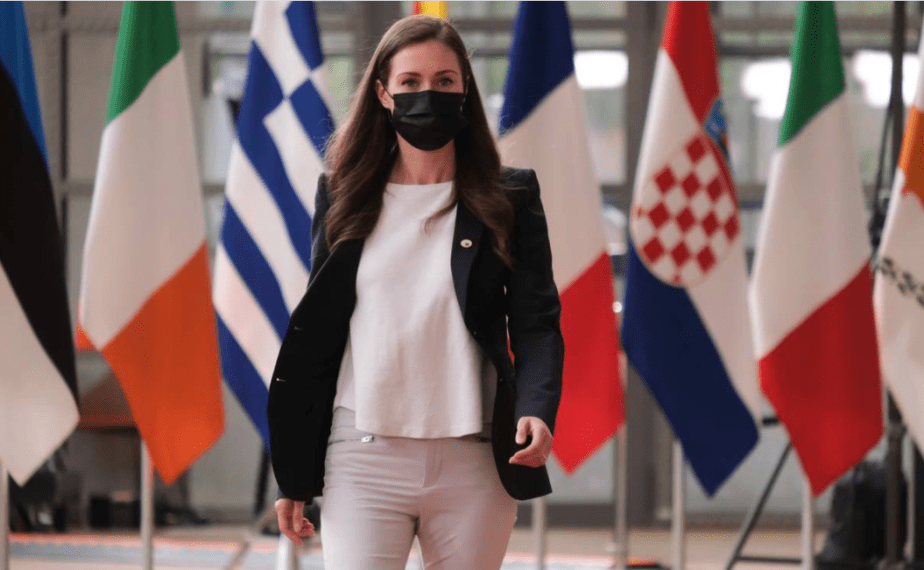
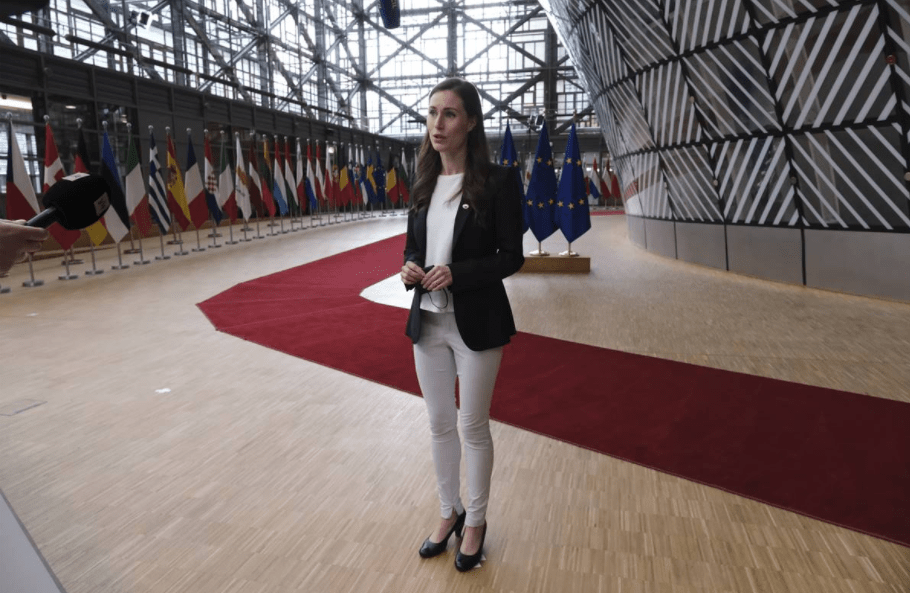
Brussels 25.06.2021 Anna van Densky OPINION There is no official dress code in the EU institutions, “however you are expected to dress adequately” the site of the European Commission announced. For most businesses throughout Europe, business attire is formal, which means dark suits, subdued ties, and lace-up shoes. Women’s clothing follows suit.
(Image: Finnish PM Sanna Marin “Friday” casual look at doorstep of the European Council).

Business attire is a formal dress code for many offices and corporate events in the EU. It denotes a professional style of dress that appears smart and sophisticated. For men, a suit is generally required. Women as “newcomers” can interpret business attire in a range of ways. While pantsuits and skirt suits are ideal, polished separates and business dresses are accepted if applied with discretion.

Business casual is a somewhat relaxed style of office wear which is accepted on certain occasions. It is often called upon for contemporary places of work in offices, however nowadays with distant working everything has been even more relaxed due to teleconferencing.

Previously along with “casual Fridays” in more conservative offices. Formal business attire is more sophisticated than business casual and is typically reserved for more traditional offices along with certain professional occasions, such as meetings and presentations.

According to modern dress code women can wear casual pants or skirts. Neither should be tight. Fabrics should be crisp; colours should generally be solid; navy, black,  gray, brown and khaki are always safe bets. For the most business-like appearance, pants should be creased and tailored; neither extreme of tight or flowing. (Image below: Christine LAGARDE -President of the European Central Bank):

“If you are pursuing a conservative industry and are in doubt, observe well-dressed women in your industry on the job, at career fairs, at information sessions, or consult your career coach” the University of Maryland School of Business instructs.

However new generation EU politicians are not willing to look up to the pre-COVID19 era. Lockdowns, social distancing and teleworking reflected upon modern looks. Future is clearly unceremonious! 

Russia-UK Black Sea altercation

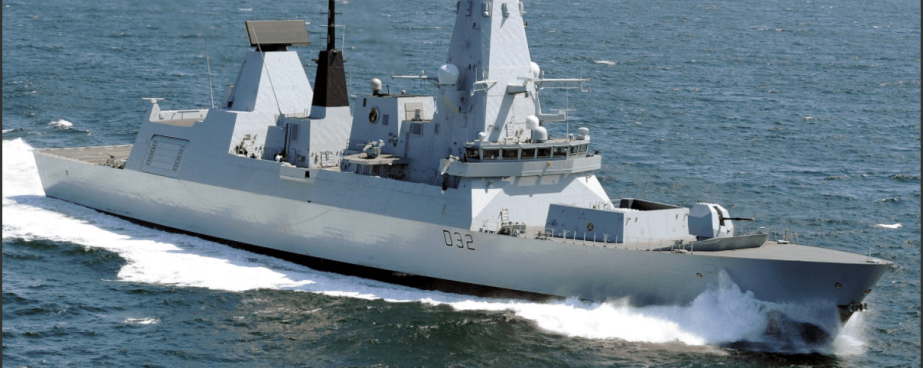
Brussels 23.06.2021 Russian Black Sea Fleet, jointly with the Border Guard Service, halted the violation of the “Russian state border by a UK naval ship off Crimea coast”, the Defense Ministry of Russia reported on Wednesday, June 23. (Image: illustration).

A guard ship of the Black Sea Fleet fired warning shots while a Su-24M bomber conducted preventing bombing, the ministry informed.

“At 11:52 on June 23 this year, the UK Navy’s guided missile destroyer Defender operating in the northwestern part of the Black Sea crossed the state border of the Russian Federation and moved 3 km into the territorial sea near Cape Fiolent,” the ministry said in a statement.

The Russian Black Sea Fleet jointly with the Border Guard Service of the Federal Security Service (FSB) of Russia “halted the violation of the Russian state border by the UK Navy’s guided missile destroyer Defender,” the statement says.

The UK Navy’s guided missile destroyer Defender was floated out in 2009. The warship can develop a speed of about 30 knots and operates various armaments, including Harpoon anti-ship missile launchers and short-and medium-range air defense systems.

The Type 45 destroyers were built to replace the Type 42 (Sheffield-class) destroyers that had served during the Falklands War (10-weeks war between Argentina and the UK in 1982 over two British dependent territories) with the last Type 42 being decommissioned in 2013. The National Audit Office reported that, during an “intensive attack”, a single Type 45 could simultaneously track, engage and destroy more targets than five Type 42 destroyers operating together.

The class HMS45 is primarily designed for anti-aircraft and anti-missile warfare.

HUNGARY: Leyen expresses “legal concerns”

Brussels 23.06.2021 “This Hungarian bill is a shame. I have instructed the responsible commissioners to send a letter to express our legal concerns before the bill enters into force”

This bill clearly discriminates against people based on their sexual orientation. It goes against the fundamental values of the European Union. Human dignity, equality and respect for human rights.

“We will not compromise on these principles. I have said it before: I believe in a European Union where you are free to be who you are and love whomever you want. I believe in a Europe which embraces diversity.
I will use all the powers of the Commission to ensure that the rights of all EU citizens are guaranteed. Whoever they are and where ever they live within the European Union”.

Belgium, the Netherlands and Luxembourg led the charge against Hungary’s anti-LGBT law while the European affairs ministers from the 27 EU countries met to discuss the rule of law. In total, 16 member states out of 27 expressed their disapproval of the Hungarian law.

Last week, the Hungarian parliament passed a new law tabled by the government of Prime Minister Viktor Orbán that bans the portrayal of homosexuality and sex reassignment during school education material and TV programmes addressed to people under 18 years of age.

The bill, approved during Pride month, was facing the condemnation from high-ranking officials of several EU countries and political groups in the European Parliament. The outrage over the Hungarian law was discussed by the EU Council, with the Benelux ministers gathering linked-minded countries in a critical statement against the legislation.

Following behind-the-scenes consultations, Denmark, Estonia, Finland, France, Germany, Ireland, Lithuania, Spain, Sweden and Latvia endorsed the Benelux text. Italy waited until the end of the meeting to add its name to the list, while Austria and Greece did so the following day.

“[The law] represents a flagrant form of discrimination based on sexual orientation, gender identity and expression and hence deserves to be condemned. Inclusion, human dignity and equality are core values of our European Union, and we cannot compromise on these principles,” the countries said.

Prime Minister Viktor Orban has expressed his opinion during the radio programme “Good morning, Hungary”, explaining that the law is not anti-gay, but defending children’s rights. “This is a law about the protection of our children” the Hungarian Prime Minister has underlined.