#SOTEU: Leyen formal debut

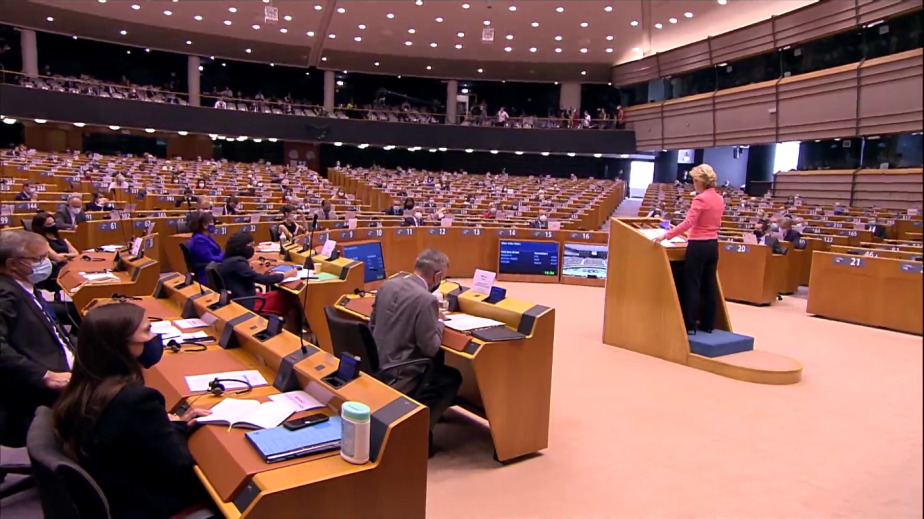
The traditions September State of the Union Speech (#SOTEU) of the European Commission president has been the first one for Ursula von der Leyen. The address before the European Parliament took place in Brussels, instead of Strasbourg, because of the coronavirus restrictions.
On 16 September in her first #SOTEU speech, she shared her vision for a stronger Europe and a better world after the coronavirus pandemic, radiating obligatory for her status enthusiasm over the EU radiant future.
However if in tone the speech did not deviate from the EU classical tradition of depicting the project as the ever-growing and successful endeavour in essence it broke with the tradition,because COVID-19 pandemic, vaccination of humanity, and related issued became the major focus, causing compression, and sidelining of many other policies – international relations became one of these areas of shrinking attention.

The overview of the EU external relations started with China, and ended with Africa with Enlargement and Neighbourhood policies squeeze in between, and complimented with haphazard mentioning of human rights. The compression of the foreign affairs chapter was striking,leading to frantic dashes from Uyghurs to Magnitsky Act, from Salisbury poisoning of former Russian secret service agent to migrant camps in Turkey.

President von der Leyen has been mixing the issues and problems with vague promises, and warnings of international politics as a disc jokey (DJs) mixes melodies, weather forecasts and advertising. The speech has been delivered on time, and almost entirely in English language in spite of the fact it is used only in two of the bloc members – Malta and Ireland – which constitute one per cent of the EU population. This Anglophilia was largely misplaces, taking into consideration the recent British Prime Minister consideration to opt for no-deal exit.

According to British press Boris Johnson will present an ultimatum to negotiators in coming days, demanding the UK and Europe to agree a post-Brexit trade deal by 15 October or Britain will step out without any agreement at all. Under the circumstances von der Leyen choice of English language looked rather submissive, and even masochistic, dissonating with major tones of the oratory, mixing cheerful slogans and staccato warnings.
“And the band played on…”

Mali political crisis

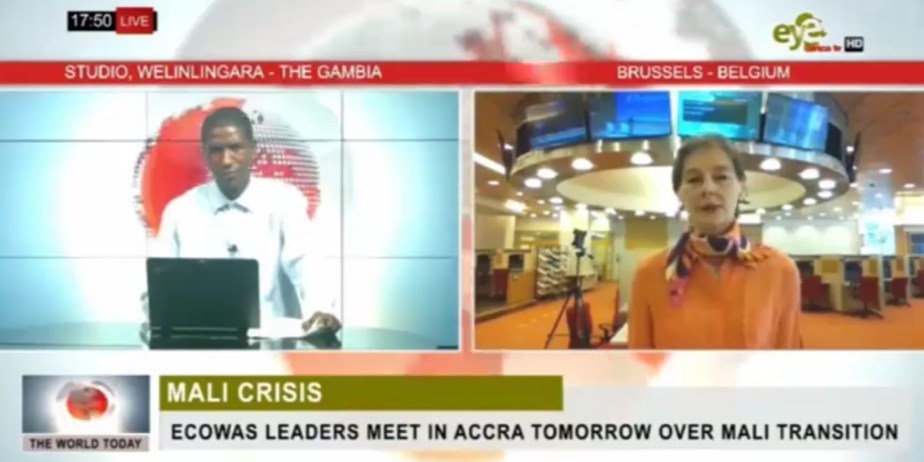
Mali’s political crisis deepened further when the opposition M5-RFP rejected the Charter negociated by the officers led by Colonal Assimi Goita and the ECOWAS. The stalemate is about than whether a civilian or a soldier should lead the transition. What looks like a crisis of confidence, in reality is a wrestling for power, while interests of Malians go begging. The country is suffering from block of the borders, and freezing of financial transations as a reaction of Mali neigbours to coup d’etat of August 18. Here is my comment for the Eye on Africa TV.

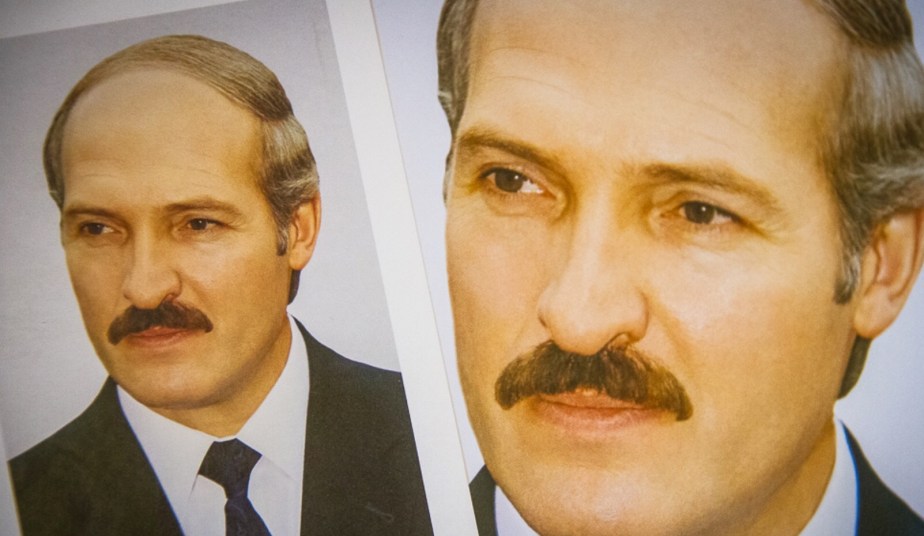
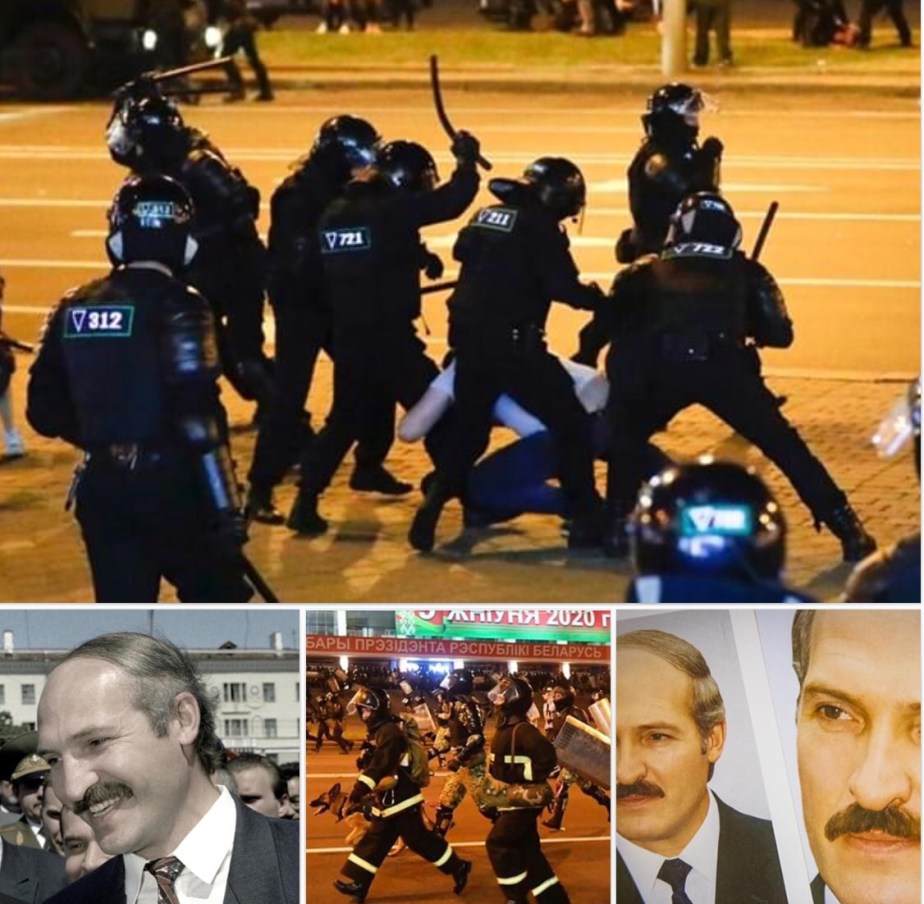
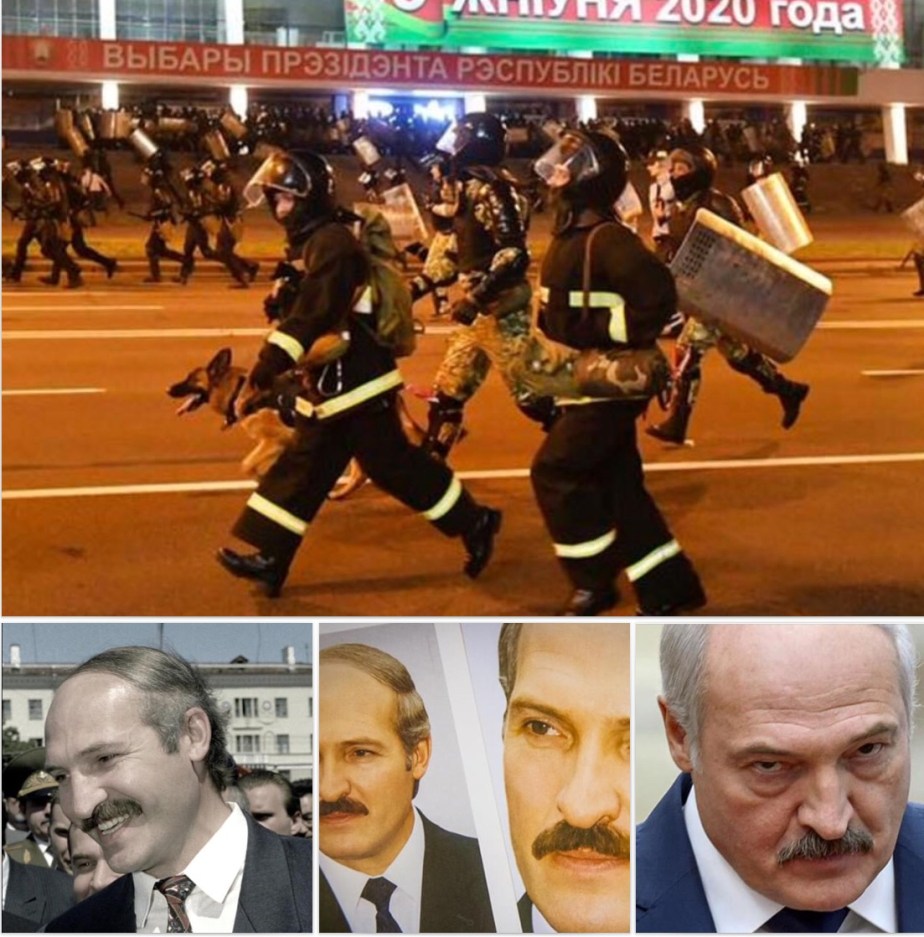
EU «wahsed hands» of Belarus

#Belarus #Lukahsenko #BelarusProtests
Anna van Densky OPINION Today, on August 19, an extraordinary meeting of the Council of the EU on the situation in Belarus took place by teleconferencing.

The feeble answer has surprised many. The EU leaders have not pronounced the name of the genuine elections winner Svetlana Tikhanovskaya even once (!)While being so ardent about Ukraine integration into the bloc, why showing so little engagement towards dramatic events in Belarus?

First of all the context has entirely changed for the Europenan Union as an internationl organisation, transcending a profound systemic crisis itself. The bloc is in a difficult economic and financial situation because of the pandemic and because of the Brexit. The UK, the second largest contributor to the EU’s coffers, has left the organization and there is no trade agreement yet, and most likely will be none, which will create a considerable number of the economic problems in short, medium and long term.

At present the economy of Belarus is integrated into Russian and it is also orientated to the former Republics of the USSR, exporting there machinery. What is especially lucrative is the export of agricultural products to Russia, while it would be not easy to find the replacement for clients at the EU market, which has a surplus of agricultural products to an extend that the farmers receive funds not to produce, and not to develop the arable lands.

The dependency of Belarus on Russian hydrocarbons (Yamal gaz pipline) is a common place, and does not need any additional clarifications; the machinery, produced for former Republics either.

Regarding political transition to democracy from Lukashenko authoritarian rule, the major riddle is how to integrate the country into the EU politically, while it’s economic foundation is firmly intertwined with Russian Federation, and former Soviet bloc.

The defence issue is not less problematic: joining the CSTO, Belarus became a military ally of Russia. Certainly it can cancel the CSTO membership, but the maximum of what can be achieved afterwards from the army and the people is military neutrality. Due to its history, the country will opt for neutrality policy, since the people do not sympathise with NATO and, unlike Ukraine and Georgia, there has never been any talk of joining the North Atlantic Alliance for Belarus.

And here the geopolitical level of the issue is reached: there is no point in integrating a country into the EU which will not host military bases of the United States, and even less so joining the the North Atlantic Alliance. If the Belarussians keep Lukashenko in disdain, it does not mean that they are ready to join the “belt of infidelity” and serve Western interest, regarding Russia as a foe, as Ukrainians and Georgians are eagerly doing.

Taking into consideration mentioned above one should not expect active political support and financial assistance to Belarus from the EU similar the one they offer to Ukraine and Georgia.

A policy of sanctions against Lukashenko’s entourage has already been chosen by the EU, which is related to the policy of sanctions againstRussia and will be further harmonized with it. De facto, what looks like support to Belarussians will be an additional package of sanctions against Russian economy.

Subsequently further retention of Lukashenko in power by allies in Moscow is not only meaningless, but frankly detrimental to the economic interests of Russia, because they will be used by the West as a tool for expanding sanctions. Lukashenko life-long presidency will also significantly deteriorate image of Vladimir Putin in domestic politics, and deepening of the Belarussian crisis will have a negative impact on the entire range of Russian interests at home and abroad.

In their best interest Russians shouldn’t hold on to the political corpse of Lukashenko, but should arrange his swift and humble funeral and turn their attention to the other contemporary political players preferred by Belarus people:

The king is dead! Long live the king!”.

Inauguration of incumbent President Lukashenko one more time will take place in two month, Russian TASS new agency reported. He has been Belarus authoritarian ruler for 26 years, who came to power as a “new type of leader” in last millenium and stayed due to his “clinch” with power for almost three decades, erasing smallest signs of dissent.

Belarus future and EU aid

Anna Van Densky OPINION #Belarus #Minsk #Lukashenko #BelarusProtests #Tikhanovskaya

The proposal to facilitate the engagement into “political dialogue” between the discredited Lukashenko regime and people of Belarus the EU has announced, looks like a stillbirth already, because the entire crisis is created by the blunt refusal of compromise between the authoritarian model, and democratic pluralism. Moreover it is impossible for Lukashenko to accept any compromise, because it will mean the definitive dismantling of his rusty “last dictatorship of Europe”.

Reacting upon the political crisis the president of the EU Council Charles Michel delcrared the start of the work on creating of the sanctions lists of the leading figures from the government responsible for repressions of the protestors, however they will remain a higly symbolical gesture in absence of the real political process of democratic transformaiton of Belarus.

The stubborn refusal of Lukahsnko to leave, his clinch with power, creates new, but predictable trubles, and a substantial challenge to the EU diplomacy, claiming ambition of being a global player.

However there are effective ways for the EU to promote democracy and political pluralism in Belarus instead of focusing on the punitive symbolism of sanctions. While the opposition leader, and the major challenger of the incumbent President Lukashenko, Svetalana Tikhanovskaya expressed her readiness to become a national leader in the transition period in order to organize new free and fair elections, the EU could give an unequivocal political support to her plan.

The proposal of leading the country towards new elections means that Svetlana Tikhanovaksya submits her personal victory in order to create opportunities for Belarus political Renaissance, opening the way of participation to all political prisoners and other candidates who were barred from the elections process at the intent of Lukashenko, who was announced an absolute victor of the elections, with the 80% of vote. The result has been widely considered considered as falsified not only by Belarus people, but also by the EU foreign ministers.

The question is if the European Union will support Svetlana Tikhanovakaya the same way as they supported Roza Otunbayeva, the President of the transition period in former Soviet Republic of Kyrgyzstan 10 years ago, after they overthrew of their dictaror. Then the top EU diplomat Baroness Ashton proposed to support Kyrgyzstan “politically, financially, technically” in order to ensure fundamental rights and freedoms to Kyrgyz people.

The role of the EU insitutions will be crucial in overcoming the political crisis and conducting democratic reforms in Belarus, establishing genuine pluralist political system, representing broad spectrum of interest and arbitation. The void, the absence of meaningful offer for practical aid from the behalf of the international community, reducing the EU role to the punitive measures as sanctions, will certainly allow the crisis to become protracted, and costly in all the senses to Belarussian people.
Moreover it might deteriorate further, creating conditions for chronic confrontation between people and Lukahsnko apparatchiks, and part of the police and military, still defending the discredited regime. This will lead to general fatigue, and loss of opportunities for promotion of genuine democracy. (Formally Belarus Republic is a democratic state).

In this context plagued by refusal of the authoritarian Lukahshenko regime to accept the justified demands of the people of Belarus, the EU aid to opposition, led by Tikhanovskaya and supported by the majority of citizens, is becoming pivotal in introduction of the democratic change to ensure definitive collapse of the last dictatorship of Europe. However the time is crucial to avoid new victims in the ongoing struggle between antipodes without any perspective of compromise. Instead of attempting to reconcile irreconcilable in the best interest of Europe is to invest in Belarus progress without delay.

Belarus: Lukashenko poisoned chalice

Anna van Densky OPINION Isn’t it time for Alexander Grigorievich to book one-way ticket to Dushanbe? He is very fond of mountain landscapes there, and, he himself has repeatedly stated that he «loves» Tajikistan for «similarity» to Belarus. No wonder – Tadjik President Rahmon will soon face the challenge of the fifth re-election, however in less lively political context.

Anyway, from the common sense perspectvie one way ticket to Duchanbe is much better than spending time in a prison cell in The Hague. And after what Lukahsenko has done, there is no chance of a quiet and serene old age, enjoying Belaveja forest in his native Belarus.

Ordering crakdown on peaceful protestors, claiming they are «people with criminal past and unemployed», Lukashenko demonstrated to what extent he lost touch with the reality, conducting Stalinist repressions in the digital age. Opressing the citizens of the Republic for their refusal to believe that his 80% eelction victory was genuine, he slided along the downspiral of self-destruction. However his poisoned chalice of elections triumph turning into a disaster was entirely self-inflicted, and rooted in his Europe Last Dictator dramatically outdated authoritarian style.

Nowadays the images of Belarus police violence, causing bruises, wounds, broken heads and arms, and videos of complainants of torture under arrest, all these images are floating across social networks around the world among four billion users!

The EU had no choice but start preparing “strong measures” in response to Lukashenko massive abuses of fundamental rights of the citizens of Belarus, addressing an old problem of the «Last Dictator of Europe».

However, not only the West is shocked by Lukashnko assault for life-long preisdency after 26 years of uninterrupted autoritarian rule, but appartnely Moscow is also concerned about the revolution he provoked by brutal power grab. After all Kremlin is also obliged to think about the image in the global world, and is not eager to convert Russia to a grave-yard for the political corpses of failed dictatros.

So the only way out is a ticket to Duchanbe (Stalinabad). And with some luck Alexander Grigorievich gains some prominence there, advising President Rahmon whether to run for the FIFTH TIME in October, or maybe hand over the post to his eldest son, or even someone else …

Once upon a time just a chairman of a collective farm in a poor village in Belarus Soviet Republic, nowadays Lukashenko has such a rich experience of a statesman that he can easily capitalize on his services to other presidents for life, willing to keep the grip on power for long. He can advise them on mistakes to be avoided, using his own scandalous affair of falsifications of elections, causing his downfall.

Surely Lukashenko advice will be in high demand, and even a commercial success, and when the list of the dictators will come to the end, he could buy a farm and start doing what he does best – raising chickens 🙂

Cock-a-doodle-do!

E-Tourism: long-term work and leisure fusion..

Anna Van Densky OPINION The latest edition of the United Nations World Tourism Organisation (UNWTO) – World Tourism Barometer concluded that the near-complete lockdown imposed in response to the pandemic led to a 98% fall in international tourist flows in May when compared to last year.

The Barometer also indicated a 56% year-on-year drop in tourist arrivals between January and May. This data signified a fall of 300 million tourists and US$320 billion lost in international tourism profits – more than three times worse than during the Global Economic Crisis of 2009.

However the dramatic disruptions of the traditional tourism caused by pandemic, can also conceive new forms and incentives for travellers, venturing advantages of long-term «e-tourism».

Nowadays the new cyber-age technologies enable travelers to work from any hotspot providing broadband internet, the opportunity transcending the traditional forms of vacation built on antithesis of work-leisure, and integrating work into classic leisure environments, creating fusion of both.

«Telework tourism» opens new perspectives for individuals, couples, families, and groups, who are interested to combine a possibility of a new format of
remote office work, and leisure in a foreign country for a basic period of three months (in some cases up to six months with a relevant insurance).

Taking into consideration the most immediate and lasting lifestyle changes caused by the pandemic, the major trend – a remote work tourism, can become a must and vogue for «office people». The opportunities are equally open for employees, and self-employed, who have reformatted their modus operandi to tele-communications; and certaliny for representatives of intellectual and free professions as authors, writers, editors, publishers; not least those who are in education and academia system, as lecturers, instructors, tutors, researchers, Ph.D students, who have had already a sufficient level of autonomy and capabilities to realise their work remotely. As a result we will soon witness the birth of the entire Nomadic e-communities venturing resorts on six continents.

Within the new pandemic context the toursim sector might develop new concepts to broaden the spectrum of services, offering to the potenial travellers ideas and models of new, adapted e-lifestyle, discoveering positive sides of teleworking, moving to different settings, and environments, combining work and leisure for a significanly longer period of time, which previously has been a luxury available for senior citizens only.

Before the pandemic disruption the European tourism has been going through a period of intense development also as a result of the status of ‘industry’ it was attributed in the EU, creating jobs and generating impressive profits.
One of the achievements of these developments is the highest level of quality of the services in products offered by the industry of hospitality responding to the diversity of demands, and scale of financial opportunities of the travellers, which nowadays with a broadband can be enjoyed for a significantly longer period of time.

And after all, may be new age technology offers us much more interesting ways of spending life than we could have ever imagined before? The nascent trend for long-term «teleworking tourism» in the setting of traditional resorts is shaped by download speeds of 2.8 Mbps for HD quality, providing modern standard tele-conferencing for the working travellers, enjoying wonders of the Cyber Age.

In today’s rapidly changing world invaded by volatility the working e-travelling is the long-term trend to stay: bon voyage!

Khabarovsk: Russians protest against Putin

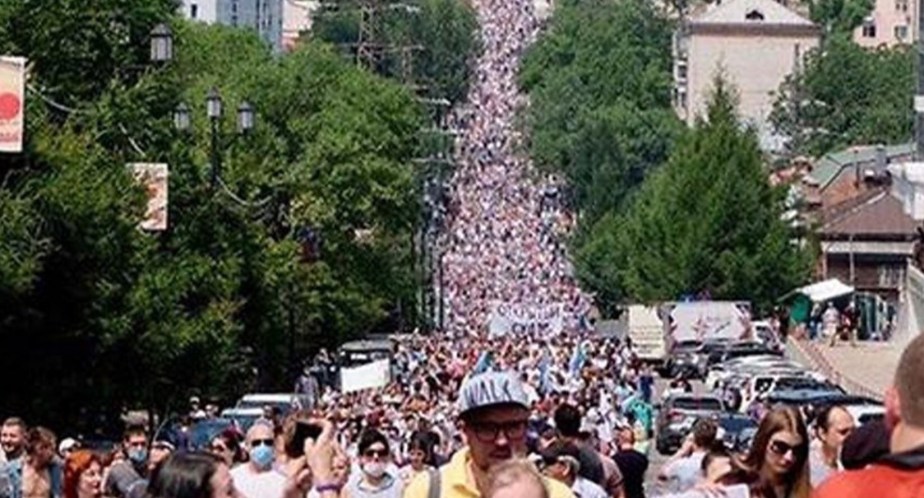
#Khabarovsk #Russia The protestors started with the demands of release of their governor Sergei Furgal, who was abdicted, they believe, because of his refusal to falsify the results of the Constitution referendum, which aimed at crowning Putin lifelong President of Russia.

The Far East region of Khabarovsk showed very little support to a plan of leaving Putin at power to 2036, with 36,64% of «NO» votes among 44% turnout, and after that failure Sergei Furgal «lost confidence» of the President, and was literally kidnapped, and transported to Moscow prison.

The abdicated on July 9 governor denies all accusation of plotting murders of businessmen committed in 2004-2005, claiming his innocence.
People in Khabarovsk insist the entire Furgal affair is fabricated, being the revenge for his independence, and democratic attitude towards the plebiscite, letting the vote happen without manipulations.

Nowadays the citizens are not only demanding his liberation, but also the resigantion of Putin, and respect of democracy, being indignant by the foul play around Constitution, with one single aim of continuation of Putin’s presidency.

They are chanting «Putin’s thief!», «Putin resign!», «Putin out!», «Crime against Constitution», «Russia without Putin!». National Guards sent to the central square said they will not act against people, in case of order to use force, they will surrender uniforms and quit.

Remarkable, that Khabarovici use method of Catalans and Yellow Vests, manifesting on Saturday, and working during the week to keep movement going for a long period of time.
It is also special that people went out in the streets in spite of the summer heat: + 31 C°
Cases of heat stroke were reported, and at least one woman received medical assistance.
Citizens-journalists claimed there were 100 000 people in streets today, more than last Saturday.
The protests started shortly after arrest of Sergei Furgal, and became massive from July 11.

Reacting upon the situation, Putin has appointed a new governor Mikhail Degtiarev from the same Liberal party, however he was not accepted by the citizens, even as deputy to revolve the situation temporarily.

At present the authorities try to play the COVID-19 card, demanding everyone «STAY HOME-STAY SAFE», but it is obvious that they are concerned about FREEDOM – “the most contagious virus known to man” spreading all over Siberia, already showing discontent with Putin’s authoritarian rule, absence of genuine political competition causing endmemic corruption.
Following Bolshevik Revolution the Far Est Republic was established in 1920-1922 in Siberia by Social-Democrats, but after the failure of White movement requested joining Russia. However nobody in Siberia has forgotten the legendary years of independence.

Review by Anna van Densky

Hagia Sophia: Turkey move towards Sultanate

Anna van Densky OPINION Today visit of the European Union top diplomat Josep Borrell to Ankara would be also highly emblematic, demonstrating the capacity of the bloc to stand for the European values, namely the human rights and freedom of religion. The wish of the President Erdogan to transform the emblematic Byzantine temple into mosque, caused vivid concerns of 300 million of Orthodox believers across the world, who consider their rights to be violated in case the building to be converted to a place of worship.

City of Istanbul Hagia Sophia (Holy Wisdom) monument has rich, centuries long history, but nowadays it has also an immense political significance for both the East and the West, symbolising the crossroads of two civilisations. The situation of cultrual balance has changed recently, when an association started pursuing the cancellation of the 1935 decision that transformed the emblematic temple into a museum, and demanded the re-establishing of the Muslim cult, and group prayers. Not without sympathy of the President Erdogan himself, who said it is an internal issue, and any expression of an opinion from outside would be considered as attack on Turkey “sovereignty“.

A court decision is expected within fortnight mid-July.

The former Orthodox Byzantine cathedral, later converted to mosque is at the center of a modern dispute between Turkey’s secular Ataturk heritage, and President Erdogan attempts to include religion into basement of his autocratic rule. The argument that surfaced at court in reality reflects the entire process in Turkish society, representing two Turkeys, one looking inwards, and the other outwards. The opportunity to pray in the UNESCO World Heritage monument is more that an argument between a possibility to convert a museum into mosque, it is a historic battle between secularism and striving for the EU membership urban part of Turkish society from one hand, and from the other hand religious conservatism, shifting the country further and further away from the European values.

The Council of State – the highest legal authority – listened to arguments of lawyers for the Association for the Protection of Historic Monuments and the Environment on July 2, the group claiming for the Hagia Sophia to be transformed to mosque.

If the court decides in the NGO’s favor, it will impose the entire transformation of the historic building of Byzantine times, which has been a symbol of the city’s status as a meeting point between the East and the West, and the Muslim and the Christian worlds.

Constructed as a temple, after it was completed in 537 the Hagia Sophia was immediately central to early Christianity and its vast cathedral dome was admired by generations as a marvel. In 1453, when the Ottomans conquered the city previously known as Constantinople, it became a mosque by force. However 500 years later it was converted into a museum soon after the choice of the Turkish society for of modern and secular state was made.

Constructed as a Byzantine architectural masterpiece, Hagia Sophia was completed in 537. Today, it is one of the world’s most popular attractions, and UNESCO World Heritage, with millions visiting every year, the magnet of the historic Sultanahmet district of Istanbul. At present there is no clarity on how this monument would function in case transformed into place of Muslim worship.

Lately hardline President Recep Tayyip Erdogan, who made Islam an integral part of his political agenda, has set his sights on the building. In a campaign speech ahead of local elections last year, he said it had been a “very big mistake” to turn it into a museum.

However Hagia Sophia’s mixture of religion belongings made it so symbolic for Turkey, predominantly Muslim, but founded in the early 20th century on secular ideas of separating religion and state.

Erdogan, and the Turkish association in the court case, certainly have many supporters, especially in the country-side.

Some experts presumed that the there should be shields, covering Byzantine Christian mosaics which are not compatible with the Islam cult. The other big issue is the building maintenance, and monitoring of the artefacts by specialists. In case it becomes the worship place, the jurisdiction would change, creating uncertainty for the restauration specialists examining the site to ensure its conversation.

However there is little doubt what the Court decision will be, after last month announcement President Erdogan made, while meeting ruling party officials:

“Allah willing, after the decision by the council state, we will pray in the Hagia Sophia”.

The European Commission, the guarding of the treaties, and the counterpart of Ankara in accession talks considers that the monument should be regarded as UNESCO World Heritage, the emblematic place for tolerance and dialogue.

German leadership in EU mulitcrisis era

Anna van Densky OPINION The German presidency of the Council of the European Union takes lead on 1 July 2020 in the context of the global COVID-19 crisis, and the EU ante-pandemic challanges, which have been already serious enough to be assessed as the “existential” threats to the organisation.

The first half of the year the global COVID-19 context has been negatively impacting long existing EU challenges, namely the well-known process of post-Brexit talks with the United Kingdom, aiming to produce an agreement to diminish damages to the European economies of “hard” Brexit; and not less significant EU agreement on the future seven year budget (multiannual financial framework) for the 27 members strong bloc without the UK – the second net contributor.

None of the ante-COVID19 challenges seem to be diminishing, on contrary, the Brexit talks are in libmo, so is the future budget, dividing the EU in groups of wealthy countries of the North, and indebted Mediterranean – pre-existing North-South divide is becoming even more dramatic after pandemic. The so-called “Frugal Four” – Austria, Denmark, Finland and The Netherlands – will hardly change their minds in favour of the South, reflecting the will of their citizens. Finanical Ice Age approaching, will the EU, especially the Visegrad East European countries, withstand it? They have been used to recipient role within the organisation, and they might object to any other.

However outside the EU the challenges are not less impressive: it is on the November 3 Americans will go to ballot boxes to elect their new President, producing a long-lasting effect on the entire set of international relations, and global development.

The EU dialogue with Russia, a former “strategic partner” and well-establish American foe is also on the brink, plagued in different dimensions internationally both by the conflict in Donbass, and U.S. sanctions blocking the construction of final 160 km of Nord Stream 2 pipeline, delivering gas via the sea from Russia to Germany.

The energy issues, and conflict are not limited to the EU Eastern borders, because the situation in the Mediterranean became even more alarming with the new Turkish assertiveness, pursuing gaz drilling in Cyprus waters, and casually threatening with massive release of migrants to Greece.

Migrants! And here we come to a sensitive issue, because still there is public opinion, blaming the German Chancellor her generous invitation to “all refugees”, which created the notorious migrant crisis in 2015 – swinging in a few months from Willkommenskultur to Flushtilingskrise. Since then there have been no acute migrant crisis of the similar scale, but an ongoing political systemic crisis over the issue, without unanimously agreed strategy towards exterior migration flows into EU, splitting the Union into antagonising communities. So far the Visegrad 4 group of East European countries firmly rejects the reception of migrants, occasionally ready to allocate funds.

In January this year, addressing Davos, Angela Merkel said, that it was a mistake to miss out of view the refugees as a direct consequence of conflict, and not to create an environment, where people can stay, without need to flee. Concluding German migrant experience, Angela Merkel, warned about possible next wave of refugees caused by military actions in Libya. But reflecting upon Chancellors’s words, there is no secret that solidarity does not really work in the realm of migration issues, and in post-pandemic period the migrant/refugee unsolved problem will re-emerge again. The only element about migration is consensual among member-states: Dublin system is obsolete. Will German presidency produce a new migration package in co-operation with the European Commission? The escalating conflict in Libya, and growing terrorist threat in Sahel, might create in the nearest future a significant pressure of migrant flows via Mediterranean route, resulting in raise of the eurosceptic moods in the Member-States.

The German presidency of EU will also ‘crown’ personally Angela Merkel’s fourth and final term of leadership after 15 years in the Federal Chancellery. Well-known for her capacity of reaching compromises, erecting solid political consturctions through multilateral agreements, she is expected to navigate between Scylla and Charybdis of the EU politics. Will Macron-Merkel initiative put forward on May 2020 – the stimulus fund – become a further step for European integration, solidifying the seamless transnational market enshrined by Kohl-Mitterand in Maastricht Treaty? Or the Eurosceptic forces will start pulling it apart, fragmenting and polarising communities, and the European nations, attempting to find the solutions to systemic crisises in individual ways?..

Whatever the outcome of German presidency will be, the decisions taken within next six months will shape the live of the next generation of Europeans and model the face of Europe up to the mid of the 21 century in a unique irreversible way.

Image: Angela Merkel, EU Council, archive

#BLM war on idols

Anna van Densky OPINION Ancient Greek philospher said – Patna Rhei – everything flows. Stepping out of the confinement the Europeans found themselves in a different world, violently torn apart by phanthomes of the сolonial past.

Black Life Matters #BLM movement touched Brussels, de facto the European Union (EU) capital, by pogroms of the luxury stores, but not only. The degradation of public life into a bitter argument over the colonial past has occurred suddenly as a skeleton fallen out from the closet.

People use politics not just to advance their interests but also to define their identity. We know who we are only when we know who we are not and often only when we know whom we are against” Samuel Hantington wrote in his famous “The Clash of Civilizations and the Remaking of the World Order”. Apparently a new episode of the clash is gaining momentum.

Unfortunately during this clash in Brussels the rule of law was completely buried in avalanche of emotions, detached from realities, and pursuing the fantômes of the past. The wave of the monuments vandalisation ended in a proposal for creation of the Belgium parliament commission for Truth & Reconciliation aiming at the appology for the colonial atrocities in Congo Free State in times of king Leopold II. “We, the Socialist party, believe that there should be an apology,” said group leader Meryame Kitir. However is the apology enough to build bridges between communities?

The statues of the public figures, causing the whirlwind of emotions, like the one of the Belgium king Leopold II in the first ranks, the one who owned Congo as his personal property, are perceived differently by Europeans and Africans within their retrospective cultures. If Belgiums mostly see in them the relics of the past, the Africans have much more lively and mysterious ways of relating to the sculptures as idols, materialising the idea, insuring its longevity.

For African ethnic religions, the idols are sacred tools to influence life through mysterious rituals, and even more, they are integral part of life, participating in their own invisible manner through emanation of energies. Originally they were named fétiche by Portuguese colonizers who introduced the word to set a clear difference between African idols and Christian saints, however this verbal distinction did not prevent Africans to look at the European sculptures though the prism of the own perceptions.

Another emblematic figure – Julius Ceasar was vandalised in Zottegem, Belgium, most probably in analogy with Christopher Columbus attacked in the U.S., because Caesar conquered the territory of present-day Belgium, and integrated it as a province into Roman Empire. Furthermore, it was Julius Caesar who gave the name of “Gallia Belgica“, leaving the description of the local tribes. However he also had diffiuclies there, facing a revolt just four years after the conquest.

Two thousand years later Belgica experiences the other type of migration, than Romans led by Ceasar – a total of 31,600 people have crossed into Europe illegally in 2020 so far, a drop of only 6% from the same period in 2019. Over 5,500 have reached Europe via the so-called ‘Central Mediterranean route‘, from North Africa to Europe, including 1,000 migrants in May.

Yet Libya continues to act as a magnet for migrants who come there in hope to make cross the sea and reach the European coasts, settling in one of the rich countries of the continent.

The International Organisation for Migration (IOM) estimates that in February 2020 there were at least 654,000 migrants gathered in Libya in view to cross the sea.

The top five nationalities were Nigerien 21%, Chadian 16%, Egyptian 15%, Sudanese 12%, and Nigerian 8%. Men constituted 89% of migrants, women 11%, and 7% were minors of which 24% were unaccompanied. On average the fee to reach Libya mounts up to $1,000.

Various projections indicate that mid-century African population will double reaching 2,5 billion threshold, while the Europeans will decline to 450 million. However if current trend of migration flows from Maghreb coast continue with the same frequency and intercity, from 150 to 200 million of Europe inhabitants will be from African descent.

In spite this impressive perspective of the “Africanisation of Europe” the politicians have no strategy of adaptation of European cultural environment to upcoming “African Age“. With the fast-growing African population in Europe, the request to abandon the Eurocentric concept of history was not totally unpredictable, on contrary, it was quite a logical outcome of the demographic trends. In these cirucumstances the vandalisation of the sculputres of the historic figures are emblematic, but not essential in adaptation demands of the newscomers.

The profound meaning of the transition from quantity to quality, which Hegel was highly likely the first to articulate, was one of several ways of explaining change and the mechanisms of social transformation. Unfortunatly so far both the European Union and national politics in the member-states have been ignoring the ongoing tectonic demographic transformation of the continent.

Hakuna-matata modus is over. Time to say patikana, and face and advantages and challenges of the imminent change.