Stockholm hosts Bilderberg Club

Brussels 13.06.2025 The 125 high-profile participants attending this year’s Bilderberg Meeting, which began on Thursday 13 June in Stockholm and runs until Sunday June 15.
The exclusive assembly brings together political leaders, business executives, and academics from both sides of the Atlantic for closed-door discussions under strict confidentiality rules.

https://platform.twitter.com/widgets.js

The Bilderberg Meeting guest list reflects the forum’s enduring role as a nexus of elite transatlantic influence, with participants drawn from the highest tiers of politics, business, academia, media, and technology.

Roughly one-third of the guests hold or have recently held top-level government roles, including sitting prime ministers–such as Finland’s Alexander Stubb and Greece’s Kyriakos Mitsotakis–Cabinet ministers, European commissioners, and high-ranking military officers from NATO and the US armed forces.

The presence of multiple European commissioners and current or former finance ministers underlines the group’s strong interest in economic governance and geopolitical stability.

Alongside them, major players from global business, such as the CEOs of Microsoft, Spotify, Citigroup, Deutsche Bank, TotalEnergies, and Pfizer, signal the continued interweaving of political decision-making and private sector interests.

The tech sector is particularly well represented, with figures such as Demis Hassabis of Google DeepMind, Mustafa Suleyman of Microsoft AI, and investor Peter Thiel indicating a growing focus on AI and defence innovation.

https://platform.twitter.com/widgets.js
Several prominent journalists and editors, including from The Economist, The New York Times and Bloomberg, suggest media remains a valued lens through which these elites interpret global trends, though under the Chatham House Rule, their participation is private rather than performative.

The inclusion of figures like Applebaum and Stacey Abrams adds transatlantic political-cultural depth, while the involvement of Polish figures such as Sikorski and entrepreneur Rafał Brzoska reflects the region’s increasing visibility in Euro-Atlantic strategic discourse.

The only Russian invited is Alexander Gabuev, the head of the Carnegie Russia Eurasia Center at the Carnegie Endowment for International Peace, an institution banned by the Kremlin in 2022.

https://platform.twitter.com/widgets.js

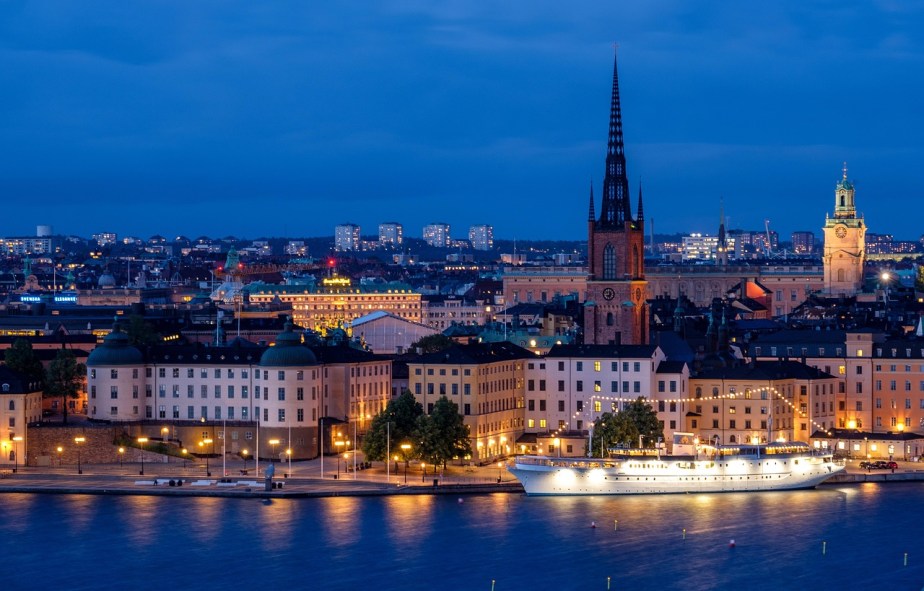
The meeting is taking place at Stockholm’s prestigious Grand Hôtel, which has been cordoned off by police since Tuesday in anticipation of protests.

The hotel, owned by the influential Wallenberg family, has blocked reservations for the duration of the event, echoing similar security steps taken ahead of Barack Obama’s 2013 visit to Sweden.

This year’s agenda includes topics such as transatlantic relations, the future of Ukraine, the US and European economies, the Middle East, and the so-called “authoritarian axis” of Russia, China, Iran and North Korea.

Discussions will also explore defence innovation, artificial intelligence and national security, energy geopolitics, and global migration trends.

Founded in 1954, the Bilderberg Meeting aims to promote informal dialogue between Europe and North America.

Around two-thirds of participants come from Europe, with the rest from North America. Roughly a quarter are active in politics and government, while the majority represent business, media, academia, and other sectors.

All discussions are held under the Chatham House Rule, which allows participants to use the information shared but prohibits identifying speakers or their affiliations.
This year agenda includes:

12 June – 15 June 2025 Stockholm, Sweden
Transatlantic Relationship
Ukraine
US Economy
Europe
Middle East
Authoritarian Axis
Defence Innovation and Resilience
AI, Deterrence and National Security
Proliferation
Geopolitics of Energy and Critical Minerals
Depopulation and Migration

The private format, there are no press briefings, resolutions, or official statements, has long fuelled speculation and conspiracy theories about the group’s influence.

However, organizers maintain that the event provides a rare space for candid, off-the-record exchange among global decision-makers, and the guest list is publicly available on the group’s website.

Stockholm, 12 – 15 June participants list:

Abrams, Stacey (USA), CEO, Sage Works Production
Albuquerque, Maria Luís (INT),
EU Commissioner Financial Services and the Savings and Investments Union

Alcázar Benjumea, Diego del (ESP), CEO, IE University
Alverà, Marco (ITA), Co-Founder, zhero.net; CEO TES
Andersson, Magdalena (SWE), Leader, Social Democratic Party
Applebaum, Anne (USA), Staff Writer, The Atlantic
Attal, Gabriel (FRA), Former Prime Minister
Auchincloss, Murray (CAN), CEO, BP plc
Baker, James H. (USA), Former Director, Office of Net Assessment, Department of Defense
Barbizet, Patricia (FRA), Chair and CEO, Temaris & Associés SAS
Barroso, José Manuel (PRT), Chair International Advisors, Goldman Sachs International
Baudson, Valérie (FRA), CEO, Amundi SA
Beleza, Leonor (PRT), President, Champalimaud Foundation
Birol, Fatih (INT), Executive Director, International Energy Agency
Botín, Ana (ESP), Group Executive Chair, Banco Santander SA
Bourla, Albert (USA), Chair and CEO, Pfizer Inc.
Brende, Børge (NOR), President, World Economic Forum
Brunner, Magnus (INT), European Commissioner for Internal Affairs and Migration
Brzoska, Rafal (POL), CEO, InPost SA
Busch, Ebba (SWE), Minister for Energy, Business and Industry
Caine, Patrice (FRA), Chair & CEO, Thales Group
Calviño, Nadia (INT), President, European Investment Bank
Castries, Henri de (FRA), President, Institut Montaigne
Chambers, Jack (IRL), Minister for Public Expenditure, Infrastructure, Reform and Digitalisation
Champagne, François-Philippe (CAN), Minister of Finance and National Revenue
Clark, Jack (USA), Co-Founder & Head of Policy, Anthropic PBC
Crawford, Kate (USA), Professor and Senior Principal Researcher, USC and Microsoft Research
Donahue, Christopher (USA), Commander, US Army Europe and Africa
Donohoe, Paschal (INT), President, Eurogroup; Minister of Finance
Döpfner, Mathias (DEU), Chair and CEO, Axel Springer SE
Eberstadt, Nicholas N. (USA), Henry Wendt Scholar in Political Economy, AEI
Ek, Daniel (SWE), CEO, Spotify SA
Ekholm, Börje (SWE), CEO, Ericsson Group
Eriksen, Øyvind (NOR), President and CEO, Aker ASA
Feltri, Stefano (ITA), Journalist
Fentener van Vlissingen, Annemiek (NLD), Chair, SHV Holdings NV
Fraser, Jane (USA), CEO, Citigroup
Freeland, Chrystia (CAN), Minister of Transport and Internal Trade
Friedman, Thomas L. (USA), Foreign Affairs Columnist, The New York Times
Gabuev, Alexander (INT), Director, Carnegie Russia Eurasia Center
Hammer, Kristina (AUT), President, Salzburg Festival
Harrington, Kevin (USA), Senior Director for Strategic Planning, NSC
Hassabis, Demis (GBR), Co-Founder and CEO, Google DeepMind
Hedegaard, Connie (DNK), Chair, KR Foundation
Heinrichs, Rebeccah (USA), Senior Fellow, Hudson Institute
Heraty, Anne (IRL), Chair, Sherry Fitzgerald ana IBEC
Herlin, Jussi (FIN), Vice Chair, KONE Corporation
Hernández de Cos, Pablo (ESP), General Manager Elect, Bank for International Settlements
Hobson, Mellody (USA), Co-CEO and President, Ariel Investments LLC
Hoekstra, Wopke (INT), European Commissioner for Climate, Net Zero and Clean Growth
Hunt, Jeremy (GBR), Member of Parliament
Isla, Pablo (ESP), Vice-Chair, Nestlé SA
Johansson, Micael (SWE), President and CEO, Saab AB
Jonsson, Conni (SWE), Founder and Chair, EQT Group
Karp, Alex (USA), CEO, Palantir Technologies Inc.
Klöckner, Julia (DEU), President Bundestag
Kostrzewa, Wojciech (POL), President, Polish Business Roundtable
Kotkin, Stephen (USA), Senior Fellow, Hoover Institution, Stanford University
Kratsios, Michael (USA), Director, White House Office of Science and Technology Policy
Kravis, Henry R. (USA), Co-Founder and Co-Executive Chair, Kohlberg Kravis Roberts & Co.
Kudelski, André (CHE), Chair and CEO, Kudelski Group SA
Kuleba, Dmytro (UKR), Adjunct Professor, Sciences Po
Leeuwen, Geoffrey van (INT), Director Private Office of the Secretary General, NATO
Lemierre, Jean (FRA), Chair, BNP Paribas
Letta, Enrico (ITA), Dean, IE School of Politics, Economics & Global Affairs
Leysen, Thomas (BEL), Chair, dsm-firmenich AG
Lighthizer, Robert (USA), Chair, Center for American Trade
Liikanen, Erkki (FIN), Chair, IFRS Foundation Trustees
Lundstedt, Martin (SWE), CEO, Volvo Group
Marin, Sanna (FIN), Strategic Counsellor, Tony Blair Institute for Global Change
McGrath, Michael (INT), European Commissioner for Democracy, Justice and the Rule of Law
Mensch, Arthur (FRA), Co-Founder and CEO, Mistral AI
Micklethwait, John (USA), Editor-in-Chief, Bloomberg LP
Minton Beddoes, Zanny (GBR), Editor-in-Chief, The Economist
Mitsotakis, Kyriakos (GRC), Prime Minister
Monti, Mario (ITA), Senator for life
Nadella, Satya (USA), CEO, Microsoft Corporation

Netherlands, H.M. the King of the (NLD),

O’Leary, Michael (IRL), Group CEO, Ryanair Group
Ollongren, Kajsa (NLD), Fellow, Chatham House; Senior Fellow, GLOBSEC
Özyeğin, Murat (TUR), Chair, Fiba Group
Papalexopoulos, Dimitri (GRC), Chair, TITAN S.A.
Paparo, Samuel (USA), Commander, US Indo-Pacific Command
Philippe, Édouard (FRA), Mayor, Le Havre
Pouyanné, Patrick (FRA), Chair and CEO, TotalEnergies SE
Prokopenko, Alexandra (INT), Fellow, Carnegie Russia Eurasia Center
Rachman, Gideon (GBR), Chief Foreign Affairs Commentator, Financial Times
Rappard, Rolly van (NLD), Co-Founder and Chair, CVC Capital Partners
Reiche, Katherina (DEU), Minister of Economic Affairs and Energy
Ringstad Vartdal, Birgitte (NOR), CEO, Statkraft AS
Roche, Nicolas (FRA), Secretary General, General Secretariat for Defence and National Security
Rutte, Mark (INT), Secretary General, NATO
Salvi, Diogo (PRT), Co-Founder and CEO, TIMWE
Sawers, John (GBR), Executive Chair, Newbridge Advisory Ltd.
Scherf, Gundbert (DEU), Co-Founder and Co-CEO, Helsing GmbH
Schimpf, Brian (USA), Co-Founder & CEO, Anduril Industries
Schmidt, Eric E. (USA), Executive Chair and CEO, Relativity Space Inc
Schmidt, Wolfgang (DEU), Former Federal Minister for Special Tasks, Head of the Chancellery
Šefčovič, Maroš (INT), European Commissioner Trade and Economic Security;
Interinstitutional Relations and Transparency

Sewing, Christian (DEU), CEO, Deutsche Bank AG
Sikorski, Radoslaw (POL), Minister of Foreign Affairs
Şimşek, Mehmet (TUR), Minister of Finance
Smith, Jason (USA), Member of Congress
Stoltenberg, Jens (NOR), Minister of Finance
Streeting, Wes (GBR), Secretary of State for Health and Social Care
Stubb, Alexander (FIN), President of the Republic
Suleyman, Mustafa (USA), CEO, Microsoft AI
Summers, Lawrence (USA), Charles W. Eliot University Professor, Harvard University
Thiel, Peter (USA), President, Thiel Capital LLC
Toulemon, Laurent (FRA), Senior Researcher, INED
Uggla, Robert (DNK), Chair, A.P. Møller-Maersk A/S
Valentini, Valentino (ITA), Deputy Minister of Enterprise and Made in Italy
Vassy, Luis (FRA), Director, Sciences Po
Verhoeven, Karel (BEL), Editor-in-Chief, De Standaard
Wallenberg, Jacob (SWE), Chair, Investor AB
Wallenberg, Marcus (SWE), Chair, Skandinaviska Enskilda Banken AB
Weder di Mauro, Beatrice (CHE), President, Centre for Economic Policy Research
Weel, David van (NLD), Minister of Justice and Security
Wilmès, Sophie (INT), Vice-President, European Parliament
Zakaria, Fareed (USA), Host, Fareed Zakaria GPS
Zeiler, Gerhard (AUT), President, Warner Bros. Discovery International

Zelenskyy frantic stunt in White House

Brussels 01.03.2025 Volodimir Zelenskyy should have come with an interpreter to the White House. His English is too rudimentary for a head of state. Unfortunately for Ukrainians he has no adequate assessment of his own skills, and capacities, which is not conducive to public good.

https://platform.twitter.com/widgets.js

Moreover Zelenskyy doesn’t not think, behave, and act as a President of a country. He looked like some obsessed WOKE ACTIVIST who broke through gates of White House, and was removed by agents to secure work environment.
The necessity to organize elections to return to democracy has never been so urgent in Ukraine as with this failed presidency. Elected due to promise of peace to his compatriots, Zelenskyy quickly mutated to “President of War” in his own words. His outfit, which causes raised brows, stands for incapacity to accept the grim realities: it is impossible to win this war, he is peddling with a remarkable insistence, omitting costs both in human lives, and resources channeled into production of lethal weapons.
It is time for elections in Ukraine to liberate the Ukrainian people from a showman, who can’t stop performing at world stage, confusing virtual reality, created by cameras with the grim realities of endless war his is so exited about. The frustrations outbursts of Zelenskyy in the White House revealed a comedian enjoying a spotlight at cost of a graveyards of young man, an aggressive Narcissist, playing a dream role of his life.
However Zelenskyy’ Harlequin mask have fallen during the White House stunt, revealing his tremendous deficiency of skills, and culture. The stunt which was a self-inflicted catastrophe. Nihilation of reputation.
The Ukrainian people deserve better. The need for elections of a President of Ukraine has become urgent.
The REAL FEEL: farewell to Harlequin !

Kissinger: U.S. on brink of war

Brussels 14.08.2022 Former U.S. Secretary of State Henry Kissinger believes that Washington is currently on the brink of war with Moscow and Beijing, he said in an interview with the Wall Street Journal.

“We are at the edge of war with Russia and China on issues which we partly created, without any concept of how this is going to end or what it’s supposed to lead to,” he underscored.

“You can’t just now say we’re going to split them off and turn them against each other. All you can do is not to accelerate the tensions and to create options, and for that you have to have some purpose,” Kissinger added.

Russia calls U.S.to unfreeze Afghan funds

Brussels 27.05.2022 Russian Security Council Secretary Nikolay Patrushev called for assistance in the earliest possible unfreezing of Afghan assets “illegally” blocked by the United States.

“[It is] necessary to facilitate the earliest possible unfreezing of Afghan assets illegally blocked by US in order to develop social and economic projects in Afghanistan,” the Russian Security Council Secretary said on Friday, May 27, in the city of Dushanbe, Tajikistan, during the fourth round of multilateral consultations on the Afghan issue.

The statesman also spoke in favor of establishing closer coordination in order to develop a unified line on the Afghaninstan direction, intensifying efforts to increase the volume of international humanitarian aid to the society and to organize its delivery to the country.

“On the Afghan track it is important to promote the consolidation of corresponding international efforts, first of all under the aegis of the UN. We believe that the [United Nations] should be the main coordinator in solving the whole range of problems of post-conflict reconstruction of Afghanistan,” Patrushev said.

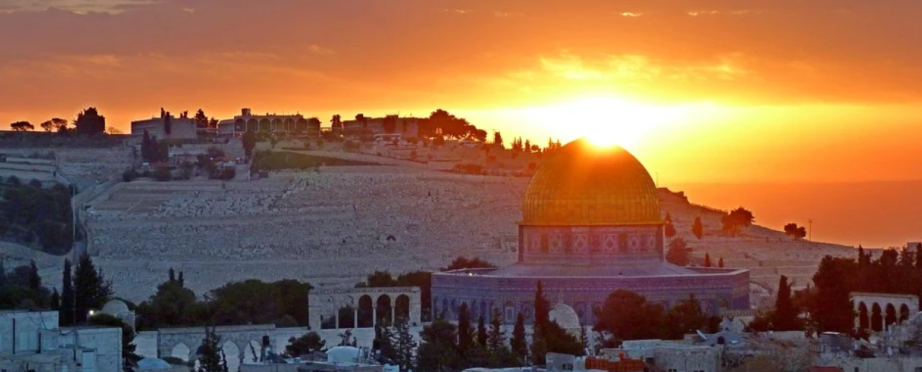
Kremlin way accept Jerusalem for talks

Strasbourg 13.03.2022 Anna van Densky A meeting between President Vladimir Putin and President Vladimir Zelensky is not ruled out, Kremlin spokesperson Dmitry Peskov said on the air of the Rossiya 1 TV channel.
The official added that in order to organise a relevant event, it was necessary to understand clearly the agenda of discussion and its possible outcome.

Turkish Foreign Minister Mevlut Cavusoglu said that President Recep Tayyip Erdogan and Vladimir Putin touched upon the topic of a possible meeting between him and Vladimir Zelensky in a telephone conversation. Cavusoglu claims that the Russian president had no objection to such a meeting.

On March 10, 2022, Foreign Ministers of Russia and Ukraine Sergey Lavrov and Dmitry Kuleba completed negotiations in Antalya, which were held with the participation of Turkish Foreign Minister Mevlut Cavusoglu. The meeting lasted over an hour and a half.

Russia has been open to holding negotiations with Ukraine in Jerusalem, a senior diplomatic source said on March 12 to Jerusalem Post newspaper, soon after Prime Minister Naftali Bennett and Ukrainian President Volodymyr Zelensky spoke on the phone.

Zelensky said earlier the same day that “at present it’s not constructive to hold meetings in Russia, Ukraine, or Belarus. These are not the places where we can agree to stop the war… Do I consider Israel, Jerusalem in particular, to be such a place? I think the answer is yes.”

Russia has not rejected the idea of negotiations in Jerusalem, the diplomatic source said, but Israel is not sure it should host the talks.

Russia-Japan: blaming U.S. for failures

Brussels 08.02.2022 Washington seeks to keep Japan’s unfounded territorial claims against Russia afloat in order to prevent the two countries from full-scale cooperation, Russian Foreign Ministry Spokesperson Maria Zakharova said in a TV interview. Japan claims the four southernmost islands, including two of the three largest ones – Iturup and Kunashir, – as an integral part of its territory along with Shikotan and the Habomai islets, which has led to the ongoing Kuril Islands dispute between Japan and Russia.

While commenting on U.S. Ambassador to Tokyo Rahm Emanuel’s statement that Washington supported Tokyo in the issue of the Northern Territories (southern Kuril Island) and recognised Japan’s sovereignty over them, the diplomat pointed out that “over the past decades, the United States has transformed Japan from an independent state into a dependent one.”

The spokesperson reminded that Moscow had repeatedly called for abandoning the “attempts to artificially pump up hysteria” and tensions around the territorial issue, while the Japanese leadership kept neglecting “the need to build normal and full-fledged economic, financial and cultural ties” with Russia. “Every time, we highlighted the artificial nature of this issue and the related tensions,” the Russian Foreign Ministry spokeswoman underlined.

“It is being fueled by a certain part of Japan’s political establishment. And who’s behind it? The U.S. ambassador has stepped forward and made it clear,” she added. Zakharova explained that Washington benefited from keeping the issue afloat because “this artificial problem prevents Japan from engaging in full-scale, mutually beneficial and long-term cooperation with Russia.”

The Russian diplomat recommended that the US envoy to Japan “should spend more time telling the Japanese public about the United States’ crimes.” “Particularly, about how the United States used nuclear weapons to attack the country’s civilians in Hiroshima and Nagasaki. Unfortunately, the Japanese public knows little about the U.S. role in those tragic events,” Maria Zakharova concluded.

Russia-Ukraine: Olaf Scholz ready to react

Brussels 07.02.2022 Anna van Densky Germany and NATO allies are ready to take “all necessary steps” if Russia “invades” Ukraine, German Chancellor Olaf Scholz said in an interview published by the Washington Post on Sunday, February 6, when asked if the German government could halt the process to open the Nord Stream2 pipeline.

“We are ready to take together with our allies all necessary steps,” Scholz clarified. “We have a very clear agreement with the United States government on gas transit and energy sovereignty in Europe.”

“We already also agreed that we will support Ukraine,” Scholz went on to say. “Also, it is absolutely clear that in a situation like this all options are on the table.”

“I will not get into any specifics, but our answer will be united and decisive,” the chancellor added.

“We are working very hard with our allies in NATO and in the European Union to make clear what we can do in the specific situation,” Scholz said. “But we are also clear about the necessary strategic ambiguity.”

“This is also critical for giving this strong message that it will be very costly — so they cannot go to a computer and count whether it will be too expensive or not,” he said. “It would be too high a price to intervene in Ukraine.”

“On the other hand, that we are working very hard to use all the channels of talks that we have now: talks between the United States and Russia, the NATO-Russia Council, the OSCE and obviously it’s also the Normandy format,” the chancellor said.

The interview came out ahead of a visit by Scholz to the US where he is set to meet with US President Joe Biden on February 7.

There has been a various statements in the West and Kiev lately that Russia could invade Ukraine soon. Kremlin Spokesman Dmitry Peskov said they were unsubstantiated escalation and that Russia doesn’t threaten anyone. At the same time, he didn’t rule out provocations to corroborate these Western statements and warned that the use of force to resolve the crisis in southeastern Ukraine will have serious consequences.

U.S. response to Russia on security guarantees

Brussels 26.01.2022 The United States Ambassador John Sullivan on Wednesday, January 26, handed over Washington’s written responses to a sweeping set of security demands that Kremlin has made of the West, Russia’s Foreign Ministry said.

The head of the US diplomatic mission delivered a written response from the US administration to the draft bilateral agreement on security guarantees that was earlier proposed by the Russian side,” the Foreign affaires Ministry said in a statement.

The meeting was requested by the US ambassador, who spent slightly more than a half hour inside the Ministry building.

Russian Foreign Minister Sergey Lavrov told the State Duma earlier on Wednesday that Russia won’t publish the US response on security guarantees, if asked, but will disclose the general meaning of the replies.

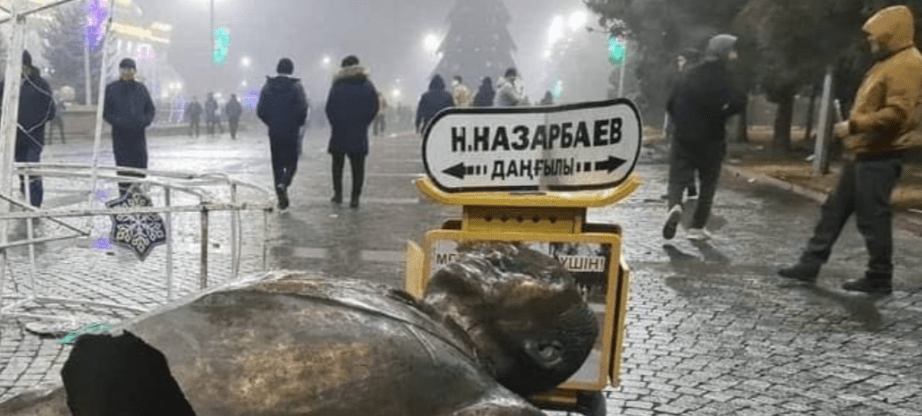
Kazakhstan: CSTO sends peacekeepers

Brussels 06.01.2022 The Collective Security Council of the Collective Security Treaty Organization (CSTO) approved the decision to send peacekeeping forces to Kazakhstan, Prime Minister of Armenia Nikol Pashinyan, who chairs the Council in 2022, said on Thursday, January 6.

“In view of the address of President of Kazakhstan Kassym-Jomart Tokayev and considering the threat to national security and sovereignty of the Republic of Kazakhstan, caused in particular by interference from the outside, the CSTO Collective Security Council in accordance with Article 4 of the Collective Security Treaty made the decision to send CSTO Collective Peacekeeping Forces to the Republic of Kazakhstan for a limited period with the aim of stabilisation and normalisation of the situation in this country,” Pashinyan wrote in Facebook.

On January 2, crowds took to the streets in the cities of Zhanaozen and Aktau in the Mangystau Region, in southwestern Kazakhstan, protesting against high fuel – liquid gas – prices.

Two days later, the protests engulfed Almaty, in the country’s southeast, where the police used flashbangs to disperse the crowd, as well as other cities, including Atyrau, Aktobe (in the west), Uralsk (in the northwest), Taraz, Shymkent, Kyzylorda (in the south), Karaganda (in the northeast) and even Kazakhstan’s capital Nur-Sultan.

The president imposed a two-week state of emergency in the Mangystau Region and in the Almaty Region, as well as the republic’s largest city of Almaty and the capital Nur-Sultan.

On January 5, the head of the state also accepted the government’s resignation, but vowed to keep his grip on power.

Reportedly 353 members of Kazakhstan’s law enforcement were injured in the clashes with protesters in Almaty, 12 were killed, the Khabar-24 TV channel said quoting the Almaty commandant’s office.

According to the TV channel, one of the victims was beheaded. “This proves the terrorist and extremist nature of criminal formations,” the commandant’s office was quoted by national media.

Russia-Turkey: Chechen war memory clash

Brussels 22.12.2021 Kremlin has conveyed its disapproval to Ankara via diplomatic channels over an attributing a name of Dzhokhar Dudayev, the leader of Chechen separatists, to one of the city parks, the spokesperson Dmitry Peskov told journalists on Wednesday, December 22. (Image: Caucasus, illustration)

“We have already notified our Turkish colleagues via diplomatic channels that we, to put it mildly, do not approve of such names in Turkish cities,” he said.

The Kremlin official also said that the reaction of Chechen leader Ramzan Kadyrov to this event was quite understandable. “This is a very emotional yet understandable reaction of the head of a Russian region who suvived several wars, several wars that were provoked, started by terrorists who attempted to take control over that Russian region,” he said. Putin’s press secretary reiterated that “one of the terrorists who did it was at some point their leader Dudayev.”

“Recently, unfortunately, in one of Turkey’s regions one of the parks was named after this terrorist. Of course, this is a very painful decision for all Chechens, for the Republic of Chechnya within the Russian Federation,” the spokesman asserted. Therefore, in his opinion “such an emotional reaction is quite understandable.”

On December 21, Kadyrov addressed the Russian Foreign Ministry asking to respond to the actions of Turkish authorities. The Chechen leader also urged Turkish President Recep Tayyip Erdogan to determine whether he supports “transparent and honest relations with the Russian Federation.” According to the Chechen leader, the current actions by the Turkish authorities are a direct threat to Turkish-Russian relations, they should be noticed and preventive diplomatic measures should be taken.

Earlier, media outlets reported that a park was opened in Korfez, a town in Turkey’s north-west, named after Dudayev, the president of the self-proclaimed Chechen Republic of Ichkeria who led an armed resistance after federal troops were deployed to the region in 1994. He was neutralised in a special operation in 1996.