Nomandy Four: «winners and losers»

Anna van Densky OPINION Kremlin spokesperson Dmitry Peskov said it is inappropriate to assess the outcome of the Normandy Four Summit in Paris in terms of the “winners and losers“.

Everyone pursued the same objective, that is, to resume the work of the Normandy format after a long break and revive real efforts to find a solution to the conflict in southeastern Ukraine” he explained.

Certain steps, important steps in that direction have been taken, but much more remains to be done,Peskov underlined.

It is inappropriate to say here who was the winner and who was the loser at that Summit,” Peskov concluded.

However Peskov is wrong, because not everyone pursues the “same objective“, and the Normandy Summit projects on the broader political context, where there are “winners and losers” in the protracted Donbass conflict, and their numbers multiply each single day.

Zelensky presidency and Kiev government to deal directly with people of Donbass, whom they formally consider their citizens, but the same time also “separatists” or “occupants“, creates a toxic atmosphere, affecting all spheres of life, including investment climate. However it is mass migration that damages Ukraine the most, forcing the active and skilled population to flee instability, and search for jobs outside the country. During last five years of Poroshneko mandate the figures of departures mounted up to 100 000 people a year. Will Zelensky be able to renverse the trend?

When electing Zelensky, the voters massively rejected the belligerent politics of his predecessor Petro Poroshenko, who ascended power by the violence coup d’état, and launched offensive against the Russian-speaking est of the country, calling the operation a “counter-terrorist” raid. The Ukrainian electorate expects from Zelensky the Donbass conflict resolution without delay. In many cases falsely presented as a conflict between Ukrainian pro-Europeans and pro-Putinites, it is about the respect of the fundamental rights of minorities in Ukraine.

“After Viktor Youchenko attributed a statuts of hero of Ukraine (2010) to Nazi criminal and Holocaust ideologist and active participant Stepan Bandera, the assimilation firmly replaced the respect of minority rights.

If later Petro Poroshenko initiated the inclusion in the Constitution of Ukraine the clause on EU integration, the claim stayed totally nominal, while the EU has 60 regional languages, Kiev marched the opposite direction. The European Union was established as a project of peace, while Ukraine decides arguments with artillery.

Suffocated by chauvinism and corruption, the Ukrainian society is in perpetual conflict with all the national minorities who are denied of the elementary individual and linguistic rights.

The slow motion for the implementation of Minks agreements, also projects on the degradation of relations between the ethnic communities within the Ukrainian society, while they realise that reluctance of Kiev to grant Donbass a special status means a denial of their identity as well. Meanwhile the notorious language law, voted by Rada and endorsed by President Porkoshenko causes concerns of the Venice Commission, making a conclusion that it strips ethnic minorities of use of their mother tongue, violating their fundamental rights.

“The language law, breaching international laws and commitments of Ukraine, is a bad omen for Donbass people, and all the other minorities in the country, but it would be naïve to think that it does not rub off the credibility of Zelensky. Silently agreeing to serve as a blunt instrument of the West to deter Russia, through repressing Russian minority in Donbass, he is undermining his own leadership in eyes of around hundred other minorities living on the territory of modern Ukraine.

While the West is cheering Zelensky, encouraging him to oppose President Putin in a Cold War syndrome style, refusing fundamental rights to Russian ethnic group in Donbass, the entire complex of minority rights in Ukraine are sacrificed, overlooked as collaterals in the crusade against Kremlin. However, hostage to Ukrainian radial nationalists with their agenda of total “Ukrainisation” of population, Zelensky‘s target of “de-occupation” of Donbass creates a self-destructive narrative, betraying his own electorate demanding peace, and surrendering further grounds to nationalists, hailing Bandera, the true winners of protracted Donbass conflict.
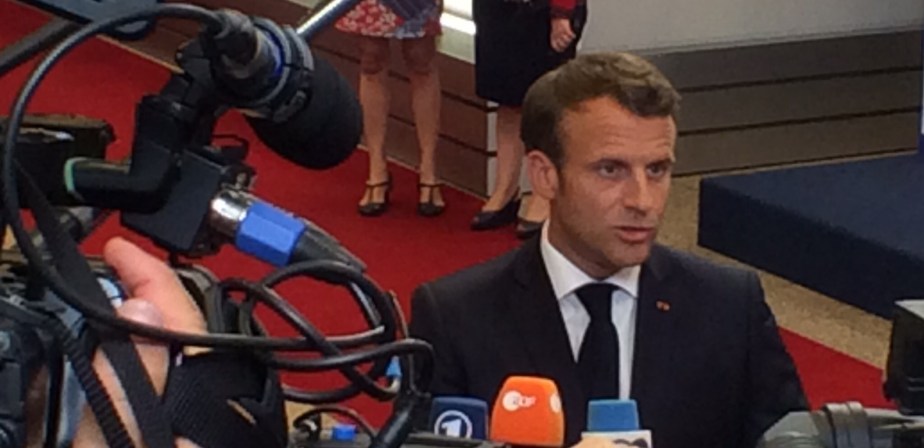

NATO: Macron follows de Gaulle footsteps

Emmanuel Macron’s remarks on NATO “brain death” have caused shock waves around the globe, exempting those who are aware of the Gaullist foreign policy traditions of the V Republic. (Image: archive).

The state funeral of the President Jacques Chirac confirmed the sentiment of the nation, highly praising the politician who stood tall against American invasion of Iraq, conducting independent foreign policy.

Long queues of people waiting patiently to pass by the coffin of their leader, paying tribute, indicated without ambiguity the direction of the policy to achieve the status of a “great” President of France – the rejection to bent to American whims.

It is highly likely that at the funeral of Jacques Chirac incumbent President Macron felt the state of mind of the nation, and rejected the perspective of entering the history as the “poodle” of President Trump. However may be this time U.S. President is not looking for a “poodele’. Actually he does not have high esteem for NATO himself. During the election campaign Trump assessed NATO as “obsolete”, and afterwards on many occasions promised to pull out the American military from the wars that seem “never end”.

President Trump has already raised questions why the U.S. should continue offering to Europeans “free ride”, requesting the Allies to invest a fair share into their own defense.

Six European allies now are above the threshold sought by US President Donald Trump — Estonia, Greece, Poland, Latvia, Lithuania and the UK were estimated to have met the 2% defence budget goal.

However the NATO burial concept derives from a few sold reasons: the Alliance task was fulfilled by the collapse of the USSR, ending Cold War; unfair distribution of financial burden within the Alliance or European “free-ride”; the nature of threats has become different, and they can not be addressed by military means. The latter is evident in failure to defeat terrorism in Afghanistan, where on average 55 people are killed daily fighting with Taliban.

The other element, contributing the degradation of NATO is the belligerent strategy of Turkish President Erdogan, representing grave concern for the Alliance in case of the retaliation attack of the Syrian leader Al Assad: the Article 5 of collective defense obliges the entire block to enter the conflict. Article 5 – the milestone of collective defence is becoming increasingly dangerous in modern world, overwhelmed by conflicts.

“I understand what you’re saying; I’ve asked the same question,” President Trump said during FoxNews programme while commenting on a young American to be obliged to defend Montenegro. “You know, Montenegro is a tiny country with very strong people. … They are very aggressive people. They may get aggressive, and congratulations, you’re in World War III.” After all, Macron is not so original, suggesting that NATO brain is dead.

Brexit forever!

Nothing is so permanent as temporary. From now onward this wisdom can be fully applied to Brexit process. The United Kingdom’s Supreme Court ruled on September 24 that Prime Minister Boris Johnson’s decision for Parliament prorogation while approaching Brexit was unlawful.

The Court decision will certainly influence the departure process, blocking the way to leave without the Withdrawal Agreement, widely known as “the deal”. The prediction of Theresa May is coming true: it may be that referendum result will be never honoured, and Brexit will not be delivered at all.

From today the EU has two special candidats: one, Turkey, is “eternally” attempting to enter, while the other is permanently at the threshold, intending to leave. As Pisa Tower – forever falling, and still there. Brexit Forever!

Memorial to Strasbourg Grand Synagogue

Modern IT technologies will help to give a second life to a destroyed by Nazi Grand Synagogue, this time in a form of a bronze monument, established at the original place at Quai Kléber. The Jewish community, IT scientists, historians, and lovers of history have  collected a significant amount of information, allowing to restore the exact model of the demolished building.

DSCN9824[1]
IT reconstruction model of Grand Synagogue Quai Kléber
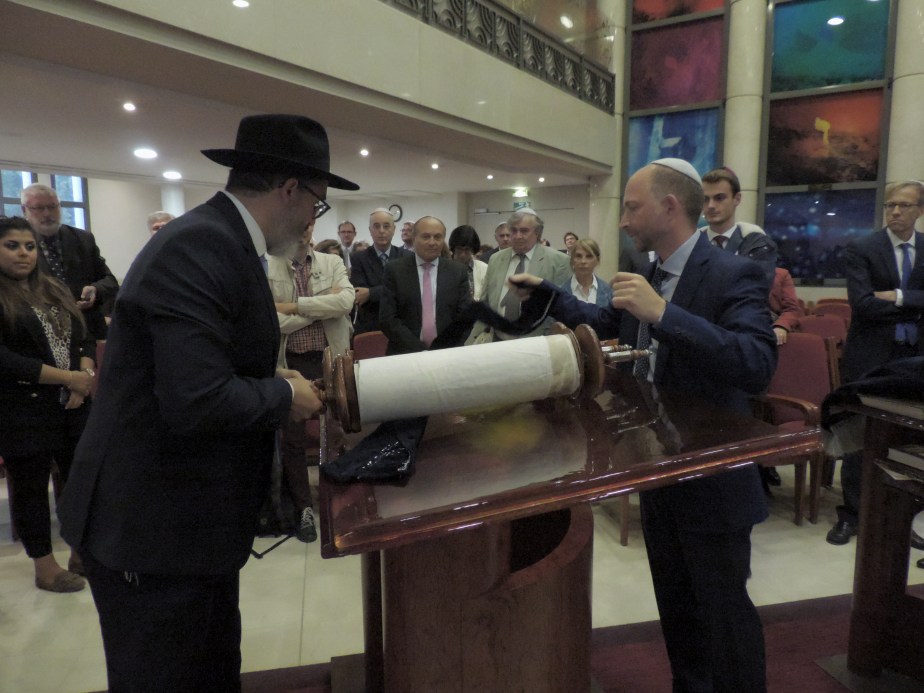
On 18th of September, during the European Parliament Plenary week the Jewish Consistory of Bas-Rhin invited to the Synagogue of Peace  Members of the European Parliament (MEPs) and Strasbourg politicians to celebrate in a cultural event the upcoming Rosh Hashana (New Year) festivities. The excursion in the building of New Synagogue preceded the assembly.

DSCN9833[1]
Rabbin Mendel Samama (right) and Thierry Roos of Consistoire israélite du Bas-Rhin (left)
The collection of the artefacts and historic objects exposed as precious pieces of mosaic restore the picture of the spiritual past of the  Jewish Community in Alsace  – one of the most ancient in Europe, traced to the Middle Ages.

DSCN9826[1]
Grand Synagogue de la Paix historic objects collection on display

After the World War II  the Jews who survived the Holocaust, reformed the Jewish community of Strasbourg, meeting in the Holiday Palace until 1948, because the Grand Synagogue, situated at Place Klèber was destroyed.

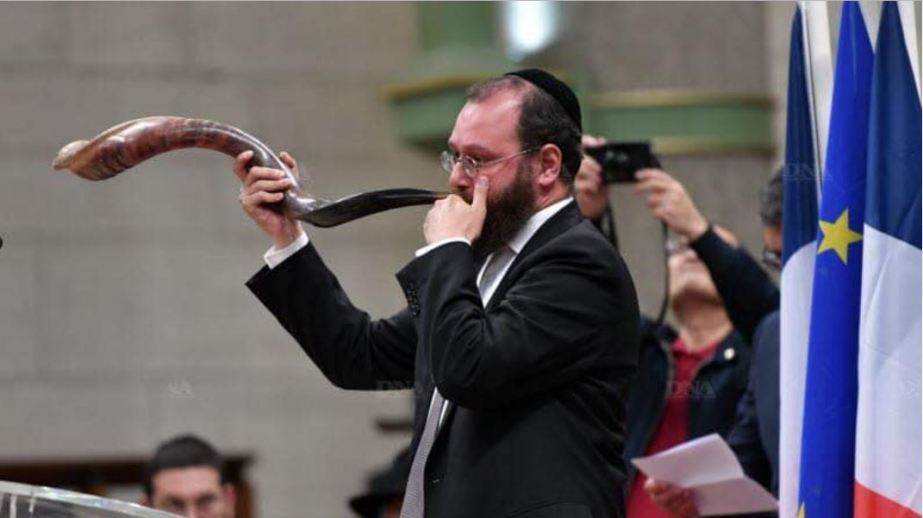
Levi horn
Rosh Hashana sound of Shoffar Image: courtesy of Levi Matusof (pictured).

Following the talks with the city of Strasbourg in 1948, the Jewish community agreed to exchange the grounds of the old Synagogue against the site of Contades area, where the new monumental building was erected, by the  architect Claude Meyer-Lévy. The synagogue, called “Peace” replicating its location Rue de la Paix,, and was inaugurated in March 1958.

DSCN9834[1]

The new synagogue also includes the Judaica radio headquarters, a youth center, and the headquarters of several movements, in addition to the four oratories.

G7: Tusk waywardness in Juncker absence

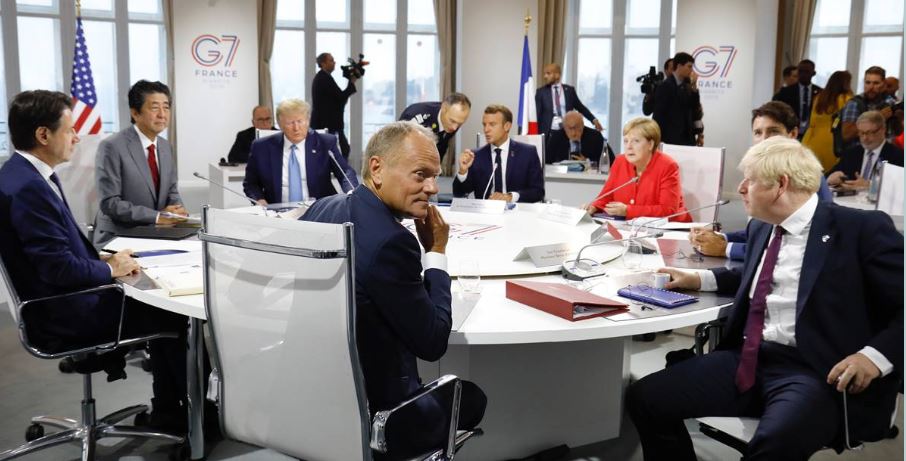
Anna van Densky OPINION The clumsy attempts of the president of the European Council Donald Tusk to influence the decision of British Prime minister Boris Johnson determined to depart from the EU on time with or without agreement, dabbing him “Mr.No-Deal”, look like an agony of the bloc, paying high price for its rusty mechanics unable to adapt to changing context. Teasing has never been an effective method in international politics.

G7 Summit in Biarritz (France) opens an opportunity to built bridges, however the representative of the EU prefers to burn them with provocative information war style public pressure, attempting to challenge Boris Johnson, instead of engaging in dialog with him. War of words with the UK is not what the European citizens wish, concerned by economic consequences of ‘no-deal’.

While American President Trump is actively using G7 platform for rapprochement with the UK, promising mutually beneficial trade deal, the EU has no other message, that insisting of the document that is already ‘dead’. The useless promotion of the Withdrawal Agreement (WA), which was the EU miscarriage, is aggravated by the contrasting surrealist proposal of Tusk to invite heavily indebted and plagued by ongoing armed conflict Ukraine to G7 ranks. While the oldest European democracy, and second net contributor to the EU purse is abandoning the EU, Tusk has nothing better to offer instead than to promote rapprochement with Ukraine one of 10 most corrupt nations in the world.

Just a week ago President of the European Commission Jean-Claude Juncker was hospitalized saving the EU from one more embarrassment, caused by his physical condition. However in comparison with Tusk intellectual inability, and primitive ways of conducting international politics, varying from schoolboy teasing, to lobbying of Polish regional interests promoting Ukraine in a blunt gesture of tribalism, – all of those, evoke nostaliga for Juncker‘s clarity of thinking. Cogito, ergo sum!

Europarl: Ann Widdecombe furore

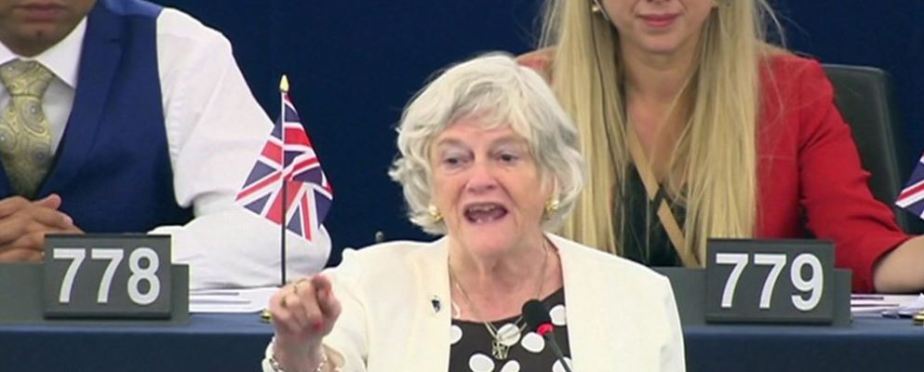
Anna van Densky OPINION The passionate speech of British MEP Ann Widdecombe had a highly unpleasant  novelty for the European Union: the doyen of Brexit party political group associated the protracted process of exiting from the EU with national liberation movement. She openly threw into face of Guy Verhofstad – the European Parliament representative for Brexit talks – the accusation of treating the UK as “colony“.

Guy Verhofstadt answered in via his Twitter micro blog, regarding Widdecombe as a “clown”. It means he failed again to understand souverainist’s influence on public opinion, and the interaction between Brexit party (former UKIP) and larger groups of electorate, initially perceived as “marginal“, but in reality numerous enough to impose Brexit referendum, and win its outcome. Verhofstadt did not answer to in a meaningful way to Widdecombe criticism of democratic deficit in EU procedures either. He also didn’t answer to her criticism of protracted withdrawal process, comparing Brussels to metropole, reluctant to give away rip on its rich colony.  However the strategy of brushing off criticism of Brexiteers is in essence myopic because it allows their vision to hover high, and spread around engaging new groups, and not only from UK electorate, but the other old EU member states.

The feeble attempt of BBC journalist to argue Ms.Widdecombe’s point of  view through pointing at her high MEP salary incomparable with “slave” status looked like faux pas.

BBC did not manage to address the issue, and attempt, dabbed by the MEP as “silly”, just re-enforcing her speech, demonstrating absence of meaningful counter-argument.


Zelensky NATO performance

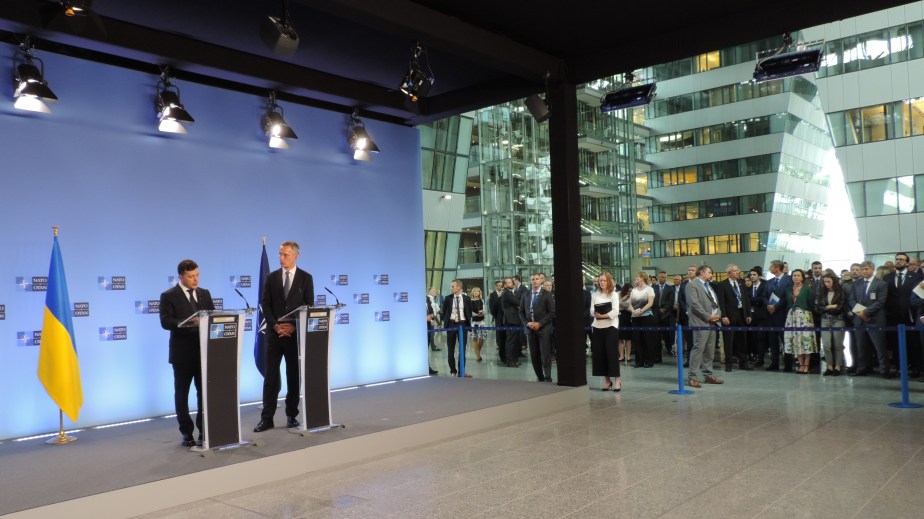
Anna van Densky OPINION UkrainePresident Volodimir Zelensky declarations at NATO headquaters could be hardly considered as good news for inhabitants of Donbass – joint drills in July with Alliance vessels in Black Sea can not be mistaken for a flight of a dove with an olive branch.

Zelensky is ready to negotiate Donbass conflicts, but only in the context of NATO integration. It means to continue imposing on Russians in Donbass the vector of development they had initially rejected – to choice a camp of Russia’s foes. But not only, it means the complete submission to a totalitarian Ukraine language law, stripping Donbass of their minority national and linguistic rights, destroying their identity.

National identity became a huge problem for ethnic Russian on the terrotries of the former USSR, when a number of former Soviet Republics have chosen for openly anti-Russian policy, eradicating Russian language and identity in contradiction with international law, and European values. Ukraine has taken an aggressive stance against Russian minority, who voted for its independence unaware it would be the beginning of the end of their national identity profile.

President Putin promise to facilitate the procedure of issuing Russian passports to Ukrainian citizens of Russian origin, based on widely used practiced of jus sanguinis, accepted by the majority of the NATO allies, has caused concerns of the Secretary General Jens Stoltenberg. He said it would ”destabiliseUkraine, omitting the fact, that the opposite, namely the attempt to eradicate Russian identity is behind the political turbulence of Ukraine, degrading into an armed conflict.

The denial of the fact that the Ukrainian state, being composed in different political contexts from different territories with autochtone populations, causes tensions fueling into conflict. In rejection of human rights, identity rights, linguistic rights of Russian, Hungarian and other minorities, Ukraine weakens the state, wasting a great deal of time and energy for suppressing the justified claims.

The declared by Jens Stoltenberg Ukraine-NATO drills in Black Sea in July, will serve as demonstration of power to Moscow, senseless and dangerous, enhancing Russia, the nuclear superpower to protect its borders, and assume it role as a guarantor of psychical survival of Donbass populations, threatened to be exterminated by Ukrainian neo-nazi as it happened in Odessa massacre (2014),  where they cremated Russians alive.

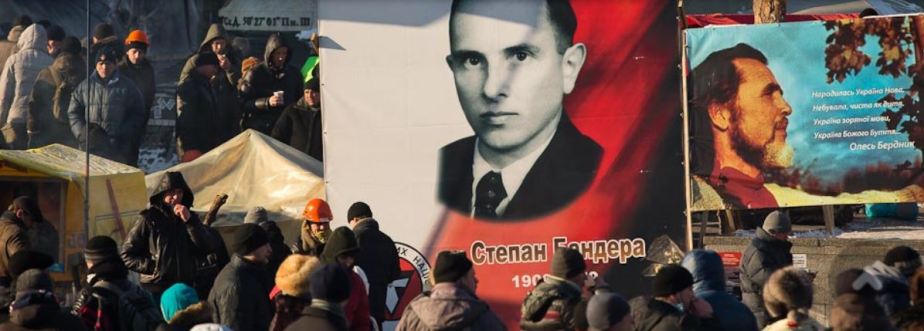
The official restoration of fascism in Ukraine took place in 2010, when President Yushchenko attributed status of national hero of Ukraine to a nazi criminal and terrorist Stepan Bandera, who led extermination of 300 000 Jews in Ukraine in a number of huge pogroms.

Jens Stoltenberg underlined that NATO is an alliance of democracies, subsequently the West should require respect of democratic values first, before undertaking rapprochement with Ukraine, contaminated by neo-nazis. The enforcement of Kiev  by NATO without demanding authorities to assume their responsibilities to respect democratic values, and minority rights will also nourish the most marginal political forces, interpreting the rapprochement as la carte blanche to return to Stepan Bandera ideology of Ukrainian nationalism.

EU elections 2019 final day

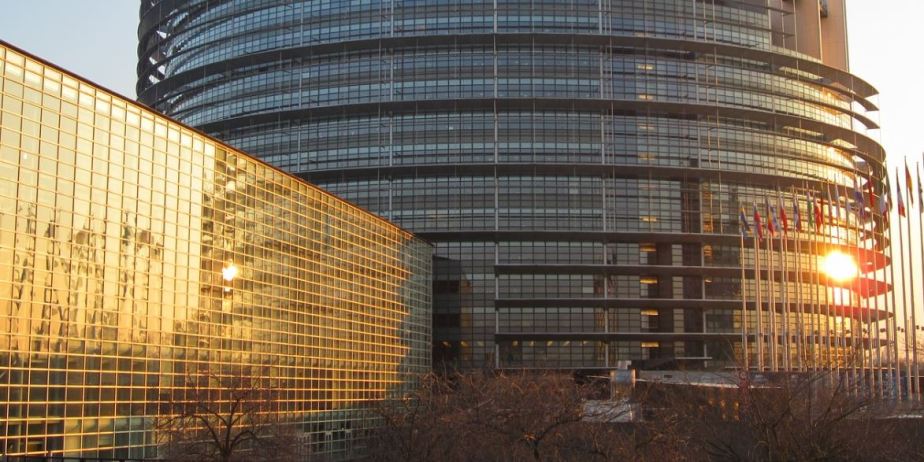
Anna van Densky On Sunday May 26 Europeans vote in an election expected to further erode traditional Eurocentric parties and boost the nationalist movements across the continent, resulting in a drastically different and difficult composition of the European Parliament – once a champion of compromise, – effecting the entire range of politics. (Image above: European Parliament, Strasbourg).

Polls opened at 7 A.M. (0400 GMT) in the east of Europe and will finally close at 11 P.M. (2100 GMT) in Italy. Seven states have already voted, with 21 joining in on Sunday in what is the world’s biggest democratic exercise after India.

Many feel it is odd, that three years after the referendum, Britons are back to the European Parliament, and there are certain fears, that the entire EU political agenda will be “hijacked” by Brexit.

However it is universally understood, that after Brexit the EU project will never be the same. Departure of the oldest European parliamentary democracy feels like an amputation.

EU in transit. Tempora mutantur – times are changed, we also are changed with them.

DSCN8074[1]
European Parliament, PHS building, Brussels


May departure opens Brexit battlefield

Anna van Densky OPINION The decision of resignation of the British Prime minister Theresa May next day after the European elections indicates the severe loss of Conservatives attempting to deliver negotiated departure from the EU. It is also an indicator of highly likely  big win of the Brexit Party led by Nigel Farage, uniting under his flags all those who are discontent with Brexit protracted crisis.

May stepping down is definitely bad news for the European Union, meaning the radical Brexit forces are taking over, leading to much feared no-deal Brexit on the 31st of October. Tearful good-bye of May, a compromise figure, is much more than a personal failure, but equally the EU leadership fiasco to achieve a reasonable agreement, which could be accepted by the majority in the Westminster.

Many considered a over demanding position of the EU as a tactic to create crisis, leading to the impossibility of the departure, and subsequent second referendum  “helpingBritons to correct their ‘historic mistake’. However this risky Russian roulette of the European Commission, including the rejection to re-open the endorsed deal to help May out of the impasse, will now backfire. Instead of the return under guidance of Brussels Shepherds, Britons, morally exhausted by the protracted Brexit argument will follow Farageclean break‘ plan.

Leaving the EU without a deal to start the negociations next day after departure will put Brussels at disadvantage, depriving of instruments of influence, but strengthen the position of the UK, striking trade deals across the world. It will be a considerable blow for many sectors, in first place for the European agriculture, losing a substantial share of the UK market to the other players, which leads to further decline of the EU popularity among Europeans.

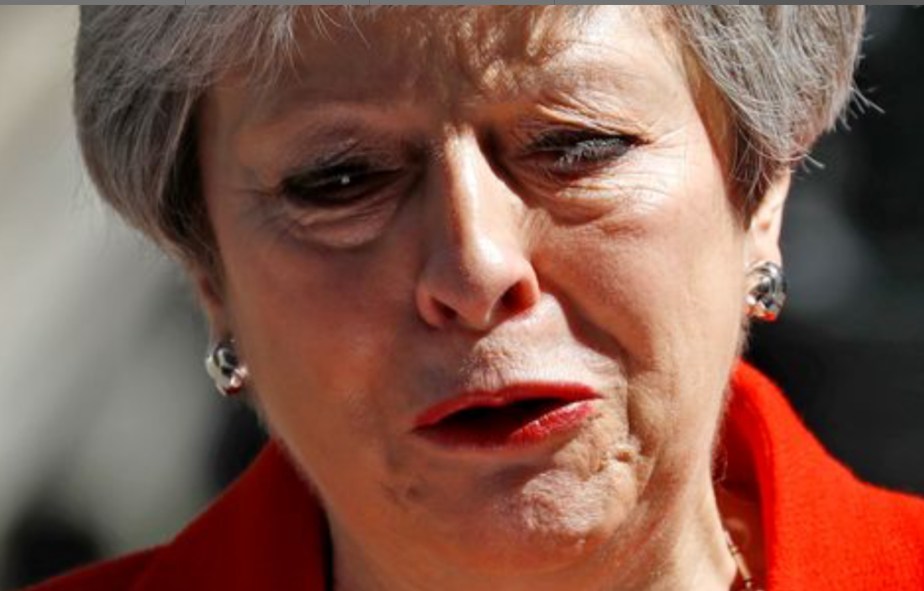
The tears of May, while announcing her resignation, are highly symbolical. They are much more about lamenting compromise with Europe, than about her personal fate. Profound sorrow for the end of the EU era, which will never come back.

From the beginning of May this year Japanese call their new era – Reiwa, meaning “harmony“. Using Japanese analogy, after May’s leaving historic arena,  the new European period of history will look like ‘Kenka‘ era, meaning “quarrel“.

Ukrainian linguistic totalitarianism

Ukrainian representative to UN Oleg Nikolenko called Russian request for UN Security Council meeting an “absurd”, insisting recent language law imposing Ukrainian unique status is no different to similar legislation in the other countries. Is it?

Ten years of prison for an attempt to establish multilingualism, and three year sentence for failure to use Ukrainian language in public institutions. Where language laws amount to such a Draconian practice? In what modern state there is such a supervising instance of powerful language inspectors, resembling Inquisition with extraordinary powers to repress?

However the totalitarianism of language  law is impossible to understand without the context of the contemporary Ukrainian nationalist ideology, resurrecting  fascist collaborator, and terrorist Stepan Bandera, glorified by President Yushchenko (2010) claiming his “sanctity“.

The “resurrection” of Nazi criminal Bandera has drawn the vector of development for contemporary Ukrainian nationalist idea, opening the tragic sequence of events from violent Maidan coup d’état, to Donbass conflict, and Odessa massacre.

The imposition of Bandera cult, marked a clean break from the humanist tradition of Ukrainian national idea of the XIX century, reflected in poetry of Taras Shevchenko and Lesya Ukrainka. Modern Ukrainian political elites could turn for inspiration to their heritage, developing national idea through creative spiritual growth, but they have chosen otherwise.

Ukrainian language law nr. 5670 enters open confrontation with the  Article 27 of the International Covenant on Civil and Political Rights  announcing individuals of linguistic minorities cannot be denied the right to use their own language.

Linguistic rights were first included as an international human right in the Universal Declaration of Human Rights in 1948.