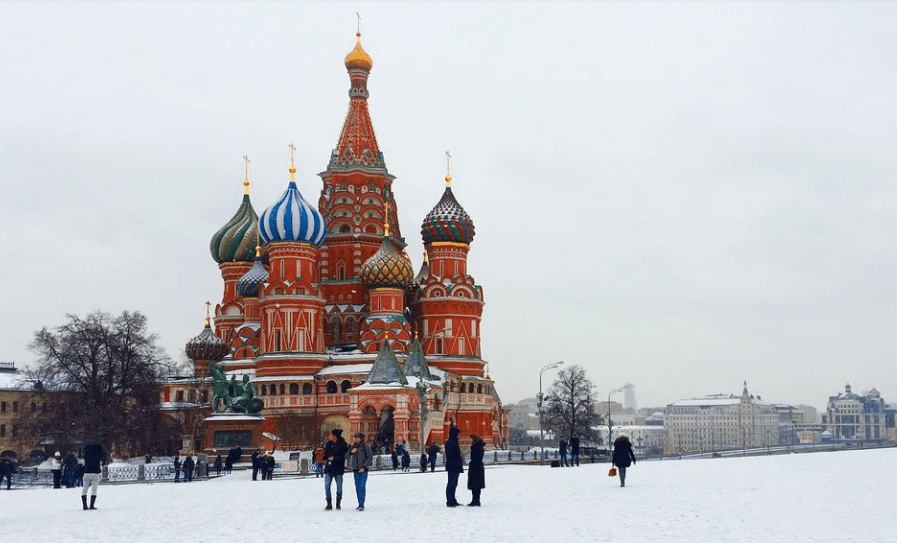
Kremlin calls EU for “sober” view

Brussels 31.01.2022 “We prefer diplomacy and are prepared to move forward if Russia de-escalates and approaches discussions about security in Europe in a balanced and reciprocal way” said the spokesperson of the EU diplomatic service (EEAS), addressing the issue of tensions at Russia-Ukraine border.

“The European Union deplores the decision by Russian authorities, announced on Friday, to ban an unknown number of representatives of EU Member States and institutions from entry into Russia” reads the statement by the spokesperson on travel restrictions against representatives of EU institutions and of the EU Member States. “This decision lacks any legal justification and transparency and will meet an appropriate response. With it, Russia continues to fuel a climate of tensions in Europe instead of contributing to de-escalation.”

Simultaneously Moscow is calling on Washington and Brussels to give up their policy of stirring up tensions around Ukraine and assume a constructive stance, Kremlin Spokesman Dmitry Peskov said on Monday.

“The hysteria that the United States is instigating is, indeed, leading to hysteria in Ukraine where people are almost packing frontline bags. This is obvious and this is a fact. This is the downside of this very malicious and damaging campaign being run by Washington. We consistently criticise this stance and call on Washington and its allies on the European continent to give up this policy and assume a constructive, calm and balanced approach,” the Russian presidential spokesman said, responding to a request to comment on Western media reports that the White House was dissatisfied with Ukrainian President Vladimir Zelensky’s position on the threat of Russia’s alleged invasion of Ukraine.

“Regrettably, American media outlets have been publishing a large amount of unverified, distorted and deliberately false and inflammatory information in recent months about what is happening in and around Ukraine. This is becoming obvious actually for all,” Peskov said, adding that these publications should be regarded “correspondingly.”

Replying to a question about whether Russian politicians and journalists should cover this issue so actively, the Kremlin spokesman said the following: “We are not empowered to tell the media how much and what they must cover, but we are empowered to recommend that people read this information as little as possible and maintain a sober view.”

Macron: “demanding dialogue” with Russia

Strasbourg 19.01.2022 An initiative on European security will be proposed to Russia
“We will ensure that Europe makes its voice heard, unique and strong”, also argued Emmanuel Macron. (Image: illustration)

“These next few weeks should lead us to bring to fruition a European proposal building a new order of European security and stability”, continued the French president.
“We must build it between Europeans, then share it with our allies within the framework of NATO, and then offer it for negotiation with Russia,” he explained.

Emmanuel Macron also called for “seeking a political solution in Ukraine, which remains the source of current tensions”.

“Europe must finally build a collective security order on our continent. The security of our continent requires a strategic rearmament of our Europe as a power of peace and balance, in particular in the dialogue with Russia. This dialogue, I have been defending it for several years. It is not an option because both our history and our geography are stubborn, both for ourselves and for Russia, for the security in our continent which is indivisible. We need this dialogue. We Europeans must collectively set our own demands and put ourselves in a position to enforce them. A frank, demanding dialogue in the face of destabilization, interference and manipulation” Macron said.

Dialogue with Russia, “I have been defending it for several years, it is not an option”, hammered the French president on Wednesday before the European Parliament, in full tension between Russia and the West.

In Strasbourg, Emmanuel Macron gave the traditional speech marking the launch of the rotating presidency of the European Union, which France will exercise until June 30. Before the MEPs, and less than three months before the French presidential election, the Head of State expressed a vision deeply attached to this continent, a long symbol of an “intangible peace” but now subject to “doubts”. To “rebuild our Europe”, the tenant of the Élysée has drawn up the major projects to come and established three promises: democracy, progress and peace.

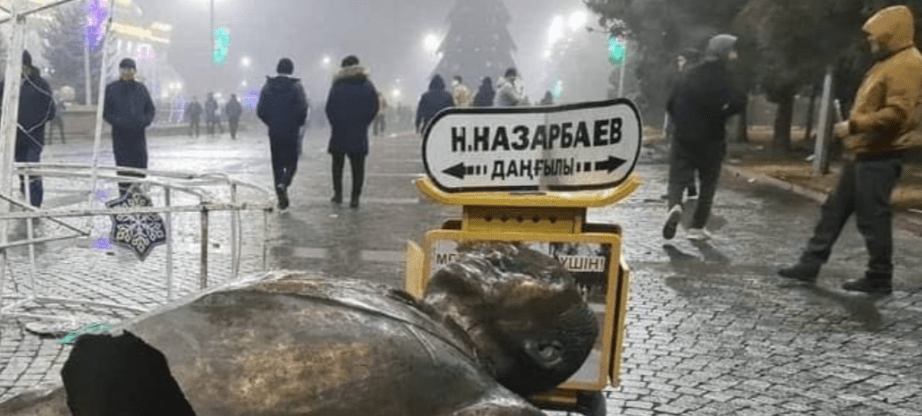
Kazakhstan: CSTO sends peacekeepers

Brussels 06.01.2022 The Collective Security Council of the Collective Security Treaty Organization (CSTO) approved the decision to send peacekeeping forces to Kazakhstan, Prime Minister of Armenia Nikol Pashinyan, who chairs the Council in 2022, said on Thursday, January 6.

“In view of the address of President of Kazakhstan Kassym-Jomart Tokayev and considering the threat to national security and sovereignty of the Republic of Kazakhstan, caused in particular by interference from the outside, the CSTO Collective Security Council in accordance with Article 4 of the Collective Security Treaty made the decision to send CSTO Collective Peacekeeping Forces to the Republic of Kazakhstan for a limited period with the aim of stabilisation and normalisation of the situation in this country,” Pashinyan wrote in Facebook.

On January 2, crowds took to the streets in the cities of Zhanaozen and Aktau in the Mangystau Region, in southwestern Kazakhstan, protesting against high fuel – liquid gas – prices.

Two days later, the protests engulfed Almaty, in the country’s southeast, where the police used flashbangs to disperse the crowd, as well as other cities, including Atyrau, Aktobe (in the west), Uralsk (in the northwest), Taraz, Shymkent, Kyzylorda (in the south), Karaganda (in the northeast) and even Kazakhstan’s capital Nur-Sultan.

The president imposed a two-week state of emergency in the Mangystau Region and in the Almaty Region, as well as the republic’s largest city of Almaty and the capital Nur-Sultan.

On January 5, the head of the state also accepted the government’s resignation, but vowed to keep his grip on power.

Reportedly 353 members of Kazakhstan’s law enforcement were injured in the clashes with protesters in Almaty, 12 were killed, the Khabar-24 TV channel said quoting the Almaty commandant’s office.

According to the TV channel, one of the victims was beheaded. “This proves the terrorist and extremist nature of criminal formations,” the commandant’s office was quoted by national media.

Lavrov reflects upon Russia-NATO relations

Brussels 27.12.2021 Anna van Densky There is no way that Russia joins NATO, since the West does not want to have rivals comparable in influence at the global stage, Foreign Minister Sergey Lavrov told the Solovyov Live YouTube channel on Monday,December 27. (Image: illustration).

Reflecting the question about the possibility of joining NATO on certain conditions, on an equal footing, the diplomat said that he did not assume such an opportunity for Russian Federation.

“I do not consider this possible, as the whole process does not revolve around NATO or the EU, it is about the West’s unwillingness to have any competitors in the international arena that are in the slightest degree comparable in terms of influence,” Lavrov explained.

According to the Minister, such attitude of the Western states derives their “hysteria over the rise of China”, which agreed to the rule introduced in the global economy and “outplayed the West on its own field”.

Russia-Turkey: Chechen war memory clash

Brussels 22.12.2021 Kremlin has conveyed its disapproval to Ankara via diplomatic channels over an attributing a name of Dzhokhar Dudayev, the leader of Chechen separatists, to one of the city parks, the spokesperson Dmitry Peskov told journalists on Wednesday, December 22. (Image: Caucasus, illustration)

“We have already notified our Turkish colleagues via diplomatic channels that we, to put it mildly, do not approve of such names in Turkish cities,” he said.

The Kremlin official also said that the reaction of Chechen leader Ramzan Kadyrov to this event was quite understandable. “This is a very emotional yet understandable reaction of the head of a Russian region who suvived several wars, several wars that were provoked, started by terrorists who attempted to take control over that Russian region,” he said. Putin’s press secretary reiterated that “one of the terrorists who did it was at some point their leader Dudayev.”

“Recently, unfortunately, in one of Turkey’s regions one of the parks was named after this terrorist. Of course, this is a very painful decision for all Chechens, for the Republic of Chechnya within the Russian Federation,” the spokesman asserted. Therefore, in his opinion “such an emotional reaction is quite understandable.”

On December 21, Kadyrov addressed the Russian Foreign Ministry asking to respond to the actions of Turkish authorities. The Chechen leader also urged Turkish President Recep Tayyip Erdogan to determine whether he supports “transparent and honest relations with the Russian Federation.” According to the Chechen leader, the current actions by the Turkish authorities are a direct threat to Turkish-Russian relations, they should be noticed and preventive diplomatic measures should be taken.

Earlier, media outlets reported that a park was opened in Korfez, a town in Turkey’s north-west, named after Dudayev, the president of the self-proclaimed Chechen Republic of Ichkeria who led an armed resistance after federal troops were deployed to the region in 1994. He was neutralised in a special operation in 1996.

Russian diplomat warns NATO against “delusions”

Brussels 28.11.2021 The assumptions heard in the United States that Russia is likely to be frightened with NATO capabilities in Ukraine and the Black Sea are dangerous delusions, Russia’s Ambassador to Washington Anatoly Antonov said on the YouTube channel during a TV show on Saturday, November 28.

“NATO states are taking over the Black Sea, Ukrainian territory. There are assumptions, which are voiced here, that certain daredevils or a group of combatants may turn up in Ukraine, who will try to test the strength of Russian defenses, expecting that we will not respond fearing the NATO potential. I would like to say and emphasize unequivocally that it is a very dangerous delusion,” the diplomat said.

Antonov pointed out that Washington is increasingly expanding the range of weapons delivered to Ukraine.

“Militarily speaking, this range of weapons funneled to Ukraine is expanding more and more. The Stinger [man-portable air-defense systems], Javelin [anti-tank weapons] and even our Mi-17 [helicopters] got there,” he said.

“They keep saying that these are defensive weapons. But we know what ‘defensive weapons’ mean, what the US Mk-41 systems are like, which, on the one hand, are certainly defensive, as they are anti-missile systems, but it has already been proven, and the Americans are not concealing now that they can be used for launching intermediate-range and shorter-range missiles,” the diplomat stressed.

Russia response to NATO Black Sea drills

Brussels 13.11.2021 President Vladimir Putin finds it inappropriate to carry out its drills in the Black Sea in response to NATO exercises there, there is no need to escalate the situation, he explained it in an interview with Pavel Zarubin.

“I should say that our Defense Ministry also came up with a proposal to hold its own unplanned exercises in this water area, but I believe that this is inappropriate and there is no need to further escalate the situation there. Therefore, the Russian Defense Ministry does not go further than escorting aircraft and ships,” Putin said.

The President drew attention to the fact that now the United States and its NATO allies are now conducting unplanned exercises in the Black Sea.

Moreover, “not only they formed a fairly powerful naval group there, but they also use aviation, including strategic aviation, in the course of these exercises,” Putin noted.

Russia denies gas use for politics

Brussels 29.10.2021 The European Union is perfectly aware that Moscow uses gas for mutually beneficial cooperation, and never blackmails anyone, Russian Foreign Ministry Spokeswoman Maria Zakharova wrote on her Telegram channel on Friday, October 29, following Polish Prime Minister Mateusz Morawiecki’s claims that Russia was allegedly using gas to blackmail the EU into making favourable decisions.

“Russia does not use gas for blackmail, but for mutually beneficial cooperation. The EU and Poland know this quite well,” Zakharova has underlined.

Russian diplomat added that Belgian Prime Minister Alexander De Croo had reacted in a rather bizarre way to Marowiecki’s claims the EU was threatening Poland with World War III.

“The Belgian Prime minister said that those who utter such statements ‘are playing with fire when waging war with your European colleagues for internal political reasons’,” Zakharova wrote.

On Friday, October 29, Polish Ministry of Foreign Affairs summoned the Belgian ambassador to Poland, Luc Jacobs, out of discontent over Belgian Prime Minister Alexander De Croo’s criticism of Warsaw’s approach to its rule-of-law argument with Brussels.

Jacobs met Poland’s Secretary of State at the Ministry of Foreign Affairs Szymon Szynkowski vel Sęk on Friday afternoon, the Ministry’s spokesperson said. Diplomats typically use such requests to convey displeasure.

Belgium’s Ministry of Foreign Affairs also confirmed the meeting, which illustrates the growing tension within the EU over alleged democratic deficit in Poland. The EU institutions are frustrated with the Polish judiciary reforms, which law experts said have undermined judicial independence, as well as a court ruling that questioned the supremacy of EU law.

Russia denies AstraZeneca theft allegations

Brussels 13.10.2021 Russian Foreign Minister Sergey Lavrov told reporters on Tuesday October 12 that claims put forward by UK media of Russia having allegedly stolen AstraZeneca’s coronavirus vaccine formula are unfounded.

“I don’t think anyone will take these unfounded accusations seriously, there have already been many baseless accusations,” Russian top diplomat said.

Lavrov added that he had not heard these accusations against Russia, and also recalled that the use of the AstraZeneca vaccine in many cases had produced negative side effects, particularly thrombosis (blood-clotting).

“No such cases have occurred with Sputnik V. I think that everyone who is interested will draw conclusions for themselves,” the foreign minister has underlined.

On October 10, The Sun, a well-known UK tabloid, published an article that claimed that Russian intelligence services allegedly received information about the formula of the vaccine developed by UK-Swedish company AstraZeneca and later used it to create Russia’s Sputnik V formula.

UNESCO welcomes Nobel prize press awards

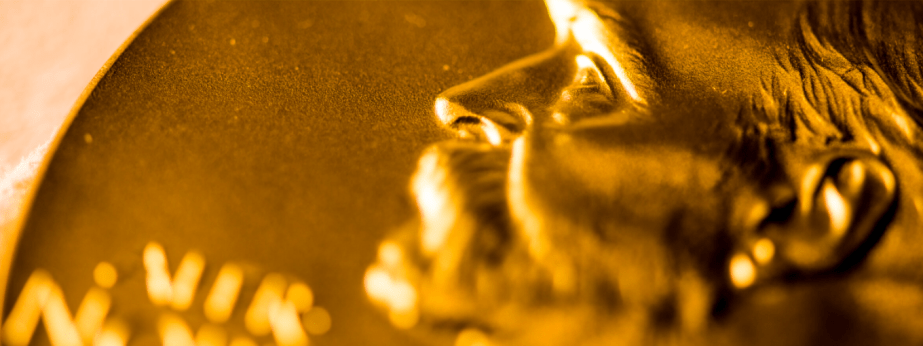
Brussels 09.10.2021 UNESCO Director General Audrey Azoulay welcomed the awarding of the Nobel Peace Prize to Russian journalist Dmitry Muratov and Filipino journalist Maria Ressa, reads the statement issued on Saturday, October 10.

“By awarding this prize, the Nobel Committee stated its belief that the freedom of expression of opinions and access to information is the basis of democracy and peace,” Azoulay said. “These ideals fully resonated with the UNESCO mandate.”

According to Azoulay, “reporters are at the frontline of a fight for shedding light where necessary, oftentimes facing a huge risk.”

“Today, they are rightfully considered protectors of justice and truth,” the official said.

On Friday, the Nobel Committee awarded the Nobel Peace Prize to Novaya Gazeta editor-in-chief Dmitry Muratov and Filipino journalist Maria Ressa for “their efforts on protection of the freedom of press, which the basis for democracy and sustainable peace.”.