Putin: was it an assassination attempt?

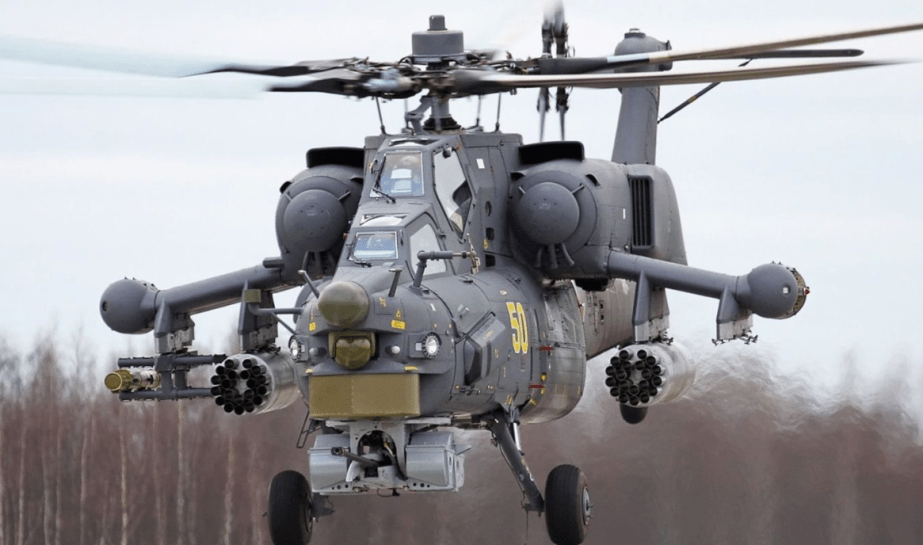
Brussels 26.05.2025 A Russian military commander of its air defense division claimed that President Vladimir Putin’s helicopter was “at the epicentre” of a Ukrainian drone attack on May 20, while travelling in Kursk oblast.

https://platform.twitter.com/widgets.js

“We were simultaneously engaged in an air defense battle and ensuring airspace security for the president’s helicopter flight. The helicopter was effectively at the epicenter of the response to the massive drone attack” Yury Dashkin said.

The claim, made five days after the alleged incident in Kursk Oblast, has not been independently verified. Dashkin provided no evidence to support the claim, and Russian authorities have not released further details.

https://platform.twitter.com/widgets.js

Putin’s visit to Kursk marked his first public trip to the region since Russian forces reclaimed most of the territory from Ukrainian control which was established there in August last year.

The incident raises question of the respect of the international law by Ukraine while attacking military target – the helicopter – in Kursk oblast, which is undisputable Russian territory. In international law, self-defense is the right of a state to use force in response to an armed attack. This right is recognized under Article 51 of the UN Charter and customary international law, which permits the use of force in self-defense when an armed attack occurs, according to the ICRC online casebook.
However the response must be necessary and proportional to the attack.

EU further restricts freedom of speech

Brussels 24.02.2025 The EU Commission cheered the Council’s adoption of the 16th Russia sanctions package aligned with the III year anniversary of the Russia-Ukraine war, including ban of a number of Russian mass media outlets.

https://platform.twitter.com/widgets.js

“As Russia’s illegal aggression enters its fourth year, this package is designed to further ramp up pressure on the aggressor and is part of the EU’s unwavering commitment to a just and lasting peace for Ukraine” reads the official text.
“In the 16th package, the EU has extended the prohibition to broadcast content to 8 Russian media outlets (EADaily, Fondsk, Lenta, NewsFront, RuBaltic, SouthFront, Strategic Culture Foundation and Krasnaya Zvezda) because these are under the permanent control of the Russian leadership and systematically participate in spreading misinformation and propaganda, which constitutes a threat to the Union’s public order and security” the reads the text of EU Commission Q&A page.
The explanation resonates with the words of the U.S. Vice-President J.D.Vance at Munich Security Conference: “…Now, to many of us on the other side of the Atlantic, it looks more and more like old, entrenched interests hiding behind ugly, Soviet-era words like “misinformation” and “disinformation,” who simply don’t like the idea that somebody with an alternative viewpoint might express a different opinion, or, God forbid, vote a different way, or, even worse, win an election”.
However the acknowledgment of mistakes, and admitting the failures are the most complicated mechanisms of human psychology, often causing well-known effect of “continuation of investment in failure”, which is both costly, and irrational waste of precious resources, including time.
The initial decision to cut off Russia Today TV channel in breach of the Lisbon Treaty Article 11 (
https://fra.europa.eu/en/eu-charter/article/11-freedom-expression-and-information)
was a precedent to open the gates into Soviet-like era of repression of freedom of speech, which later became normalized, and shifted from periphery to the centre, becoming the major instrument of dealing with the opponents – shut down. Unfortunately the pattern causes the irreparable damages to the EU project, indicating to lack of arguments, and deficiency of moral high ground.

Russia breaks CITES Convention and indulges in wildlife trade

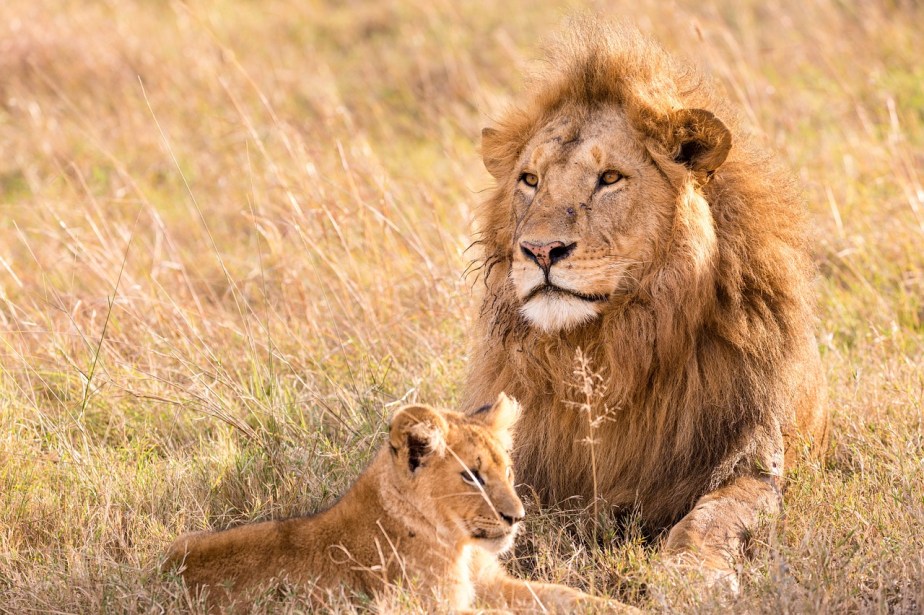
Strasbourg 23.10.2024 The atrocious death of Taigan safari-zoo keeper Leocadia Perevalova, 41, mauled by lions on October 16 caused serious concerns about the “pocket of lawlessness” in Russia-controlled Crimea, where along with the breach of security, sanitary norms, the illegal trade in big cats flourishes, breaching Russia’s government obligation imposed by the CITES Convention. Apparently after the second death of an employee of the safari-park in suspicious circumstances, the catastrophic lack of security measures came to public attention, leading further to a shocking discovery of the intentional character of the irregularities, covering the shady wildlife trade.

The founder, and the owner of the parc Oleg Zoubkov, who at times claimed that he is just an ordinary guide in the parc, attempting to avoid the responsibility for the systemic neglect of public safety, has already announced that the death of Perevalova was a result of omitting the rules, and “forgetting” to close the lock of the lion’s cage. However the animal rights activists have pointed to many contortions in Zoubkov statement, which contradict the official information from the ongoing investigation, namely five hours pause between discovering of a dead body of the keeper to calling police.

The activists, and civil journalists confirmed that they have been attempting to draw the attention of the authorities to the catastrophic situation in the parc for many years. The breach of basic safety rules is obvious, so is the total neglect of sanitary obligations: in the park hosting around 1500 wild animals there is no one single veterinary specialist!
The only vet, visiting park upon request, comes from the city of Simferopol – 50 km away, and offers services free off charge, being a founder of animal charity “Fauna Blago” to help animals in need.
Furthermore there is nobody monitoring the health of animals, and even their numbers are kept unknown to facilities the illegal trade. The activists were raising the issue of uncontrolled animal reproduction, and vanishing of lion’s and tiger’s cubs used for adverting of the park.

Recently the fate of a lion’s cub Sherkhan attracted attention of the activists: “…Let us recall that the cub Sherkhan was transferred to Crimea by a businessman from Donetsk in mid-November. The lion cub was given to him as a birthday present. A whole room was set up for the little predator. He was kept in excellent conditions, grew up affectionate and friendly. But at one fine moment the man realized that the king of beasts is not a house toy, and brought his pet to “Taigan” writes Russian tabloid KP.ru (VIDEO of Zoubrov advertising Sherkhan lion cub below)

In spite of being from unknown origin, Sherkhan was sold to notorious Harbin Zoo, China, in breach of the CITES convention. The activists point at the bragging of Zoubkov, being proud of responding to high demand for “Russian lions” internationally for private zoos, and circuses, advertising, photo-shooting etc. Animal welfare groups demand the independent investigation of the situation, claiming that the local authorities in Crimea are totally corrupt, and enjoy their “fair share” in illegal big cats trade. The workers of the park, tell stories of cruelty, and also inbreeding of lions, and tigers, describing the safari park as a cover for illegal farming and trade in big cats. So far the demands of the activists have fallen on deaf ears. Local authorities, and law enforcement simulate activities, in reality allowing the big cats farming to prosper, transforming Crimea into a platform for illegal wildlife trade.
(VIDEO of Harbin zoo lions in winter below)

The Russian Federation joined CITES in January 1992 through the continuation of its membership as part of the former USSR and was elected to serve as a regional member on the CITES Standing Committee at CITES CoP17.

Ukraine: accession and hurdles

Brussels 25.06.2024 The EU today held the first Intergovernmental Conference at ministerial level to open accession negotiations with Ukraine.

This follows the decision by the European Council on 14-15 December 2023 to open accession negotiations with Ukraine, and the approval by the Council of the Negotiating Framework for the negotiations with Ukraine on 21 June, in accordance with the revised enlargement methodology.

The EU delegation was led by Hadja Lahbib, Minister of Foreign and European Affairs of Belgium, accompanied by Commissioner for Neighbourhood and Enlargement Olivér Várhelyi. The delegation of Ukraine was led by Deputy Prime Minister Olha Stefanishyna.

The EU reiterated its resolute condemnation of Russia’s war of aggression against Ukraine and stated its readiness to continue to support Ukraine and its people against Russia’s ongoing war for as long as it takes and as intensely as needed.

The EU underlined that Ukraine is already a close partner of the EU.  Its Association Agreement with the EU, which also includes the far-reaching Deep and Comprehensive Free Trade Area, entered into force in 2017 and has been provisionally applied since 2014. It is the basis for extensive cooperation between the EU and Ukraine in a broad range of areas. The EU and Ukraine are closely aligned on foreign and security policy, and the EU encourages Ukraine to continue its positive trend towards full alignment with the EU Common Foreign and Security Policy.

The EU has now invited the Commission to continue to assess the state of preparedness of Ukraine for opening negotiations in specific areas and identify the issues that will most likely come up in the negotiations, starting with the fundamentals’ cluster which, in accordance with the Negotiating Framework, will be opened first.

As a future member state, Ukraine will be expected to continue to adhere to the values listed in Article 2 of the Treaty on European Union, namely the respect for human dignity, freedom, democracy, equality, the rule of law and respect for human rights, including the rights of persons belonging to minorities.

At present there are a number of questions regarding the human rights, namely the
The Treaty on European Union sets out the conditions (Article 49) and principles (Article 6(1)) to which any country wishing to become a member of the European Union (EU) must conform.

Certain criteria must be met for accession. These criteria known as the Copenhagen criteria were established by the Copenhagen European Council in 1993 and strengthened by the Madrid European Council in 1995.

They are:

    • stability of institutions guaranteeing democracy, the rule of law, human rights and respect for and protection of minorities;
    • a functioning market economy and the ability to cope with competitive pressure and market forces within the EU;
    • the ability to take on the obligations of membership, including the capacity to effectively implement the rules, standards and policies that make up the body of EU law (the ‘ acquis ’), and adherence to the aims of political, economic and monetary union.

Ukraine faces unprecedented challenges affecting gender equality and the enjoyment of equal rights and opportunites by women, particularly those facing multiple forms of discrimination. Structural discrimination of women persists in both the public and private spheres to varying extents in the country. The roots can be found in patriarchal attitudes and stereotypes, as well as deeply entrenched systemic gaps.

Clearly at present the human rights in Ukraine are not respected as declared by the EU Charter of Fundamental Rights which guarantees the EU citizens’ rights. The Charter lays down the fundamental rights that are binding upon EU institutions and bodies. It also applies to national governments when they are implementing EU law.

Ukraine faces unprecedented challenges affecting gender equality and the enjoyment of equal rights and opportunites by women, particularly those facing multiple forms of discrimination. Structural discrimination of women persists in both the public and private spheres to varying extents in the country. The roots can be found in patriarchal attitudes and stereotypes, as well as deeply entrenched systemic gaps.

Russia IL-76 crash under scrutiny

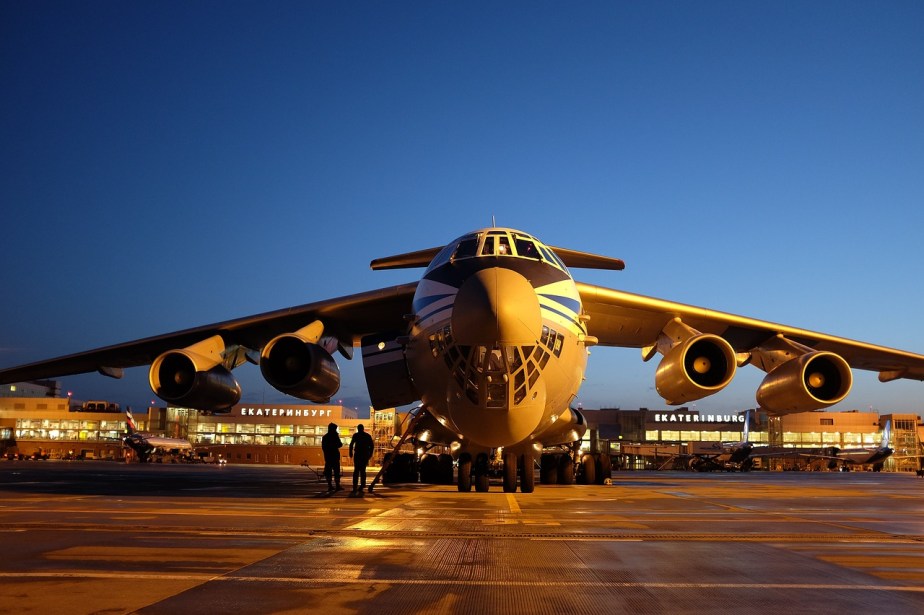
Brussels 26.01.2024 In case the use of an U.S. or a German surface-to-air missile systems for the deadly attack on Russia’s Il-76 plane (pictured) is confirmed, Western countries will become complicit in the crime committed by the Kiev government, Russian First Deputy Permanent Representative to the UN Dmitry Polyansky said.

“According to preliminary investigation, Ukrainian armed forces carried out this terrorist attack using an anti-aircraft missile system. The missiles were launched from the village of Liptsy in Kharkov region,” the Russian diplomat said. “These could have been either American Patriot or German-made Iris-T missiles. If confirmed, this will make the Western suppliers of this ammo complicit in this crime. Just as they are complicit in shelling of peaceful neighborhoods of Russian cities that Ukrainian armed forces carry out with Western weapons.”

On January 24, Ukrainian forces shot down a Russian Il-76 military transport aircraft that was carrying Ukrainian prisoners of war (POW) for exchange. All 74 people onboard, including 65 Ukrainians perished in the incident. The Russian Defense Ministry called the catastrophe a terrorist act and said Kiev authorities knew about the transportation POWs for an exchange that was planned at the Kolotilovka checkpoint.
In his video address late on Wednesday, President Zelensky said it was “obvious that the Russians are playing with the lives of Ukrainian prisoners, with the feelings of their relatives and with the emotions of our society”.

The Ukrainian leader, who has cancelled a planned regional trip linked to his birthday on Thursday, stressed that “all clear facts must be established”.

Kremlin spokesman Dmitry Peskov condemned the downing of the plane as a “monstrous act”, according to Russian news agencies. He told reporters that if Mr Zelensky meant an international inquiry into “the criminal actions of the Kyiv regime”, it was definitely needed.

EU establishes Russia Crime Centre

Today, the International Centre for the Prosecution of the Crime of Aggression against Ukraine (ICPA) started its operations in the Hague, hosted by the European Union Agency for Criminal Justice Cooperation (Eurojust). The newly established Centre will be key to investigate Russia’s crime of aggression against Ukraine and facilitate case building for future trials. It will provide a structure to support and enhance ongoing and future investigations into the crime of aggression and contribute to the exchange and analysis of evidence gathered since the start of the Russian aggression.

The Centre will begin operating as of today. Eurojust will work closely with the Commission and the members of the Joint Investigation Team to ensure that the Centre can provide the best possible support to national authorities.

The International Criminal Court (ICC) is competent to prosecute the gravest international crimes (genocide, crimes against humanity and war crimes and the crime of aggression). However, at the moment, the ICC cannot prosecute Russia for the crime of aggression, since Russia is not a State party to the ICC. To close this gap, in November 2022 the Commission presented options to the Member States to guarantee that there is full accountability for all crimes committed in Ukraine. These options explored the possibility of establishing an accountability mechanism to allow the prosecution of the crime of aggression.

While discussions continue, in particular within the Core Group on the establishment of the Special Tribunal, it is crucial to ensure that the relevant evidence is properly secured, and that investigations can begin within the existing legal frameworks.

The evidence collected by the Centre could be used before other jurisdictions, including national and international courts, including a possible tribunal for the crime of aggression or the International Criminal Court (ICC) for crimes within its jurisdiction.

Prosecutors from the members of the Joint Investigation Centre will be relocated to Eurojust, where they can work together on a daily basis. The prosecutors will be supported by legal and analytical experts from Eurojust. Evidence identified can be stored securely in Eurojust’s Core International Crimes Evidence Database, established following the changes to the Eurojust Regulation based on the Commission’s proposal to amend Eurojust’s regulation.

Borrell: EU €3.5bn military support to Ukraine

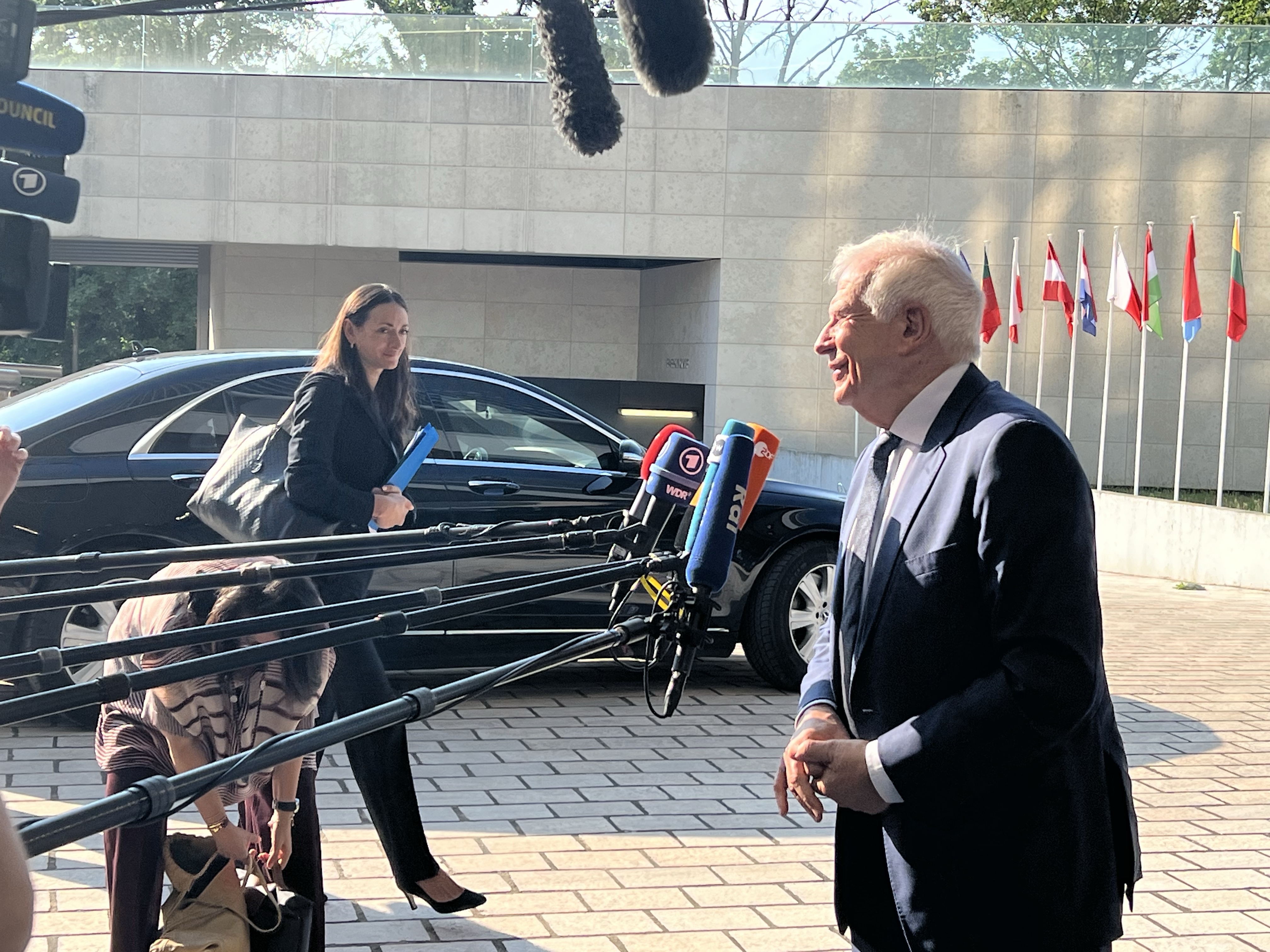
Luxembourg 26.06.2023 “Today, the Foreign Affairs Council is approving a new top-up of our military support to Ukraine: €3.5 billion [for the European Peace Facility]” said the EU top diplomat Josep Borrell at doorstep of the EU Foreign ministers Council.

“I think that it is more important than ever to continue supporting Ukraine, because what has happened during this weekend shows that the war against Ukraine is cracking Russian power and affecting its political system”.

“We are certainly following closely what is happening, but now is the moment to continue supporting Ukraine more than ever, and that is what we will do”.

“Today, the Foreign Affairs Council is approving a new top-up of our military support to Ukraine: €3.5 billion [for the European Peace Facility]” the diplomat concluded.

Sudan: Russian diplomat calls for cooperation

Brussels 28.04.2023 Russia calls for national consensus in Sudan — deputy foreign minister.
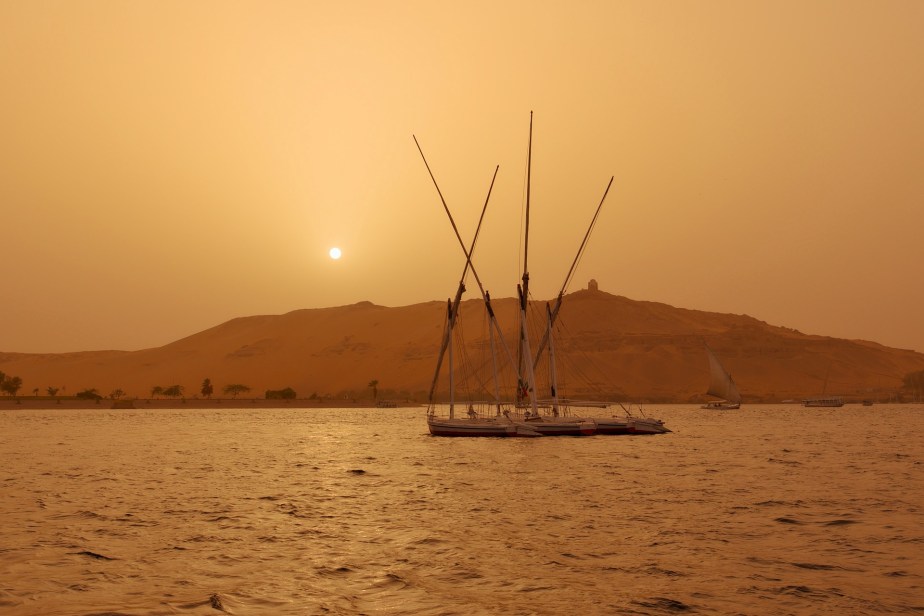
The situation in Sudan escalated amid disagreements between the army chief, Abdel Fattah al-Burhan, who also leads the ruling Sovereignty Council, and the top commander of the paramilitary Rapid Support Forces (RSF), Mohamed Hamdan Dagalo widely known as Hemedti, who used to be al-Burhan’s deputy on the Council. (Image: Nile, sunset)

Russia is calling on the belligerent sides of the conflict in Sudan to reach a national consensus and cooperate, Russian Deputy Foreign Minister Mikhail Bogdanov said on RT television on Thursday, April 27.

Bogdanov, who is also the presidential Special Envoy for the Middle East and Africa, added that Russia and Sudan always had friendly relations.

“Our minister [Foreign Minister Sergey Lavrov] was on a visit to Khartoum. There were very good communication, meetings and negotiations with both the Foreign Minister and the military authorities. We have always been in favor of national consensus and cooperation between the forces in Sudan – the military and civilian ones,” Bogdanov clarified.

The conflict in Sudan occurred as a result of disagreements between the army chief, Abdel Fattah al-Burhan, who also heads the ruling Sovereignty Council, and the head of the paramilitary Rapid Support Forces, Mohamed Hamdan Dagalo, named Hemedti, who is al-Burhan’s deputy on the council.

On April 15, armed clashes between the rival military factions erupted near a military base in Merowe and in the capital, Khartoum. According to the country’s Health Ministry, more than 600 people have been killed since the conflict broke out. The World Health Organization reported that the conflict had claimed more than 450 lives with more than 4,000 people suffering injuries.

Thousands of foreign nationals have been evacuated from Sudan in recent days. Spain, Italy, the Netherlands, and France closed their Embassies in Khartoum. Many other countries are reducing their diplomatic presence or relocating diplomatic missions to nearby states.

Ukraine: Zaporozhye activates emergency diesel

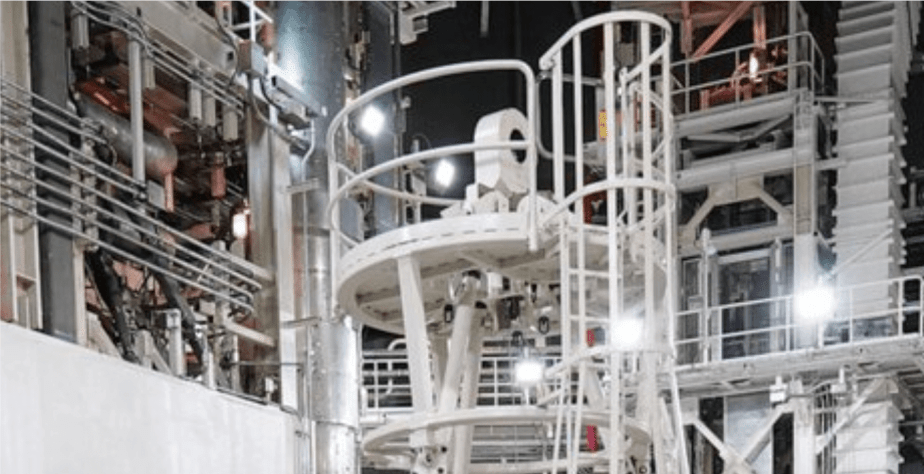
Brussels 09.03.2023 Ukraine has cut off power to the Zaporozhye Nuclear Power Plant in the city of Energodar, Chairman of the “We Stand With Russia” movement Vladimir Rogov told TASS on Thursday, March 8.

“…[Ukraine] cut off the supply through the last remaining power line to the Zaporozhye NPP at 4:53 a.m. The nuclear power plant is currently disconnected from external power sources,” Rogov explained.

“It has nothing to do with shelling attacks, nothing happened in the area that could have led to the power cutoff. It is just an act of pure spite on the part of Kiev,” he continued noted. He added that the nuclear power plant had been switched to diesel generators.

The Zaporozhye nuclear plant, located in the city of Energodar, is the largest in Europe and has a capacity of about 6,000 MW. Russian troops took control of the facility in late February 2022. Since then, the Ukrainian military has been shelling both Energodar’s residential areas and the premises of the Zaporozhye nuclear station, using drones, heavy artillery and multiple rocket launchers.

An IAEA mission led by Grossi visited the facility in early September 2022 and two of its members remained at the site as observers. The IAEA later published a report calling for the creation of a safety zone around the plant to prevent any calamities from the ongoing military activities.

“It has nothing to do with shelling attacks, nothing happened in the area that could have led to the power cutoff. It is just an act of pure spite on the part of Kiev,” Vladimir Rogov noted

EU-Russia: X package of “arsenic”

Brussels 20.02.2023 “We are approaching one year since Russia’s full-scale invasion of Ukraine” said the EU top diplomat Josep Borrell, while addressing the Members of the European Parliament in Strasbourg (pictured).

“Until today, Putin is escalating this illegal aggression, weaponising winter, food and hunger. Russia continues to show its inhuman face with brutal missile terror against civilian targets.

“The European Union has so far reacted with unprecedented support to Ukraine and nine sanctions packages. They are taking a heavy toll on the Russian economy and on the Kremlin’s ability to finance its aggression.

“Today, as the President of the [European] Commission [Ursula von der Leyen] has announced, we are putting forward a 10th package of sanctions against those who are instrumental in the continuation of this brutal war. Taking more measures, tackling the banking sector, access to dual-use technology and targeting, also, advanced technologies.

“Additionally, I am submitting to the Council a list of proposals to sanction almost 100 additional individuals and entities for their role in undermining sovereignty and territorial integrity of Ukraine.

“This includes those responsible for military activities, for political decisions, propaganda, and disinformation.

“We are targeting those involved in inhumane kidnappings, deportations and forced adoption of Ukrainian children to Russia and also those enabling the looting of Ukrainian resources.

“We will again hit hard at the Russian military and defence sector, at the organisations related to them, [and] those responsible for the development of drones that are targeting civilians and civilian infrastructure.

“And these [sanctions] are not [confined] to Russia. Today’s proposal includes a full exports-ban of several Iranian entities involved in the manufacture and provision of unmanned aerial vehicles. Yesterday, at the NATO [Ministerial] meeting, we got clear evidence that this is happening.

“So, we are proposing to sanction more key decision-makers, senior government officials and parliamentarians.

“I am proposing to the Member States to extend our sanctions to the proxy authorities and the so-called judges in the four illegally annexed Ukrainian regions of Luhansk, Donetsk, Kherson and Zaporizhzhia –who are providing fake legitimacy to the Russian rulers and their illegal decisions.

“We are imposing restrictive measures on media organisations, on persons and organisations who are polluting the public space with disinformation and malicious narratives, adding to the military warfare also through information warfare.

“We will continue to increase pressure on Russia – and we will do it for as long as needed, until Ukraine is liberated from the brutal Russian aggression”.

A new portion of “arsenic” for Russians include the following measures:

European Commission President Ursula von der Leyen and the EU top diplomat Josep Borrell have already announced details of the EU’s proposed 10th package of Russia sanctions. The X-th package of sanctions will include:

Export bans on critical technology and industrial goods, such as electronics, specialised vehicles, machine parts, spare parts for trucks and jet engines, as well as goods used in the construction sector, such as antennas or cranes.
Further restrictions on the export of dual use goods and advanced technology goods, including 47 new electronic components that can be used in Russian weapons systems, including drones, missiles and helicopters.
Export restrictions on specific rare earth materials and thermal cameras.

The addition of VII Iranian entities to the EU’s Russia dual use sanctions. This responds to Iran’s Revolutionary Guards alleged provision of Shahed drones to attack civilian infrastructure in Ukraine.
The designation of nearly 100 people and entities, including:

– those involved in kidnappings, deportations and forced adoption of Ukrainian children to Russia;
– those enabling the looting of Ukrainian resources;
– organisations involved in the Russian military and defence sector, including those responsible for the development of drones that are targeting civilians and civilian infrastructure;
– key decision-makers, senior government officials and parliamentarians;
– proxy authorities and judges in non-government-controlled Ukrainian regions of Luhansk, Donetsk, Kherson and Zaporizhzhia; and
– media organisations, people and entities responsible for disinformation.

Measures to prevent circumvention, including the creation of an “overview” of all frozen assets of the Russian central bank held in the EU alongside Member States. President von der Leyen said that this is crucial in view of the possible use of public Russian assets to fund reconstruction in Ukraine.

President von der Leyen also said that the Commission is organising a Sanctions Coordinators Forum. Subsequently she called on Member States to adopt this package swiftly with the aim of having significant sanctions in place by 24 February 2023, the 1-year anniversary of Russia’s aggression against Ukraine.