Florence speech as Renaissance Fata Morgana

Anna van Densky, OPINION

Public speeches of politicians are not confessions,
even less can they be compared to an experience on
a couch of a psychoanalyst, and Britons can only hope
that the Florence speech of PM Theresa May
was a public relations moment, and not a roadmap
for #Brexit.
Even at first glance once can notice that the aims
of president of the EU executive body – European Commission –
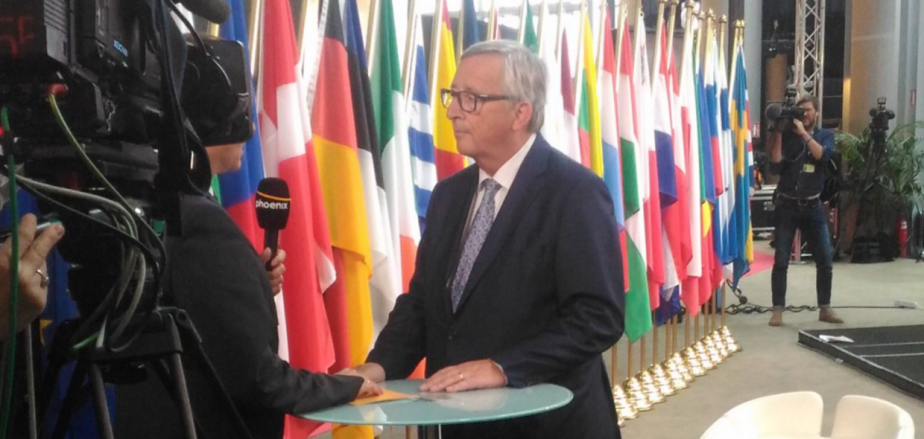
Jean-Claude Juncker are opposite to May’s wish to achieve ‘Renaissance’
in a framework of a renewed partnership between
the UK and the reduced to 27 members bloc.

In his September state of the Union speech Juncker clearly
formulated the goals: a full-forward to the United States of Europe,
with mentioning Brexit in a sinister wow the UK would “regret” the
decision to leave the bloc soon. The intention to enshrine Brexit
as a negative example forever has been the only concept circulating
in Brussels corridors of power, where the EU diplomats
in ‘confidential’ talks would hint on only possible future
of London, and it was not a splendor of Florence,

but as declining Venice (or fall of Venice)Venice decline the inevitable poor fate of the rebellious  against Brussels bureaucracy Britons.
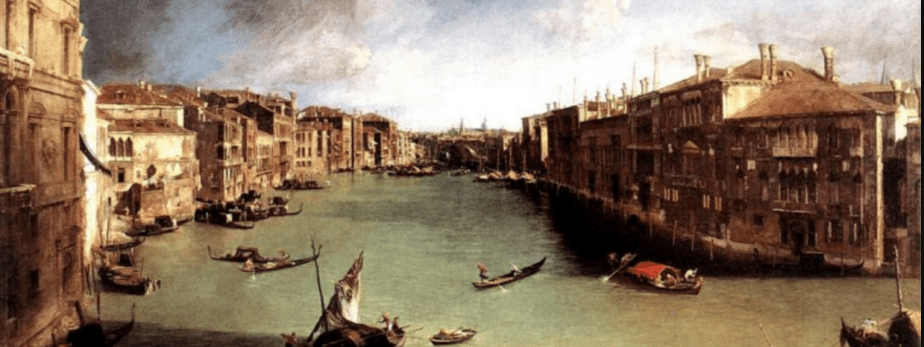
May’s calls for Renaissance are also utopia because of the United Kingdom
post-Brexit prosperity will set a precedent and give an example to many others, namely the old members of the EU to leave the block, reestablishing sovereignty – the ‘heresy’ leading to collapse of the United States of Europe project.

Certainly, the proposal to pay fee beyond Brexit May made is attractive
to the EU federal state architects, however it does not exclude
their profound concern with the post-Brexit success of the Leavers.
The best scenario for the EU would be to continue to accept the UK fee,
and diminish its political influence, meanwhile imposing ‘four freedoms’ dogma.
So Britons would obey Brussels, pay for the construction of the EU superstate, preserving de facto four freedoms, including the reception of migrants,
but without a political presentation in the EU intuitions.

A “wonderful woman” as president Trump rightfully characterised May for her many virtues,  has been already once lured into a trap by president Juncker, reportedly
convincing her to declare the snap elections she lost.
Calls for Renaissance in relentless search for compromise to satisfy the EU quenching thirst for power and finance, will certainly please Brussels,
happy to find in May a Remainer leading Brexit.
But do Britons need a head of government, bowing to Brussels in Brexit talks?
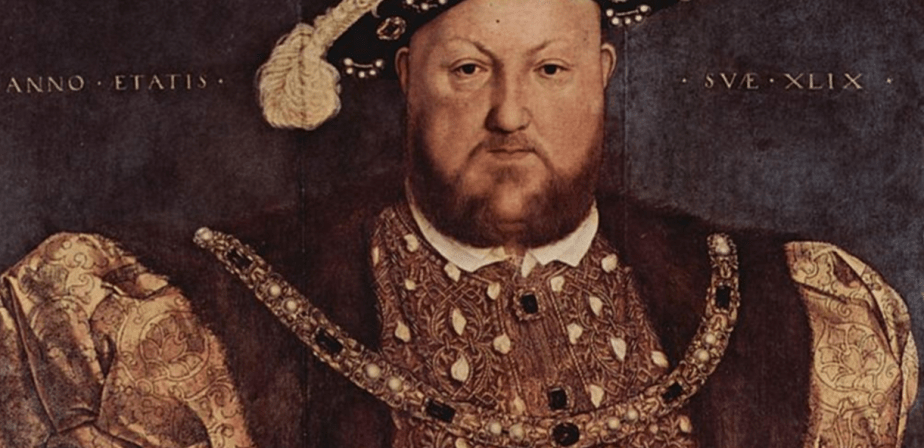
Henry VIII

Imagine Henry VIII proposing to Pope:
‘Look, we don’t believe you are an apostolic successor to Saint Peter, you holding the keys to Haven, etc, – so I will become the head of Church in my country, but
we continue to pay you for two more years according to previous obligations,
and then we create a new equal-footed
partnership for mutual benefit and prosperity.
Please, let’s go for Renaissance together!”

Would the pontiff accept it?
Ha-ha:)

Pope FB

#SOTEU2017: Apogee of dogmatism

#SOTEU2017. Startling by its neglect of the realities of life, the State of Union speech has been hovering high above like a banner dragged by a colorful hot air-balloon in blue sky to admire it for a few moments, before going back to blacks.
One could hardly associate numerous full of optimism slogans of president Jean-Claude Juncker with the grim realities of millions of Europeans struggling to make the ends meet. The magic formula ‘More Europe!’ – the ‘philosopher’s stone’ of the European bureaucrats, supposedly to turn everything into gold became a source of disquietude to extend, some block’s most prolific member prefered to end the engagement, concerned with the sovereignty.

The idea of moving towards the ‘United States of Europe’ – the ultimate dream of the forefathers of the project, resurrecting continent from the ashes of the WWII seem less appealing nowadays, in a totally different political context. The times have changed, but the eurocrats, unlike the rest of us have not changed with times:( remaining guardians of more than half-a-century old doctrines, that are clashing with for modern dynamic and flexible word.
The inseparable four freedoms of the EU became more of a problem, instead of a solution: open borders, and free movement cause insecurity, and is generally perceived as the major reasons of the UK break away from the block, but not but the eurocrats.

Simply brushing aside the problems related to the EU profound #Brexit crisis, Juncker ordered ‘fast forward’ to the bright future of the EU27, without any clarification how the intensified integration will be funded in absence of the UK, the second net contributor to the EU purse.

Juncker’s vow #Brtions will regret soon their decision to vote leave, sounded sinister, sensed as a threat, while the policy of making ‘negative example’ from the UK till now has been the only reaction from the EU institutions, eager to ‘receive’ a mega ‘allowance’ as if in divorce case. Making a scarecrow from the EU supposedly should stop anyone else from turning to a seditious idea of leaving the block regardless its results delivery.

With Geert Wilders (PvV) growing numbers of supporters in the Netherlands; narrowly defeated Norbert Hofer (FPO) in Austria; Marine Le Pen (FN) reaching the second round of presidential elections in France; with AfD flexing muscle, anticipating entering Bundestag in Germany, – within this political context the old EU doctrines look outdated. So does the EU leader, reminiscent of the late members of Politburo of the Soviet Union, loyal to the ideals of their youth, and unable to adapt to the changing world.

Fragilized by age, but refusing to assume the responsibility for Brexit as the major EU failure, still insisting on the marvels of the membership of the bloc, Jean-Claude Juncker looks like a relic of another era. In epilogue of the debating the State of the Union speech with the MEPs, publicly complaining about his health, he evoked an idea of necessity for an urgent renewal of the EU leadership. The need of change of generations obvious even for the most devoted Eurocentrics to avoid the imminent decline, and collapse like the late USSR.

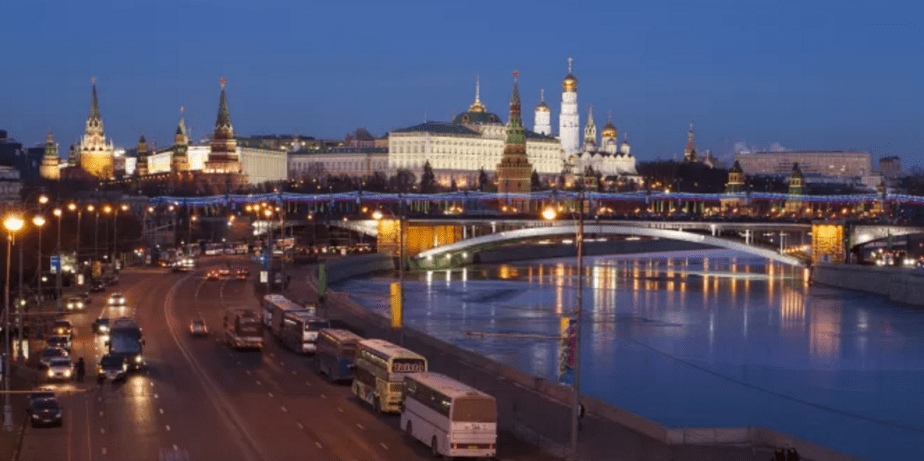
Moscow reacts with reserve on Washington sanctions

The signing of a law on tougher US sanctions against Russia, North Korea and Iran by President Trump does not change anything de facto in the current situation, the Russian President’s press secretary, Dmitry Peskov said, according to Russian TASS news agency.

“The very fact of signing the law doesn’t change anything,” he said when a reporter asked him about the impact of the sanctions and a possibility of retaliation from Russia.

“What kind of measures?” Peskov went on. “No new steps. Retaliatory measures have already been taken.”


Brexit negotiations pessimistic forecast

Anna van Densky, OPINION

The repeated requests for ‘clarifications’ from behalf of the EU27 articulated by the chief negotiator Michel Barnier reflect the state of the disbelief of the block vis-à-vis Britons who voted for abandoning of Europe’s project. In a long list of issues to be settled to the UK membership expiration date, the rights of the EU citizens, and the payments of fees beyond departure date are among the most controversial.

The demands of Barnier to create a three million strong growing expat community in UK, subdued to the EU law under umbrella of the European court of Justice, attributing it supremacy in jurisdiction over these citizens, and offering the European Commission right to monitor the situation, is de facto a claim of creating a EU27 enclave in the UK.

Nowadays the two groups of expats are different not only in numbers, as the Europeans are roughly three times more numerous in the UK, but also have different demographic potential. If the UK group has a large segment of senior citizens, which will be reduced with time for natural reasons, the Europeans represent the young generation with growing families, eager to pass their status to children. The demographic potential of 3,3 million of Europeans including more than a half a million of children in need of schooling  is in stark  contrast with the decreasing group of British wealthy senior citizens purchasing properties, and healthcare on continent.  As the recent study shows the biggest UK citizens community resides in Spain – more than 300 thousand people, and one-third of them are over 65, presumably retired.

However it is not economic, but political potential of EU growing group that should be of concern for Britons, risking to face a sizable problem in hosting a young and fast growing community, which can be a subject to a different kind of manipulations in the hands of the Brussels bureaucracy. In reality Barnier promotes the European community in the UK as a Trojan horse, serving the EU interests in the UK, and not the interests of the community itself, which naturally should be aiming at integration, and not prioritising the ties with the continent they have abandoned.

The other contradictory claim derives from the EU27 ‘divorce’ concept of Brexit, which is also at odds with the enshrined in Lisbon Treaty right of a state to cancel its membership. With the  ‘divorce’ concept Brussels is attempting to plant in public conscience the idea of ‘allowance’,  ethically framing the move of taking Prime minister Theresa May to cleaners.

If brushing away the profane description of the process, imposed by the European Commission, the membership cancellation does not include any membership fee beyond the actual legal period of being in the ranks of the European Union project. However the EU27 with a remarkable tenacity attempts to force the UK to pay the fees until the end of the financial term to ensure the stability for the European programmes until the finale of the current institutional mandate for the EU top executives, prioritising their personal political ambitions over long standing strategic interests of the continental Europeans, and Britons.

The exaggerated claims of the EU27 are rooted in the denial  of the reality of Brexit, namely the rejection of the UK citizens to continue their engagement with the European project, shifting from Single Market to European superstate. The obsessive pursuit of Brussels financial interests, and claims of an exclusive status to EU expats, will force the UK to leave without a deal, and this episode will leave a profound scar in relations between former partners for generations to come.

Brexit talks in Brussels

Britain’s Brexit minister David Davis vowed to “get down to work” ahead of a first full round of negotiations, however the gap between the EU27 financial claims, and the UK readiness to contribute to Europe’s purse after departure remains huge, so is the order of talks, imposed by the bloc, insisting on settling the ‘divorce’ bill first, and arranging a new framework of relations after.

The EU27 financial claims widely considered as an Apple of Discord between Brussels and the UK government, accepting to contribute beyond Brexit in some programmes, but not in a lavish ways the EU apparatchiks desire. The departure of the second net contributor leaves a huge hole in the EU27 budget, without an immediate solution how to mend it, putting many EU projects at risk.

The incumbent EU executives are also looking for the ways to conclude their mandate without having egg on their faces for shrinking activities in European project. Many experts consider that the Enlargement to the East without respect of Copenhagen criteria, and open door migration policy undermined the EU, forcing Britons to leave. There are many forecasts the UK will not be the only country eager to end its membership in the advanced democracies club, increasingly shifting away from its original concept of stability and prosperity in Europe.

Mogherini ignores Sophia mission failure

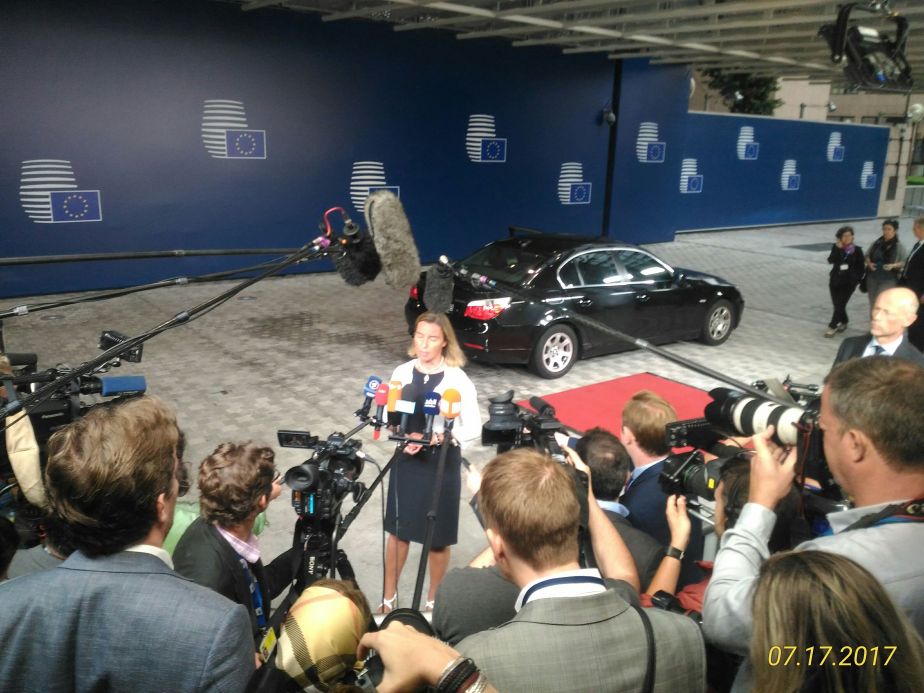
The EU top diplomat Federica Mogherini ignores the obvious Sophia operation failure in Mediterranean, in spite of the clear will of Belgium to cancel the participation of their vessel in sea rescue mission. Mogherini also pretends to be unaware of the assessment of the House of Lords, openly stating the EU mission has failed to prevent massive migrant smuggling to Europe.

Ahead of the Council meeting the Foreign minister of Belgium Theo Francken clearly stated during a national TV programme that his country has the intention to end Louise-Marie frigate participation in the Mediterranean operation, because of the double message it sends inspiring more migrants to undertake the risky journey in a hope to be saved and transported to European coasts, thus not only saving lives but also  increasing flows of the ‘illegal migrants” eager to gamble.

The UK House of Lords report on Sophia mission is even more eloquent in its assessment, entitled: “Failed Mission”. The major recommendation is to disrupt the business model of smuggling networks through required ‘concerted action’ at Libya’s southern land border.

The Council agenda foresees discussion on migration, focusing on the situation on the Central Mediterranean route. Filippo Grandi, United Nations High Commissioner for Refugees and William Lacy Swing, Director-General of the International Organisation Migration will both take part in the discussion.
Grandi is also known for his criticism of the ‘xenophobic climate’ in Europe vis-à-vis mass migration from Africa and Middle East.

EU-Russia talk – falling on deaf ears

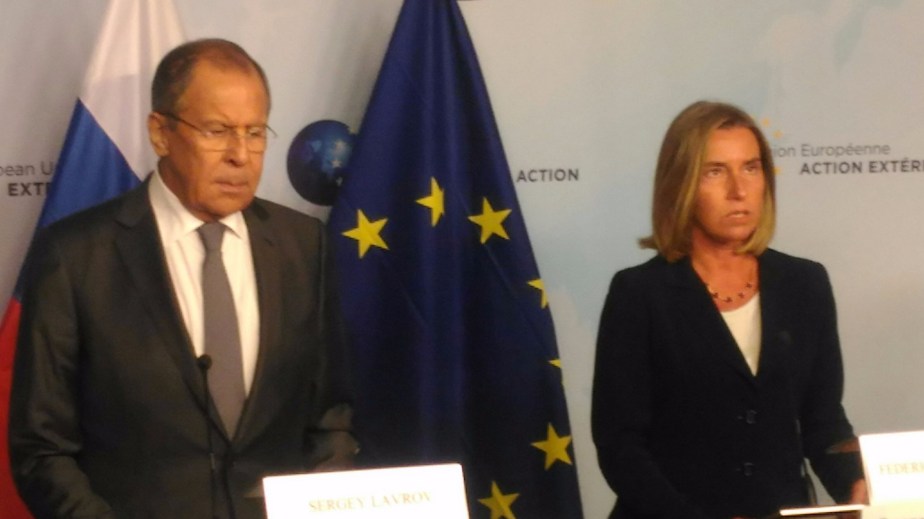
The consultations between Russian foreign minister Sergey Lavrov and EU top diplomat Federica Mogherini were very brief, and hardly resembled the ostentatious format of the strategic partnership, practiced between the EU and Russian in the recent past, before the Maidan revolution in Ukraine. Lavrov did not make a secret of the EU meeting taking place as an addition to his visit to Belgium, however he agreed to accept the invitation, and thanked for it, considering exchange as useful.

However even at a glance at two gloomy and tense officials one could assess the talks as a formal exercise, where none of the parties expected a rapprochement. The long list of issues from the international agenda, cited by Mogherini, just made one think how little left in common between two neighbours, sharing the responsibility for the security and stability of the European continent.

Although Lavrov expressed confidence in returning of the EU-Russia relations to  its ‘normal course’, it is difficult to imagine how this normalisation is possible with the incumbent EU leadership’ hostility towards Kremlin. The comparison of Russian press to Islamic state propaganda in a resolution of the European Parliament marks the lowest of the relations since collapse of the USSR. But high tight is possible: fragile after the departure of the second net contributor in two years time, the EU after Brexit will have no reserves to continue its ‘crusade’ against Kremlin. “Money is a nerve of war’.

Cornered by the US request to contribute to NATO according to the engagement, and cut off the UK fee to the European purse, the EU27 will be pushed to reconsider its strategy towards Moscow unable to maintain the current level of hostility for purely economic reasons. Moreover in the end of the day the heavily  indebted Ukraine does not have the required features to remain an Appel of Discord for long – political instability and endemic corruption make it an unsuitable  partner for the EU, and unreliable client of Siberian gas for Russians. But coming on terms with realities of life is not an easy exercise for the ambitious Brussels bureaucrats, subsequently at the moment Lavrov’s reasoning falls on deaf ears.


Mogherini “so ashamed of EU”

Anna van Densky, OPINION

The EU top diplomat Federica Mogherini refrain of being “so ashamed of the EU” came as startling amid the high level conference in the European Parliament on migration management. Lashing the European Union for not doing enough, Mogherini  expressed her profound disdain with the organisation, incapable to host migrants in numbers they appear at European coasts.

The frustration of Mogherini with the reluctance of the EU member-states to host massive flows of migrants has its pre-history. previously the head of the European Actions Service has been known as an ardent promoter of Islam: “I am not afraid to say that political Islam should be part of the picture”, said Mogherini at an event devoted to ‘Islam in Europe’.

“Islam belongs in Europe. It holds a place in Europe’s history, in our culture, in our food and – what matters most – in Europe’s present and future” – Mogherini continued.

However the biggest challenge to the diplomat is the  European identity, she sees as an obstacle for free inflows of the migrants from the Islamic countries: “Any attempt to divide the peoples of Europe into “us” and “them” brings us in the wrong direction.” Following this logic anyone who reaches geographic Europe becomes European in his own right, without any need to adapt to the European culture in a broader sense, moreover the newcomers are entitled to recreate the ideology which is the reason of their misery, pushing them to flee their homes. No one ever heard of the Christians searching for asylum in Muslim countries, but strangely enough the major reason of their life drama is preserved as an integral part of their personal ‘freedom’, especially grotesque in case of Muslim women, who insist in Western societies on freedom of submission. A perfect oxymoron, and contemporary paradox, but not the only one.

However deeply ‘ashamed ‘ of the EU Mogherini is, she continues to receive a mega-salary of a high-ranking executive from the EU she scorns: a monthly pay of 27,953 euros – which increased on 633 euros this year according to Bild newspaper – thanks to the generosity of the European ‘shameful’ taxpayer, sponsoring the entire project.

Pecunia non olet! (Latin – money doesn’t stink

EU migrant crisis deadlock

Although  focused on sanctioning Vicegrad4 (V4) group members – Czech Republic, Hungary, Poland and Slovakia – for their reluctance to accept the refugees and migrants after the wave of the terroristic attacks in Europe, the EU does not have a concept or strategy for long-term solution of the problem of illegal mass migration from Africa. Tactically forcing the V4 to accept some thousands of migrants will not lead to the a halt, or even a relieve in the  Italian shelters, but achieve the opposite,  encouraging new massive arrivals. Even if hosted  proportionately among all EU27 states, the migration problem  will not be an inch closer to its solution, on contrary to what the leader of the European Parliament Socialsits @GianniPittella MEP, might hope for, insisting that there is no other solution, but sanctioning V4:

Next to old rivalries and violent conflicts the West introduced the new once, as a result of a passion for regime-change Libya has been degraded from one of the richest African nations under Colonel Gaddafi rule to a failed state, terrorized by various groups of jihadists, whom he once fought. Failed state became an open gate for anyone in Africa interested to try his luck in Europe. Different sources mentioned 15 000 jihadists who have already infiltrated in Europe with migrants flow, waiting for a suitable moment to strike.

Until Libya remains no man land, the perspectives to curb the flow of migrants from Sub-Sakharian  Africa stay feeble: countries like Nigeria with two million people fled from the militant group Boko Haram’s violence since 2014, will continue to represent a reserve of refugees eager to risk their lives to reach Italian coasts.

At the moment  six million people are looking for an opportunity to cross Mediterranean, gathering at Libyan coast, according to a report leaked to Build newspaper. The plea of the European Liberals to relocate to each European town “30 migrants” doesn’t work either, because it will privilege the happy few, inspiring deprived millions to require the same treatment. The re-location of even one million of Africans to V4 countries will not resolve the problems of the entire 1,2 billion population of the continent, suffering violent conflict, poverty and famine.

The restrictive measures towards V4 will alienate the citizens of these countries from the EU project, which has been passing through turbulent times of Brexit – the decision largely taken in discord with the EU open door policy, and a broad gesture of Chancellor Merkel inviting one million migrants to Germany. Calais camp Jungle has also played its part, while Britons were casting a ballot in referendum to share common destony with Europe. (Photo: a migrant camp in France set ablaze in a brawl between two ethinic groups).

However not everyone shares the views on sanctions against V4 as a solution: the leader of the European Parliament Nordic Greens MEP Gabi Zimmer admitted that the sanctioning is not, she believes in solidarity, but she doesn’t precise where its limits are.

The dilemma for the East European nations is the choise  between European Funds they are threatened to lose and security.

“Wallet or life?”- for V4 to decide…


Failed Mogherini’s bit of trolling May

It looks the EU top diplomat Federcia Mohgerini’s attempt to troll the UK Prime Minister May failed – there will be no ‘hung’ Parliament in the UK, and #Brexit talks will start in 10 days as foreseen due to the alliance between the Conservatives and the Democratic Unionist Party (DUP), joining with 10 MPs. Apparently the heavy-weight in politics May is not an easy target even for mega-trolls:)

However it would be better for the EU executives to restrain from the trolling PM May in the future, because on contrary to Brussels, leaving without the Article 50 deal has a lot of political benefits for the Conservatives, delivering  the desirable STOP of paying Brussels all at once. The departure of the  UK being a second net contributor with full membership fee of £17.8 billion (the deduction of the Thacher’s rebate reduces it to £12.9 billion),  or £35 million a day, – this departure leaves the EU without an answer how to mend the giant hole in the pocket.

The chances of Conservatives oping for #hardBrexit in alliance with DUP loom large, envisaging the scenario of the UK leaving Brussels ‘elite’ insolvent, and immobilized to move forward their ultimate target of ‘more Europe.’