KABUL: Russian Embassy remains functional

Брюссель 15.08.2021 Russian diplomats are not preparing the evacuation of the Russian embassy from Kabul, the diplomatic mission is working in a quiet mode, we are in touch with the ambassador, Zamir Kabulov (pictured), the special envoy of the Russian president for Afghanistan, director of the second department of Asia of the Russian Foreign Ministry, told RIA Novosti.

“No, the evacuation of the embassy is not being prepared. I am in contact with our ambassador, they are calmly working and closely watching the development of events,” Kabulov said.
The Taliban guaranteed security not only for the Russian embassy, but also for diplomatic missions of other countries, Kabulov added.

Russian Foreign Ministry spokesman Maria Zakharova, commenting on the situation in Afghanistan, where the Taliban are taking over major cities, said that the world is watching with “horror” the result of another “historical experiment” of Washington.

“It’s surprising, but true: in Afghanistan, there is a confrontation between two forces, both of which are the fruit of the US thinking process. The world is watching with horror the result of another historical experiment in Washington,” Zakharova wrote on the Telegram channel.

The situation in Afghanistan has escalated in recent weeks with the Taliban militant attacks on the country’s major cities. On Sunday,August 15, media and sources reported that the Taliban control all border crossings in Afghanistan, are in the vicinity of the capital and have taken control of the Kabul University.

Meanwhile, the Afghan presidential administration said it was in control of the situation in the country’s capital, Al-Arabiya TV reported. Negotiations with Taliban are ongoing now in Presidential Palace.

Former Afghan Interior Minister and former Ambassador to Germany, Ali Ahmad Jalali, will be appointed head of the country’s transitional government, Afghan Khaama Press reports citing sources.

According to sources, negotiations are underway at the Presidential palace in Kabul to transfer power to the radical Taliban movement. It is noted that the head of the Supreme Council for National Reconciliation in Afghanistan, Dr.Abdullah Abdullah, acts as a mediator.

Earlier, the Taliban said they were negotiating with the government about the possibility of peacefully entering Kabul. They also stated that the Afghan government will be responsible for the security of Kabul until the end of the transition process.

The Taliban movement, while being a terrorist group banned Russia, guaranteed the security of the Russian embassy in Kabul, said Mohammad Sohail Shahin, a spokesman for the Taliban’s Qatari political office. Zamir Kabulov, special envoy of the Russian president for Afghanistan, director of the second department of Asia of the Russian Foreign Ministry, added that the evacuation of the Russian embassy in Afghanistan is not planned.

Zamir Kabulov, who was born in Soviet Uzbekistan, graduated from the Moscow State Institute of International Relations in 1977, and carried on responsibilities in various diplomatic posts in the central offices of the Ministry of Foreign Affairs and abroad, in particular in Afghanistan. His Central Asian background further bolstered his career in dealing with Afghan and Pakistani issues.
Kremlin issues warning to Taliban

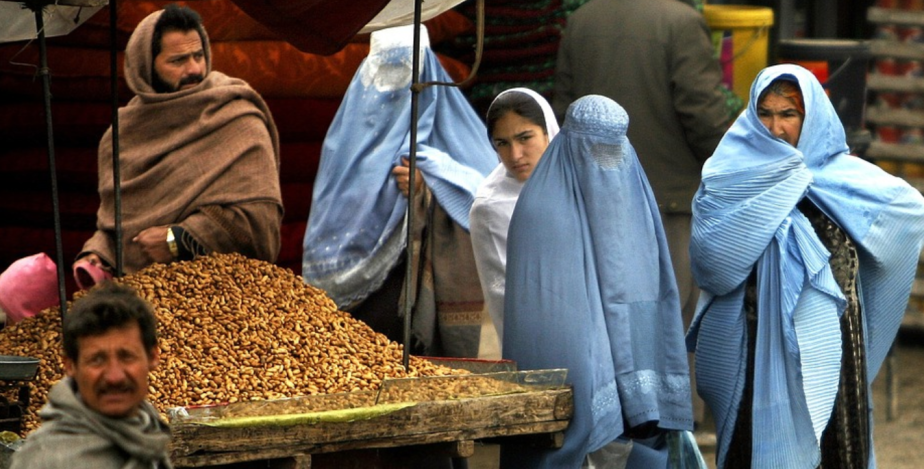
Brussels 14.07.2021 Russian senior official accused the Afghan government of hypocrisy and said it needed to start proper negotiations with the Taliban about the country’s future before it was too late. (Image above: illustration, Afghanistan).

Zamir Kabulov, a special Representative on Afghanistan, issued the warning ahead of upcoming talks about the Afghan crisis in Tajikistan where Foreign Ministers from the Shanghai Cooperation Organisation were meeting.

In an interview with state RIA news agency, the high official said that while the Afghan government paid lip service to the idea of talks it was not doing enough to make them happen.

“It’s hypocrisy. It’s an attempt to close their eyes to the reality which exists and these are empty words,” Kabulov told RIA when talking about the Afghan’s government’s stance on negotiations with the Taliban. “We need deeds” Kabulov has underlined.

The only way out of the current crisis which has seen the Taliban make military gains on the back of an exit by U.S. and NATO forces was for all sides to assemble at the negotiating table in Kabul, the official continued. Russia and other regional powers favoured a transitional government in Afghanistan, he added.

Any attempt by the Taliban to damage the security of Russia’s allies in Central Asia will be fraught with large losses for the Taliban movement, continued Zamir Kabulov.
“We are closely monitoring the situation. Taliban should understand that “any attempt to damage the security of our allies in Central Asia will be fraught with great losses for them, if not the loss of everything” Kabulov continued.

No new Russian envoy to new NATO headquarters

Russian decision to postpone  the appointment of a new ambassador to NATO announced today marks a new low in rapidly deteriorating relations between the East and the West, but even more it underlines Kremlin assertiveness, and claims of parity,  turning the page of a period when one could label Russia as a “regional power“.

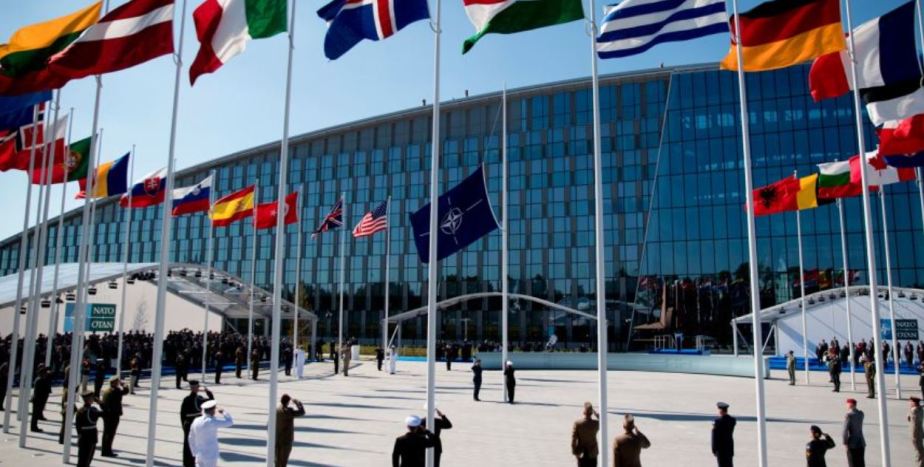
However while looking at new splendid NATO headquarters in Brussels one wonders what it the purpose of the Alliance today? What’s the raison d’être? If it is the revival of the Cold War, what is its aim this time? The Communism has fallen, and there is no official state ideology in Russia to defeat. The authoritarianism, human rights and rule of law issues can hardly be targets of criticism, while NATO ally Turkey’s ‘Sultan’ Erdogan openly, and literally conducts purges against his political opponents, and wages a war against Kurds, describing it the ‘Olive Branch’ operation against Islamic State.

Meanwhile the radicals are not shy about showing faces in Afghanistan. After a decade of military campaign, NATO has withdrawn its troops in 2014 without any definite conclusion, but rapid and widespread rise of Taliban. Nowadays the Islamists are taking grounds, imposing unprecedented levels of violence, and there is hardly a week without news of terrorist attacks, and numerous victims among civilians. Unlike the time of the beginning of the US military mission Jawbreaker (2001)  against Osama Ben Laden in Tora Bora, the radicals are not hiding in the caves, they are claiming  power,  and constructing networks in real and virtual world, controlling two-thirds of Afghan  territory. The airstrikes in defeating the radicals do not help much, but turn against the Kabul and the West the entire population of the provinces for ‘collateral damages’.

However even the rapid progress of Taliban does not motivate NATO to start a coordinated action with Moscow, in spite of the obvious interest of both sides to defeat terrorism,  there are instead allegations of Russians ‘arming Taliban’.

“They say they wouldn’t mind if we gave them weapons, but they don’t need weapons. They say ‘give us money, we’re buying weapons from the stocks of the Afghan army and police’,” Ambassador Zamir Kabulov was quoted as saying by The Associated Press.

Ambassador said  that in their talks with the Taliban, the group’s representatives said they buy all their weapons illegally from the Afghan government and police, and asked for financial support for that.

While the West argues with Russia, reducing diplomatic missions and expelling staff, the Taliban actively uses an opportunity to expand, and it will succeed until there is a comprehensive joint NATO-Russia strategy for counter-terrorism. However within the current political situation, the low tight in diplomatic relations does not provide with an effective response to the rapidly growing terrorist threat.