
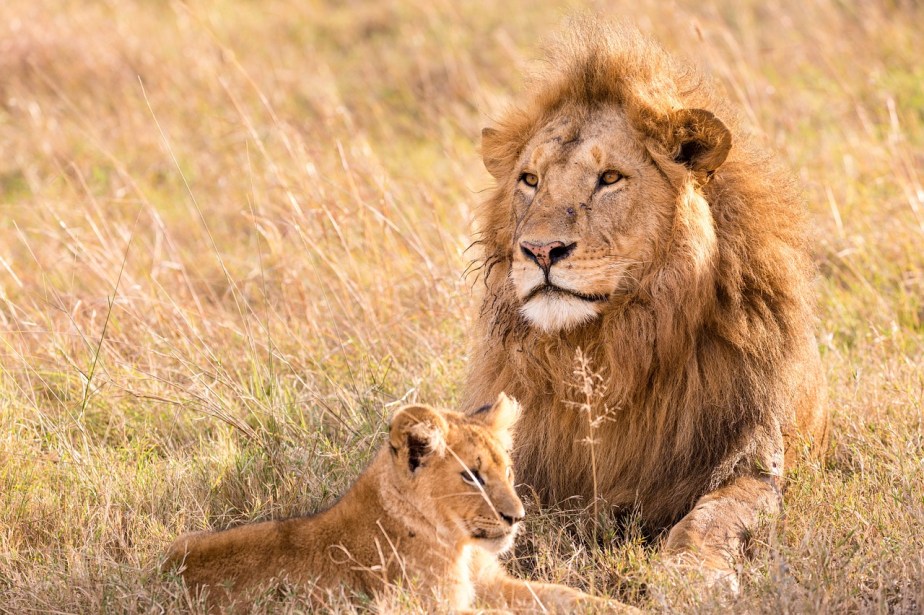
Strasbourg 23.10.2024 The atrocious death of Taigan safari-zoo keeper Leocadia Perevalova, 41, mauled by lions on October 16 caused serious concerns about the “pocket of lawlessness” in Russia-controlled Crimea, where along with the breach of security, sanitary norms, the illegal trade in big cats flourishes, breaching Russia’s government obligation imposed by the CITES Convention. Apparently after the second death of an employee of the safari-park in suspicious circumstances, the catastrophic lack of security measures came to public attention, leading further to a shocking discovery of the intentional character of the irregularities, covering the shady wildlife trade.
The founder, and the owner of the parc Oleg Zoubkov, who at times claimed that he is just an ordinary guide in the parc, attempting to avoid the responsibility for the systemic neglect of public safety, has already announced that the death of Perevalova was a result of omitting the rules, and “forgetting” to close the lock of the lion’s cage. However the animal rights activists have pointed to many contortions in Zoubkov statement, which contradict the official information from the ongoing investigation, namely five hours pause between discovering of a dead body of the keeper to calling police.
The activists, and civil journalists confirmed that they have been attempting to draw the attention of the authorities to the catastrophic situation in the parc for many years. The breach of basic safety rules is obvious, so is the total neglect of sanitary obligations: in the park hosting around 1500 wild animals there is no one single veterinary specialist!
The only vet, visiting park upon request, comes from the city of Simferopol – 50 km away, and offers services free off charge, being a founder of animal charity “Fauna Blago” to help animals in need.
Furthermore there is nobody monitoring the health of animals, and even their numbers are kept unknown to facilities the illegal trade. The activists were raising the issue of uncontrolled animal reproduction, and vanishing of lion’s and tiger’s cubs used for adverting of the park.
Recently the fate of a lion’s cub Sherkhan attracted attention of the activists: “…Let us recall that the cub Sherkhan was transferred to Crimea by a businessman from Donetsk in mid-November. The lion cub was given to him as a birthday present. A whole room was set up for the little predator. He was kept in excellent conditions, grew up affectionate and friendly. But at one fine moment the man realized that the king of beasts is not a house toy, and brought his pet to “Taigan” writes Russian tabloid KP.ru (VIDEO of Zoubrov advertising Sherkhan lion cub below)
In spite of being from unknown origin, Sherkhan was sold to notorious Harbin Zoo, China, in breach of the CITES convention. The activists point at the bragging of Zoubkov, being proud of responding to high demand for “Russian lions” internationally for private zoos, and circuses, advertising, photo-shooting etc. Animal welfare groups demand the independent investigation of the situation, claiming that the local authorities in Crimea are totally corrupt, and enjoy their “fair share” in illegal big cats trade. The workers of the park, tell stories of cruelty, and also inbreeding of lions, and tigers, describing the safari park as a cover for illegal farming and trade in big cats. So far the demands of the activists have fallen on deaf ears. Local authorities, and law enforcement simulate activities, in reality allowing the big cats farming to prosper, transforming Crimea into a platform for illegal wildlife trade.
(VIDEO of Harbin zoo lions in winter below)
The Russian Federation joined CITES in January 1992 through the continuation of its membership as part of the former USSR and was elected to serve as a regional member on the CITES Standing Committee at CITES CoP17.

 Anna Van Densky blog