Russia supports Ryanair highjack

Brussels 24.05.2021 Anna van Densky OPINION The defence of Belarus President Lukashenko actions, which have been already defined by some of the EU politicians as “state terrorism”, indicated that Russia has been informed or, even engaged in this operation, which also can lead to a suggestion the the liberation of Protasevich and the other political prisoners in Belarus would be possible through an asymmetric answer. The extensive presence of Russians at French Riviera, purchasing luxury mansions and palaces could become an key to the liberation of all political prisoners in Belarus, just through questioning the sources of their wealth.

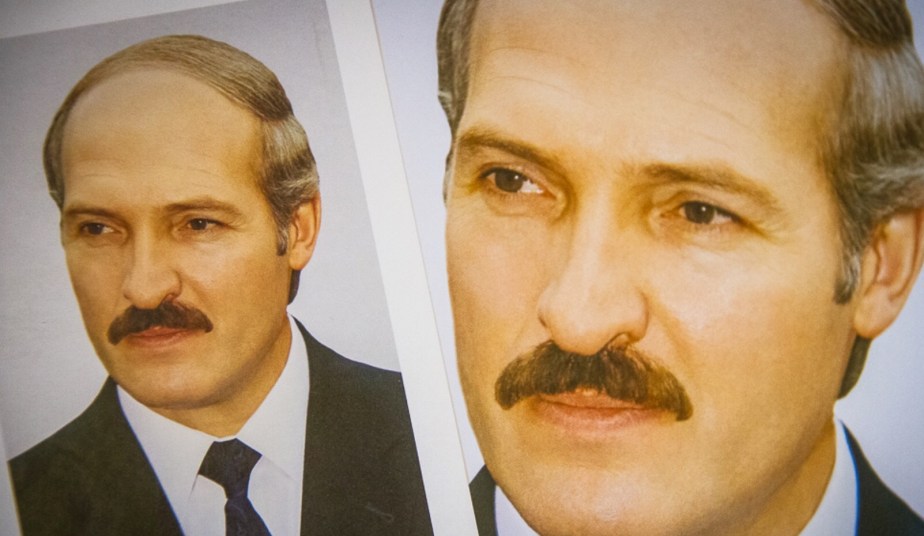
“There is no reason why Western countries should be shocked by the Ryanair flight incident, Russian Foreign Ministry Spokeswoman Maria Zakharova wrote on Facebook on Monday, May 24, clearly defending the actions of Alexandar Lukashenko, who sent MiG29 jet to force civil aircraft landing with purpose of kidnapping the Belarus opposition journalist Roman Protasevich.

“What is shocking is that the West has described the incident in Belarusian airspace as shocking. The so-called civilised democracies’ tendency to follow the ‘quod licet Iovi, non licet bovi’ principle has long been irrelevant because the former leaders have lost leadership skills. The blood and suffering of millions of people across the world have yanked the pedestal from under Western demagogues, from where they have been preaching,” Zakharova has underlined.

“Or, they should be shocked by everything, including the moves to force down the Bolivian president’s plane in Austria at the United States’ request and the Belarusian aircraft carrying an anti-Maidan activist. Otherwise, such behavior should not come as a shock to them,” the Russian diplomat emphasized.

During Ryanair flight to Vilnius that took off from Athens was forced to make an emergency landing at Minsk International Airport on Sunday, May 23, after a reported bomb threat, which came up empty. The Belarusian Investigative Committee has launched a criminal case into the false bomb threat. Minsk’s federal authorities specified that Roman Protasevich, wanted in Belarus as a co-founder of the Nexta Telegram channel deemed extremist, had been among the flight’s passengers. He was detained by law enforcement officers, media reports said.

A joint investigation by the Organized Crime and Corruption Reporting Project (OCCRP), the Russian newspaper Novaya Gazeta, and the French Le Monde revealed the extent to which one of Russia’s most infamous oligarchs — Putin’s childhood friend Boris Rotenberg — is entrenched in the French Riviera. However he was not the only one. Would the EU show the political will for Protasevich liberation start questioning Russians wealth sources at French Riviera?
Russia: new migrant status

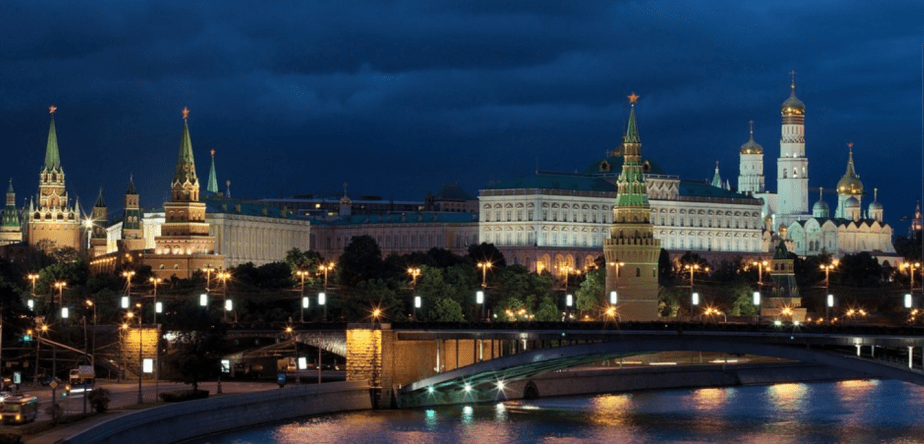
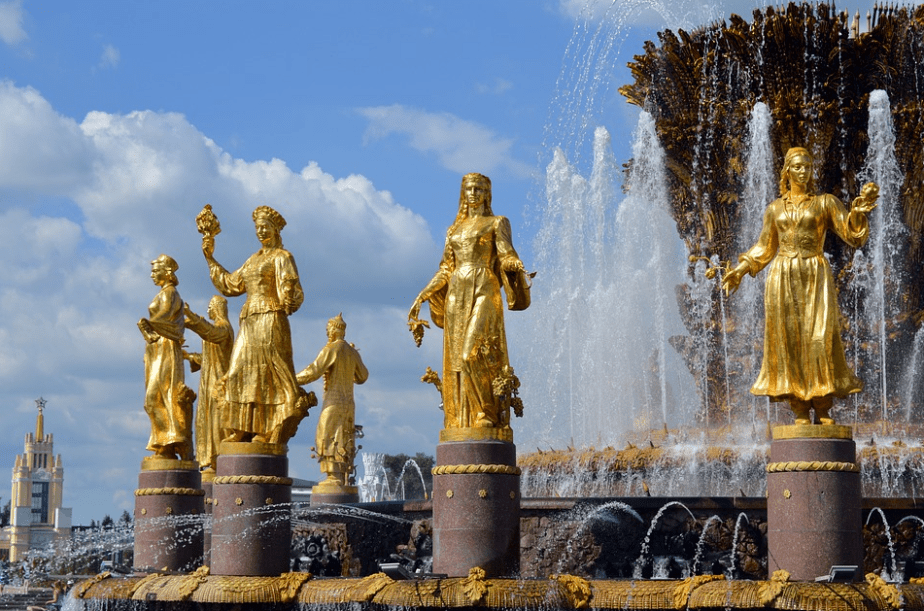
Brussels 22.05.2021 A special legal status – ‘controlled presence’ – will be introduced for migrants that have no right to stay in Russia, but are forced to remain on its territory due to circumstances, for example, the coronavirus-related lockdown, a source in press service of the Russian Interior Ministry told TASS in response to a respective request. (Image above: USSR people friendship fountain, Moscow, Russia)

“As one of preventative activities aimed at improving the efficiency of the mechanism ensuring safety and law enforcement in the migration field, it is planned to introduce a special legal status – ‘controlled presence’. It will be established regarding migrants having no legal grounds to stay in Russia, but remaining on its territory for whatever reason,” press service said.

The new legal status will be applied to foreigners, regarding which, for example, a deportation judgement has been suspended or exit from Russia has been limited due to necessity to execute the imposed punishment, participate in legal proceedings, the ministry explained. “The issue is under consideration on establishing such a status regarding foreigners with socially-dangerous diseases, who have been provided with instructions by Rospotrebnadzor on observing certain sanitary rules, including lockdown, as well,” it added.

According to the data provided by the ministry, around 1.6M migrants have not left the country after expiration of the period of their stay in the country since last March when the coronavirus infection pandemic started. The measures that have been taken, have enabled around 400,000 people to legalize their status.

ECHR: Navalny Foundation lawsuit

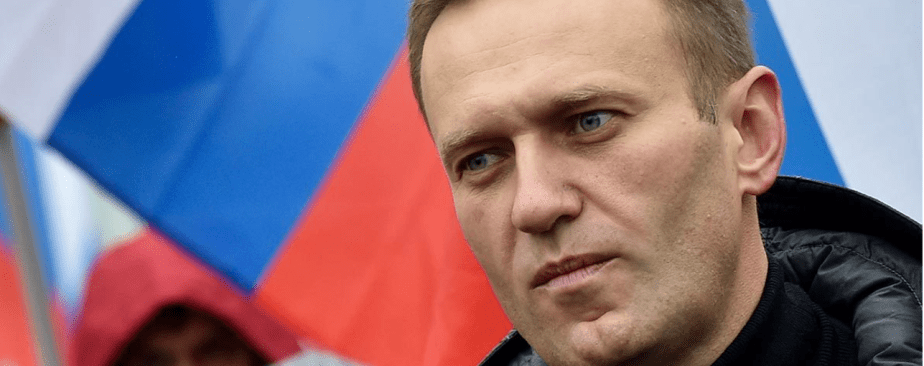
Brussels 21.05.2021 The European Court of Human Rights (ECHR) has given priority to the case on the lawsuit of the Navalny Anti-Corruption Foundation (FBK) labeled an extremist organisation by Russian government, the director of the Foundation, Ivan Zhdanov, said live on the Navalny Live YouTube channel.

According to Zhdanov, Russia was given a deadline until May 20 to answer questions from the ECHR on this case. Navalny Foundation must announce its position by May 24. At the same time, all the procedures in the case, which can take years, the fund passed in a month, noted Ivan Zhdanov.

The director of the Foundation hopes that the ECHR will deliver its ruling earlier than the Russian court. Ivan Zhdanov suggested that it is precisely because of the consideration of the complaint in the European Court that the case on the recognition of the fund as an extremist organisation in the Russian court is being delayed.
“We believe that the lawsuit against the Anti-Corruption Foundation is a fundamental case that separates us from truly massive repression,” Zhdanov said. “The European Court of Human Rights has also realised that this lawsuit is one of the key events in modern Russian history. “.
In April, the Moscow prosecutor’s office turned to court with a demand to recognise the Anti-Corruption Foundation and Navalny’s headquarters as extremist organisations. As explained in the supervisory department, these organisations are engaged in the destabilisation of the social and socio-political situation “under the guise of liberal slogans.”
“The actual goals of their activities are to create conditions for changing the foundations of the constitutional order, including using the scenario of the “color revolution” the prosecutor’s office has underlined.

All Navalny’s headquarters stopped their activities under unprecedented pressure from Russian state.

US-Russia meeting in Reykjavik

Brussels 13.05.2021 Russian Foreign Minister and US Secretary of State Antony Blinken discussed the timeline of bilateral Russia-US contacts by phone Wednesday, May 12, including the proposed highest-level Russia-US Summit, and agreed to hold a separate meeting during the Arctic Council ministerial session in Reykjavik.

“The sides discussed the timeline of other Russian-US contacts for the upcoming period, including Washington’s proposal on the organization of the Russia-US summit,” the Russian Foreign Ministry said in its statement.

The sides also touched upon the interaction between the two countries in the Arctic Council – in particular, in regards to the upcoming Russian presidency in the organisation, which will begin on May 20.

“Lavrov and Blinken agreed to hold a separate meeting on the sidelines of the [May 20] session to review key issues of bilateral relations and the international agenda,” the Foreign Ministry said.

Russia denies Donbass takeover plans

Brussels 13.05.2021 Russian Federation has no plans for taking over the territories of Donbass that are beyond Kiev’s control, Kremlin spokesperson, Dmitry Peskov said in response to EU allegations Russia harbored some intentions to take over the self-proclaimed Donetsk and Lugansk breakaway regions.

“Russia has never had any takeover plans, nor will it have any in the future. It has never done anything like that,” the Kremlin spokesman said.

Peskov had reiterated more than once that the question of taking over Donbass was not on the Kremlin’s agenda. At the same time he stressed that Russia was taking a consistent and responsible stance in favour of protecting the interests of the Russian-speaking population in that territory.

Erdogan accesses Baku oil

Brussels 12.11.2020 Anna van Densky OPINION The result of the military campaign for Nagorno-Karabakh is the entry of Azerbaijan into the NATO orbit. Turkey is NATO, even the first NATO army in terms of military personnel.

This Turkish military base presence agreed with Azerbaijan means unhindered access to Baku (pictured) oil, which is imported by Turkey, lucrative contracts of the Turkish energy company BOTAS with the Azerbaijani SOCAR, and in return President Erdogan will export Islam. In short, the Turkish expansion in the Caucasus will proceed in the military, political, economic and cultural spheres.
Do svidania, Azerbaijan!
It doesn’t make sense to have a “poker face” and declare Putin a “great winner”. Russia got a burden of protection of the poorest country in the Caucasus, which became even poorer after the N.Karabakh war, and at the same time suffers from militant chauvinism and high levels of anti-Russian sentiment, while the wealth of oil fields went to Turkey under the leadership of Erdogan.

It is not clear what is so victorious in the duty of protecting Armenia, which is in the deepest economic and political crisis? After the pogrom in the parliament in Yeravan, and hospitalisation of the speaker caused by mob attack, and further vandalism in Prime minister Pashinyan residence, Armenia resembles a failed state.

Meanwhile “Sultan” Erdogan received what Germany did not get during the Second World War, and because of what, in fact, the Battle for Stalingrad, where two million perished – access to Baku oil. Now, Erdogan gained access to the Baku oil rigs during a campaign that lasted a little more than two months. And he fought mainly with the forces of the Azeri army and with their funds from the sale of the same oil. And the Russian peacekeepers went to defend the dilapidated quarries of N. Karabakh, used for graveyards.
Concluding mentioned above, N.Karabach war opened Turkish era in Caucasus, which will change the region entirely and without return, launching its Islamisation. Sunset of Russian influence. One more failure of President Putin.
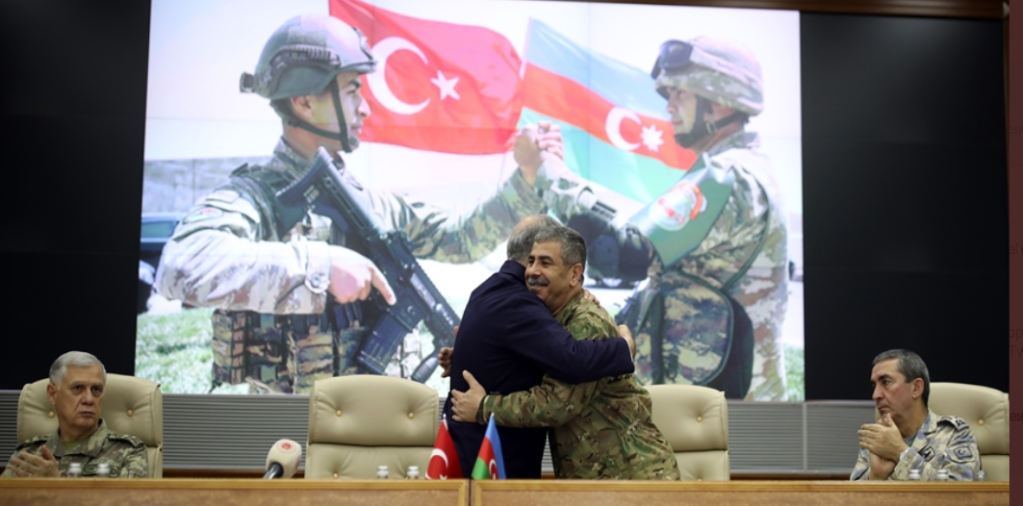
Image below: Turkish Defence Minister and former Chief of Staff Hulusi Akar is on official visit to Baku.
The fraternal gesture between the two military Azerbaijani and Turkish have been duly displayed in the official images, flaunting Ankara victory.

Nagorno-Karabakh: Russia deploys 1960 peacekeepers

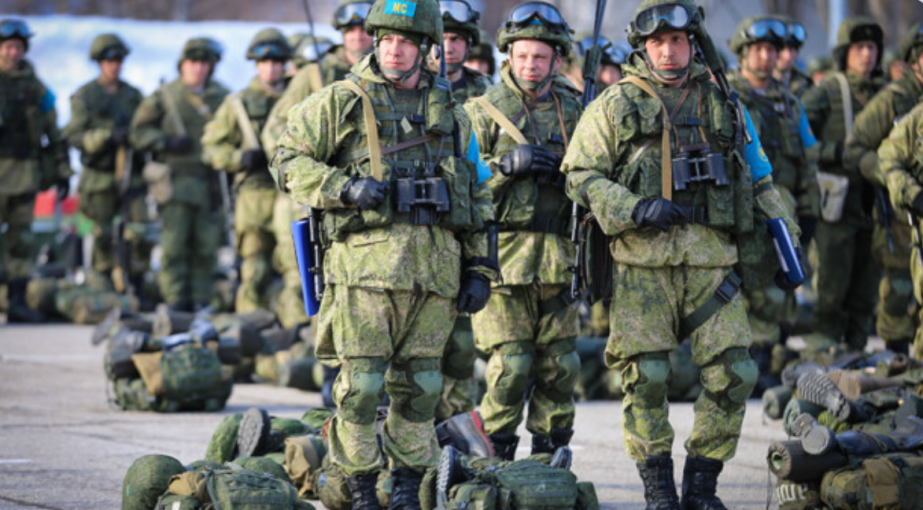
Brussels 09.11.2020 According to Russian TASS Agency a peacekeeping contingent of the Russian Federation will be deployed along the line of contact in Nagorno-Karabakh and along the Lachin corridor in the amount of 1,960 servicemen with small arms, 90 armored personnel carriers, 380 units of automobile and special equipment, the statement signed by Russia, Armenia, and Azerbaijan says. President Putin confirmed the decision to send peacekeepers in an TV addresse.

The peacekeeping contingent of the Russian Federation is being deployed in parallel with the withdrawal of the Armenian armed forces. The duration of the stay of the peacekeeping contingent of the Russian Federation is 5 years with automatic extension for the next 5-year periods, if none of the Parties declares 6 months before the expiration of the period of intention to terminate the application of this provision.

In order to increase the effectiveness of control over the implementation of the agreements by the Parties to the conflict, a peacekeeping center is being deployed to control the ceasefire.

The Republic of Armenia will return the Kelbajar region to the Republic of Azerbaijan by November 15, 2020, and the Lachin region by December 1, 2020, while leaving behind the Lachin corridor (5 km wide), which will ensure the connection of Nagorno-Karabakh with Armenia and at the same time not will affect the city of Shusha.

By agreement of the Parties, in the next three years, a plan for the construction of a new traffic route along the Lachin corridor will be determined, providing communication between Stepanakert and Armenia, with the subsequent redeployment of the Russian peacekeeping contingent to protect this route.
The Republic of Azerbaijan guarantees traffic safety
along the Lachin corridor of citizens, vehicles and goods in both directions.

Internally displaced persons and refugees return to the territory of Nagorno-Karabakh and adjacent areas under the control of the Office of the UN High Commissioner for Refugees.

The exchange of prisoners of war and other detained persons and bodies of the dead is carried out.

Nagorno-Karabakh: Armenia confirms complete ceasefire

The text of the statement of the presidents of Russia, Armenia and Azerbaijan is being distributed on social networks (information needs to be confirmed)

Statement
President of the Republic of Azerbaijan,
Prime Minister of the Republic of Armenia
and the President of the Russian Federation

We, the President of the Republic of Azerbaijan I. G. Aliyev,
Prime Minister of the Republic of Armenia Nikolai Pashinyan and
President of the Russian Federation Vladimir Putin
announce the following:

1. A complete ceasefire and all hostilities in the zone of the Nagorno-Karabakh conflict are announced from 00:00 hours Moscow time on November 10, 2020. The Republic of Azerbaijan
and the Republic of Armenia, hereinafter referred to as the Parties, stop at their positions.

2. The Aghdam region and the territories held by the Armenian Party in the Gazakh region of the Republic of Azerbaijan shall be returned to the Azerbaijan Party until November 20, 2020.

3. Along the contact line in Nagorno-Karabakh and along the Lachin corridor, a peacekeeping contingent of the Russian Federation is deployed in the amount of 1,960 military personnel with small arms, 90 armored personnel carriers, 380 units of automobile and special equipment.

4. The peacekeeping contingent of the Russian Federation is being deployed in parallel with the withdrawal of the Armenian armed forces. The duration of the stay of the peacekeeping contingent of the Russian Federation is 5 years with automatic extension for the next 5-year periods, if none of the Parties declares 6 months before the expiration of the period of intention to terminate the application of this provision.

5. In order to increase the effectiveness of control over the implementation of the agreements by the Parties to the conflict, a peacekeeping center is being deployed to control the ceasefire.

6. The Republic of Armenia will return the Kelbajar region to the Republic of Azerbaijan by November 15, 2020, and the Lachin region by December 1, 2020, while leaving behind the Lachin corridor (5 km wide), which will ensure the connection of Nagorno-Karabakh with Armenia and at the same time not will affect the city of Shusha.

By agreement of the Parties, in the next three years, a plan for the construction of a new traffic route along the Lachin corridor will be determined, providing communication between Stepanakert and Armenia, with the subsequent redeployment of the Russian peacekeeping contingent to protect this route.
The Republic of Azerbaijan guarantees traffic safety
along the Lachin corridor of citizens, vehicles and goods in both directions.

7. Internally displaced persons and refugees return to the territory of Nagorno-Karabakh and adjacent areas under the control of the Office of the UN High Commissioner for Refugees.

8. The exchange of prisoners of war and other detained persons and bodies of the dead is carried out.

9. All economic and transport links in the region are unblocked. The Republic of Armenia provides transport links between the western regions of the Republic of Azerbaijan and the Nakhichevan Autonomous Republic in order to organize the unimpeded movement of citizens, vehicles and goods in both directions. Control over transport communication is carried out by the bodies of the Border Service of the FSB of Russia.

By agreement of the Parties, the construction of new transport communications linking the Nakhichevan Autonomous Republic with the western regions of Azerbaijan will be provided.

Erdogan anger amid fossil fuel decline

Brussels 26.10.2020 Anna van Densky OPINION Recent President Erdogan verbal attacks on France have many reasons rooted in frustrations, not least is the economic difficulty of Turkey, experiencing sharp decline of demand of fossil fuels on world markets. Related to COVID-19 pandemic reduction of demand has dropped to record 30%, however the experts explain that the trend is here to stay. Before the pandemic broke out Turkey has been gaining strength as an energy corridor, supplying oil and gas to Europe from oil-rich suppliers of the region. However now, in so rapidly changing world, will Ankara be able to preserve its plans, or following the hydrocarbons definite decline of demand, it will face the economic consequences of end of fossil fuel era?

In the beginning of the pandemic, China’s economy slowed down, impacting fossil fuel demand, subsequently the OPEC tried to negotiate with Russia the limitations of production, but failed, the price struggle erupted between Saudi Arabia and Russia, and oil prices collapsed. Moreover, end October crude oil prices sank after Libya’s National Oil Corp (NOC) announced the output would reach one (1) million barrels per day in four weeks. Futures in New York fell 2.3% to drop below $39 a barrel.

In this volatile context Turkey will begin to discuss the new long-term energy contacts with a number of suppliers – Russia, Azerbaijan, Iran, Algeria and Nigeria, of total 45 billion cubic meters of gas. Three of them are covering one third of the energy imports – with Russia, Azerbaijan and Nigeria – will expire next year. The Turkish state-owned crude oil and natural gas pipelines and trading company BOTAŞ and Russian Gazprom had to negotiate delivery of 8 billion cubic meters of gas; the contract with Azerbaijan is covering 6.6 billion cubic meters of natural gas and with Nigeria for 1.3 billion cubic meters of LNG will – all of them expire in 2021.

Till present Russia remains the largest gas supplier to Turkey – 33.6% of total imports, followed by Azerbaijan 21.2% and Iran 17.1%. The rest 28.1% is covered by the liquefied gas (LNG) from other sources. However fossil fuel companies have entered the state of “terminal decline”, and fossil fuel companies are set to face it because of falling demand and higher investment risks caused by competition from clean technologies and tougher government climate and energy security targets, according to climate finance analysts, because of falling demand accelerated by COVID-19 pandemic, and higher investment risks explained by competition from clean technologies and strict government climate and energy security targets.

In this contemporary context the belligerent rhetoric of Erdogan against President of France, reflects tensions in Turkish society, facing the economic crisis caused by the coronavirus pandemic. The government has no plan B to answer to the fossil fuel decline impact of the economy. According to official figures Turkey’s unemployment rate improved slightly to 12.8% in April despite the raging pandemic, while the alternative calculations indicate that more than 50% were jobless. These figures might grow sharply while fossil fuels demand is declining, and plans of President Erdogan to create Turkish energy hub became dim.

The exaltation of the crisis of the relations between Turkey and France did not come as a surprise: France had systematically criticised Turkey’s role in Syria and Libya, and nowadays the unfolding conflict between Armenia and Azerbaijan over the Nagorno-Karabakh region, defending human rights of the Armenian inhabitants there. This recent conflict has added to the other tactics of President Erdogan to deviate the attention of his compatriots from gravity of economic situation in Turkey to various conflicts and crisis he stirs in outside world.
But not only, the active Ankara political support of Azerbaijan in Nagorno-Karabach conflict, will certainly reflect on energy talks of next year expired contracts, the moment when Erdogan will attempt to convert his political influence into preferences and privileges enshrined in new energy energy agreements with Russia and Azerbaijan, allowing Turkey better gains from gas and oil transit.

EU «wahsed hands» of Belarus

#Belarus #Lukahsenko #BelarusProtests
Anna van Densky OPINION Today, on August 19, an extraordinary meeting of the Council of the EU on the situation in Belarus took place by teleconferencing.

The feeble answer has surprised many. The EU leaders have not pronounced the name of the genuine elections winner Svetlana Tikhanovskaya even once (!)While being so ardent about Ukraine integration into the bloc, why showing so little engagement towards dramatic events in Belarus?

First of all the context has entirely changed for the Europenan Union as an internationl organisation, transcending a profound systemic crisis itself. The bloc is in a difficult economic and financial situation because of the pandemic and because of the Brexit. The UK, the second largest contributor to the EU’s coffers, has left the organization and there is no trade agreement yet, and most likely will be none, which will create a considerable number of the economic problems in short, medium and long term.

At present the economy of Belarus is integrated into Russian and it is also orientated to the former Republics of the USSR, exporting there machinery. What is especially lucrative is the export of agricultural products to Russia, while it would be not easy to find the replacement for clients at the EU market, which has a surplus of agricultural products to an extend that the farmers receive funds not to produce, and not to develop the arable lands.

The dependency of Belarus on Russian hydrocarbons (Yamal gaz pipline) is a common place, and does not need any additional clarifications; the machinery, produced for former Republics either.

Regarding political transition to democracy from Lukashenko authoritarian rule, the major riddle is how to integrate the country into the EU politically, while it’s economic foundation is firmly intertwined with Russian Federation, and former Soviet bloc.

The defence issue is not less problematic: joining the CSTO, Belarus became a military ally of Russia. Certainly it can cancel the CSTO membership, but the maximum of what can be achieved afterwards from the army and the people is military neutrality. Due to its history, the country will opt for neutrality policy, since the people do not sympathise with NATO and, unlike Ukraine and Georgia, there has never been any talk of joining the North Atlantic Alliance for Belarus.

And here the geopolitical level of the issue is reached: there is no point in integrating a country into the EU which will not host military bases of the United States, and even less so joining the the North Atlantic Alliance. If the Belarussians keep Lukashenko in disdain, it does not mean that they are ready to join the “belt of infidelity” and serve Western interest, regarding Russia as a foe, as Ukrainians and Georgians are eagerly doing.

Taking into consideration mentioned above one should not expect active political support and financial assistance to Belarus from the EU similar the one they offer to Ukraine and Georgia.

A policy of sanctions against Lukashenko’s entourage has already been chosen by the EU, which is related to the policy of sanctions againstRussia and will be further harmonized with it. De facto, what looks like support to Belarussians will be an additional package of sanctions against Russian economy.

Subsequently further retention of Lukashenko in power by allies in Moscow is not only meaningless, but frankly detrimental to the economic interests of Russia, because they will be used by the West as a tool for expanding sanctions. Lukashenko life-long presidency will also significantly deteriorate image of Vladimir Putin in domestic politics, and deepening of the Belarussian crisis will have a negative impact on the entire range of Russian interests at home and abroad.

In their best interest Russians shouldn’t hold on to the political corpse of Lukashenko, but should arrange his swift and humble funeral and turn their attention to the other contemporary political players preferred by Belarus people:

The king is dead! Long live the king!”.

Inauguration of incumbent President Lukashenko one more time will take place in two month, Russian TASS new agency reported. He has been Belarus authoritarian ruler for 26 years, who came to power as a “new type of leader” in last millenium and stayed due to his “clinch” with power for almost three decades, erasing smallest signs of dissent.