Petroleum agent presides over Brussels press corps

Brussels 03.10.2025 The General Assembly of the International Press Association (API) endorsed a correspondent of the non-news media to preside over the journalisits’ organisation. Although officially Dafydd ab Iago @dafyddabiago (David Ferguson) has been “elected”, in reality he was endorsed because there were no competition for the position.

The situation is remarkable because he is the first chairman in half a century, who presides over the EU press corps, while working for non-news media, which means the UK company he represents as a Brussels correspondent has the following fields of endeavor: “advertising material publishing; On-line publishing of statistics and other information; On-line publishing photos and engravings; Photo and engraving publishing; Postcard publishing; Poster publishing: Printed matter publishing; Publishers (other than of newspapers, books and periodicals”. In its own words Argus Media (previously known as Petroleum Argus Ltd) is an independent provider of price information, consultancy services, conferences, market data and business intelligence for the global petroleum, and other types of energy.

https://platform.twitter.com/widgets.js

But where is journalism? Where is the construction of public discourse?
Where is prime target of journalism: serving as a forum for public criticism and search for a fair compromise, facilitating discussion and collective action for positive change?

How Argus “price information”, and “global petroleum data” ensures journalism’s watchdog function, in fact, the news media’s main role in political system? How does it increase accountability in the EU democratic governance systems? Obviously the non-news media are unrelated to journalism, while pursuing purely commercial purposes.

Subsequently the endorsement of non-news actor as the president of a the international journalist’s Association (API) manifests the state of Brussels press corps, drifting away from its original mission of Democracy’s Watchdogs.

Nowadays API unites 400 members among a thousand of the EU institutions-accredited journalists, being a specific organization for Brussels-based foreign correspondents. API claims to be first organization since 1975 to unite non-Belgian journalists of all categories and expertise based in Belgium and working for international media. The membership is open to journalists employed by one or more media outlets—whether as staff or freelancers—whose headquarters are located abroad, or who can demonstrate that their work is targeted at a non-Belgian audience, reads the introduction on the API site.

https://platform.twitter.com/widgets.js

As the representative group of non-Belgian journalists in the Kingdom of Belgium, API was created to facilitate connection between the foreign correspondents and the EU institutions on issues relevant to professional activities of the members. This includes the established set of rules, opening access to information, ensuring adequate working conditions at the EU press events, and equal access to the sources, and documents.

However during Ursula von der Leyen presidency of the European Commission which is the EU institution granting accreditation for the journalists, the access for the press-events and information has been severely restricted. The bunker mentality of Madame President is widely known, reflected in replacing press-conferences by read out of statements, “family” photos, and other photo-ops as shake hands, shifting from dialogue, answering to the questions of press to production of public relations material, and policies promotion.

This shift signifies a clean break with the previous presidencies of the European Commission, engaged in dialogue with press, and explanations of the initiatives, or decisions. The von der Leyen Commission has been systematically replacing them with advertising of the Commission’s activities, and public relations.

https://platform.twitter.com/widgets.js

Undoubtfully Brussels journalists are experiencing the global trends of transition from legacy media to digital multimedia, the process which has multiple implications. With the Digital revolution a Homo Sapiens, a product of written culture, is transforming into a Homo Videns for whom the word has been dethroned by the image. The image plays a decisive role, floating away from a text as an abstract form of thought to a visual representation. As a result the complexity of political process, democracy, and rule of law is substituted by shake hands, red carpets, and broad smiles of politicians, attempting to convince citizens that they are guided to a brighter future. Benefiting from the Digital technologies, the beau monde of politics is increasingly reliant on power of colorful, and often doctored images.

Within this global trend, while genuine discussion through traditional mass communication channels is replaced by the mosaic of optimistic edited images, the EU Commission does not miss opportunities to shape public debate upon its agenda. The Ursula von der Leyen Commission has successfully flooded the information field with the self-advertising, and promotions, while the gap between the Institutions, and regular citizens broadens daily.

In an exclusive new report for MCC Brussels — Brussels’s media machine: EU media funding and the shaping of public discourse — the author Thomas Fazi – revealed a vast, previously under-scrutinized system through which the European Union annually disburses nearly €80 million to media projects across Europe and beyond.

“The report contends that the EU’s financial leverage creates a ā€œsemi-structural relationshipā€ with major media outlets, particularly public broadcasters and news agencies, blurring the lines between independent journalism and institutional communication — and seriously compromising the media’s ability to hold power to account” Thomas Fazi writes.

The European Commission and European Parliament collectively disburse close to €80 million annually to media projects, including major news agencies, who are used by the other types of media as a prime source of news distribution. The MCC report concluded a conservative estimate of one billion euro (€1 billion) in funding during the past decade. This figure doesn’t include indirect funding streams — for example, advertising or communication contracts awarded to marketing firms who then redistribute funds to major media outlets.

The European Commission system of replacing journalism by public relations, and advertising was shuttered by Brexit, which revealed the immunity of a large part of the electorate to the efforts of the EU institutions to promote their agenda, disguised in “independent” media discourse. However it after the departure of the Brits, the EU institutions’ methods became more aggressive, adding active censorship. The EU citizens have especially felt it during the pandemic, and beyond, when the battle for freedom of speech climaxed in EU Commissioner Thierry Breton clash with Elon Musk. The owner of X (formally Twitter) platform dabbed former European Commissioner for Digital Affairs a “tyrant of Europe” for his relentless efforts to impose censorship on social media via the EU regulations of the digital platforms.

https://platform.twitter.com/widgets.js

The public battles for freedom of speech, and censorship are shifting Overton window, so do the other, less noticeable, but not less significant actions, for example including non-news agents into journalistic communities, and then promoting them to lead. The endorsement of non-journalist as a president of the Association of the International Press is one of these Overton shifts. The replacement of journalists by advertising, and other commercial publications agents is not only a precedent, it is decisive vector of development, which will allow to ditch the role of press as democracy watch dogs to favor the European Commission lap dogs, without attracting much attention of the general public to the surrogate.

“This latest episode simply confirms the disgraceful state of the EU press corps, and Brussels-based journalists more in general, which have forsaken their role of watchdogs a long time ago and today largely act as PR agents for the corporate-political interests which fund their operations, which happens to include the Commission itself, which funds a large number of media outlets across Europe, as I show in my report, – Thomas Frazi wrote, commenting on the situation.-With the non-news media agent, leading the Association of International Press. – The result is that there is basically zero real scrutiny from the Brussels media of the Commission and von der Leyen’s policies, as the latter’s embarrassing press conferences attest to. The good news is that more and more people are starting to realise just how corrupt the traditional media are, and no longer give much credit to what they have to say. So as the propaganda becomes more pervasive and blatant, it also becomes less effective”.

Letter to Postimees editorial

Brussels 19.09.2025
Postimees Editor-in-Chief Priit HƵbemƤgi

Dear Sir,
In spite of the EU prohibition of the publication of the personal data due to strict data protection regulations GDPR, Postimees newspaper blatantly breached the law again, and issued the second article, publishing my personal information without my consent, moreover the information published was inaccurate, manipulated, and in some passages totally false, thus damaging my reputation of an independent journalist. I am not a civil servant, governmental official, or an elected representative to be exempted from the general rule of the GDPR regulations, protecting personal data.

The GDPR regulations are effective since May 25, 2018, thus they grant individuals a significant control over their personal data, and place strict obligations on organizations worldwide that process EU citizens’ data. The General Data Protection Regulation (GDPR) does not permit the general publication of private data, as it prioritizes the protection of individuals’ privacy and requires a legal basis for any processing of personal data. Both articles about me are published after the date of the entering of the regulation into force, thus they are liable to the regulation.

As the editorial is obliged to respect the GDPR in publication of personal data, which is permissible only under specific conditions, such as obtaining informed consent, which was not asked by your employee Meinhard Pulk, who collected, manipulated, deformed, and published my personal data in incoherent way, and without my consent.

Unfortunately the second time in a new article the employee Meinhard Pulk provided readership with intentionally inaccurate, false, and incomplete information, with a clear pattern to mislead the public, and damage my professional reputation.

As professionals in media Postimees editorial is obliged to know that the intentional distortion of information is called disinformation, or information manipulation, when someone intentionally provides incomplete, inaccurate, or false information with the goal of manipulating the audience. Distortion can take various forms, including providing incomplete, incoherent information changing the context, or intentionally distorting part of the information.

Taking into consideration mentioned above, I demand respect my rights, and call the Postimees editorial to return to the legal methods of processing, and publishing information, removing my personal data from both issued articles. I would like also to remind you for the future, that I am the only owner of my personal data, having the exclusive rights to administrate it.

The information to be removed from both articles: my photo (image), my locations data, characteristics as my political opinions, my cultural background, my employment history.

This letter is send to you in good faith, and in accordance with the GDPR regulator recommendations in line with the wish to settle the arguments in the spirit of the good will. In case you ignore my request, I will start a formal procedure, demanding the penalties, and claiming the damages as foreseen by the regulator.

NB! Any person who has suffered material or non-material damage as a result of an infringement of Regulation has the right to receive compensation the damage suffered.

Regards,
Anna

Yemen: realities and misconceptions

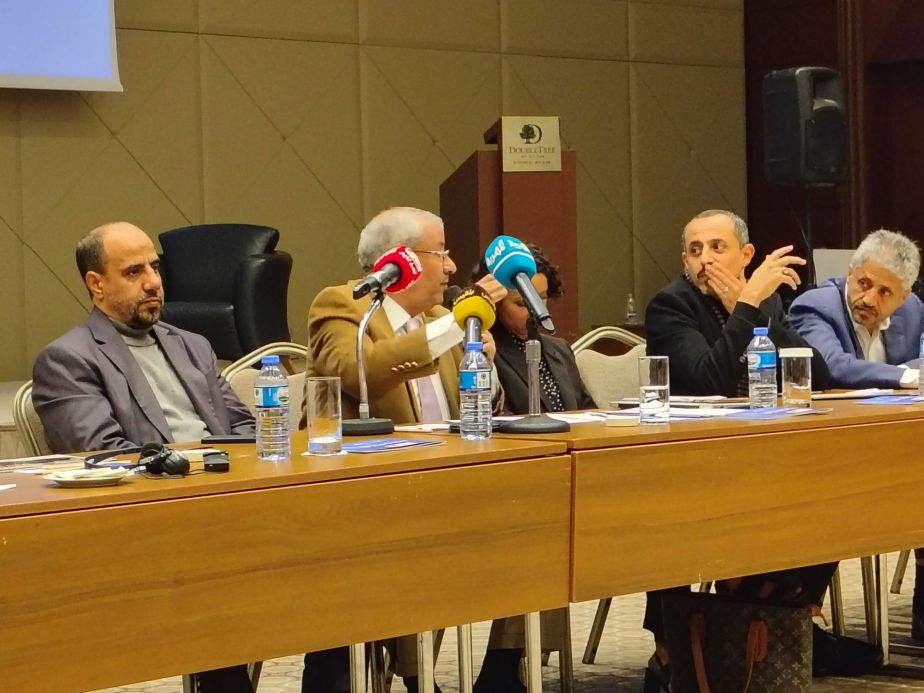
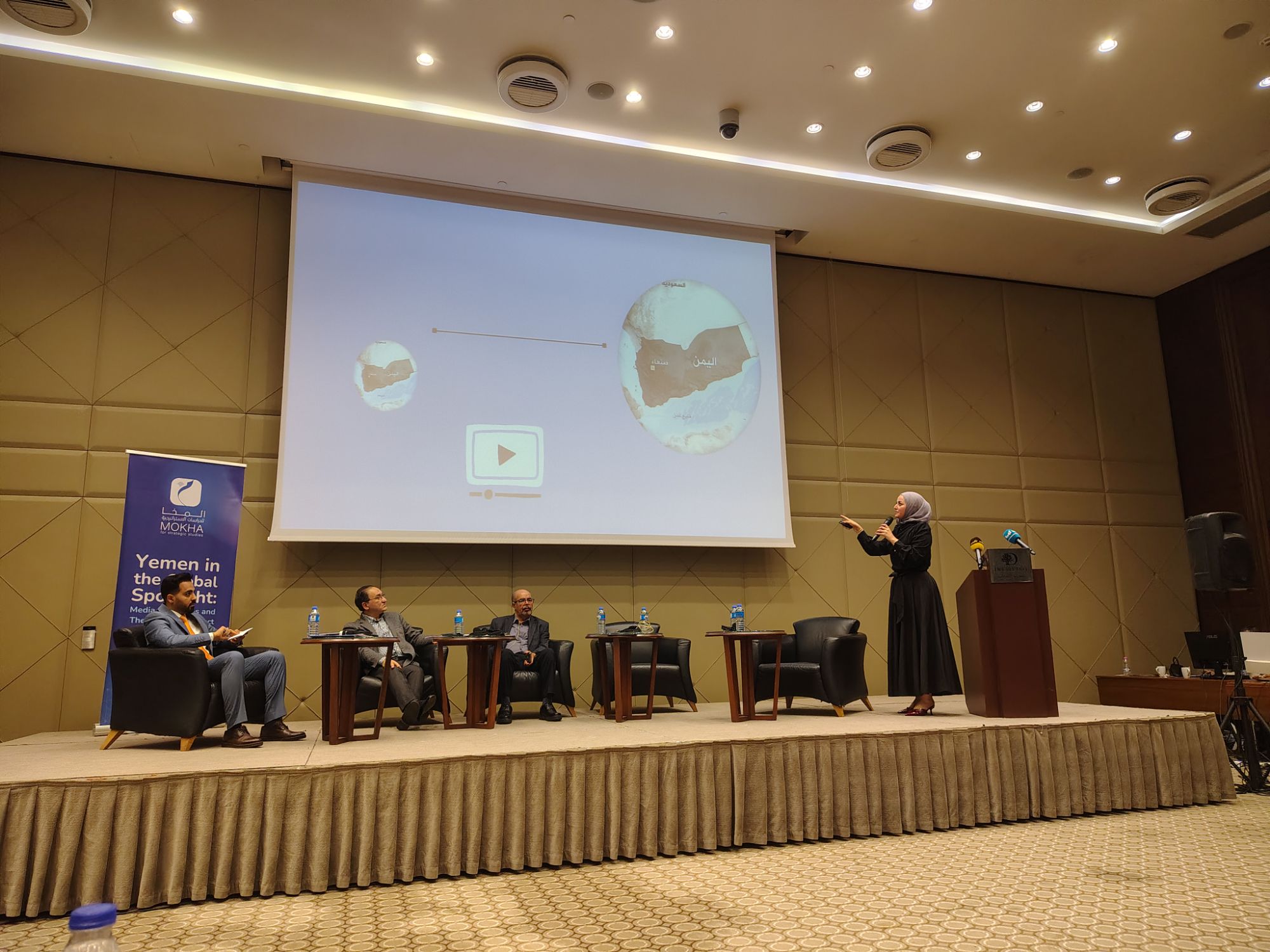
Istanbul 30.11.2024 At present the major focus of Russian media shifted from the ongoing internal conflict devastating the Yemeni society to the impact of the Houthi rebels storming the international stage with their political ultimatum to the Israeli government. The new profile of the Houthis as an ambitious, and reckless force on international stage, has defined their status as a world-class negative influencer. The violent attacks on the maritime transport in Red sea, and heavy economic toll on trade, especially for Europe, overshadowed the ongoing clashes between the Houthi rebels, and the Saudi coalitions, backed by Yemen’s internationally recognized government.

img_20241129_115835370_hdr6610784272087578829
Recent International Criminal Court arrest warrants to Israel Prime Minister Benjamin Netanyahu and former Defense Minister Yoav Gallant for war crimes and crimes against humanity in the Gaza Strip placed Houthis on the progressive side of the political avenue, which significantly complicated the search for the peace settlement within Yemen society.

Previously dialogue between the Houthis and Saudi Arabia, along with Iranian-Saudi rapprochement, has inspired hope for a negotiated solution for Yemen.

Unfortunately, the talks were marred by violence, and have not risen up to the expectations. Meanwhile the Southern Transitional Council (STC) has also renewed clams for an independent southern Yemeni state, casting a long shadow on peace prospects. Even more alarming became al-Qaeda Arabian Peninsula (AQAP) teaming with the Houthis. According to a report by UN experts, the two terrorist groups agreed to overlook their differences, and focus on weakening the Yemeni internationally recognized government.

These recent trends are reflected in Russian media, pointing to the Houthi movement as highly unpredictable, volatile, and unreliable force. Although it has gone through several stages both in structure and ideology, the only constant trend is its permanent fluidity, perceived as chronic instability, and dangerous mutations mentioned above, transforming Houthis into a grouping where the ideology, and subsequent strategies are replaced by political adventurism, eroding to terrorism. Subsequently the beginning of this year the U.S. State Department had no other choice than accept the new realities, and announced Ansarallah, commonly referred to as the Houthis, as a “Specially Designated Global Terrorist group”.

Following the suit, Russian media much more reserved, predicting that the movement will continue mutations, adapting to the changing environment, which makes impossible to project the ultimate result in ideological and political terms. Containing elements of a national-patriotic, religious, and political movement, Houthis accumulated a considerable weight in the eyes of the followers, referring in each specific context to a particular fragment of the movement, sensitive to a particular aspect.

At the same time, Russian government has managed till recently to maintain dialogue with all the main participants in the Yemeni conflict. Diplomats regularly engage in discussions with representatives of the internationally recognized Presidential Governance Council (PGC), the separatist Southern Transitional Council (STC), and the former ruling General People’s Congress (GPC) party, which has now entered into a coalition with the Houthis.

img_1384

Although the Wall Street Journal (WSJ) reported that Russia transmitted satellite data via Iran to Yemen’s Houthis, which they used to attack ships in the Red Sea, they were citing anonymous sources, and did not offer any tangible proof. A Kremlin spokesperson said he was not familiar with the contents of the publication, and declined any comment. However, according to a journalistic investigation conducted by the WSJ editorial board, the Russian authorities were thus helping Yemen’s Houthis to carry out more accurate strikes on Western ships. The experts explained the episodes as the symmetric answer to the U.S. and the allies for assisting the Ukrainian troops with the satellite information for the relevant attacks.

img_1379

For a long time, Russia tried to take an equidistant position in relations with the participants in the Yemeni conflict. Nevertheless Russian military advisers are engaged in the Houthi-controlled capital Sanaa, and Russian diplomats do not rule out the future shipments of weapons to the rebels. However till now Russia is reluctant to transfer missiles and other weapons to the Houthis, preferring to maintain functional relations with Saudi Arabia, CNN reports. However by no means the Russian government position towards Houthis is altruistic. Just a few days before the full-scale invasion to Ukraine, the Houthis issued the ā€œrecognition of Donetsk and Luhansk as independent Republics.ā€

img_20241129_114352664_hdr1710045161123171694

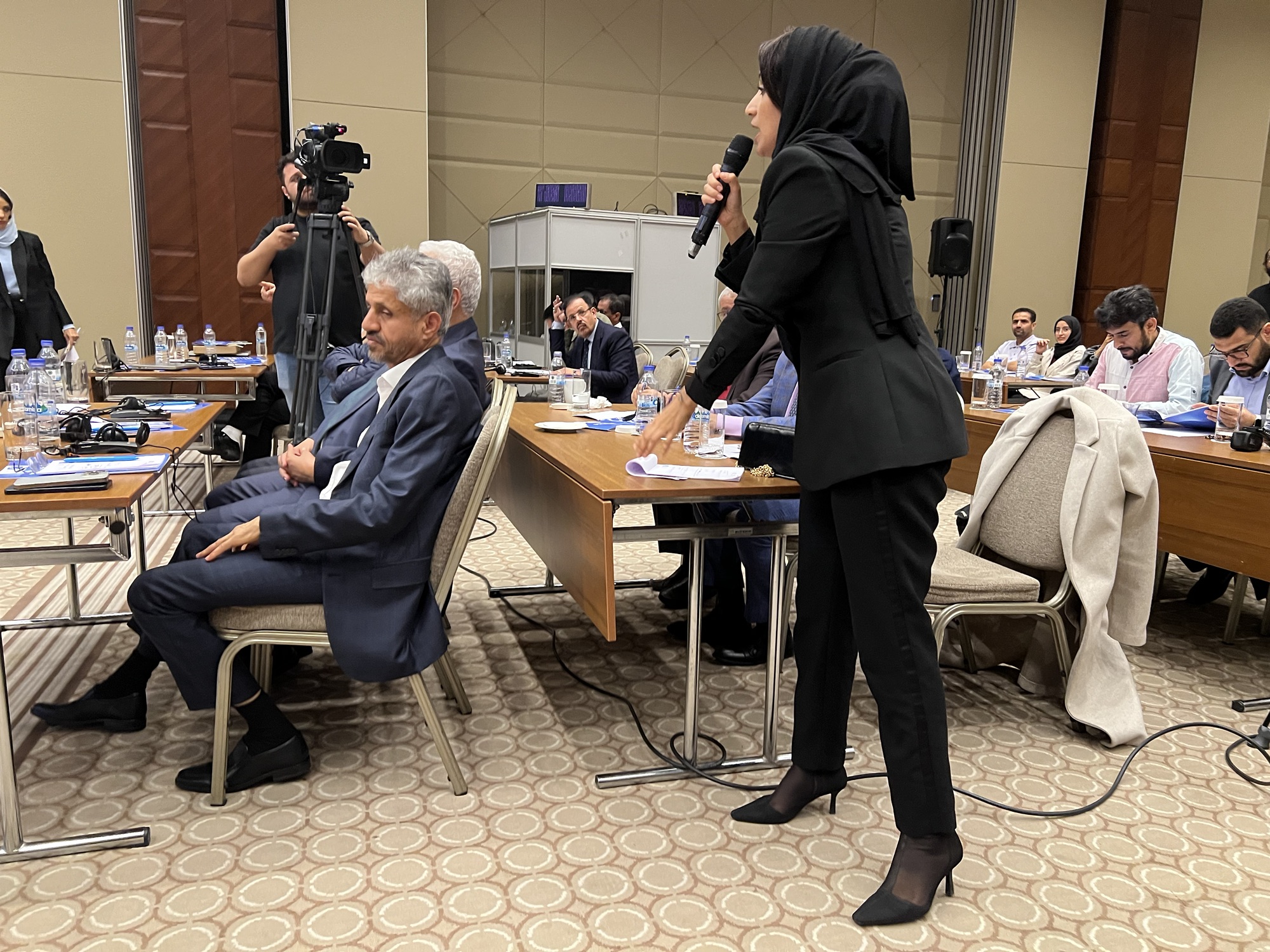
Meanwhile, the humanitarian crisis has aggravated: 21.6 million people need aid, including 11 million children, and more than 4.5 million are displaced. Surprisingly, instead of the care for the vital needs of the population, the Houthi authorities have drastically expanded restrictions against women’s movement in their territories since taking control of Sanaa, and much of northern Yemen in the last nine years. The same time Yemeni government forces and STC have restricted women’s movement in the south.

Subsequently the sharp criticism of Human rights organizations has been focused on lack of efforts from the behalf of the warring parties to insure the access of population to the basic necessities, as food, and clean water. Instead they have been raising barriers to women’s freedom of movement, which aggravated their dire situation further. These restrictions have a highly negative impact on women’s lives and impedes their ability to receive health care, pay family visits. It also have a negative effect on women’s education, and employment. Although legally Yemen women are not prohibited to work, the multiple impediments, including the recent ones, do not allow to implement the formally existing opportunities into practice. The human rights defenders lament that the Constitutional rights of the Yemeni women have been not implemented in spite of being clearly articulated in the unification Constitution in Articles 40, and 41: “Every citizen has the right to participate in the political, economic, social and cultural life of the country.”

The UN reporters are increasingly concerned about the situation of Yemeni women, and girls. Women and girls are 49% of the 18.2 million people in need of humanitarian assistance, and face food insecurity, water shortages, disease, lack of access to basic life-saving services, such as health care and education, poverty and deprivation of economic opportunities, and systematic exclusion and suppression of their rights.

Withing the population of 6.3 million Yemeni women and girls are at heightened risk of gender-based violence, including domestic and sexual violence, and many have been forced to resort to extreme coping mechanisms, including forced and early marriage, with over 30% of girls married by the age of 18. Women and girls from minorities and marginalized groups, including the Muhamasheen and Baha’i, are further disproportionately impacted. Muhamasheen women and girls are increasingly subjected to targeted attacks, including sexual violence, torture, and exploitation, the UN experts say.

Women’s human rights, particularly their freedom of movement, are heavily restricted by all the warring parties in Yemen. The imposition of a mahram, dress codes, and restrictions on freedom of expression, especially in Houthi-controlled areas, impede women’s ability to develop, to learn, to work, including in the humanitarian sector, to access healthcare, and to participate in public life. These policies are clearly not conducive to public good, as the UN experts insist, indicating to scientific research results indicating that the women’s economic empowerment has a healing effect on well-being in communities locally, and for the society in general. Empowering women, and promoting gender equality is crucial to enhance economic development and achieving more harmonious societies, which are crucial elements in preventing armed conflicts.

The increasing efforts to fortify conflict prevention by engaging women in various aspects of society life, including the positions of power, are reflected in the passage of United Nations Security Council Resolution 1325 in October 2000, which ā€œurges Member States to ensure increased representation of women at all decision-making levels in national, regional and international institutions and mechanisms for the prevention, management, and resolution of conflict.ā€

The mentioned above leads to conclusion that the entire potential of Yemeni women, as a powerful force for the conflict resolution, and harmonization of the society with a view on development, and prosperity, has not been released yet. Since 2006, Yemen ranks as the lowest in the world for gender equality; maintaining the 142th place of 142 countries in the Global Gender Gap report.

img_20241129_150948714_hdr1612079489981499157

Nowadays when the risk of renewed active hostilities in Yemen is high, especially taking into consideration the Houthis’ ravaging in the Red Sea, attacking the merchant vessels. The strikes caused 300% raise in price of shipments, and subsequent efforts of the U.S., the UK, and Israel to restore the safety of navigation by military means. This tough response further aggravated the situation, causing collateral damage to civilians, already exhausted by the long, and cruel civil war. This multifaceted tumultuous situation might influence a decision for a new campaign of the Houthis to the South in attempt to take the territories under control.
Within this dangerous prospect the efforts for peaceful resolution should be doubled, including engagement of all interested members of the society, especially those who were unjustly overlooked as millions of Yemeni women.

Animal welfare: civilization benchmark

Strasbourg 17.09.2024 Today OlivƩr VƁRHELY has been named as Commissioner-designate for Health and Animal Welfare, and many considered it to be a diminishment of the incumbent influential position of Neighbourhood and Enlargement portofolio.
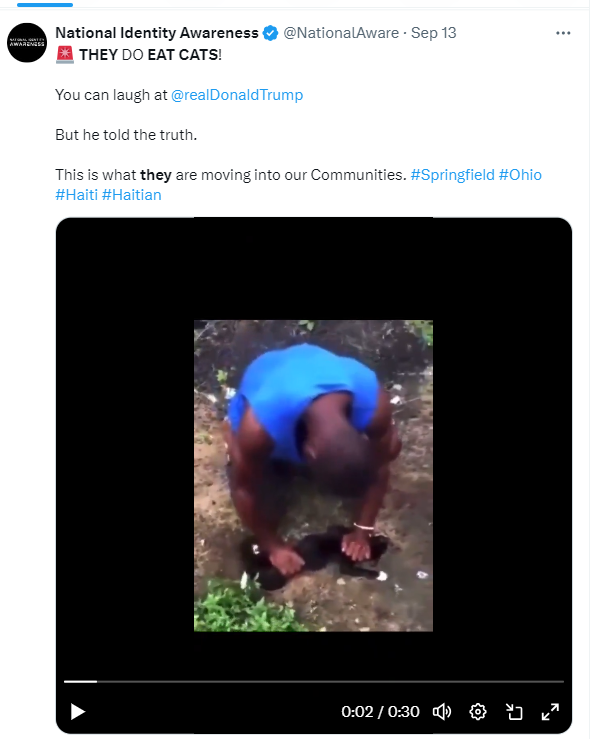
However, this assessment is wrong because contrary to opinion of political enemies of Varhely, his powers are at a rise, and this new appointment is far more political than the previous one, because this time his responsibility is not regional, but global. (Below: Voodoo ritual, full video on X platform)

Vodoo cat killing

With the American presidential elections the issue of animal welfare became a leading political theme, becoming a symbol of civilisation, a measurement of development level of individuals, and societies.

Fresco Cave Age
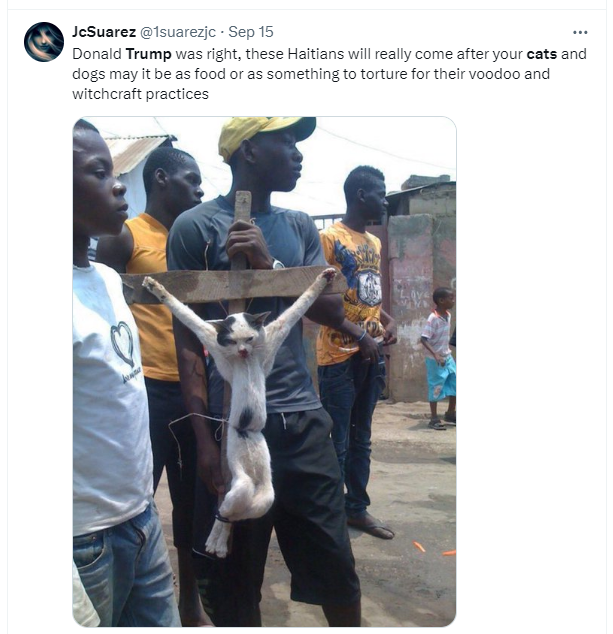
ā€œMake cats safe again!ā€ is more than a joke flooding social media, and more than a sarcastic metaphor, – it is a new benchmark of civility, of civilised life, distinguishing it from barbarism, and Cave Age. However even then, people worshiped animals, leaving to us the amazing masterpieces of this admiration depicted on frescos. (Image below: Voodoo ritual cat killing. Full video with sound at X platform)

Vodoo cat killing 3

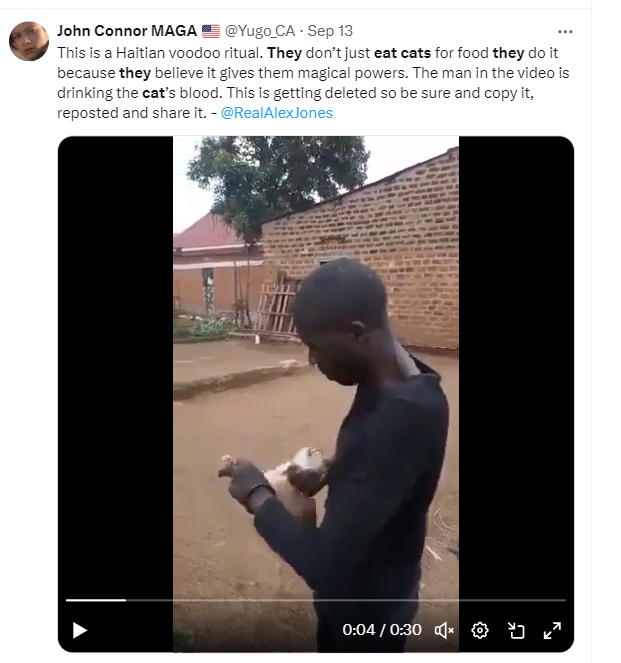
ā€˜They eat cats! They eat dogs!ā€ accusations of Donald Trump transcended the borders of U.S. presidential race, and transformed the issue of animal well-being into a highly political issue, defining the essence of civilizations, and societies. Civility against barbarism, development against degradation, and progress against regress. What way to choose?

(Image below: Voodoo cat cat eating ritual. Full version of X platform) Vodoo cat killing 2

The article 13 of the EU Lisbon Treaty clearly states that the animal welfare is the European value. It is up to Varhely to use his newly assigned powers to defend, and develop the European civilisation, or to let it fall into decline, surrendering to barbarism, and narrowing animal welfare to health related issues. How the Commissioner will define his mission? Linear, or multidimensional? In the upcoming weeks at the hearing in the European parliament, he will have an opportunity to define his vision of his mission, contributing to benefits of our civilization, or to its downfall.

Taurus: Crimea bridge attack plans

Brussels 03.03.2024 The German authorities are looking forward to the results of an investigation into a leaked conversation of Germany’s top officials about a perspective attack on the Crimean Bridge with the use of Taurus missiles. Bild am Sonntag reported the conclusions of this research will be published soon.
Earlier Russian media claimed it had obtained a 40 minutes long secret conversation between German Air Force Commander Ingo Gerhartz and other senior officers about the supply of Taurus missiles to Ukraine. Boris Pistorius said the released recording revealed officers discussing various scenarios and did not mean a “green light” for the transfer of Taurus missiles to Kiev.

According to the newspaper, the government intends to find out how the leak has occurred in a matter of days and then decide on appropriate measures. German Spiegel magazine ensures that first analyses show that the footage released is authentic.

Since this incident involves national security, German Chancellor Olaf Scholz has taken it upon himself to make a decision, the newspaper said. He wishes to discuss potential measures with German Defense Minister Boris Pistorius.

On Friday, March 1, Scholz gave assurances that NATO was not now and would not in the future be directly involved in the Ukraine conflict.

However he leak of German military conversations about the attack on the Crimean bridge with a Taurus missile is explosive, – Tagesschau TV channel:
ā–ŖļøThe officers conferred before a briefing for Defense Minister Boris Pistorius. The questions on the agenda were whether the Taurus could technically destroy the bridge, whether Kyiv would be able to carry out an attack without the participation of the Bundeswehr, and how long it might take to train the Ukrainians to work with these missiles.
ā–ŖļøThe recording shows that there is no green light from Berlin for the supply of cruise missiles. It says that first Germany can supply 50 missiles, and then another 50. But this is just speculation about the possibilities. The main result is a hole in the country’s security system. The media are asking the question: ā€œhow did Russia get the recording, was it a targeted interception? Did the fact that one of the participants in the conversation lived in a hotel in Singapore play a role?ā€
ā–ŖļøThe CDU party has already stated that it is necessary to investigate how Russian spies obtained phone numbers and ā€œhow they were able to gain access to this conference.ā€
ā–ŖļøRussia’s main goal in the publication is to confirm that Germany has long been a participant in the confrontation in Ukraine and is deeply involved in the conflict, contrary to Berlin’s claims. The investigation is ongoing. – RVvoenkor reports.