Borrell: EU €3.5bn military support to Ukraine

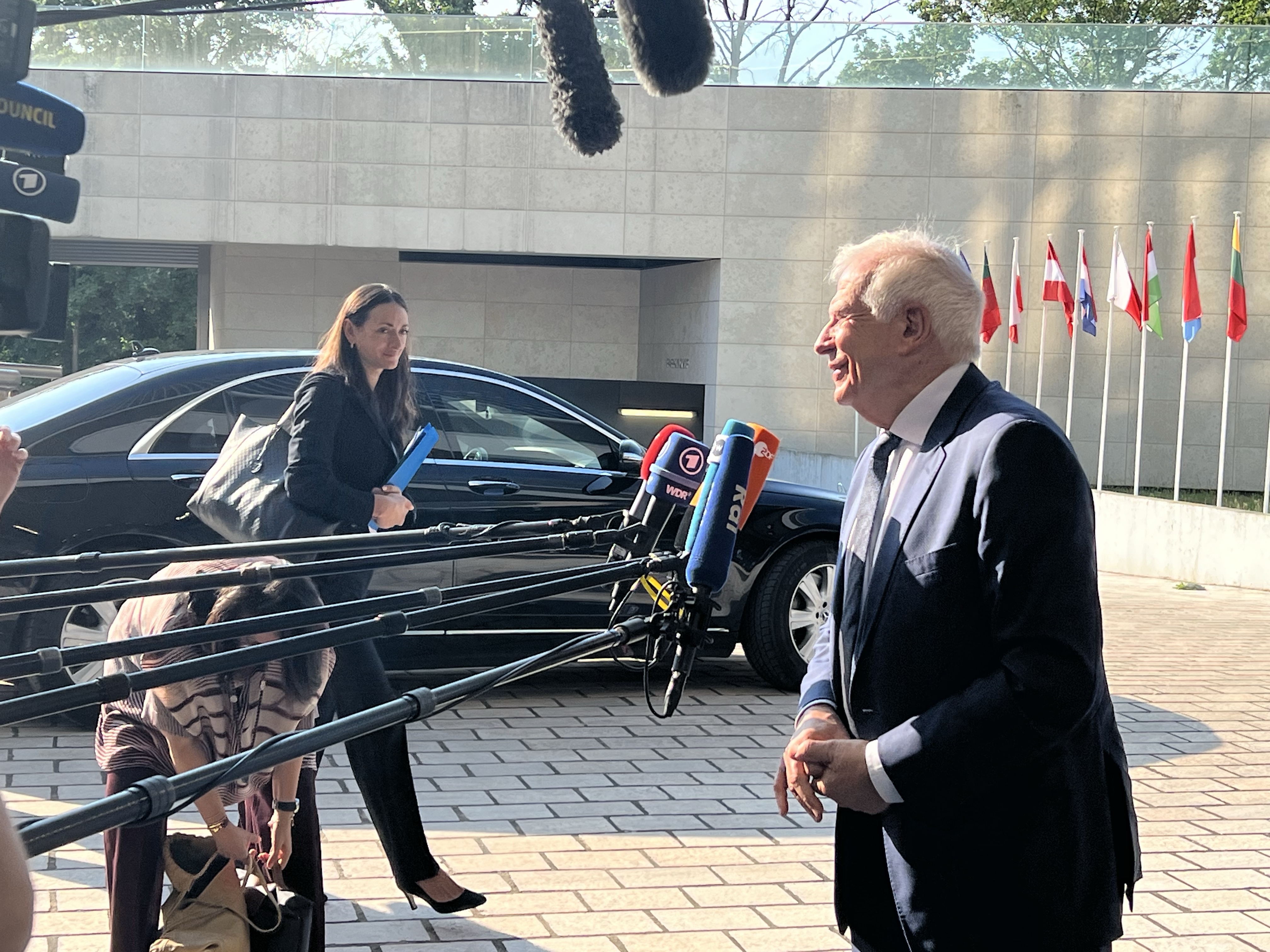
Luxembourg 26.06.2023 “Today, the Foreign Affairs Council is approving a new top-up of our military support to Ukraine: €3.5 billion [for the European Peace Facility]” said the EU top diplomat Josep Borrell at doorstep of the EU Foreign ministers Council.

“I think that it is more important than ever to continue supporting Ukraine, because what has happened during this weekend shows that the war against Ukraine is cracking Russian power and affecting its political system”.

“We are certainly following closely what is happening, but now is the moment to continue supporting Ukraine more than ever, and that is what we will do”.

“Today, the Foreign Affairs Council is approving a new top-up of our military support to Ukraine: €3.5 billion [for the European Peace Facility]” the diplomat concluded.

Putin laments Berlusconi’s death

Strasbourg 13.06.2023 MOSCOW, June 12. /TASS/. The Italian Senator Silvio Berlusconi will be honored in a state funeral in Milan cathedral on Wednesday, June 14, the Curia said.

Berlusconi was Prime Minister for nine years in total, making him the longest serving post-war Prime Minister of Italy.

President of the Republic Sergio Mattarella is expected to attend, sources said Monday, June 13.

Meanwhile, sources said Berlusconi’s body was transferred to his home at Villa San Martino in Arcore, near Milan, on Monday June 12 before being laid out for people to pay their respects starting Tuesday 13 June at the production centre of his Mediaset television empire in Cologno Monzese, ANSA news agency writes.

Berlusconi leadership skills and charisma and his ability to maintain strong and close foreign relations with both the United States and Russia was appreciated by many.

Russian President Vladimir Putin said that he feels deeply aggrieved over the death of former Italian Prime Minister Silvio Berlusconi, who was a true friend and person whom he held dear.

“For me, Silvio was a dear man and a true friend,” Putin said in a message of condolence to Italian President Sergio Mattarella.

“I have always sincerely admired his wisdom and his ability to make balanced, far-sighted decisions even in the most difficult situations. During each of our meetings, I was literally charged with his incredible vitality, optimism and sense of humor,” Putin shared his memories of Berlusconi. “His death is an irreparable loss and a great misfortune.”.

Putin called Berlusconi a remarkable person with whom the most significant events in Italy’s recent history were associated.

“A true patriot, Silvio Berlusconi has always put the interests of his country above everything else. Being at the helm of the Council of Ministers and holding other important governmental posts for many years, he did a great deal for the economic and social development of the country and for its firmer foothold in Europe and in the world arena,” Putin said. The Russian underlined that Berlusconi was rightly considered the patriarch of Italian politics and enjoyed high international prestige.

The President drew particular attention to the fact that Berlusconi had made a truly invaluable personal contribution to the development of mutually beneficial Russian-Italian partnership.

“In Russia, Silvio Berlusconi will be remembered as a consistent and high-principled supporter of strengthening friendly relations between our countries,” Putin believes. He asked the Italian President to “express sincere sympathy and support for Silvio’s relatives and friends.”

“I wish everyone fortitude in the face of this great loss,” Putin wrote.

Berlusconi’s death was reported by Corriere della Sera on Monday, June 12. The veteran and heavyweight of Italian politics, founder and permanent leader of the Forza Italia! (Forward, Italy!) party, who led the government three times, died at the age of 86.

Putin and Berlusconi first met at the G8 summit in Genoa in 2001. They held dozens of one-on-one business meetings over the years in politics and at various international forums in Russia and Italy and in many other countries. Putin and Berlusconi not only worked together, but were on friendly terms for more than 20 years.

Sudan: Russian diplomat calls for cooperation

Brussels 28.04.2023 Russia calls for national consensus in Sudan — deputy foreign minister.
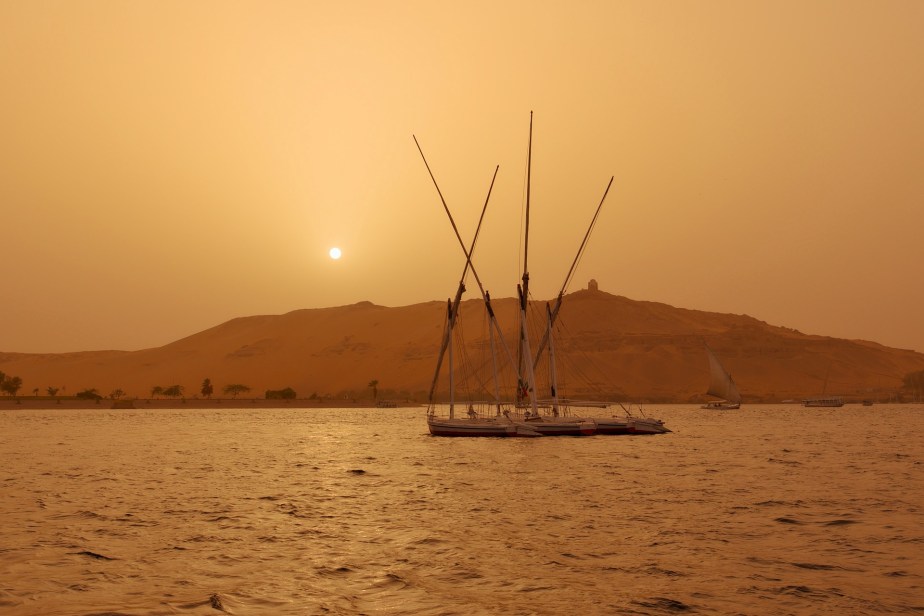
The situation in Sudan escalated amid disagreements between the army chief, Abdel Fattah al-Burhan, who also leads the ruling Sovereignty Council, and the top commander of the paramilitary Rapid Support Forces (RSF), Mohamed Hamdan Dagalo widely known as Hemedti, who used to be al-Burhan’s deputy on the Council. (Image: Nile, sunset)

Russia is calling on the belligerent sides of the conflict in Sudan to reach a national consensus and cooperate, Russian Deputy Foreign Minister Mikhail Bogdanov said on RT television on Thursday, April 27.

Bogdanov, who is also the presidential Special Envoy for the Middle East and Africa, added that Russia and Sudan always had friendly relations.

“Our minister [Foreign Minister Sergey Lavrov] was on a visit to Khartoum. There were very good communication, meetings and negotiations with both the Foreign Minister and the military authorities. We have always been in favor of national consensus and cooperation between the forces in Sudan – the military and civilian ones,” Bogdanov clarified.

The conflict in Sudan occurred as a result of disagreements between the army chief, Abdel Fattah al-Burhan, who also heads the ruling Sovereignty Council, and the head of the paramilitary Rapid Support Forces, Mohamed Hamdan Dagalo, named Hemedti, who is al-Burhan’s deputy on the council.

On April 15, armed clashes between the rival military factions erupted near a military base in Merowe and in the capital, Khartoum. According to the country’s Health Ministry, more than 600 people have been killed since the conflict broke out. The World Health Organization reported that the conflict had claimed more than 450 lives with more than 4,000 people suffering injuries.

Thousands of foreign nationals have been evacuated from Sudan in recent days. Spain, Italy, the Netherlands, and France closed their Embassies in Khartoum. Many other countries are reducing their diplomatic presence or relocating diplomatic missions to nearby states.

Russia reacts upon UK depleted uranium shells

Brussels 23.03.2023 Radiation effects of depleted uranium shells, in case used on the territory of Ukraine, will be impossible to control, Russian Foreign Ministry spokeswoman Maria Zakharova said at news briefing on Thursday, March 23.

“Now the impact of used weapons and shells will be impossible to control either for neighboring states or for the states of the region. This simply cannot be done,” the diplomat explained, while commenting on London’s intention to provide shells with depleted uranium to Kiev.

“It is possible to participate in the exchange of intelligence, it is possible to ask Washington to control the Kiev regime to ensure it should not carry out strikes at the territory of Poland or shoot down aircraft of some other countries, it is possible to do many other things, but no one can give instructions to radiation, it’s impossible to negotiate with it, there is no way of controlling it.”

Zakharova recalled the Chernobyl and Fukushima nuclear power plant disasters.

“Both tragedies still have dire consequences. Their scale is different, but the lesson is the same: it’s impossible to come to terms with radiation,” Zakharova concluded.

EU-Russia: X package of “arsenic”

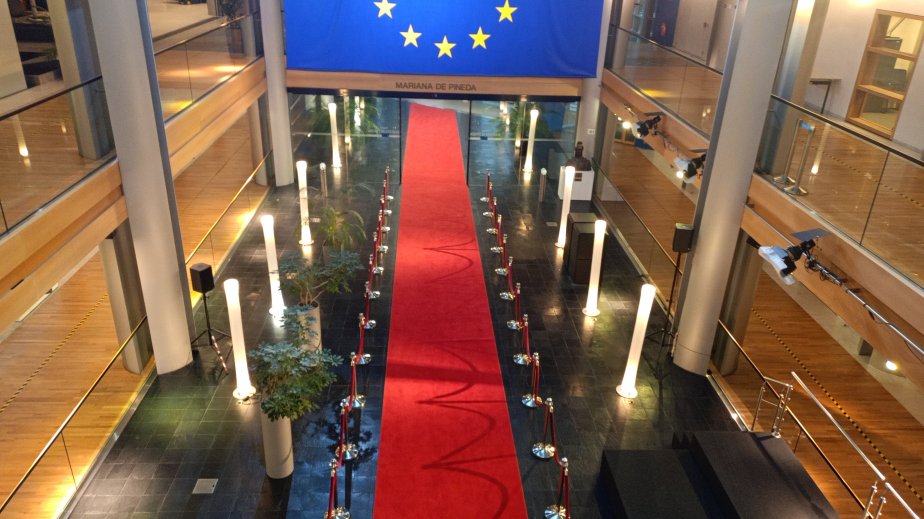
Brussels 20.02.2023 “We are approaching one year since Russia’s full-scale invasion of Ukraine” said the EU top diplomat Josep Borrell, while addressing the Members of the European Parliament in Strasbourg (pictured).

“Until today, Putin is escalating this illegal aggression, weaponising winter, food and hunger. Russia continues to show its inhuman face with brutal missile terror against civilian targets.

“The European Union has so far reacted with unprecedented support to Ukraine and nine sanctions packages. They are taking a heavy toll on the Russian economy and on the Kremlin’s ability to finance its aggression.

“Today, as the President of the [European] Commission [Ursula von der Leyen] has announced, we are putting forward a 10th package of sanctions against those who are instrumental in the continuation of this brutal war. Taking more measures, tackling the banking sector, access to dual-use technology and targeting, also, advanced technologies.

“Additionally, I am submitting to the Council a list of proposals to sanction almost 100 additional individuals and entities for their role in undermining sovereignty and territorial integrity of Ukraine.

“This includes those responsible for military activities, for political decisions, propaganda, and disinformation.

“We are targeting those involved in inhumane kidnappings, deportations and forced adoption of Ukrainian children to Russia and also those enabling the looting of Ukrainian resources.

“We will again hit hard at the Russian military and defence sector, at the organisations related to them, [and] those responsible for the development of drones that are targeting civilians and civilian infrastructure.

“And these [sanctions] are not [confined] to Russia. Today’s proposal includes a full exports-ban of several Iranian entities involved in the manufacture and provision of unmanned aerial vehicles. Yesterday, at the NATO [Ministerial] meeting, we got clear evidence that this is happening.

“So, we are proposing to sanction more key decision-makers, senior government officials and parliamentarians.

“I am proposing to the Member States to extend our sanctions to the proxy authorities and the so-called judges in the four illegally annexed Ukrainian regions of Luhansk, Donetsk, Kherson and Zaporizhzhia –who are providing fake legitimacy to the Russian rulers and their illegal decisions.

“We are imposing restrictive measures on media organisations, on persons and organisations who are polluting the public space with disinformation and malicious narratives, adding to the military warfare also through information warfare.

“We will continue to increase pressure on Russia – and we will do it for as long as needed, until Ukraine is liberated from the brutal Russian aggression”.

A new portion of “arsenic” for Russians include the following measures:

European Commission President Ursula von der Leyen and the EU top diplomat Josep Borrell have already announced details of the EU’s proposed 10th package of Russia sanctions. The X-th package of sanctions will include:

Export bans on critical technology and industrial goods, such as electronics, specialised vehicles, machine parts, spare parts for trucks and jet engines, as well as goods used in the construction sector, such as antennas or cranes.
Further restrictions on the export of dual use goods and advanced technology goods, including 47 new electronic components that can be used in Russian weapons systems, including drones, missiles and helicopters.
Export restrictions on specific rare earth materials and thermal cameras.

The addition of VII Iranian entities to the EU’s Russia dual use sanctions. This responds to Iran’s Revolutionary Guards alleged provision of Shahed drones to attack civilian infrastructure in Ukraine.
The designation of nearly 100 people and entities, including:

– those involved in kidnappings, deportations and forced adoption of Ukrainian children to Russia;
– those enabling the looting of Ukrainian resources;
– organisations involved in the Russian military and defence sector, including those responsible for the development of drones that are targeting civilians and civilian infrastructure;
– key decision-makers, senior government officials and parliamentarians;
– proxy authorities and judges in non-government-controlled Ukrainian regions of Luhansk, Donetsk, Kherson and Zaporizhzhia; and
– media organisations, people and entities responsible for disinformation.

Measures to prevent circumvention, including the creation of an “overview” of all frozen assets of the Russian central bank held in the EU alongside Member States. President von der Leyen said that this is crucial in view of the possible use of public Russian assets to fund reconstruction in Ukraine.

President von der Leyen also said that the Commission is organising a Sanctions Coordinators Forum. Subsequently she called on Member States to adopt this package swiftly with the aim of having significant sanctions in place by 24 February 2023, the 1-year anniversary of Russia’s aggression against Ukraine.

Russia: response to two Ukraines

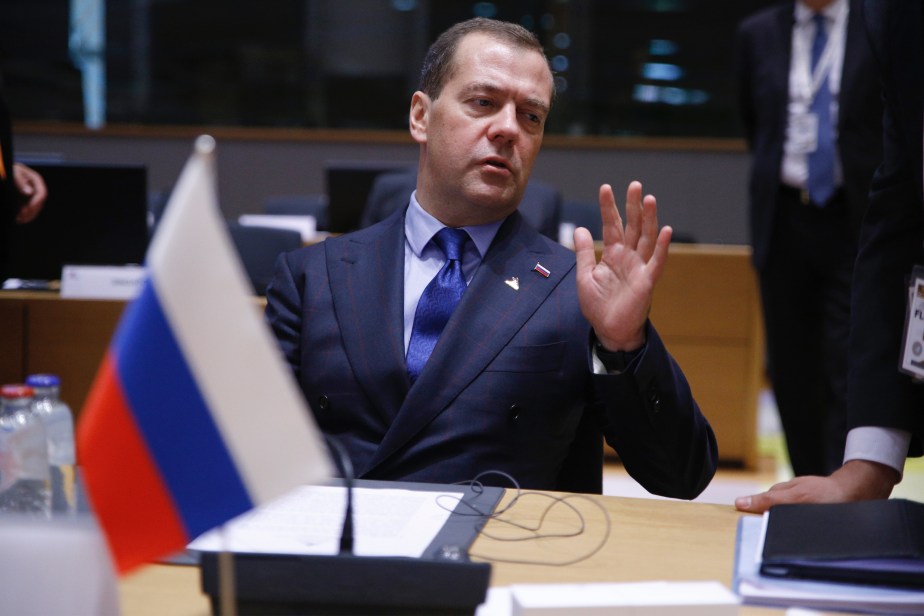
Brussels 08.02.2023 Russian former President Dmitry Medvedev (pictured) recalled that “the division along the 38th parallel (demilitarized zone between the DPRK and South Korea) created two independent countries.”

Medvedev, nowadays the deputy chairman of Russia’s Security Council has depicted Kiev’s speculation that the West is allegedly ready to split Ukraine “according to the Korean scenario” as the first step towards recognizing the existing territorial realities.

“It is clear that the “Korean scenario” speculation is just wishful thinking: ‘We, the rest of Ukraine, would be under Western control and protection. And then we would reach the level of the Republic of Korea. Also, there would remain some hope for reunification with the former territories’,” Medvedev wrote on his Telegram channel on Tuesday, February 7. The politician commented that such hypothetic thinking “is meant for internal use only.”

“There is something else that is noteworthy here,” Medvedev stressed. “Kiev has in fact made a timid hint that there can be no victory. At best, they will follow the country’s division into parts. But in fact, this is the first step towards recognizing the realities that have developed on the ground,” he said.

Medvedev recalled that “the division along the 38th parallel (demilitarized zone between the DPRK and South Korea – TASS) created two independent countries.”

“In the meantime, Donbass and other territories have become part of Russia, which is the largest state with full sovereignty and the most formidable weapons,” Medvedev stressed.

Earlier, a former adviser to the head of the Ukrainian presidential office Alexey Arestovich admitted that Ukraine lacked the strength to win and that the Western countries were ready to implement the concept of “two Koreas” in the region. Prior to this, the secretary of Ukraine’s National Security and Defense Council, Alexey Danilov claimed that Kiev might be offered a “Korean option” of the settlement, involving an “equivalent of the 38th parallel.”

As Russian Presidential Spokesman Dmitry Peskov also expressed a position of Kremlin, commenting on Kiev’s speculation about alleged discussions between the deputy chief of the Russian presidential staff, Dmitry Kozak, over the possibility of a “Korean option” for a settlement in Ukraine was a media concoction. Russian Foreign Ministry spokeswoman Maria Zakharova dismissed Danilov’s statement that Russia might allegedly offer Ukraine a “Korean option” as rumors and far-fetched speculation.

Ukraine top executives killed in crash

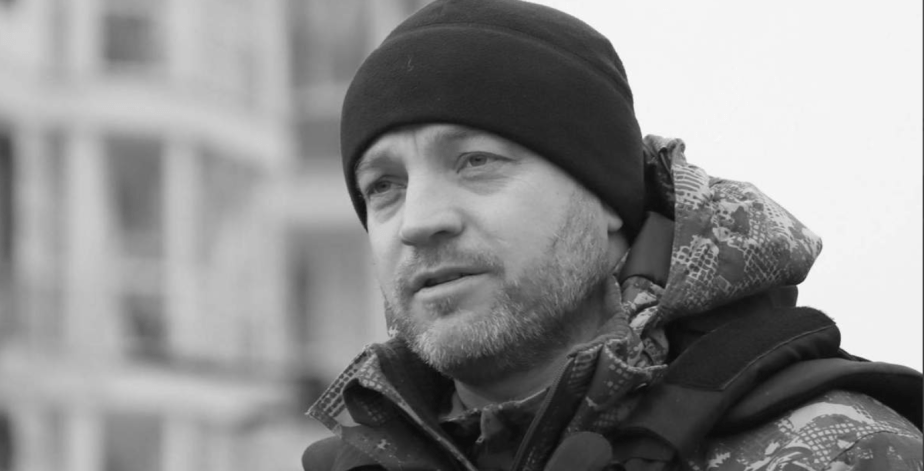
Strasbourg 18.01.2023 The three leading figures in Ukraine’s interior Ministry have been killed in a helicopter crash next to a nursery in an eastern suburb of the capital Kyiv – Brovary.

Interior Minister Denys Monastyrsky, 42, died alongside his first deputy Minister and State secretary.

Nine people were killed when the helicopter came down in Brovary and another nine died on the ground, including three children.

Minister Monastyrsky is the highest profile Ukrainian casualty since the war broke out on February 24, 2022.

The deputy head of Ukraine’s presidential office, Kyrylo Tymoshenko, said the Minister had been on errand to a war “hot spot” when his helicopter went down.

There is no indication the crash was anything other than an accident, although witnesses said Russia’s war was to blame for the disaster.

“It was very foggy and there was no electricity, and when there’s no electricity there are no lights on the buildings,” local resident Volodymyr told the BBC.

The 42-year-old Interior minister was a prominent member of President Volodymy Zelensky’s cabinet. The top executive played a key role in updating the public on casualties caused by Russian missile strikes since Ukraine was invaded in February 2022.

Gen.Clark: Ukraine can regain control over Crimea

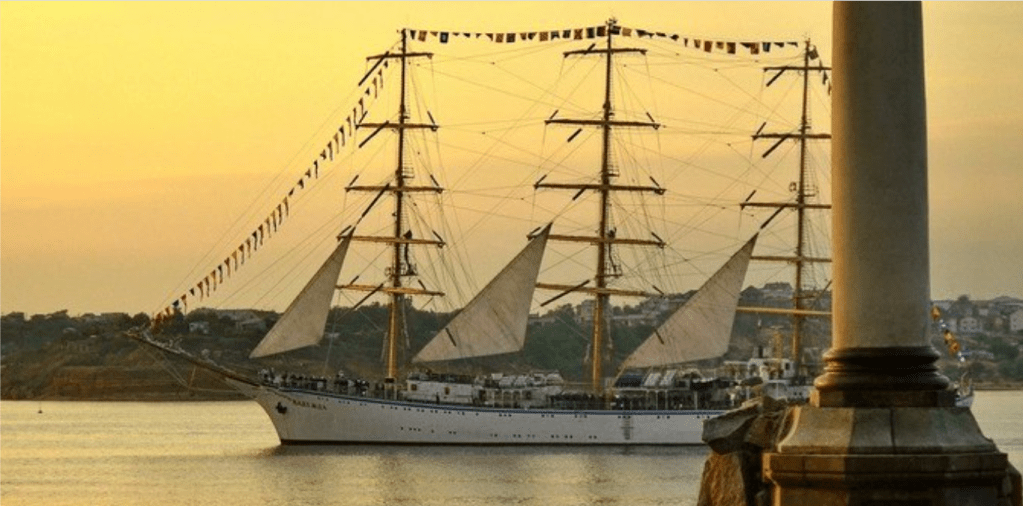
Brussels 12.01.2023 Since August, Ukraine has conducted successful counteroffensives in the north and south, taking back over 50 percent of the territory that Moscow seized after the full-scale invasion on February 24, 2022. Ukraine has also conducted successful strikes on Russian military bases in Crimea and on Black Sea Fleet near Sevastopol (pictured).

Some experts have argued that now is the time for Ukraine to retake Crimea, nine years after Vladimir Putin’s annexation in 2014. Were Ukraine to move in the south and break the land Kerch bridge running from Russia to Crimea, Moscow’s hold on the peninsula would be in danger.

Ukraine can regain control over Crimea, said Gen.Wes Clark, on condition it would be given the offensive weapons. The retired general expressed his opinion of a strong possibility of such a scenario on condition of the U.S. military support in the various fields, including intelligence.

https://youtu.be/AB8emsKoyW0

Image: social media.

Putin announces Xmas cease-fire

Brussels 05.01.2023 Russian President Vladimir Putin on Thursday ordered a 36-hour cease-fire in Ukraine over Orthodox Christmas, the first major truce of the more than 10-month war that has killed tens of thousands and devastated swaths of Ukraine.

Putin ordered the cease-fire to begin on January 6, the Kremlin said. Many Orthodox Christians, including those living in Russia and Ukraine, celebrate Christmas on January 6-7.

Putin did not appear to make his conditional on Ukrainian agreement to follow suit.

But it wasn’t clear whether hostilities would actually halt on the 684-mile front line. Ukrainian officials have previously dismissed Russian peace moves as playing for time to regroup their forces and prepare for additional attacks. A senior Ukrainian official quickly dismissed the proposal.

“The Russian Federation must leave the occupied territories — only then will it have a ‘temporary truce.’ Keep hypocrisy to yourself,” presidential adviser Mykhailo Podolyak wrote on Twitter.

Patriarch Kirill of Moscow, the head of the Russian Orthodox Church, called earlier Thursday for both sides of the war in Ukraine to observe a Christmas truce.

Paris Mosque versus writer Houellebecq

The rector of the Grand Mosque of Paris has filed a complaint against award-winning French writer Michel Houellebecq over “staggeringly brutal” comments made during a recent interview in which the author drew divisions between “native French people” and “the Muslims” responsible for “robbing and assaulting them”.

In a statement published on Twitter, the Grand Mosque of Paris announced it had filed a complaint against Michel Houellebecq following “very grave comments he had made about Muslims in France”.

The statement referred to a “long conversation” between Houellebecq and philosopher Michel Onfray – the founder of “anti-system” magazine Front Populaire – published in November.
The wish of the native French population, as they say, is not that Muslims assimilate, but that they stop robbing and assaulting them. Or else, another solution, that they leave,” Houellebecq is quoted as saying.

The statement, signed by the mosque’s rector Chems-Eddine Hafiz reads:

“When entire territories are under Islamic control, I think that acts of resistance will take place. There will be attacks and shootings in mosques, in cafés frequented by Muslims, in short Bataclan in reverse,” referring to the 13 November 2015 terrorist attack on the Paris concert hall.

“The wish of the native French population, as they say, is not that Muslims assimilate, but that they stop robbing and assaulting them. Or else, another solution, that they leave,” Houellebecq is quoted as saying.

Houellebecq, one of France’s most renowned authors, has written fictionalised accounts of the “Islamisation” of France, but the Paris Mosque claims his comments in a published interview infringe France’s anti-discrimination laws.

Houellebecq, one of France’s most renowned authors, has written fictionalised accounts of the “Islamisation” of France, but the Paris Mosque claims his comments in a published interview infringe France’s anti-discrimination laws.

The rector of the Grand Mosque of Paris has filed a complaint against award-winning French writer Michel Houellebecq over “staggeringly brutal” comments made during a recent interview in which the author drew divisions between “native French people” and “the Muslims” responsible for “robbing and assaulting them”.

In a statement published on Twitter on Wednesday, the Grand Mosque of Paris announced it had filed a complaint against Michel Houellebecq following “very grave comments he had made about Muslims in France”.

The statement referred to a “long conversation” between Houellebecq and philosopher Michel Onfray – the founder of “anti-system” magazine Front Populaire – published in November.

The statement, signed by the mosque’s rector Chems-Eddine Hafiz, quotes an extract:

“When entire territories are under Islamic control, I think that acts of resistance will take place. There will be attacks and shootings in mosques, in cafés frequented by Muslims, in short Bataclan in reverse,” referring to the 13 November 2015 terrorist attack on the Paris concert hall.

“The wish of the native French population, as they say, is not that Muslims assimilate, but that they stop robbing and assaulting them. Or else, another solution, that they leave,” Houellebecq is quoted as saying.

The Grand Mosque described the remarks as “unacceptable” and implied that Muslims were “not real French people”.

It wrote that the comments constitute “an incitement to hatred against Muslims” and “a call to reject and exclude the Muslim component as a whole”.

The statement cites a recent decision by the European Court of Human Rights (ECHR) which upheld the conviction of former far-right French presidential candidate Eric Zemmour for “inciting discrimination and religious hatred” over comments targeting France’s Muslim community.

“The court held that the interference with the applicant’s right to freedom of expression had been necessary in a democratic society to protect the rights of others that were at stake,” the ECHR wrote in a statement on 20 December.

Houellebecq won the Goncourt Prize – France’s highest literary honour – in 2010.

But he is no stranger to controversy.

His 2015 fictional novel Submission, about the rise to power of an Islamist president in France, won acclaim but also sparked concern over fomenting anti-Muslim sentiment.

The philosopher, Robert Redeker, who was the victim of a fatwa forcing him to live for a time under police protection, supports Michel Houellebecq, targeted by a complaint from the Great Mosque of Paris for “provoking hatred against Muslims”