Brussels 31.10.2021 EP’s Bureau decided that the request to present an EU Digital COVID Certificate to access Parliament’s buildings will be extended to all people wishing to enter, reads the announcement on the site of the European Parliament.
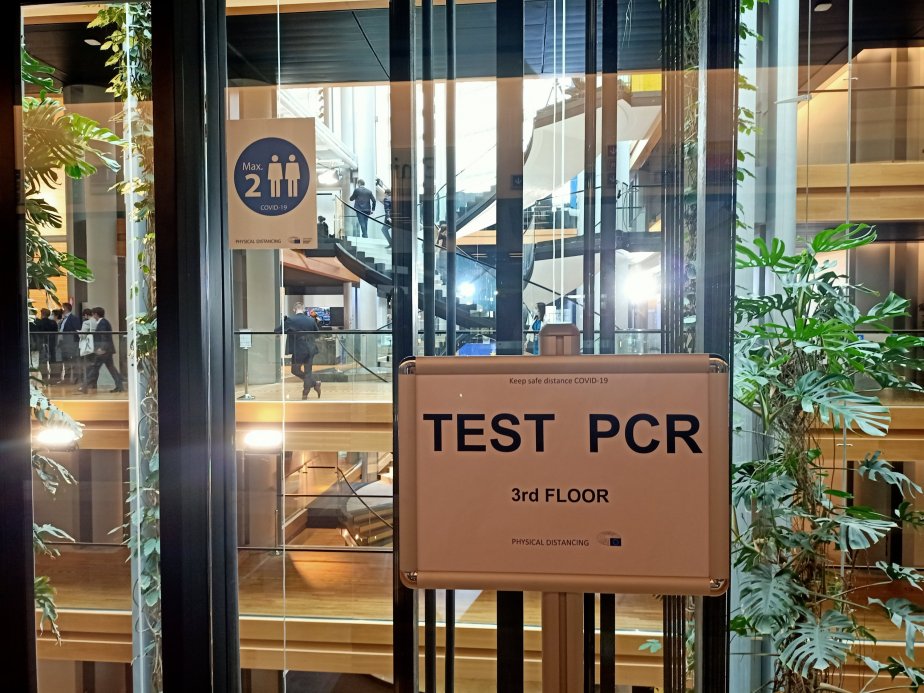
As of November 3, all people entering Parliament’s buildings in its three places will be requested to present a valid EU Digital COVID Certificate, including journalists. The EU Digital COVID certificate proves that a person is either fully vaccinated, has immunity after having recovered from COVID-19 or can show a recent negative PCR test result. Both digital and paper formats of the EU Digital COVID Certificate or of a recognised equivalent certificate will be accepted.
EU citizens' rights are severely violated by the Digital Certificate. We will fight for your right to freedom, which has to be restored in the EU! Full Press Conference 28.10.2021 https://t.co/WDryDuiCXD
A proof of a negative result of a PCR test carried out within the last 48 hours in Belgium, Luxembourg or France will also be accepted.
Please note that the existing precautionary measures like the compulsory wearing of a medical face mask and temperature checks at entrances remain in place.
The measure, taken by the Bureau will enable MEPs the return to in-person meetings for parliamentary activities, while continuing to guarantee safety. The decision takes into account the specificity of the European Parliament, an Institution gathering MEPs and other actors travelling to and from different Member States on a regular basis and the significant differences in vaccination level in Member States, according to the latest ECDC data. Please note that the measure was already in place for all external visitors since the beginning of September.
Personal data retrieved from the Certificate during the scanning process will only encompass the name of the holder, the authenticity and the validity of the Certificate. The personal data will be processed in accordance with Regulation (EU) 2018/1725 and its use will be strictly limited to granting access to Parliament’s buildings. Personal data will not be stored, recorded or retained locally or externally or transferred to any other Union body or third party.
Whatever view of EU & European Parliament (latter has v little power) the comments of these speakers at Press Confernece are bang on
Coercion no jab no job Green Pass deny freedoms & liberty
Strasbourg 20.10.2021 Sakharov Prize for Navalny is completely justified: “It is quite right that the Sakharov Prize for Freedom of Thought should be awarded to Navalny. Alexei Navalny is constantly opposing Vladimir Putin’s regime, despite the Russian president’s efforts to silence him in every possible way.” That is the reaction of MEP Peter van Dalen (ChristenUnie) to the announcement just now.
By awarding the Sakharov Prize to Alexei Navalny, the European Parliament is giving the Russian opposition a great boost, says Van Dalen: “We are making it clear loud and clear that Putin’s attempts to silence opponents are not working.” Navalny was nominated by the EPP group for the Sakharov Prize more than a month ago, after MEP Peter van Dalen (Christian Union) nominated him. He then justified it as follows: “Navalny deserves this award for his continued resistance to Putin and his regime. For this fight he almost paid the highest price: his life. He has been bullied, harassed, imprisoned, arrested, poisoned and re-arrested countless times since 2006.”
Over the last year, @EPPGroup social media posts on @Navalny have received overwhelming support.
According to Van Dalen, the former opposition leader stands for human rights, open democracy and transparency and advocates reforms against corruption in Russia: “The result of this, however, is that he is now in a Russian prison camp. As far as I am concerned, there is therefore no other person who meets the criteria of this award as well as Navalny. He is truly committed to freedom of thought.” Van Dalen hopes that a large group in Russia may feel supported by this award: “In addition to Navalny, we also honor the enormous list of others who have become victims of Putin’s regime in recent years. Navalny is therefore the icon of resistance against the dictator in Moscow.”
The official presentation of the Sakharov Prize is on December 15 in Strasbourg.
Brussels 15.10.2021 The EU condemns the decision of the Russian Federation to conduct a population census in the “illegally annexed Ukrainian territory of Crimea and the city of Sevastopol” from 15 October until 14 November, and the launching of yet another conscription campaign on 1 October.
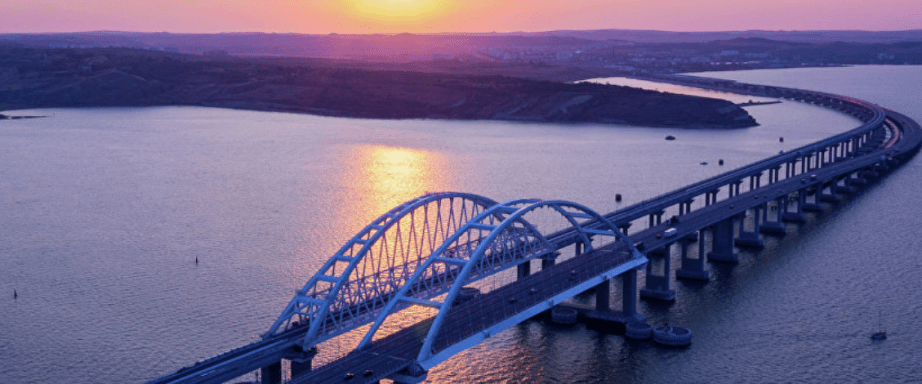
“These actions are an attempt to legitimise the illegal annexation of Crimea and further undermine the sovereignty and territorial integrity of Ukraine within its internationally recognised borders”.(Tweet below: new road infrastructure).
The European Union calls on Russia to stop all violations of international law and international humanitarian law on the Crimean peninsula. The European Union will continue to work for a peaceful end of Russia’s “illegal annexation of the peninsula”, as reiterated at the first summit of the International Crimean Platform on 23 August. The European Union will continue and to enforce its non-recognition policy.
🇪🇺 @EUCouncil imposes sanctions on 8 people enforcing Russian law in the illegally annexed Crimea and Sevastopol in #Ukraine 🇺🇦.
Brussels 13.10.2021 Russian Foreign Minister Sergey Lavrov told reporters on Tuesday October 12 that claims put forward by UK media of Russia having allegedly stolen AstraZeneca’s coronavirus vaccine formula are unfounded.
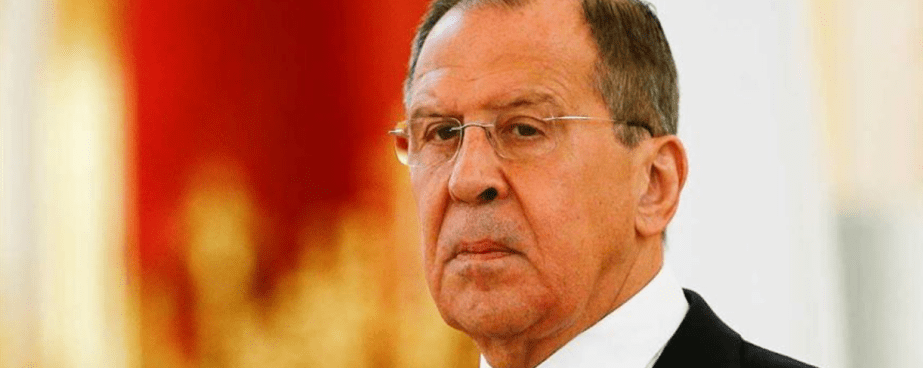
“I don’t think anyone will take these unfounded accusations seriously, there have already been many baseless accusations,” Russian top diplomat said.
💉#Russia allegedly stole the blueprint for the Oxford-AstraZeneca vaccine before designing #SputnikV, the UK's security services have told the government, according to The Sun's report:https://t.co/UbO5jpxMAE
— Hybrid Warfare Analytical Group/UCMC (@hwag_ucmc) October 11, 2021
Lavrov added that he had not heard these accusations against Russia, and also recalled that the use of the AstraZeneca vaccine in many cases had produced negative side effects, particularly thrombosis (blood-clotting).
“No such cases have occurred with Sputnik V. I think that everyone who is interested will draw conclusions for themselves,” the foreign minister has underlined.
#Pharma wars: smart marketing to attract attention to shrinking #AstraZeneca demand. Understatement: why #Russian spies ignored #Pfizer? Because #UK science products are the best! Allegations as a product promotion tool:) Clever tactic! https://t.co/vtb4UAb48n
On October 10, The Sun, a well-known UK tabloid, published an article that claimed that Russian intelligence services allegedly received information about the formula of the vaccine developed by UK-Swedish company AstraZeneca and later used it to create Russia’s Sputnik V formula.
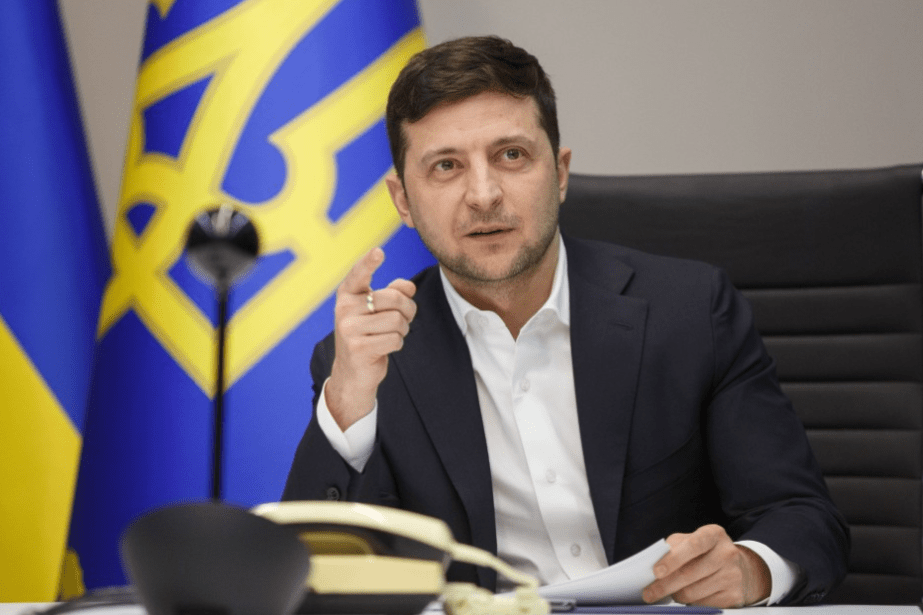
Strasbourg 05.10.2021 The Ukrainian president Volodymyr Zelensky may have pledged to reform the country’s corrupt system of politics, but the Pandora Papers reveals otherwise.
🇺🇦 Ukraine has the highest number of politicians implicated in the Pandora Papers, with 38 names — including President Volodymyr Zelensky.
Driving the news: Ukraine is the country with the highest number of politicians named in the leak of offshore data, which implicates hundreds of people linked to offshore companies — including President Volodymyr Zelensky, presumably fighting corruption.
Zelensky’s dream was always to be on world media’s front pages together with other world leaders. pic.twitter.com/jGjoayAAo4
Though offshore companies are not themselves illegal, they often help facilitate tax evasion or money laundering, writes the International Consortium of Investigative Journalists, the network of reporters and media organisations that obtained the records, revealing double-faced politicians.
While being a popular professional comedian, Zelensky had campaigned on reforming Ukraine’s oligarch-dominated system, positioning himself as an outsider of the crooked universe of the politicians, including incumbent Petro Poroshenko, who hid offshore assets.
Zelensky is named in the Pandora Papers for offshore accounts set up *before* the election. You have to feel bad for Ukrainians, who trusted him enough to give him 73% of the vote… after he spent the campaign railing against the exact same thing https://t.co/n4lSeCOnzL
However the Pandora Papers revealed that Zelenski was involved with a network of offshore companies, which he co-owned with friends and business partners.
Zelensky is one of several politicians who campaigned on anti-corruption platforms — others include Czech Prime Minister Andrej Babis and Pakistani Prime Minister Imran Khan — who will now be facing questions over undisclosed wealth tied to them or their close associates, Axios’ eidotor Dave Lawler said.
Ukrainian President Volodymyr Zelensky, who also has pledged to clean up his country, had offshore companies with partners.
Just before he was elected, he appears to have moved to disguise his interest. 4/ https://t.co/mNGZyZOFL2
— Organized Crime and Corruption Reporting Project (@OCCRP) October 3, 2021
By the numbers: Ukraine leads with 38 politicians named in the Pandora Papers. The top five are …
– Ukraine: 38
– Russia: 19
– Honduras: 11
– United Arab Emirates: 11
– Nigeria: 10
Strasbourg 05.09.2021 More than 600 journalists from the International Consortium of Investigative Journalists’ @ICIJorg 2021 have conducted a vast investigation named #PandoraPapers which reveals how the offshore money machine operates in every corner of the planet, including the world’s largest democracies.
The Consortium @ICIJorg has uncovered tax evasion and corruption totaling up to $32 trillion involving:
The Pandora Papers reveal alleged hidden wealth by 300+ global elected officials and 100+ billionaires.
The data has info on: ▪️ 14 heads of state ▪️ Tax havens like: British Virgin Islands, Cyprus, Switzerland, U.S. states South Dakota, Delaware ▪️ Celebrities incl. Shakira pic.twitter.com/TrYYOYit7q
The Washington Post, owned by the American billionaire Jeff Bezos, and the International Consortium of Investigative Journalists (ICIJ) gained an unprecedented look into the money flowing into trusts in the United States by examining a trove of more than 11.9 million confidential documents maintained by trust and corporate services providers around the world.
The records, presented to public under the name of the Pandora Papers, expose how foreign political and corporate leaders or their family members moved money and other assets from long-established tax havens to U.S. trust companies.
The investigation identified 206 U.S.-based trusts linked to 41 countries holding combined assets worth more than $1 billion. Nearly 30 of the trusts held assets connected to people or companies accused of fraud, bribery or human rights abuses in some of the world’s most vulnerable communities.
The cache of confidential files, obtained by @ICIJ and shared with more than 150 media partners, describe only some of the trusts in the United States but is the most significant set of records ever made public from inside America’s trust industry.
Putin’s top image-maker became a silent partner, hidden behind layers of offshore companies, in a state-funded privatization deal that allowed him to invest in dozens of movie theaters and other property from the city of Moscow, the #PandoraPapers reveal. https://t.co/HJoBmUsP7Epic.twitter.com/txl84IbwRj
The trust documents come mostly from the Sioux Falls office of Trident Trust, a global provider of offshore services. In a written statement, Trident said it is committed to compliance with all applicable regulations and routinely cooperates with authorities. The company declined to answer questions about its clients.
'Pandora Papers' fallout.
World leaders are on the defensive after the release of millions of documents detailing how heads of state use offshore tax havens to stash assets worth hundreds of millions of dollarshttps://t.co/1IkqXg1QRrpic.twitter.com/oGr4tcoeMt
On Monday, October 4, the European Parliament included Council and Commission #PandoraPapers statements to agenda of the Plenary in Strasbourg. On October 6 at Strasbourg plenary of the European Parliament – implications on the efforts to combat money laundering, tax evasion and avoidance will be presented at 15h00. The MEPs will vote on the resolution at the next part-session.
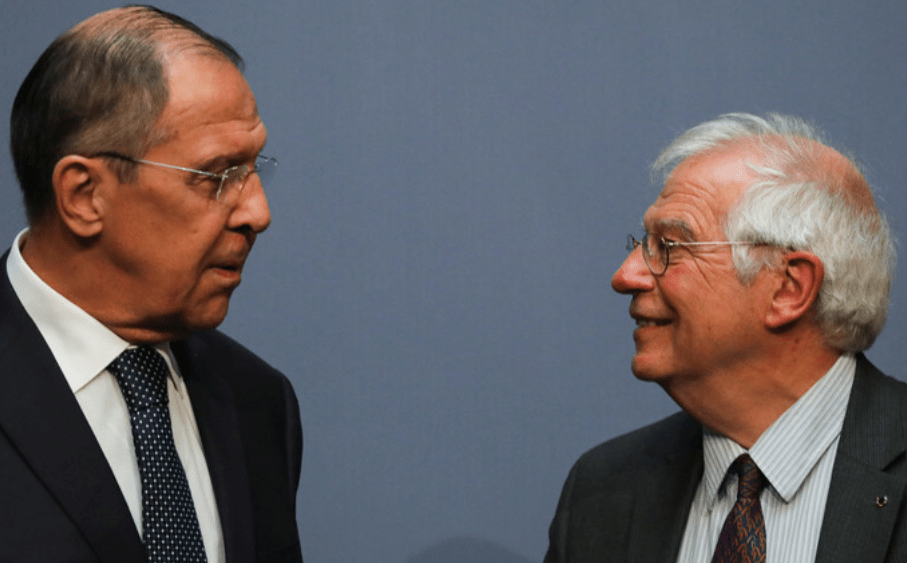
Brussels 24.09.2021 The EU High Representative Josep Borrell met with the Foreign Minister of the Russian Federation Sergey Lavrov, in the margins of the 76th session of the UN General Assembly on Thursday. They discussed EU-Russia relations as well as pressing international issues.(Image: archive)
— European External Action Service – EEAS 🇪🇺 (@eu_eeas) September 24, 2021
High Representative Borrell addressed some of the challenges in EU-Russia relations, the objective being to aim at a more stable and predictable relationship. Disagreements persist, in particular in regards to Russia’s violations of Ukraine’s sovereignty and territorial integrity, in the area of democracy and human rights, as well as with regard to cyber, disinformation and other hybrid threats.
Met with Foreign Minister Sergey Lavrov in the margins of #UNGA
The EU and Russia have major disagreements but we need to cooperate on a number of foreign policy issues, in the interest of global security and stability. This was my message to him today.https://t.co/523IrYfy3epic.twitter.com/c3RGsl8QcO
The discussion focused on international issues where the EU and Russia should continue to cooperate, with a view to addressing global security challenges such as the situation in Afghanistan, Libya, Mali, the Middle East Peace Process or the Joint Comprehensive Plan of Action (JCPOA).
“Investigators managed to find out that head of the Russian Foreign Ministry, his niece Polina, his mistress Svetlana, as well as her mother Tamara and daughter Polina fly on Deripaskas planes, sail on his yachts and live in his houses since at least 2014” https://t.co/HYO5fN1usK
Brussels 02.09.2021 The United States will impose sanctions against Nord Stream II in case other countries create energy problems for Ukraine, President Vladimir Zelensky said on Wednesday, September 2, after his visit to Washington.
“So far, we are at a stage when President Biden personally guarantees that if Russia or other parties to Nord Stream II after its commissioning … create energy problems to Ukraine, the United States guarantees it will impose sanctions against Nord Stream II,” he told at a briefing, which was aired by the Ukraina-24 TV channel.
US president Joe Biden has pledged to help Ukraine fight "Russian aggression", including with new arms supplies and sanctions against Nord Stream 2. https://t.co/zUoTQdv7Cu
Zelensky said it is a “big victory,” but the issue still needs further discussion.Ukraine’s position on Nord Stream II enjoys serious support in the U.S. Congress, he added.
Nord Stream II is an international project for the construction of a gas pipeline that will run across the seafloor of the Baltic Sea from the Russian coast to Germany bypassing transit states, such as Ukraine, Belarus, Poland and other Eastern European and Baltic countries.
The new 1,230-kilometer pipeline, basically following the same route as Nord Stream I, traverses the economic zones and territorial water of five countries, namely Russia, Finland, Sweden, Denmark, and Germany.
Works under the project were suspended in December 2019 after Allseas, a Swiss company laying the pipes for the Nord Stream II pipeline, suspended pipe-laying works over possible US sanctions and recalled its vessels. The construction works were resumed only a year later in December 2020 after an intense legal struggle.
On July 21, 2021, the United States and Germany published an agreement on the Nord Stream II project, where Washington recognised that sanctions would not stop the project implementation and Berlin undertook the efforts to ensure the extension of Russian gas exports via Ukraine. The United States however reserved the right to take measures in case Russia, as it put it, uses energy as a geopolitical weapon in Europe and in case of its “aggression” against Ukraine.
When Chuck and Nancy were running impeachment theater for the last 2 years they had no idea that Biden would commit a series of actually impeachable acts in public in his first 7 months in office
The Russian side has repeatedly stressed that Nord Stream II is purely a commercial project and is being implemented jointly with European partners under the WTO rules. Kremlin press secretary Dmitry Peskov expressed resentment over attempts of a number of countries to link the future of the project to political context and various circumstances unrelated to trade. Moscow has also repeatedly underlined that it has never used energy resources as an instrument of a political pressure, even providing Georgia with gas during the war.
Is this the same Joe Biden who pressured the President of Ukraine to drop the corruption investigation into Burisma, a Ukrainian gas company that his son Hunter was on the board of, or else he would withhold $1B in loan guarantees from the United States? Sounds like him.
President Biden recent promises to support Ukraine in its struggle out of economic difficulties, the endemic corruption is not the least factor,and reminds of his own son Hunter adventures in Ukraine entering the board of Burisma energy company without any relevant experience. It is also reminded about the impeachment documents failed by Representative Marjory Taylor Greene last year, clearly stating Joe Biden should be investigated over the conflict of interests caused by his son involvement in corruption scandal in Ukraine.
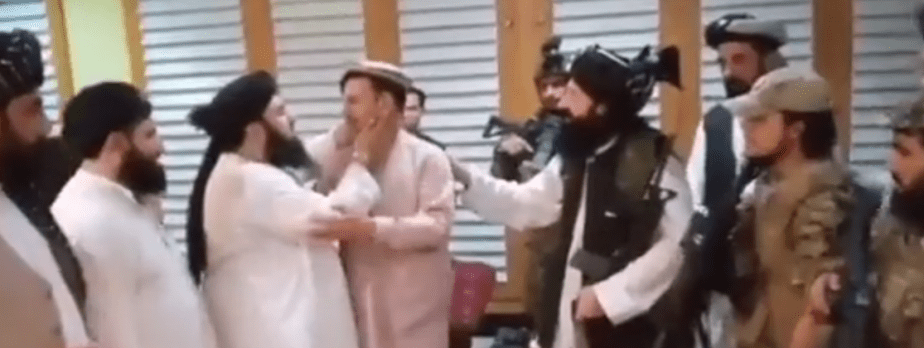
Brussels 21.08.2021 Ashraf Ghani’s brother joins Taliban, EHA News reports. Former President Ashraf Ghani’s brother Heshmat Ghani pledged allegiance to Taliban,the video of the ceremony was released on the social media.
Heshmat Ghani Ahmadzai joined the Taliban in the presence of Khalil al-Rahman Haqqani, a senior Taliban member, and declared his support for the Taliban.
Local Pajhwok news agency said on Saturday, August 21, that Hashmat Ghani, brother of former Afghan President Ashraf Ghani, had pledged allegiance to the movement. Heshmat Ghani, who heads the Kush (Bedouin) Grand Council in Afghanistan, held no official post during Ashraf Ghani’s eight-year presidency.
Heshmat Ghani appeared in a video pledging allegiance to Khalil Rahman, a prominent member of the Taliban movement, according to the Afghan agency.
NEW – Brother of former Afghan president Ashraf #Ghani has allegedly joined the Taliban. Hashmat Ghani has pledged his support in the presence of religious scholar Mufti Mahmood Zakir and Taliban leader Khalil-ur-Rehman.pic.twitter.com/JFDMzcmhQd
Afghanistan’s Ambassador to Tajikistan has accused Afghan President Ashraf Ghani of stealing nearly $170 million while fleeing Kabul, and the diplomat is calling for international authorities to arrest him.
Ambassador Zahir Aghbar, during a news conference said said Ghani, who fled the country as the Taliban entered Kabul on Sunday, on August 15, and “stole $169 million from the state coffers,” according to The Associated Press.
Now, the US blames Ashraf Ghani for all the mess in Afghanistan. But, who had made Ghani the President? Not Afghans; it was Americans. They made him finance minister after the invasion, then the President twice without any popular support. Ghani was more American than Afghan!
Brussels 19.08.2021 Extraordinary Meeting of NATO Ministers of Foreign Affairs – Brussels, 20 August 2021
An extraordinary virtual meeting of the North Atlantic Council (NAC) at the level of Ministers of Foreign Affairs will be held via secure teleconference on Friday 20 August 2021. NATO Foreign Ministers will discuss developments in Afghanistan.
An extraordinary virtual meeting of the North Atlantic Council at the level of Foreign Ministers will be held on Friday 20 August 2021. #NATO Foreign Ministers will discuss developments in #Afghanistan.
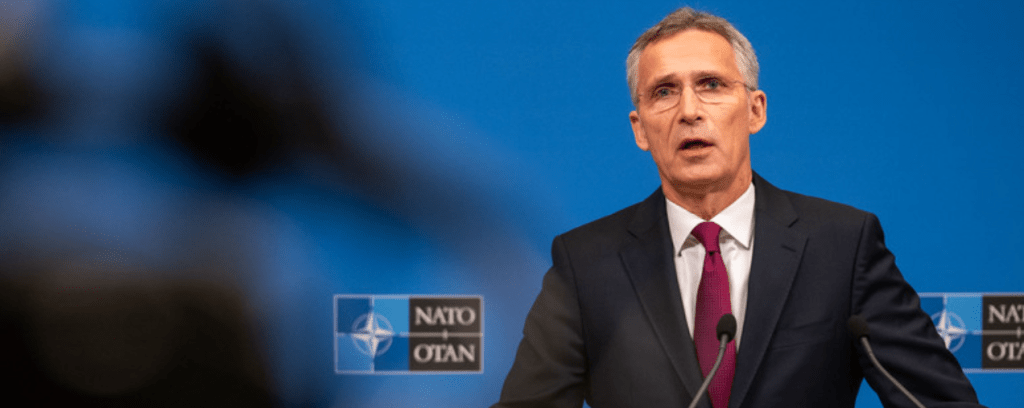
The meeting will be chaired by the NATO Secretary General, Jens Stoltenberg.
The meeting will start on 20 August 2021 at +/- 14h00 Brussels. The Secretary General is expected to brief the press after the meeting.
Spoke with @EU_Commission President @vonderleyen and @eucopresident Charles Michel about the situation in #Afghanistan. #NATO continues to work closely with the #EU & the rest of the international community to coordinate and facilitate evacuations.
Previously at the press-briefing in NATO HQ Brussels on August 17, the Secretary General, Jens Stoltenberg said: “The North Atlantic Council has met to discuss Afghanistan.
“The situation is extremely serious and unpredictable.
Kabul has fallen, and the Taliban have taken control of most of the country.
I am deeply saddened by what I see unfolding in Afghanistan.
#NATO Allies met to discuss #Afghanistan. The situation is extremely serious & unpredictable. Those taking power have the responsibility to ensure that international terrorists do not regain a foothold. Allies have the capabilities & vigilance to respond. https://t.co/f0cicsUoVo
“NATO’s focus right now is to ensure the safe departure of personnel from Allied and partner countries, and of the Afghans who have helped us.
NATO has been working round the clock to maintain operations at Kabul international airport.
Around 800 NATO civilian personnel have remained to provide key functions under very challenging circumstances.
“Including air traffic control, fuel, and communications.
And I would like to thank them.
Let me also thank the military forces of NATO Allies, in particular Turkey, the United States and the United Kingdom for their vital role in securing the airport.
Operations at the airport are now gradually resuming.
And during today’s meeting Allies announced that they are sending additional airplanes.
“We have also maintained our diplomatic presence.
Our Senior Civilian Representative Ambassador Pontecorvo and his team have been working closely with Allies and the rest of the international community to coordinate and facilitate the evacuation.
And we remain committed to completing evacuations including of our Afghan colleagues, as soon as possible.
The Taliban must respect and facilitate the safe departure of all those who wish to leave.
The airport, as well as roads and border crossings, must be open.
All Afghan men, women and children deserve to live in safety and dignity.
There must be a peaceful transfer of power to an inclusive government.
With no revenge or retribution.
“A government that does not respect the fundamental rights of all Afghans and reinstates the reign of fear, risks international isolation.
“The United States agreed with the Taliban last year that US troops would withdraw by May.
And after many rounds of consultations, all Allies agreed to follow the US decision.
Ending our military mission was not easy.
We were faced with a serious dilemma.
Either leave, and risk seeing the Taliban regain control.
Or stay, and risk renewed attacks, and an open-ended combat mission.
“We never intended to stay in Afghanistan forever.
Over the past few years, from over 100,000 troops we went down to less than 10,000 – and now to zero.
But what we have seen in the last few weeks was a military and political collapse at a speed which had not been anticipated.
Parts of the Afghan security forces fought bravely.
But they were unable to secure the country.
Because ultimately, the Afghan political leadership failed to stand up to the Taliban and to achieve the peaceful solution that Afghans desperately wanted.
This failure of Afghan leadership led to the tragedy we are witnessing today.
“At the same time, we need to have an honest, clear-eyed assessment of NATO’s own engagement in Afghanistan.
Despite our considerable investment and sacrifice over two decades, the collapse was swift and sudden.
There are many lessons to be learned.
“But we should also recognise the gains we have made.
NATO Allies and partners went into Afghanistan after 9/11 to prevent the country from serving as a safe haven for international terrorists to attack us.
In the last two decades, there have been no terrorist attacks on Allied soil organised from Afghanistan.
Those now taking power have the responsibility to ensure that international terrorists do not regain a foothold.
Allies have the capabilities and the vigilance to address future terrorist threats from Afghanistan.
“Due to our military presence and the support of the international community, a new generation of men and women have grown up in a new Afghanistan.
Able to get education, take part in the political process, run their own businesses, and enjoy a vibrant media scene.
Today’s Afghanistan is very different to the Afghanistan of 2001.
So those gains cannot be easily reversed.
“The world will be watching.
And must continue to support a stable and peaceful Afghanistan”.