Western Balkans Summit is a lively event in Bulgarian capital Sofia, assembling leaders from the EU member states, and the countries (and disputed territories) of colorful and rich in diversity mountain region, sometimes even too diverse for achieving the integration and cohesion promoted by Brussels strategists. In essence the Western Balkans represent a permanent challenge for the EU, regarding the inclusion into the bloc as the final chapter, closing the entire book of Yugoslav wars, which shook the continent two decades ago. Happy end. However there are some elements, indicating that Brussels plans to integrate Western Balkans in the bloc is nothing more than a fata morgana, a vision of an exhausted traveller of an oasis with green palm trees in the sands of a desert…
Approaching the painful ‘divorce’ with the UK, the second largest net contributor to the EU purse, Brussels started to look at #WestBalkans with a special warmth in the eyes and voice, diverting public attention from #Brexit as the major failure to another direction –the enlargement project ‘of a great potential’ for the ‘old and tired’ Western Europe. We are loosing in the north, but winning in the south, so nevertheless the EU is ‘up and running’ reads the message of the Eurocentrics, attempting to preserve the fading image of the European project by ignoring losses and focusing on the wins. But are there any?..
FROM THE ARCHIVES | Organised crime and corruption are among the key challenges facing the societies of the Western Balkans, with corruption in particular being a key grievance for ordinary citizens and voters.https://t.co/XOXxjPQLP5pic.twitter.com/b7BSkmaKca
It has been some time already that the European citizens have an opportunity to enjoy the enchanting resorts of Croatia, regarding the country as a ‘success model’ of the EU Enlargement policy in the Western Balkans. And now : Albania, Bosnia and Herzegovina, Serbia, Montenegro, the former Yugoslav Republic of Macedonia and disputed Kosovo – are the ones to integrate, the WB6. However, even if putting aside the problems of rise of Albanian mafia, or the drug trafficking, indicating that the most heroin reaching the EU from Afghanistan flows through Kosovo.
— Ultrascan HUMINT (@ultrascanhumint) May 12, 2018
Even if putting aside the problems of illegal mass migration exploiting the routes for Middle East strangers entering Bosnia from Serbia as the result of a visa-free regime introduced last year between Serbia and Iran. Even if excluding the West Balkans role in the human trafficking, being both destination and transit place. And also if we drop the issues of corruption. If one regards only a political dimension, the Western Balkans represent a Pandora box for the EU. From a first glance it is clear that the Sofia Summit represents a high risk project to an extend the Spanish prime minister Mariano Rajoy prefered to leave the scene even before the launch of the event to avoid the parallels between Kosovo and Catalonia claims of independence.
It's a shame that Rajoy boycotts a EU summit on the Western Balkans because Kosovo is attending too.
What makes it such a crazy decision is that even Serbia (!!!) is attending the summit despite Kosovo's participation. Ridiculous move by Rajoy. https://t.co/P54RgTP9MI
— Aleix Sarri i Camargo (@aleixsarri) May 16, 2018
Just passing by to say ‘hello’, prime minister Rajoy prefers not to enter the Summit to avoid the confrontation with the sui generiscase of unilateral independence of Kosovo. However will the diplomatic maneuver save Spain from Balkanization? Jure humāno…
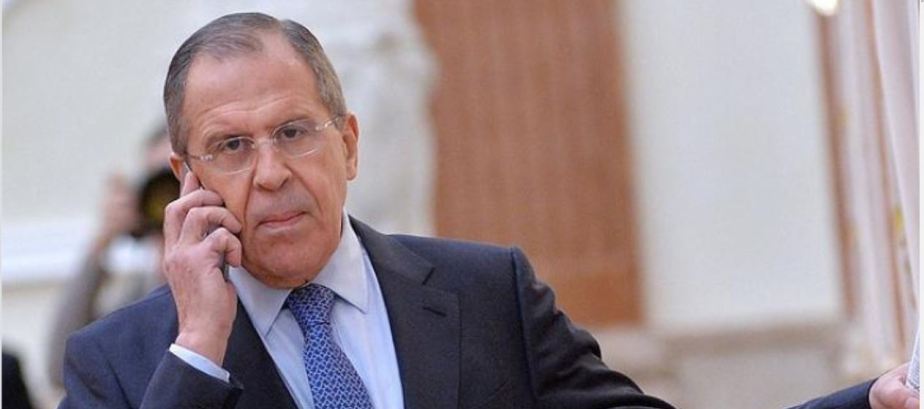
Moscow is ready to search for ‘generally acceptable approaches’ together with its Western partners, including Germany. However, the prospects for cooperation continue to be marred by the situation that emerged through “no fault of Russia”, top Russian Foreign ministerSergey Lavrov said, quoted by TASS agency, while opening talks with his German counterpart Heiko Maas.
🇷🇺🗣️🇩🇪Talks between Sergey #Lavrov & @HeikoMaas has started in Moscow. The Ministers meet for the 1st time since FM Maas has been appointed German Foreign Minister. The media attention corresponds w/ the occasion pic.twitter.com/gZh6TRekcT
“We are ready to look for generally acceptable approaches with our German and Western partners even under the current situation, which we find utterly unsatisfactory, that has been created through no fault of ours. It continues to cast a shadow over any prospects for cooperation both in Europe and on the global stage as a whole,” Lavrovunderlined.
Russia’s top diplomat reminded that the historic reconciliation between Russianand German people, which took place, in a very large measure, thanks to Russia’s country’s “active support” for German unification, and it is of “paramount importance” for European destiny.” “It was hoped that this would be followed by a genuine unification of Europe, that the common European home based on equal and indivisible security will be built,”Lavrov continued. “Unfortunately, this did not happen, but we do bear in mind that strategic objective.”
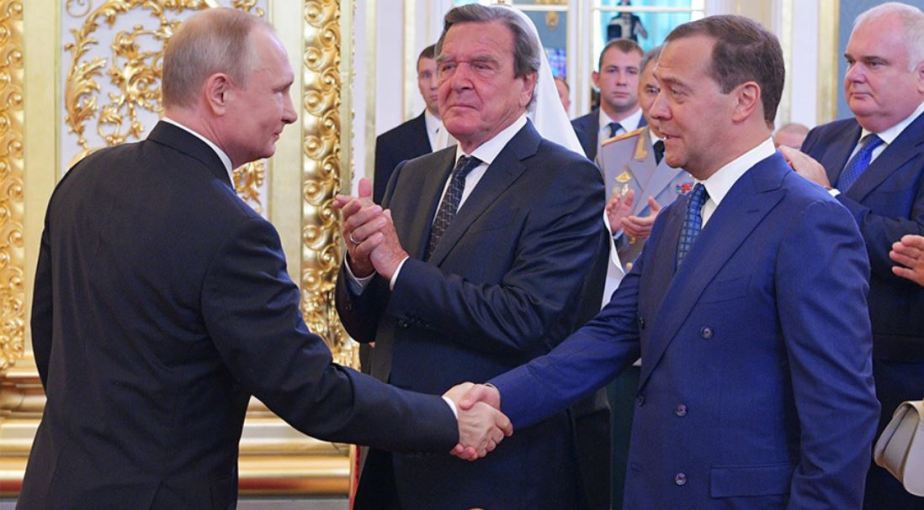
The predictions are plentiful at the IV inauguration of the very same Russian ruler. However only few are optimistic ones, the majority is fearing the deepening schism between Russia and the West, the revival of the Cold Warmodus operandi, and even risk of the accidental eruption of the III World war. But if not following the extreme scenarios, what the EU can expect from the IV mandate of Vladimir Putin? Clearly not much in terms of science, progress or respect of human rights, but highly likely the continuation of stagnation with the subsequent loss of traditional Russian spheres of influence like Balkans, Caucasus, and Central Asia.
The recent events in Armenia showed the fragility of the only ally in the Caucasus, and the switch of Kazakh alphabet to Latin letters indicated to direction of the development the leadership has chosen, clearly not impressed by Kremlin’s achievements. For traditional allies and neighbours Russia is not an attractive construct: rusting vertical of power, causing corruption at all levels, elite openly preferring to keep their fortunes and families abroad; economy firmly becoming a global supplier of raw materials; and declining population. The latter deserves some special attention, because with the current trends Siberia is rapidly inhabited by Chinese neighbours, hardworking and politically inactive, filling working places of those Russians who leave for the European part of the country, or void of many of extinct villages. The process called by the Siberians themselves as ‘Chinese colonisation‘.
When voting Putin for the fourth time, Russian have chosen for a traditional biologic cycle of political power change, it means that the current model will come to a natural end in 15 year from now, when Putin‘s close cercle reaches the age it would be physically unable to keep a grip on power, and even on their own fading away lives. No one is immortal. But what kind of Russia will the West encounter then?..
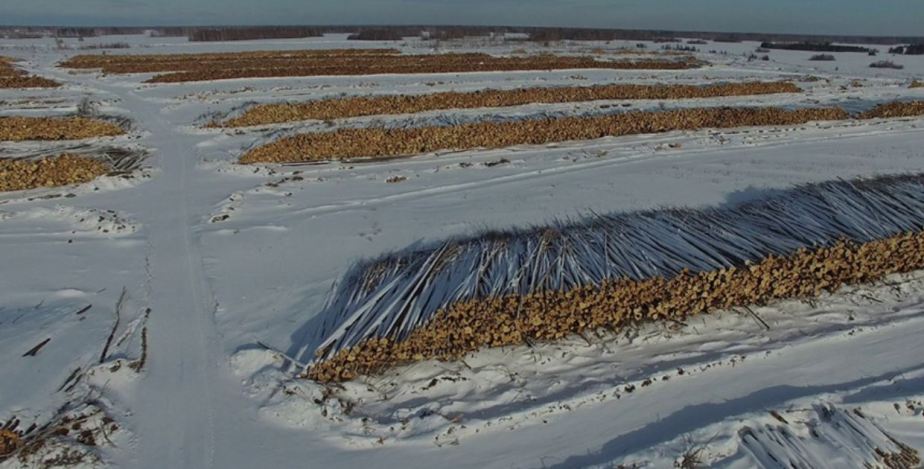
Culturally in 15-20 years Russia will be a different place. At present 38 million Chinese live in bordering Heilongjiang province, while in the entire Siberia just 36 million, and lately in the province the Communist party allowed to have a third child to the couples with the higher income. Growing population with growing needs, and limited resources, but remembering Deng Xiaoping advise they keep low profile, while “aiming to do something big.” In social media Russians share posts about Chinese taking over enterprises and territories. Siberians have collected 140 000 signatures under petition to Putin, asking him to stop the commercial destruction of forests, but in vain.
Cornered by the Western sanctions, Kremlin has little choice to turn to the East, selling natural resources, and welcoming Chinese workers to cope with the economic trouble caused by the stance of the West. Above it all the Chinese are so much friendlier to Kremlin, never reminding about Human rights, Freedom of speech, or requesting the liberation of political prisoners. What a stark contract with the West!
However the Chinesefactor is not the only one, the other element is rapid spreading of Islam over Russian territory. In case the current trends stay in 20 year from now the country’s population will transform from predominantly Orthodoxto Muslim. One more challenge for Europe, desperate to cope with radical Islam and home-grown terrorists.
In his inauguration speech Vladimir Putin compared Russia to Phoenix – magic Firebird, living rebirth. However even a very myopic observer could notice, that after each crisis Russian Firebird comes smaller in size, with further shrinking population. Would it come back as a Firebird after a quarter of a century of Putin‘s uninterrupted rule? Or will it be consumed by the Chinese Dragon? (The President himself has well prepared his children, who learned Chinese language at school:)
To conclude, the fourth inauguration of Vladimir Putin is a turning point, a clear choice for decline and Russia’s disintegration. Subsequently the EU needs to adjust its four road maps with Moscow, conducting its foreign policy having in view the upcoming Russia‘s ethnic, and religious change. Abyssus abyssum invocat! (One abuse leads to another).
Image: Siberia becoming a desert, while the forests are cut out in barbaric way, and sold to Chinese companies. Source: social media.
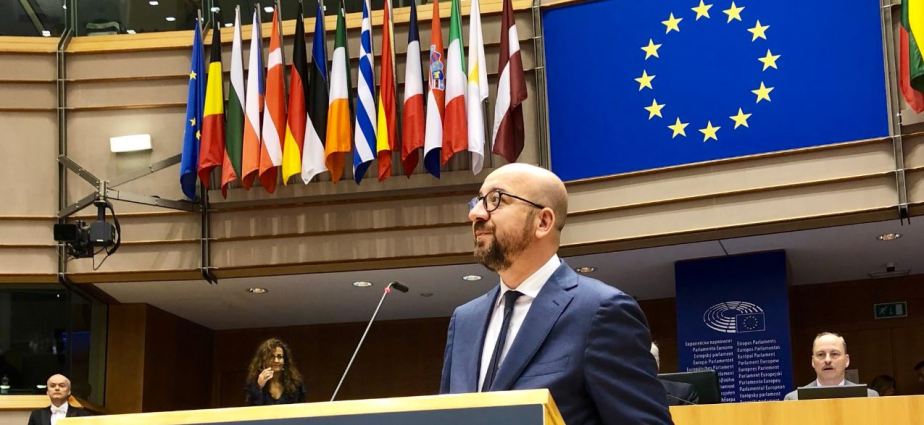
Belgium Prime Minister Charles Michel received warm welcome from European Parliament’s President Antonio Tajani, who stressed the importance of these debates on #FutureofEurope with European leaders, which ‘enable us to look ahead at what we can dotogether: member states, Commission and European Parliament”. However we did not receive any confirmation for the ‘importance of the debate’ from the behalf of the overwhelming majority of MEPs, who simply failed to show up.
A few of Parliament’s group leaders praised Michel’s commitment to a strong Europethat delivers added value to citizens, referring to the city of Brusselsnot only as the capital of Belgium, but also as the heart of the Europe. However, their compliments did not sound very convincing in a big void space.
One can question if the idea to give the PM speech of such a paramount significance in Brussels during mini-plenary was such a good idea, and wouldn’t it be better to follow the established format of presenting Belgium in Strasbourg? But this thought by no means diminishes criticism towards MEPs who regard their participation in mini-plenary as ‘benevolat‘. It is definitely not.
The nonchalant attitude is especially detrimental in view of upcoming European elections. In case the citizens will adopt the symmetrical attitude towards MEPs and ignore polling stations, the European Parliament would simply suffer lack of legitimacy, dramatically affecting the #FutureofEuope, at least its #EU dimension.
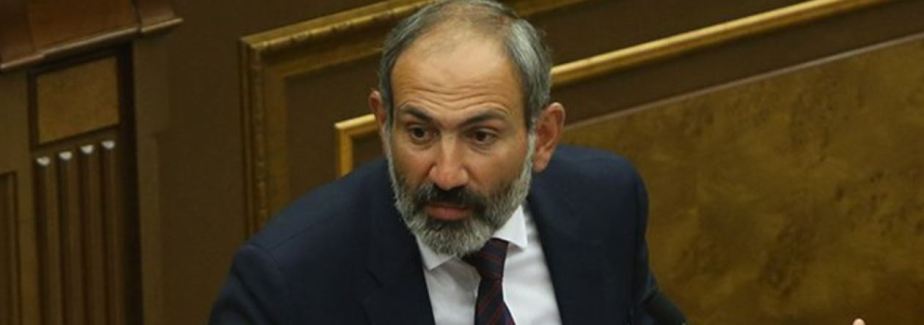
Armenian opposition leader Nikol Pashinyan has failed in his bid to become interim prime minister short of eight votes. The next step in legal procedure is the second Parliament sitting in a week time, expected to end in the similar stalemate, leading to dissolving of the institution, and snap elections. However, Republicanshopeto organise the process, continuing to cling to power against all odds.
After a day of debate in the Parliament, Pashinyan didn’t receive enough support despite being the only candidate for the post, while collecting 45 votes, eight short of the 53 he needed to have a majority in the 105-seat legislature.
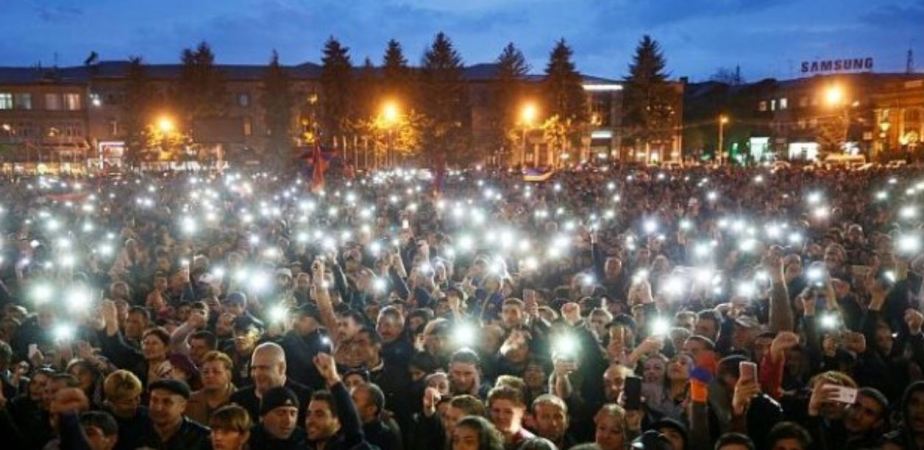
Nikol (our opposition leader) has lost a vote in parliament to become a prime minister, as republicans voted against him. Still our movement goes on to reach fair elections. The proof: Republic Square today after voting was over.#VelvetRevolution#Armenia#NikolPashinyanpic.twitter.com/fRJURJK4d7
In a very intense and sharp debate all parties had a consensus on keeping the matter as ‘interior policy problem’, without challenging any issues of foreign policy, and respecting international agreements and obligations, namely vis-à-vis Russia, the European Union, the Council of Europe and the other international organisations. They also agreed that the only way of the impasse lies though general elections.
However the ruling Republican party was not willing to abandon power without resistance, motivating their disagreement to endorse the candidacy of Pashinyanas interim PM in his lack of a governing experience, especially taking into consideration complexity of military-political situation with the frozen conflict in Nagorno-Karabakh. The denial allowed Pashinyan to remind to his opponents that Nelson Mandela became South African President after long stay in prison brought to power by will of people, which is a decisive force in a democratic process. In his exchange with MP he also presented his views on a broad spectrum of issues, including Nagorno-Karabakhconflict, relations with Russia, Georgia, and denied any personal contacts with Russian opposition politician Alexei Navalny and Georgia’sMikhail Saakashvili.
“Grilled” in a tough American style by MPs Pashinyan said he would increase defence budget, blaming that last 15 years government failed to level military might with Azerbaijan. He also vowed to create conditions for repatriating Armenians from abroad, including those who would bring investments, linking the process to a substantial reform of system of justice, liberating it from its ‘totalitarian mentality‘. He put to shame Republicans, blaming them temptation to curb the judiciary to serve their political interests, even degrading to keeping ‘prisoners of thought’. The substantial amount invested in judiciary was spent on exterior – buildings and judges outfits, but not on establishing of its independence, he added.
An issue of ethnic minorities took a special place in a debate: Pashinyan insisted they don’t have political freedoms, and are almost obliged to be loyal to a dominant political force, the practise he would certainly end, opening to them an opportunity to join political life, and to choose freely, including joining the opposition.
However it was the question of children and youth that fueled most anger from the Republicans who considered Pashinyan crossed red lines, inviting schoolchildren to join the protests. They received an answer that it is an experience, and education of civility, which would stay with them, and hopefully pass on to the future generations. The position forced one of the MPs to leave the audience in a protest for 10 minutes.
The rejection of Republicans to accept the will of people, endorsing the only candidate as an interim PM to organise snap elections, caused the continuation of protests.
#NikolPashinyan just called for a total labor and student strike throughout #Armenia. "Starting at 8:15 a.m., we will block the metro, the airport… Everything and anything that we can take over, we will."
— The Armenian Weekly (@ArmenianWeekly) May 1, 2018
Pashinyan called the citizens to go on with actions of civil disobedience, he also addressed transport workers asking to join the strike to ensure a total paralysis, forcing ruling party of Republicans to accept the democratic transition without further delay.
Today’s vote at noon in Armenian parliament electing Prime Minister is crucial for the future of Armenians, but also the Caucasus, and the Kremlin, gradually losing influence in the region. While oil-rich Azerbaijan manifests its affiliation with Turkey, and Georgia is open about is ambition to join NATO, Armenians, as the last ally of Russia in the regionabruptly, and unexpectedly are breaking away led by an opposition politician Nikol Pashinyan,who has never been hiding his pro-European stance.
Massive street manifestations are rather startling as a phenomenon for the ex-Soviet Republic, where leaders are not used to democratic accountability. At first glance the current turmoil came as a result of a political miscalculation of a former President Serzh Sargsyan, who ‘mechanically’ applied Kremlin scheme of moving from President’s to Prime Ministers chair to continue his unchallenged rule from a different office interior decorations.
The scenario was clearly not appreciated by Armenians, who considered the manipulation as a fraud: while reforming the country from a presidential to a parliamentary republic,Sargsyan ensured citizens, that he is not going to claim any more mandates. But later he broke his promise arranging for himself the Prime Minister’s chair, and fueling the indignation of Armenians, who streamed into the streets, manifesting their protest.
However there is more to indignation of Armenians than discontent with their former President attempt to impose himself in Vladimir Putin‘s style as a tsar or an eternal ruler. There is an entire rejection of outdated Russian authoritarian system, plagued with corruption and nepotism. If in the Soviet era the information flows were under strict control of the Communist party, nowadays it is increasingly difficult to govern neglecting ‘demos‘, who is intensely communicating with each other via smartphones.
In age of Digital revolution, when people can easily find an alternative information via internet, the role of Armenian diaspora in Europe and the USA is not the least factor to contribute public opinion disposition. People to people contacts with friends and family members, sharing experiences of life in democratic societies became an efficient engine of progress, shifting Armenians away from outdated authoritarian rule of heirs of Soviet nomenklatura.
In an hour and a half, thousands are expected to join #NikolPashinyan at Republic Square for a demonstration, before leading him to the National Assembly for a special session of parliament, during which he can be elected PM. (Photo: Sofia Manukyan/The Armenian Weekly, April 16) pic.twitter.com/7qSrF0pDKW
— The Armenian Weekly (@ArmenianWeekly) May 1, 2018
The experts would say that Russia can not be rapidly removed or replaced or abandoned due to its status in resolution of Nagorno-Karabakh frozen conflict, offering to Armenia military and political guarantees, through Collective Security Treaty Organization (CSTO). And they are right. Pashinyan has already confirmed that in case his party leads the country, no changes will be introduced to its membership in both CSTO (‘Tashkent Treaty’), or Eurasian Economic Union (EAEU).
However, now it is too early for Pashanyan to reveal his real aims.
Unlike Sargsyan, he did not fight in Nagorno-Karabakh (NK), and does not have any personal affiliation to the region claiming independence. Like many of Armenians of his generation he presumably wishes to move on with the resolution of the conflict, inclining to a compromise to end the stalemate, and isolation of his country in the Caucasus. Subsequently in coming years it will be increasingly difficult for Kremlin to keep the alliance with #Yerevan, in total absence of incentives, relying only on protracting the NK stalemate.
The entire situation with street protests in Armenia is a definite indicator of Russia‘s loss of influence in the region and an absolute decline. It is reminiscent of the other colored revolutions in ex-Soviet Republics, coming as unpleasant surprise to Kremlin inhabitants unable to understand the people’ rejection of their obsolete modus vivendi on the ruins of Soviet Empire in a perimeter protected by ballistic missiles. The very same missiles which did not save their predecessors from collapse.
A global chemical weapons watchdog OPCWsays it has deployed fact-finding teams to investigate an alleged chemical attack in Douma, a town in Syria’s Eastern Ghouta kept in hands of insurgents.
“The Prohibition of Chemical Weapons (OPCW) confirms that the Fact-Finding Mission (FFM) team is on its way to Syria and will start its work as of Saturday 14 April, 2018,” – the official confirmed.
The announcement came a few days after the alleged chemical attack which, according to NGOs on the ground, claimed the lives of more than 85 civilians and harmed thousand more.
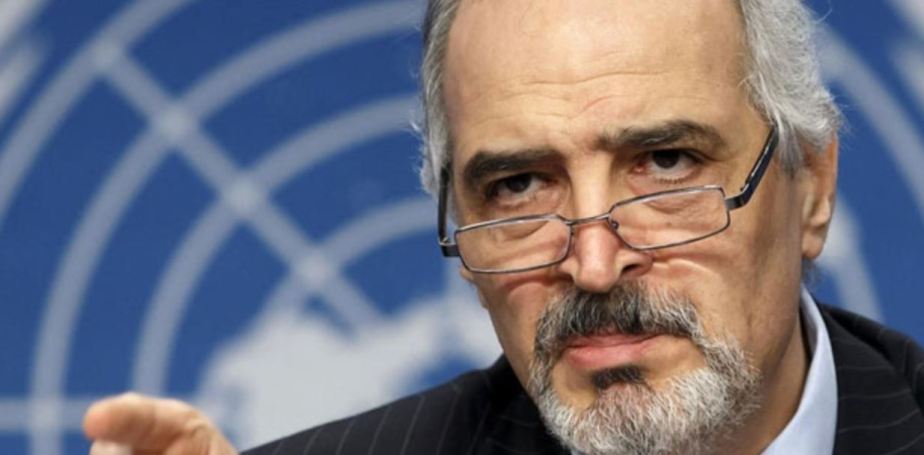
Syrian Permanent Representative to the United Nations Bashar Al-Jaafari confirmed Damascus’ readiness to provide unlimited assistance to the Organization for the Prohibition of Chemical Weapons (OPCW) mission coming to the city of Douma in order to investigate into an alleged chemical attack.
“My country Syria stresses its unlimited cooperation with the OPCW to fulfill the commitments stated in the convention of the prohibition of the development, production, stockpiling and use of chemical weapons,” Al-Jaafari said during an emergency meeting on Syria at the UN Security Council this week.
Once again Al-Jaafari reminded that Syrian government has no possession of any chemicals weapons including chlorine that was allegedly used over the weekend in Douma, he added.
“The Syrian Arabic Republic stresses once again it does not possess any chemical weapons of any type, including chlorine,”Al- Jaafarisaid, while addressing UN.
However the record of co-operation between OPCW and Syrian government is far from being flawless. Back in 2017 Syria rejected the conclusions of the report of the OPCW-UN Joint Investigative Mechanism on Khan Sheikhoun incident because it was not “neutral and not professional, and it built its false charges against Syria on the process of fabricating evidence and manipulating information” Al-Jaafariclaimed.
In a session (November 2017) of the Security Council on the report OPCW-UN Joint Mechanism, Al-Jaafariwondered how the Mechanism didn’t consider Khan Sheikhounincident as a political issue, saying “Since when is chemical terrorism considered a fully technical issue and not a political one?”
Al-Jaafarisaid that some states’ governments claim that they adhere to ethics and they consider themselves as custodians of the provisions of international law and the UN Charter while at the same time they adopt policies that violate these noble moral principles and they exploit them to implement their destructive interference agendas“.
“Some UN committees, such as the Joint Mechanism, which should be neutral, professional, and credible, have proven through their work that they are biased and politicized,” Al-Jaafari continued ‘(2017).
Ambassador cited a number of examples indicating to lack of neutrality and professionalism by the Joint Mechanism, and regretted that the report on the internal investigations on the incident of Khan Sheikhoun did not reveal the truth about the attack.
Syria-OPCW turbulent record casts doubts if the current mission findings would be accepted by Syrian government as objective. Subsequently it asises even more doubts if military action is an adequate solution: Saddam Husseinalso claimed he had no chemical weapons of mass destruction, however four star US Gen.Colin Powell had an alternative point of view…
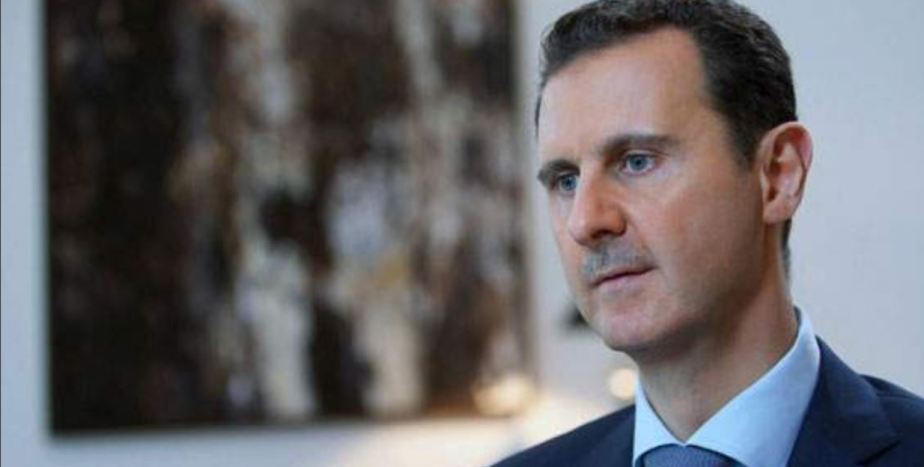
The question on alleged chemical weapons use in Syria leads the West to another dilemma: is Abu-Bakr al Baghdadi a viable alternative to Bashar Al-Assad?
Russian decision to postpone the appointment of a new ambassador to NATO announced today marks a new low in rapidly deteriorating relations between the East and the West, but even more it underlines Kremlin assertiveness, and claims of parity, turning the page of a period when one could label Russia as a “regional power“.
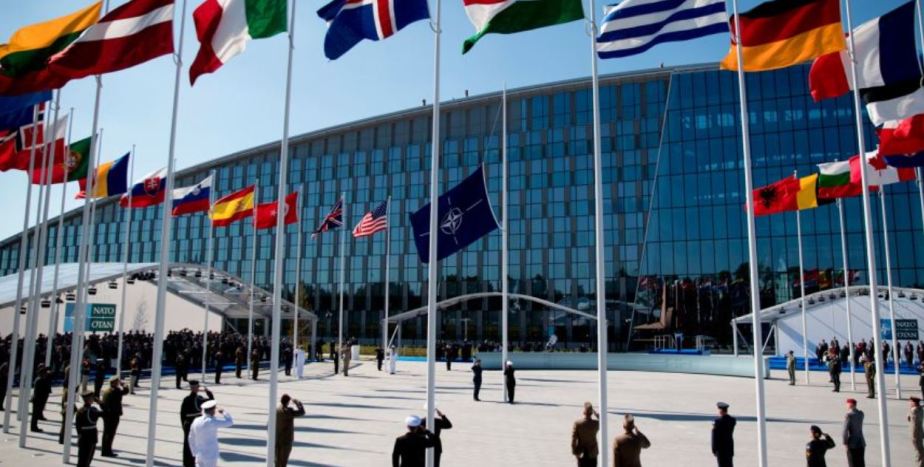
However while looking at new splendid NATOheadquarters in Brussels one wonders what it the purpose of the Alliance today? What’s the raison d’être? If it is the revival of the Cold War, what is its aim this time? The Communism has fallen, and there is no official state ideology in Russia to defeat. The authoritarianism, human rights and rule of law issues can hardly be targets of criticism, while NATO ally Turkey’s ‘Sultan’ Erdogan openly, and literally conducts purges against his political opponents, and wages a war against Kurds, describing it the ‘Olive Branch’ operation against Islamic State.
Meanwhile the radicals are not shy about showing faces in Afghanistan. After a decade of military campaign, NATO has withdrawn its troops in 2014 without any definite conclusion, but rapid and widespread rise of Taliban. Nowadays the Islamists are taking grounds, imposing unprecedented levels of violence, and there is hardly a week without news of terrorist attacks, and numerous victims among civilians. Unlike the time of the beginning of the US military missionJawbreaker (2001) against Osama Ben Laden in Tora Bora, the radicals are not hiding in the caves, they are claiming power, and constructing networks in real and virtual world, controlling two-thirds of Afghan territory. The airstrikes in defeating the radicals do not help much, but turn against the Kabul and the West the entire population of the provinces for ‘collateral damages’.
Hundreds of Dashte Arche residents started moving to #Kunduz city in protest over #Afghan airstrike. They say that if the gov't doesn't investigate these airstrikes, all residents of Dashte Arche will joint the #Taliban and announce their support from Islamic Emirate of Taliban. pic.twitter.com/cvdC8hMAvd
However even the rapid progress of Taliban does not motivate NATO to start a coordinated action with Moscow, in spite of the obvious interest of both sides to defeat terrorism, there are instead allegations of Russians ‘arming Taliban’.
“They say they wouldn’t mind if we gave them weapons, but they don’t need weapons. They say ‘give us money, we’re buying weapons from the stocks of the Afghan army and police’,” AmbassadorZamir Kabulov was quoted as saying by The Associated Press.
Ambassador said that in their talks with the Taliban, the group’s representatives said they buy all their weapons illegally from the Afghan government and police, and asked for financial support for that.
While the West argues with Russia, reducing diplomatic missions and expelling staff, the Taliban actively uses an opportunity to expand, and it will succeed until there is a comprehensive joint NATO-Russia strategy for counter-terrorism. However within the current political situation, the low tight in diplomatic relations does not provide with an effective response to the rapidly growing terrorist threat.
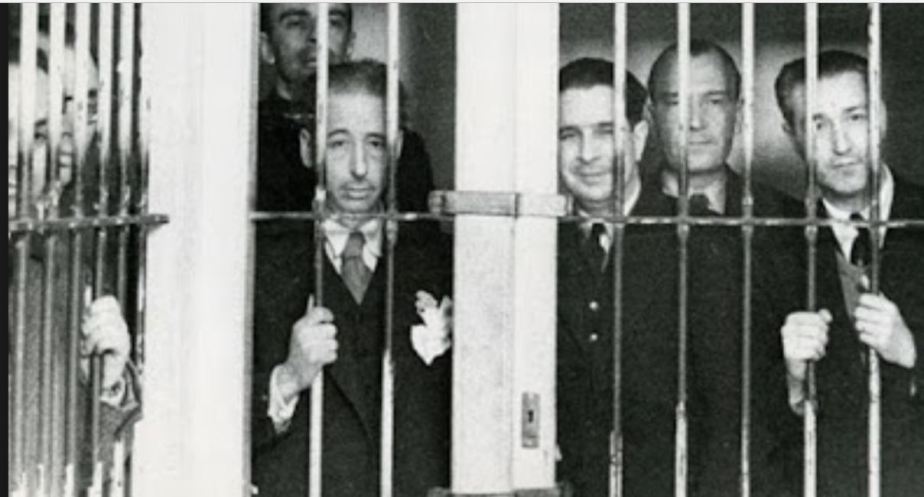
After the rigorous action of Germanpolice, stopping Catalan independence leader upon the EU arrest warrant, issued by Madrid, the major question arises: will German judges condemn Puigdemont to follow the fate of President Companys (1882-1940), who was detained by Gestapo in France and handed to Spain?
With arrest of @KRLS#EU becomes reminiscent of #WWII darkest pages of human history, when President Lluis Companys was deported from France to Spain to torture and death in hands of fascists.
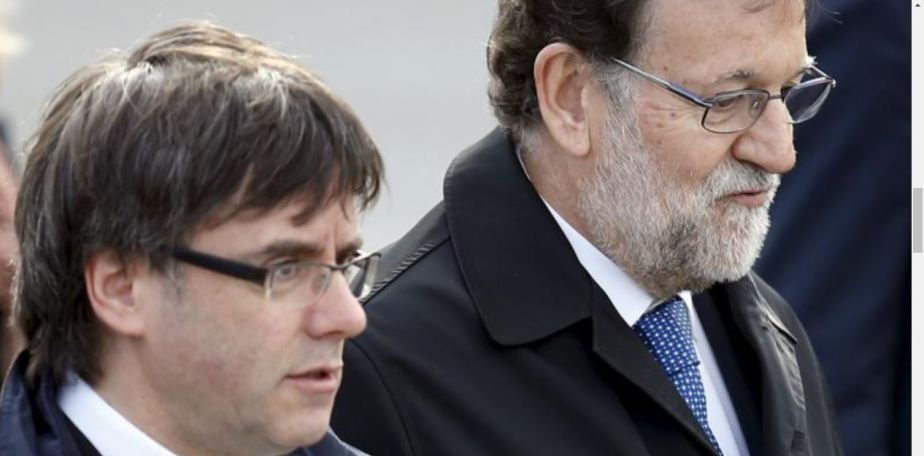
President of Catalonia Carles Puigdemont next to Prime Minister of Spain Mariano Rajoy
The President of Catalonia from 1934 and during the Spanish Civil War , Companyswas detained in France, where he lived in exile, and handed over by the Nazisecret police Gestapo in a formal procedure to Spanish state, where under the dictatorship of Gen.Francothe President Lluís Companys i Jover was tortured in prison, and executed by firing squad in 1940.
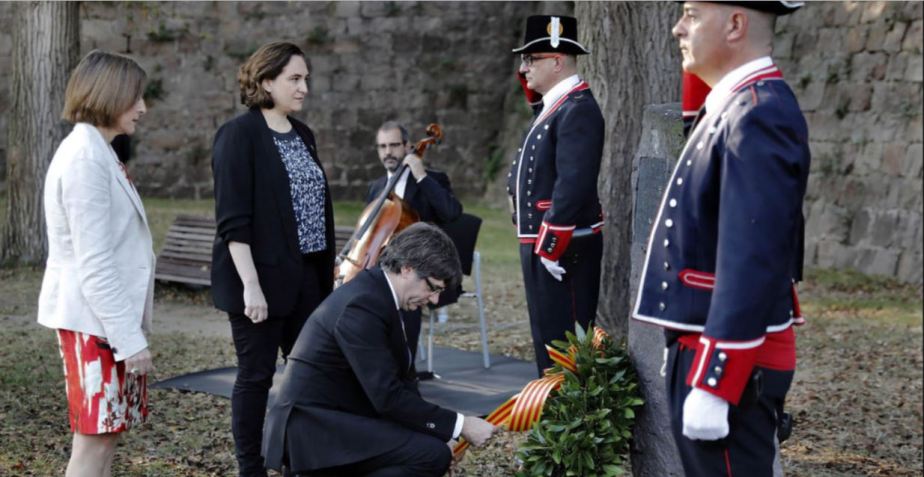
Carles Puigdemont at Lluís Companys i Jover tomb
The lawyer of former Presidentof self-proclaimed Catalan Republic said that highway police had stopped Puigdemont on Sunday (25.03.2018) after he crossed the border from Denmark to Germany. He also confirmed that Puigdemont had been on his way back to Belgium after his trip to Finnish Parliament. A spokesperson for Puigdemontmade the following statement:
“1. President Carles Puigdemont was retained in Germany when he was crossing the border from Denmark, on his way to Belgium from Finland. 2. The treatment has been correct in every moment. At the moment he is in a police station and his legal defense is already activated. 3. The president was going to Belgium to put himself, as always, at the disposal of the Belgian justice.”
3. El president es dirigia a Bèlgica per posar-se, com sempre, a disposició de la justícia belga.
Madrid assess the independence movement in Catalonia as a ‘plot’ against Spain’s legal and constitutional order. The charges carry up to 30 years in jail. Catalan politicians are accused of rebellion, contradicting the principle of self-determination of people enshrined in UN Charter.
The omitted factors in presumption of Moscow deliberate assault on a former KGB Colonel Sergei Skripal with Cold War mass-destruction chemical weapon Novichok reduce the blame of Prime Minister Theresa May to a highly subjective hypothesis.
Challenging the official conclusions, different episodes from Novichok sinister legend frame the official British version as endogenous, thus serving the political strategy of accusing Kremlin, but not pursuing the search of the truth, which goes begging…
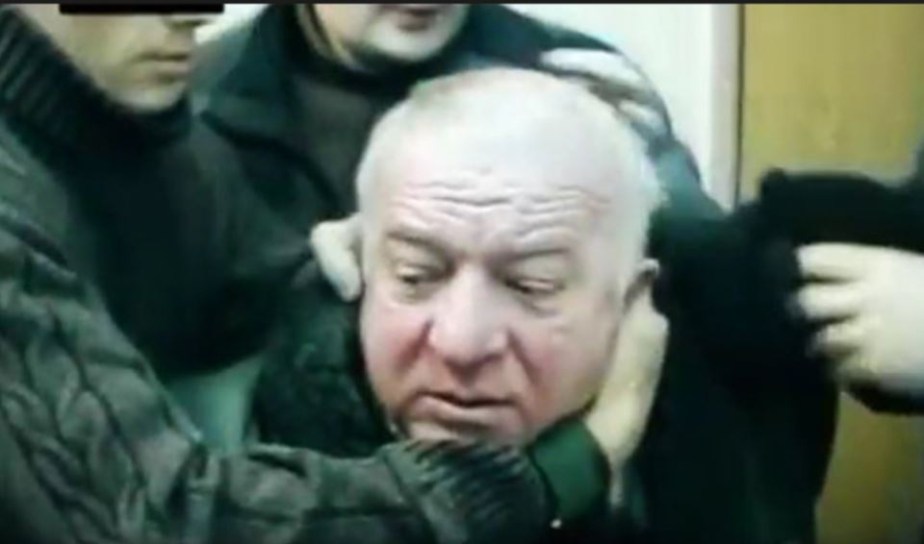
Arrest of Colonel Sergei Skripal in his apartment. Moscow, 2004.
The narrative of Novichok is deeply rooted in Cold War, when the USSR was flaunting its military might. The Communist party was so proud of a possession of such a powerful chemical weapon, that honoured both inventors of Novichok – Vladimir Ouglev (Владимир Углев) and Vil Mirzayanov (Виль Мирзаянов) with Lenin Prize (1991) for a break-thought in science. The special achievements of this new generation of nerve agents were it is unprecedented might – with one liter of liquid a population of multi-million city could be destroyed without a chance of recovery. The other characteristic was in method of application – in unremarkable composing elements, which represent no danger to humans if kept apart, will produce a lethal effect when assembled.
“Scripals are practically dead”, said the Vil Mirzayanov, an immigrant in the USA since collapse of the Soviet Empire. “And even if they survive, they will never recover”, he added. There is not antidote to Novichok.
Vil Mirzayanov (Виль Мирзаянов) one of inventors of USSR chemical weapon of mass destruction – Novichok. Facebook page.
Tragically Skirpals attacked with nerve agent were not the only victims who came to public attention. The sinister story of Russian banker Ivan Kivelidi (1995) assassinated by application of chemical weapon to a telephone in his office, shocked Russians. His secretary (30) and coroner (40) who performed autopsy on Kivelidi’s body also lost their lives – the poison was so powerful, that continued the devastation in derivatives.
After this sequence of suspicious deaths the investigation led to an employer of the scientific laboratory in the institute where the chemical was invented, and his wealthy client, who purchased the formula, – a businessman and former victim’s partner – Vladimir Khutsishvili. Both men arrested and sentenced. It is useful to mention that Kivelidi was not just “a” banker, but a chair of a club of bankers, with a pronounced interest in politics.
Russian banker Ivan Kivelidi assassinated in Moscow by a powerful nerve agent (1995)
However it was unclear then how the former partner managed to insert the nerve agent in the telephone membrane – one should have special costume, triple layer gloves and gas mask to survive the manipulation, but the accused Vladimir Khutsishvili entered the office of the victim in tenue de ville…
At present one of two Novichok inventors lives in the USA, Mirzaynov claims that he revealed the formula of the chemical in his book, and at collapse of the USSR warned Americans about this secret Russian weapon, that should have been included in the list of prohibited substances. Russian expert at United Nations Igor Nikulin confirmed that the formula of Novichok was known by the potential foes after collapse of the USSR.
At present Russians instantly deny the possession of Novichok – in 1997 Kremlin ratified the Convention of prohibition of chemical weapons, and subsequently President Putin received report of a complete destruction of the entire Soviet arsenal in Russian Federation. But Igor Nikulin added that Novichok samples could have been kept in any of the former Soviet Republics after collapse of the Communist system. In the USSR one of the leading production laboratories of chemical weapons was situated in Noukous, in Uzbekistan, outside Russian jurisdiction, where the government worked closely with the USA in destruction of its arsenal.
Considering these omitted in public debate factors – the leak of Novichok formula from laboratory in 90th, and migration of its inventor Vil Mirzayanov to the USA, the access to production and samples in Soviet Republics, which became independent states, – the circle of potential holders of the nerve agent formula is significantly larger than Lubyanka secret service office in Moscow.
Beyond mentioned above, there are too many inexplicable elements in the assassination of Sripals: why father and daughter collapsed at the same moment? If she was the one who brought poison in her luggage from Moscow, and was exposed to it first, logically there should have been a time difference in their collapse, but there was not. If the suitcase was contaminated with such a powerful nerve agent as British media reports claim, all workers along the air transport chain should have been dead by now, but fortunately there are no reports of any ‘suspicious deaths’ so far. But was it Novichok, or some other nerve agent?.. Only an independent international inquiry can establish the truth, until independent experts have an access to the information, the accusations would remains in the realm of hypothesis, serving political concept of demonizing Russians, and dragging the world backward into Cold War era, where Skirpal belongs.
Recruited by MI6 while serving as a military attaché of Russian Embassy in Spain, Skripal sold 20 000 pages of secret documents, receiving more than £100 000 in 10 years before his arrest in 2004, and subsequent sentence for 13 years.
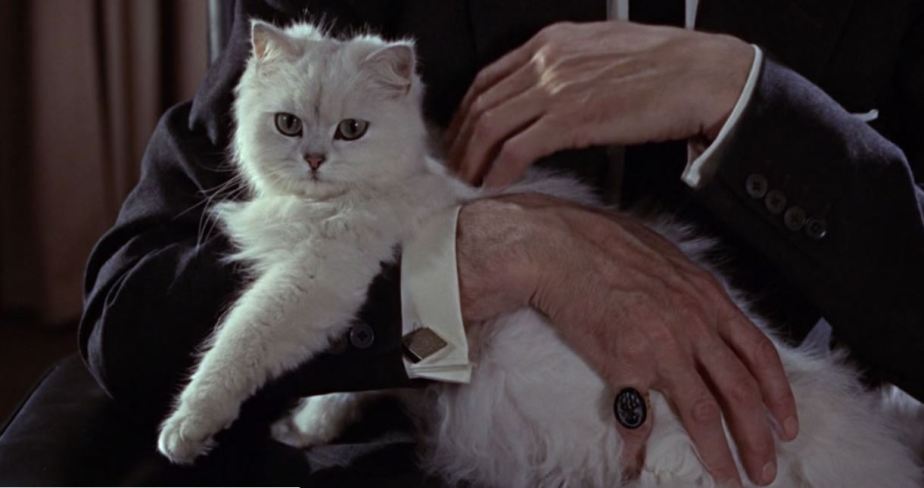
The former double agent was pardoned five years later in a swap operation between Moscow and Washington. Freed, the disgraced Colonel installed in a small English town of Salisbury, not far from his recruiter, where he led low profile lifestyle, until the spectacular assassination, worth masterpieces of Bondiana, when Skripal’s name stormed the headlines of media worldwide, and ascended to UN debate.
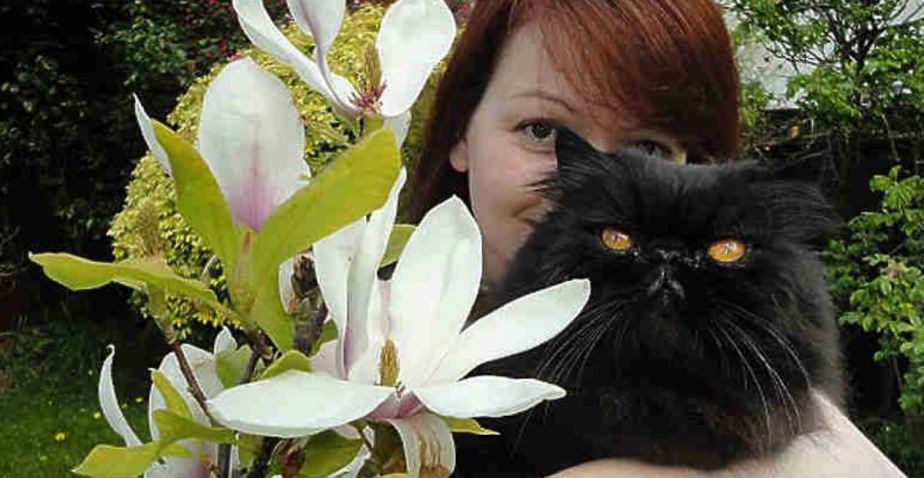
Skripal’ black cat vanished. Neighbours in Salisbury suspect it died from nerve agent. (Image from social networks).