Stockholm hosts Bilderberg Club

Brussels 13.06.2025 The 125 high-profile participants attending this year’s Bilderberg Meeting, which began on Thursday 13 June in Stockholm and runs until Sunday June 15.
The exclusive assembly brings together political leaders, business executives, and academics from both sides of the Atlantic for closed-door discussions under strict confidentiality rules.

https://platform.twitter.com/widgets.js

The Bilderberg Meeting guest list reflects the forum’s enduring role as a nexus of elite transatlantic influence, with participants drawn from the highest tiers of politics, business, academia, media, and technology.

Roughly one-third of the guests hold or have recently held top-level government roles, including sitting prime ministers–such as Finland’s Alexander Stubb and Greece’s Kyriakos Mitsotakis–Cabinet ministers, European commissioners, and high-ranking military officers from NATO and the US armed forces.

The presence of multiple European commissioners and current or former finance ministers underlines the group’s strong interest in economic governance and geopolitical stability.

Alongside them, major players from global business, such as the CEOs of Microsoft, Spotify, Citigroup, Deutsche Bank, TotalEnergies, and Pfizer, signal the continued interweaving of political decision-making and private sector interests.

The tech sector is particularly well represented, with figures such as Demis Hassabis of Google DeepMind, Mustafa Suleyman of Microsoft AI, and investor Peter Thiel indicating a growing focus on AI and defence innovation.

https://platform.twitter.com/widgets.js
Several prominent journalists and editors, including from The Economist, The New York Times and Bloomberg, suggest media remains a valued lens through which these elites interpret global trends, though under the Chatham House Rule, their participation is private rather than performative.

The inclusion of figures like Applebaum and Stacey Abrams adds transatlantic political-cultural depth, while the involvement of Polish figures such as Sikorski and entrepreneur Rafał Brzoska reflects the region’s increasing visibility in Euro-Atlantic strategic discourse.

The only Russian invited is Alexander Gabuev, the head of the Carnegie Russia Eurasia Center at the Carnegie Endowment for International Peace, an institution banned by the Kremlin in 2022.

https://platform.twitter.com/widgets.js

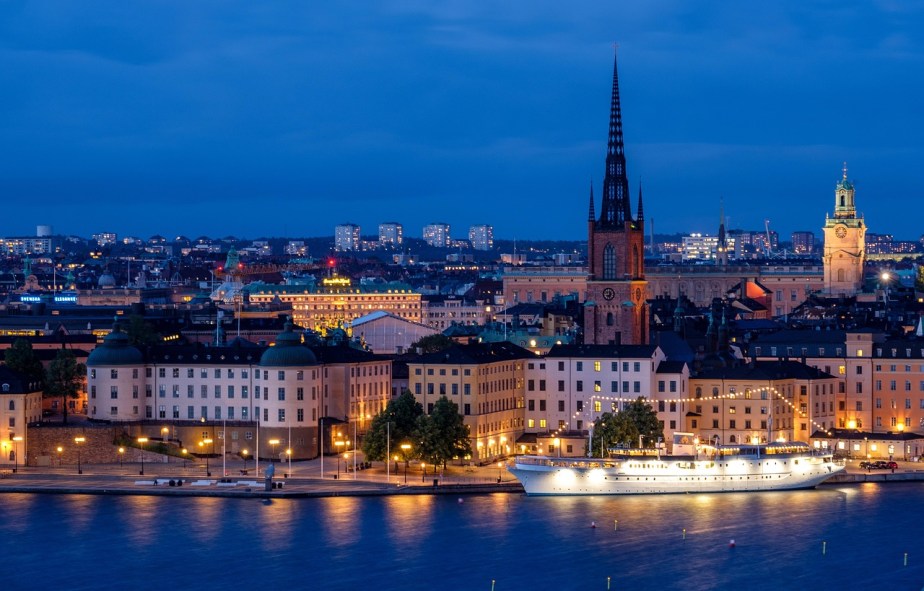
The meeting is taking place at Stockholm’s prestigious Grand Hôtel, which has been cordoned off by police since Tuesday in anticipation of protests.

The hotel, owned by the influential Wallenberg family, has blocked reservations for the duration of the event, echoing similar security steps taken ahead of Barack Obama’s 2013 visit to Sweden.

This year’s agenda includes topics such as transatlantic relations, the future of Ukraine, the US and European economies, the Middle East, and the so-called “authoritarian axis” of Russia, China, Iran and North Korea.

Discussions will also explore defence innovation, artificial intelligence and national security, energy geopolitics, and global migration trends.

Founded in 1954, the Bilderberg Meeting aims to promote informal dialogue between Europe and North America.

Around two-thirds of participants come from Europe, with the rest from North America. Roughly a quarter are active in politics and government, while the majority represent business, media, academia, and other sectors.

All discussions are held under the Chatham House Rule, which allows participants to use the information shared but prohibits identifying speakers or their affiliations.
This year agenda includes:

12 June – 15 June 2025 Stockholm, Sweden
Transatlantic Relationship
Ukraine
US Economy
Europe
Middle East
Authoritarian Axis
Defence Innovation and Resilience
AI, Deterrence and National Security
Proliferation
Geopolitics of Energy and Critical Minerals
Depopulation and Migration

The private format, there are no press briefings, resolutions, or official statements, has long fuelled speculation and conspiracy theories about the group’s influence.

However, organizers maintain that the event provides a rare space for candid, off-the-record exchange among global decision-makers, and the guest list is publicly available on the group’s website.

Stockholm, 12 – 15 June participants list:

Abrams, Stacey (USA), CEO, Sage Works Production
Albuquerque, Maria Luís (INT),
EU Commissioner Financial Services and the Savings and Investments Union

Alcázar Benjumea, Diego del (ESP), CEO, IE University
Alverà, Marco (ITA), Co-Founder, zhero.net; CEO TES
Andersson, Magdalena (SWE), Leader, Social Democratic Party
Applebaum, Anne (USA), Staff Writer, The Atlantic
Attal, Gabriel (FRA), Former Prime Minister
Auchincloss, Murray (CAN), CEO, BP plc
Baker, James H. (USA), Former Director, Office of Net Assessment, Department of Defense
Barbizet, Patricia (FRA), Chair and CEO, Temaris & Associés SAS
Barroso, José Manuel (PRT), Chair International Advisors, Goldman Sachs International
Baudson, Valérie (FRA), CEO, Amundi SA
Beleza, Leonor (PRT), President, Champalimaud Foundation
Birol, Fatih (INT), Executive Director, International Energy Agency
Botín, Ana (ESP), Group Executive Chair, Banco Santander SA
Bourla, Albert (USA), Chair and CEO, Pfizer Inc.
Brende, Børge (NOR), President, World Economic Forum
Brunner, Magnus (INT), European Commissioner for Internal Affairs and Migration
Brzoska, Rafal (POL), CEO, InPost SA
Busch, Ebba (SWE), Minister for Energy, Business and Industry
Caine, Patrice (FRA), Chair & CEO, Thales Group
Calviño, Nadia (INT), President, European Investment Bank
Castries, Henri de (FRA), President, Institut Montaigne
Chambers, Jack (IRL), Minister for Public Expenditure, Infrastructure, Reform and Digitalisation
Champagne, François-Philippe (CAN), Minister of Finance and National Revenue
Clark, Jack (USA), Co-Founder & Head of Policy, Anthropic PBC
Crawford, Kate (USA), Professor and Senior Principal Researcher, USC and Microsoft Research
Donahue, Christopher (USA), Commander, US Army Europe and Africa
Donohoe, Paschal (INT), President, Eurogroup; Minister of Finance
Döpfner, Mathias (DEU), Chair and CEO, Axel Springer SE
Eberstadt, Nicholas N. (USA), Henry Wendt Scholar in Political Economy, AEI
Ek, Daniel (SWE), CEO, Spotify SA
Ekholm, Börje (SWE), CEO, Ericsson Group
Eriksen, Øyvind (NOR), President and CEO, Aker ASA
Feltri, Stefano (ITA), Journalist
Fentener van Vlissingen, Annemiek (NLD), Chair, SHV Holdings NV
Fraser, Jane (USA), CEO, Citigroup
Freeland, Chrystia (CAN), Minister of Transport and Internal Trade
Friedman, Thomas L. (USA), Foreign Affairs Columnist, The New York Times
Gabuev, Alexander (INT), Director, Carnegie Russia Eurasia Center
Hammer, Kristina (AUT), President, Salzburg Festival
Harrington, Kevin (USA), Senior Director for Strategic Planning, NSC
Hassabis, Demis (GBR), Co-Founder and CEO, Google DeepMind
Hedegaard, Connie (DNK), Chair, KR Foundation
Heinrichs, Rebeccah (USA), Senior Fellow, Hudson Institute
Heraty, Anne (IRL), Chair, Sherry Fitzgerald ana IBEC
Herlin, Jussi (FIN), Vice Chair, KONE Corporation
Hernández de Cos, Pablo (ESP), General Manager Elect, Bank for International Settlements
Hobson, Mellody (USA), Co-CEO and President, Ariel Investments LLC
Hoekstra, Wopke (INT), European Commissioner for Climate, Net Zero and Clean Growth
Hunt, Jeremy (GBR), Member of Parliament
Isla, Pablo (ESP), Vice-Chair, Nestlé SA
Johansson, Micael (SWE), President and CEO, Saab AB
Jonsson, Conni (SWE), Founder and Chair, EQT Group
Karp, Alex (USA), CEO, Palantir Technologies Inc.
Klöckner, Julia (DEU), President Bundestag
Kostrzewa, Wojciech (POL), President, Polish Business Roundtable
Kotkin, Stephen (USA), Senior Fellow, Hoover Institution, Stanford University
Kratsios, Michael (USA), Director, White House Office of Science and Technology Policy
Kravis, Henry R. (USA), Co-Founder and Co-Executive Chair, Kohlberg Kravis Roberts & Co.
Kudelski, André (CHE), Chair and CEO, Kudelski Group SA
Kuleba, Dmytro (UKR), Adjunct Professor, Sciences Po
Leeuwen, Geoffrey van (INT), Director Private Office of the Secretary General, NATO
Lemierre, Jean (FRA), Chair, BNP Paribas
Letta, Enrico (ITA), Dean, IE School of Politics, Economics & Global Affairs
Leysen, Thomas (BEL), Chair, dsm-firmenich AG
Lighthizer, Robert (USA), Chair, Center for American Trade
Liikanen, Erkki (FIN), Chair, IFRS Foundation Trustees
Lundstedt, Martin (SWE), CEO, Volvo Group
Marin, Sanna (FIN), Strategic Counsellor, Tony Blair Institute for Global Change
McGrath, Michael (INT), European Commissioner for Democracy, Justice and the Rule of Law
Mensch, Arthur (FRA), Co-Founder and CEO, Mistral AI
Micklethwait, John (USA), Editor-in-Chief, Bloomberg LP
Minton Beddoes, Zanny (GBR), Editor-in-Chief, The Economist
Mitsotakis, Kyriakos (GRC), Prime Minister
Monti, Mario (ITA), Senator for life
Nadella, Satya (USA), CEO, Microsoft Corporation

Netherlands, H.M. the King of the (NLD),

O’Leary, Michael (IRL), Group CEO, Ryanair Group
Ollongren, Kajsa (NLD), Fellow, Chatham House; Senior Fellow, GLOBSEC
Özyeğin, Murat (TUR), Chair, Fiba Group
Papalexopoulos, Dimitri (GRC), Chair, TITAN S.A.
Paparo, Samuel (USA), Commander, US Indo-Pacific Command
Philippe, Édouard (FRA), Mayor, Le Havre
Pouyanné, Patrick (FRA), Chair and CEO, TotalEnergies SE
Prokopenko, Alexandra (INT), Fellow, Carnegie Russia Eurasia Center
Rachman, Gideon (GBR), Chief Foreign Affairs Commentator, Financial Times
Rappard, Rolly van (NLD), Co-Founder and Chair, CVC Capital Partners
Reiche, Katherina (DEU), Minister of Economic Affairs and Energy
Ringstad Vartdal, Birgitte (NOR), CEO, Statkraft AS
Roche, Nicolas (FRA), Secretary General, General Secretariat for Defence and National Security
Rutte, Mark (INT), Secretary General, NATO
Salvi, Diogo (PRT), Co-Founder and CEO, TIMWE
Sawers, John (GBR), Executive Chair, Newbridge Advisory Ltd.
Scherf, Gundbert (DEU), Co-Founder and Co-CEO, Helsing GmbH
Schimpf, Brian (USA), Co-Founder & CEO, Anduril Industries
Schmidt, Eric E. (USA), Executive Chair and CEO, Relativity Space Inc
Schmidt, Wolfgang (DEU), Former Federal Minister for Special Tasks, Head of the Chancellery
Šefčovič, Maroš (INT), European Commissioner Trade and Economic Security;
Interinstitutional Relations and Transparency

Sewing, Christian (DEU), CEO, Deutsche Bank AG
Sikorski, Radoslaw (POL), Minister of Foreign Affairs
Şimşek, Mehmet (TUR), Minister of Finance
Smith, Jason (USA), Member of Congress
Stoltenberg, Jens (NOR), Minister of Finance
Streeting, Wes (GBR), Secretary of State for Health and Social Care
Stubb, Alexander (FIN), President of the Republic
Suleyman, Mustafa (USA), CEO, Microsoft AI
Summers, Lawrence (USA), Charles W. Eliot University Professor, Harvard University
Thiel, Peter (USA), President, Thiel Capital LLC
Toulemon, Laurent (FRA), Senior Researcher, INED
Uggla, Robert (DNK), Chair, A.P. Møller-Maersk A/S
Valentini, Valentino (ITA), Deputy Minister of Enterprise and Made in Italy
Vassy, Luis (FRA), Director, Sciences Po
Verhoeven, Karel (BEL), Editor-in-Chief, De Standaard
Wallenberg, Jacob (SWE), Chair, Investor AB
Wallenberg, Marcus (SWE), Chair, Skandinaviska Enskilda Banken AB
Weder di Mauro, Beatrice (CHE), President, Centre for Economic Policy Research
Weel, David van (NLD), Minister of Justice and Security
Wilmès, Sophie (INT), Vice-President, European Parliament
Zakaria, Fareed (USA), Host, Fareed Zakaria GPS
Zeiler, Gerhard (AUT), President, Warner Bros. Discovery International

Putin: was it an assassination attempt?

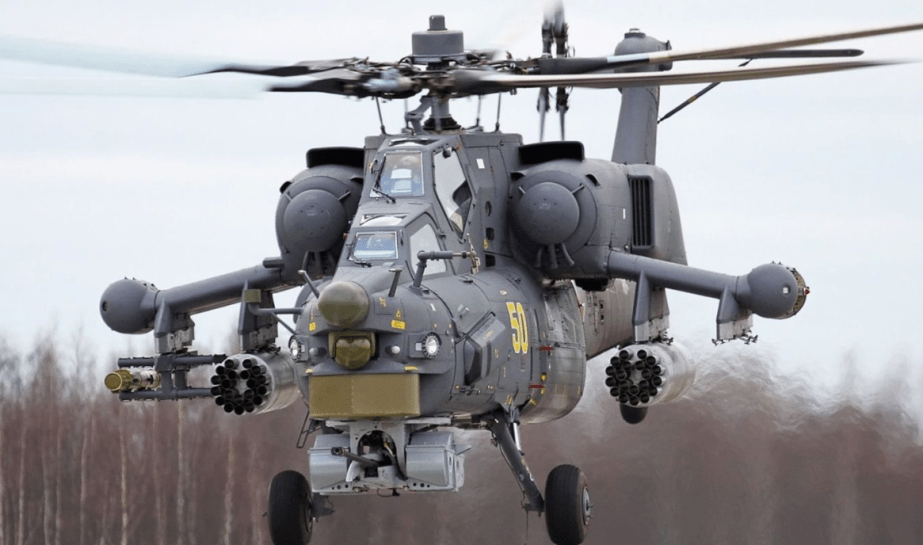
Brussels 26.05.2025 A Russian military commander of its air defense division claimed that President Vladimir Putin’s helicopter was “at the epicentre” of a Ukrainian drone attack on May 20, while travelling in Kursk oblast.

https://platform.twitter.com/widgets.js

“We were simultaneously engaged in an air defense battle and ensuring airspace security for the president’s helicopter flight. The helicopter was effectively at the epicenter of the response to the massive drone attack” Yury Dashkin said.

The claim, made five days after the alleged incident in Kursk Oblast, has not been independently verified. Dashkin provided no evidence to support the claim, and Russian authorities have not released further details.

https://platform.twitter.com/widgets.js

Putin’s visit to Kursk marked his first public trip to the region since Russian forces reclaimed most of the territory from Ukrainian control which was established there in August last year.

The incident raises question of the respect of the international law by Ukraine while attacking military target – the helicopter – in Kursk oblast, which is undisputable Russian territory. In international law, self-defense is the right of a state to use force in response to an armed attack. This right is recognized under Article 51 of the UN Charter and customary international law, which permits the use of force in self-defense when an armed attack occurs, according to the ICRC online casebook.
However the response must be necessary and proportional to the attack.

EU Media: Ursula’s Colonial remnants

Brussels 30.03.2025 During the hearing on the European Commission self-glorification “propaganda” the MEP Elisabeth DIERINGER ( @E_Dieringer_MEP ) said that she is concerned with the accumulating of accreditation refusals for independent journalists, who are not allowed to enter the institutions press-events.
The problem manifested itself during the second term of Ursula von der Leyen in a way it became visible to broader public. Less than modest presence of journalists during press-conferences can be perceived by a TV spectator as a lack of interest, however if one takes interest in the EU Commission accreditation rules an alternative vision of causes of this feeble presence occurs. It is also useful to remind that accreditation is a form of public control of the institutions performance.

https://platform.twitter.com/widgets.js

To receive the annual accreditation to the EU institutions: the press-centers of the European Commission, European Council, and the European Parliament, a journalist should be compliant with three criteria: become a resident of Belgium, regularly cover the EU affairs, and… pass the financial screening.

The financial screening is described as follows: “journalism must be the main source of income”, meaning a candidate should submit the totality of financial documents for last two years to an anonyms Committee composed by an unknown criteria, who will consider the entirety of the income, and pronounce their judgement. Within these rules, imposed by Ursula von der Leyen Commission two elements are especially striking, the request to submit the financial documents without any frame to guarantee proper handling of the private financial information; and anonymity of the “judges”.
@MCC_BrusselsThese Commission financial screening demands are at odds with the rights of media companies to keep the information about the fees to freelances confidential. Paradoxically Ursula von der Leyen has been ultra defensive regarding the grants of the European Commission to media companies, keeping the information as top secret, although thanks to the MCC ( @MCC_Brussels) report signed by Thomas Fazi, it became clear that tens, and hundreds of millions of public funds are distributed in undisclosed procedures to ensure positive coverage of the EU institution’s activities.

On the flipside is the submitting of the entirety of financial documents to Ursula von der Leyen Commission anonyms Committee without any obligation from their behalf to guarantee a minimum discretion. On contrary to tax authorities the Commission’s Committee doesn’t establish any regulatory frame in treating this external financial information.

The other aspect of the unusual among organizations request for financial screening of the income of the journalist is the basis of this initiative is rooted in Belgium Colonial history. In 1963 King Albert II signed a law, which was officially was designed to protect the status of journalist in the society, but in reality this piece of legislation to transform journalism into a price prohibitive profession, unattainable for Africans, who broke away from Empire. Nowadays in Belgium the situation is unchanged, and preserving the legislation-remnant of the other era.
However the European Commission as an international organization is not obliged to follow the suit, and replicated the rules based on Colonial era frustrations, and inhibitions.

https://commission.europa.eu/about/contact/press-services/media-accreditation_en

Nevertheless the most egregious element is not the totalitarian impulse of Ursula von der Leyen Commission to inspect pockets of journalists as such, but establishing the correlation between earning, ana professional status, which allows those journalists who receive generous grants from the Commission to be in the first ranks in this shrouded obscure scheme. Commission distributes grants, and than grants accreditation to financially successful recipients of their own generosity. What a travesty! Ultimus hypocrita omnis…
.

Zelenskyy frantic stunt in White House

Brussels 01.03.2025 Volodimir Zelenskyy should have come with an interpreter to the White House. His English is too rudimentary for a head of state. Unfortunately for Ukrainians he has no adequate assessment of his own skills, and capacities, which is not conducive to public good.

https://platform.twitter.com/widgets.js

Moreover Zelenskyy doesn’t not think, behave, and act as a President of a country. He looked like some obsessed WOKE ACTIVIST who broke through gates of White House, and was removed by agents to secure work environment.
The necessity to organize elections to return to democracy has never been so urgent in Ukraine as with this failed presidency. Elected due to promise of peace to his compatriots, Zelenskyy quickly mutated to “President of War” in his own words. His outfit, which causes raised brows, stands for incapacity to accept the grim realities: it is impossible to win this war, he is peddling with a remarkable insistence, omitting costs both in human lives, and resources channeled into production of lethal weapons.
It is time for elections in Ukraine to liberate the Ukrainian people from a showman, who can’t stop performing at world stage, confusing virtual reality, created by cameras with the grim realities of endless war his is so exited about. The frustrations outbursts of Zelenskyy in the White House revealed a comedian enjoying a spotlight at cost of a graveyards of young man, an aggressive Narcissist, playing a dream role of his life.
However Zelenskyy’ Harlequin mask have fallen during the White House stunt, revealing his tremendous deficiency of skills, and culture. The stunt which was a self-inflicted catastrophe. Nihilation of reputation.
The Ukrainian people deserve better. The need for elections of a President of Ukraine has become urgent.
The REAL FEEL: farewell to Harlequin !

EU: Ursula – Colonial syndrome

Brussels 26.02.2025 The second mandate of Ursula von der Leyen has been marked by a tight grip on press, covering the European Commission endeavors. The new rules for media accreditation are replicating the Belgium 1963 law defining the status of journalist during the crisis of the downfall of the Colonialism. Signed by the King Albert II in December 1963, the law remains a relic from a period of a further collapse of the Empire. The Belgian Congo, today DR Congo, ruled from 1908 to 1960, and Ruanda-Urundi, modern Rwanda and Burundi from 1922 to 1962, – became independent.

Obviously, after the proclamation of independence of the African colonies the desire of dominance of the Metropole didn’t extinguish, and the battle for the wealth went on, preventing newly liberated people from entering the political process in form of a debate on pages of the newspapers. The law signed by King Albert II formally defending a status of a professional journalist in Belgium in reality was transforming journalism in a cost-prohibitive occupation.

Nowadays in Belgium the law is still valid, and the status of a professional journalist, and the relevant press card are obtained after the revenue scrutiny by the Committee, which is composed upon the direct orders of the King.
The title of a “professional journalist” is awarded by an official Approval Commission, composed equally of professional journalists and media directors. The members of the commission are appointed by royal decree” reads the announcement on the site of the Belgium Association of the Professional Journalists. https://www.ajp.be/la-loi-relative-au-titre-de-journaliste-professionnel/

Clearly, all of them the loyalists of the Crown. However, only loyalism is not suffice. As the Association of the professional journalists announces, the candidate for the statues has to present to the incognito Committee the integrity of the revenues, manifesting that the journalism is the major source of income.

A candidate should provide among the other documents a copy of the employment CONTRACT, or for freelancers: a proof of RENUMERATION – invoices, tax forms, etc. for the two-year period.

Taking into consideration mentioned above a contributor has no chance to obtain a status of a “professional journalist”, because it is not a number of articles, or success among readership, or other qualities, as for example a quotation index that counts. It is all about revenue, the capacity to sell the info product, resulting in a handsome income to impress the incognito loyalists in the Committee.
Doesn’t look too independent, neither modern in the Age of the Fourth Industrial Revolution, however this system is still effective in filtering the authors who are at odds with the mass-media system unable to sell. The professional journalist in Belgium is the one who is able to successfully merchandise his info product, which makes money the only measurement of a professional success, and opens doors for a professional affiliation.

More than half-a-century later Belgium 1963 law, protecting professional journalist status, or in reality filtering all the descent, narrating the uncomfortable truth which is not always suitable for sale, got second life thanks to Ursula von der Leyen. One can notice to what extend she takes the re-cycling seriously!

Skillfully von der Leyen replaces the Monarch in this new Commission accreditation rules, and the role of the former Colonies subjects is offered  to the EU journalists, who should proof that they are successful in merchandising their information products. The situation is even more ambivalent because the Commission refuses to issue a list of mass-media enjoying Ursula von der Leyen generosity, manifesting itself in lavish grants. As it was revealed in the MCC report by Thomas Fazi some of the recipients of the Commission “support” as the EuroNews TV Channel through years received hundreds millions omitting to inform the audiences about it.

https://platform.twitter.com/widgets.js
Exactly as in Belgium 1963 law the Committee, attributing the accreditation, is formed by Ursula von der Leyen Commission. The composition of the Committee, the names of journalists, or media they are representing is unknown. Incognito. Do the incognito members of the selection Committee enjoy grants from the Commission? Unknown. What are the rules for handling the presented financial documents? Unknown. 

However to obtain the European Commission accreditation  “Journalism must be their main source of income”, and for that purpose all the integrity of the revenues of a candidate should be presented for the scrutiny by unknown individuals, probably sponsored by the very Commission to buy their loyalty. 
Patrons and clients. 

https://platform.twitter.com/widgets.js

Emily O’Reilly, a former journalist, who served till recent as the EU Ombudsman said that her ambition was to “support the EU institutions in becoming more effective, transparent and accountable”, however by the end of her two terms she acknowledged with sadness in a podcast that she was “never at ease” with the “powerful consiglieri” from the Commission president’s cabinet. “Consiglieri” is a specific term used to describe a position in mafia structure in Sicily or Calabria, clearly used in this context intentionally.

Metsola: Enlargement must remain a top priority

Brussels 27.06.2024 In her traditional address to the European leaders at the EUCO Summit the president of the European Parliament Roberta Metsola has drawn attention to the following:
“Competitiveness, security & defence, and social equality are clear electoral messages for the EU’s programme”, said EP President Roberta Metsola to the European Council.

Addressing the European Council today in Brussels, President of the European Parliament Roberta Metsola highlighted the following topics:

44ad0a41-c720-44e4-b729-4b02080ce032

Ukraine
“The European Parliament welcomes the new security cooperation pact between Ukraine and the European Union.

The presence of President Zelenskyy here to mark the occasion is of important symbolical value and bears proof to our mutual commitment to our common security and shared destiny.”

Enlargement
“The step taken to begin formal EU membership talks with Ukraine and Moldova this month is significant and important. The European Parliament has been a strong advocate for the launch of EU accession negotiations.

Getting our Union ready for enlargement must remain a top priority in our next institutional cycle.”

Delivering on messages from the elections
“We have now a much clearer view of what people expect us to deliver on over the next five years. The challenge is now to turn these electoral messages into a political programme for the European Union. One that is serious, deliverable and implementable.”

Security and defence
“People have called for the robust defence of our values and for security to remain a top priority. Our support for Ukraine must continue.

It also means doing more to increase Europe’s ability to respond to any type of crisis and strategic autonomy. This requires a pressing need to develop a real common security and defence policy.

We have already worked together to ramp-up our capabilities, decrease duplications and reduce the fragmentation of the defence industries. Establishing a strong defence industrial base is the next step.”

Competitiveness and the Single Market
“European competitiveness is critical from an economic and a political perspective – we need to reinforce Europe’s place on the global stage.“

“We need to re-double our efforts for open, balanced, fair trade that is based on international rules, and broaden our network of trade agreements with partners by concluding and ratifying the ones we have in the pipeline.”

“Strengthening competitiveness will also require deepening the Single Market. Only by increasing productivity, speeding-up investments in own industrial capabilities, can we reduce strategic dependencies while simultaneously supporting and sustaining economic growth. The Single Market is our greatest economic driver.”

Financing growth
“If we are to grow our economies and pay back our debts, we have to get serious about finding innovative ways to fuel both public and private investment.”

“The increase of the ceilings in a mid-term revision of the EU’s current long-term budget was an important step in the right direction. As we prepare for the next MFF, we need to ensure a budget that is fit-for-purpose.”

“We need to complete our Banking and Capital Markets Unions, if we are serious about mobilising private capital to invest in our priorities, and to incentivise our companies to stay in Europe. This is how we sustain economic growth and create new quality jobs and futures with dignity.”

Leaving nobody behind
“When it comes to making progress on the green and digital transitions, no one should be left behind. Implementation here is key. That must be our focus now.”

“Whilst we are extremely proud of our world leading targets, burdens, bureaucracy and red-tape risk holding back progress. Each regulation may well be justified, but when taken together we need to be careful to ensure that this does not become too much. Our proposals must work for families. For industry. For farmers.”

“That is how we can bring Europe a little bit closer to how our people want it to be. How we can reflect on the message that the electorate sent us. How we will deliver on a stronger, safer, fairer and better Europe for all Europeans.”

Election of the President of the European Commission
“The European Parliament remains firmly behind the Lead Candidate process and we confirm that the European People’s Party is once again the largest political group in the European Parliament.

We will respect the due process. After the European Council communicates to us the name, we will invite the person to meet with Group leaders on Tuesday (2 July). The aim of this is to determine the candidate able to form the necessary qualified majority in Parliament to become the next Commission President. A candidate with a political programme that is able to capture the main electoral messages and reflect the views of the majority of the House.

The European Parliament stands ready to move the smooth process forward for electing a new Commission President without delay as soon as the European Council submits its candidate and for the hearings of the Commissioners after that.”

Ukraine: accession and hurdles

Brussels 25.06.2024 The EU today held the first Intergovernmental Conference at ministerial level to open accession negotiations with Ukraine.

This follows the decision by the European Council on 14-15 December 2023 to open accession negotiations with Ukraine, and the approval by the Council of the Negotiating Framework for the negotiations with Ukraine on 21 June, in accordance with the revised enlargement methodology.

The EU delegation was led by Hadja Lahbib, Minister of Foreign and European Affairs of Belgium, accompanied by Commissioner for Neighbourhood and Enlargement Olivér Várhelyi. The delegation of Ukraine was led by Deputy Prime Minister Olha Stefanishyna.

The EU reiterated its resolute condemnation of Russia’s war of aggression against Ukraine and stated its readiness to continue to support Ukraine and its people against Russia’s ongoing war for as long as it takes and as intensely as needed.

The EU underlined that Ukraine is already a close partner of the EU.  Its Association Agreement with the EU, which also includes the far-reaching Deep and Comprehensive Free Trade Area, entered into force in 2017 and has been provisionally applied since 2014. It is the basis for extensive cooperation between the EU and Ukraine in a broad range of areas. The EU and Ukraine are closely aligned on foreign and security policy, and the EU encourages Ukraine to continue its positive trend towards full alignment with the EU Common Foreign and Security Policy.

The EU has now invited the Commission to continue to assess the state of preparedness of Ukraine for opening negotiations in specific areas and identify the issues that will most likely come up in the negotiations, starting with the fundamentals’ cluster which, in accordance with the Negotiating Framework, will be opened first.

As a future member state, Ukraine will be expected to continue to adhere to the values listed in Article 2 of the Treaty on European Union, namely the respect for human dignity, freedom, democracy, equality, the rule of law and respect for human rights, including the rights of persons belonging to minorities.

At present there are a number of questions regarding the human rights, namely the
The Treaty on European Union sets out the conditions (Article 49) and principles (Article 6(1)) to which any country wishing to become a member of the European Union (EU) must conform.

Certain criteria must be met for accession. These criteria known as the Copenhagen criteria were established by the Copenhagen European Council in 1993 and strengthened by the Madrid European Council in 1995.

They are:

    • stability of institutions guaranteeing democracy, the rule of law, human rights and respect for and protection of minorities;
    • a functioning market economy and the ability to cope with competitive pressure and market forces within the EU;
    • the ability to take on the obligations of membership, including the capacity to effectively implement the rules, standards and policies that make up the body of EU law (the ‘ acquis ’), and adherence to the aims of political, economic and monetary union.

Ukraine faces unprecedented challenges affecting gender equality and the enjoyment of equal rights and opportunites by women, particularly those facing multiple forms of discrimination. Structural discrimination of women persists in both the public and private spheres to varying extents in the country. The roots can be found in patriarchal attitudes and stereotypes, as well as deeply entrenched systemic gaps.

Clearly at present the human rights in Ukraine are not respected as declared by the EU Charter of Fundamental Rights which guarantees the EU citizens’ rights. The Charter lays down the fundamental rights that are binding upon EU institutions and bodies. It also applies to national governments when they are implementing EU law.

Ukraine faces unprecedented challenges affecting gender equality and the enjoyment of equal rights and opportunites by women, particularly those facing multiple forms of discrimination. Structural discrimination of women persists in both the public and private spheres to varying extents in the country. The roots can be found in patriarchal attitudes and stereotypes, as well as deeply entrenched systemic gaps.

Russia IL-76 crash under scrutiny

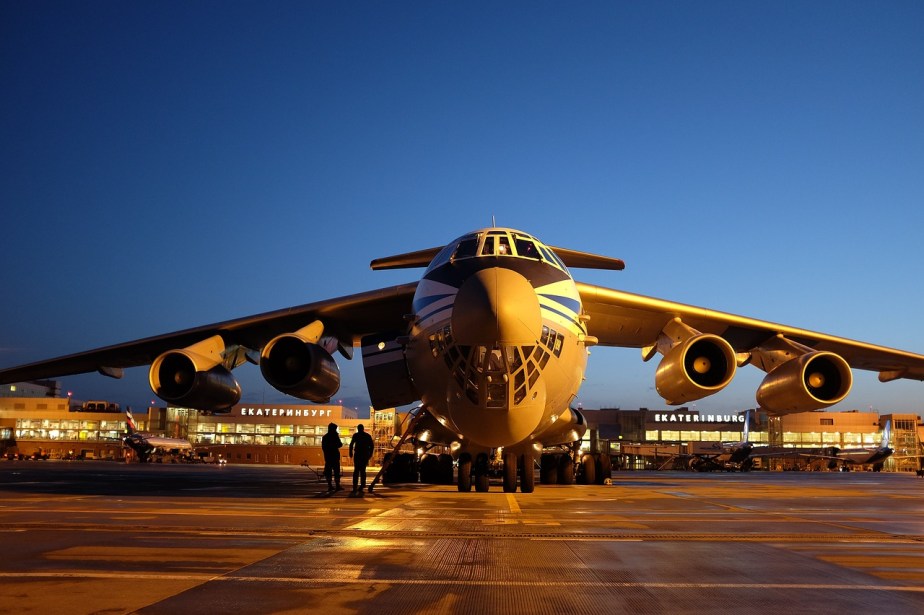
Brussels 26.01.2024 In case the use of an U.S. or a German surface-to-air missile systems for the deadly attack on Russia’s Il-76 plane (pictured) is confirmed, Western countries will become complicit in the crime committed by the Kiev government, Russian First Deputy Permanent Representative to the UN Dmitry Polyansky said.

“According to preliminary investigation, Ukrainian armed forces carried out this terrorist attack using an anti-aircraft missile system. The missiles were launched from the village of Liptsy in Kharkov region,” the Russian diplomat said. “These could have been either American Patriot or German-made Iris-T missiles. If confirmed, this will make the Western suppliers of this ammo complicit in this crime. Just as they are complicit in shelling of peaceful neighborhoods of Russian cities that Ukrainian armed forces carry out with Western weapons.”

On January 24, Ukrainian forces shot down a Russian Il-76 military transport aircraft that was carrying Ukrainian prisoners of war (POW) for exchange. All 74 people onboard, including 65 Ukrainians perished in the incident. The Russian Defense Ministry called the catastrophe a terrorist act and said Kiev authorities knew about the transportation POWs for an exchange that was planned at the Kolotilovka checkpoint.
In his video address late on Wednesday, President Zelensky said it was “obvious that the Russians are playing with the lives of Ukrainian prisoners, with the feelings of their relatives and with the emotions of our society”.

The Ukrainian leader, who has cancelled a planned regional trip linked to his birthday on Thursday, stressed that “all clear facts must be established”.

Kremlin spokesman Dmitry Peskov condemned the downing of the plane as a “monstrous act”, according to Russian news agencies. He told reporters that if Mr Zelensky meant an international inquiry into “the criminal actions of the Kyiv regime”, it was definitely needed.

EU establishes Russia Crime Centre

Today, the International Centre for the Prosecution of the Crime of Aggression against Ukraine (ICPA) started its operations in the Hague, hosted by the European Union Agency for Criminal Justice Cooperation (Eurojust). The newly established Centre will be key to investigate Russia’s crime of aggression against Ukraine and facilitate case building for future trials. It will provide a structure to support and enhance ongoing and future investigations into the crime of aggression and contribute to the exchange and analysis of evidence gathered since the start of the Russian aggression.

The Centre will begin operating as of today. Eurojust will work closely with the Commission and the members of the Joint Investigation Team to ensure that the Centre can provide the best possible support to national authorities.

The International Criminal Court (ICC) is competent to prosecute the gravest international crimes (genocide, crimes against humanity and war crimes and the crime of aggression). However, at the moment, the ICC cannot prosecute Russia for the crime of aggression, since Russia is not a State party to the ICC. To close this gap, in November 2022 the Commission presented options to the Member States to guarantee that there is full accountability for all crimes committed in Ukraine. These options explored the possibility of establishing an accountability mechanism to allow the prosecution of the crime of aggression.

While discussions continue, in particular within the Core Group on the establishment of the Special Tribunal, it is crucial to ensure that the relevant evidence is properly secured, and that investigations can begin within the existing legal frameworks.

The evidence collected by the Centre could be used before other jurisdictions, including national and international courts, including a possible tribunal for the crime of aggression or the International Criminal Court (ICC) for crimes within its jurisdiction.

Prosecutors from the members of the Joint Investigation Centre will be relocated to Eurojust, where they can work together on a daily basis. The prosecutors will be supported by legal and analytical experts from Eurojust. Evidence identified can be stored securely in Eurojust’s Core International Crimes Evidence Database, established following the changes to the Eurojust Regulation based on the Commission’s proposal to amend Eurojust’s regulation.

Russia reacts upon UK depleted uranium shells

Brussels 23.03.2023 Radiation effects of depleted uranium shells, in case used on the territory of Ukraine, will be impossible to control, Russian Foreign Ministry spokeswoman Maria Zakharova said at news briefing on Thursday, March 23.

“Now the impact of used weapons and shells will be impossible to control either for neighboring states or for the states of the region. This simply cannot be done,” the diplomat explained, while commenting on London’s intention to provide shells with depleted uranium to Kiev.

“It is possible to participate in the exchange of intelligence, it is possible to ask Washington to control the Kiev regime to ensure it should not carry out strikes at the territory of Poland or shoot down aircraft of some other countries, it is possible to do many other things, but no one can give instructions to radiation, it’s impossible to negotiate with it, there is no way of controlling it.”

Zakharova recalled the Chernobyl and Fukushima nuclear power plant disasters.

“Both tragedies still have dire consequences. Their scale is different, but the lesson is the same: it’s impossible to come to terms with radiation,” Zakharova concluded.