Borrell regrets Ukraine NATO membership promise

Strasbourg 13.03.2022 Anna van Densky The West made a mistake by promising Ukraine NATO membership, the EU top diplomat Josep Borrell said in an interview with LCI TV channel, France.

“There are moments in which we could have reacted better. For example, we proposed things that we could not guarantee, in particular Ukraine’s accession to NATO. This was never realised. I think it was a mistake to make promises that we could not fulfil,” the diplomat explained.

The head of European diplomacy also admitted that the West had made mistakes when building relations with Russia. “Thus, we lost the opportunity to bring Russia closer to the West in order to deter it,” Borrell continued.

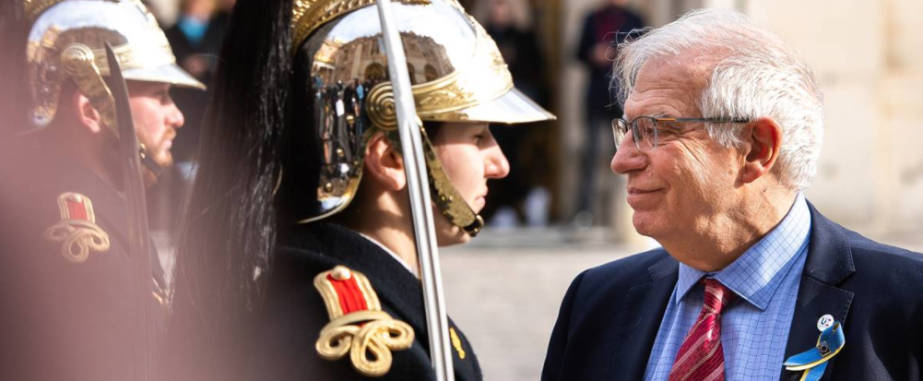
Interviewed in Versailles just before the opening of the Summit of the 27, Josep Borrell said he believed that “Russia is bombarding indiscriminately”. According to him, “Mariupol is undoubtedly a war crime, but it’s not just that hospital. Russia is incapable of taking the cities, the Ukrainian resistance is very strong, so it is doing as it did in Syria or Chechnya, it bombs. The Russian army is an artillery army. So it bombs, it bombs, indiscriminately, sometimes a hospital, sometimes a pavement of a house.”

On February 24 President Vladimir Putin announced a special Russian military operation in response to a request for help from the heads of the Donbass self-proclaimed Republics. The head of state has pointed out that Moscow had no plans of occupying Ukrainian territories, but aims to “de-militarise and de-nazify” the neighbour. Later he added that one of Moscow’s key demands was that Ukraine remain neutral, and rejected plans to join NATO. As Director of the Russian Foreign Intelligence Service Sergey Naryshkin had earlier confirmed, it is critical for Russia because it is the “minimum territorial barrier” the country needs to preserve the existing security system.

Russia and Ukraine top diplomats meet

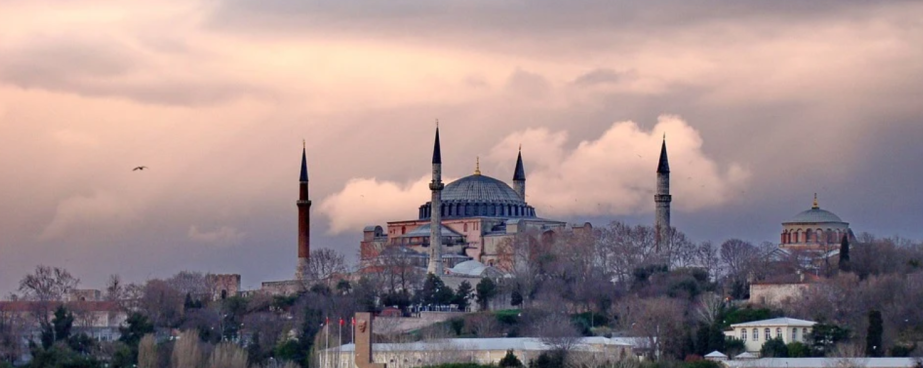
Strasbourg 09.03.2022 Kiev has confirmed that a meeting between Ukrainian Foreign Minister Dmitry Kuleba and his Russian counterpart Sergey Lavrov will take place on the sidelines of a diplomatic forum in Turkey’s Antalya on Thursday, March 10, so Moscow expects that the meeting will indeed be held, Russian Foreign Ministry Spokeswoman Maria Zakharova said to Russian journalists.(Image: Istanbul, Turkey).

“We believe that since Ukraine has confirmed it, the meeting will indeed take place, particularly because it was initiated by Turkey, the host of the event on the sidelines of which the meeting is expected to be held,” she pointed out.

Zakharova emphasized that Russia was making preparations for the talks but there was no need to rush things. She added that Lavrov’s flight to Antalya was scheduled for Wednesday March 9.

Lavrov and Kuleba are expected to meet on the sidelines of a diplomatic forum in Antalya on March 10, the meeting will also involve Turkish Foreign Minister Mevlut Cavusoglu.

On February 24, Russian President Vladimir Putin announced a “special military operation” based on a request from the heads of the Donbass self-proclaimed Republics. The Russian leader stressed that Moscow had no plans to occupy Ukrainian territories and the goal of the operation was to “de-militarise and de-nazify” the Ukranian state.

Putin: Ukraine is Bolshevik project

Brussels 21.02.2022 Russian President Vladimir Putin on February 21, during a televised address, announced the recognition of the independence of the Donetsk and Luhansk People’s Republics (DPR and LPR). The head of state signed decrees on the recognition of the DPR and LPR, as well as agreements on mutual assistance with the republics.

Key quotes from the President’s address:
– Modern Ukraine was created entirely by Bolshevik Russia. The Bolsheviks literally squeezed Donbass into Ukraine;

– Do you want decommunisation? Well, that suits us. We are ready to show you the real de-communisation;

– Ukraine has never had a true statehood of its own;

– It is impossible to recall the terrible tragedy of Odessa without a shudder, the criminals were not punished, but we know them by name. We will do our best to find and punish them;

– Ukraine’s entry into NATO and the deployment of alliance facilities is a foregone conclusion;

– Statements about Ukraine’s creation of its own nuclear weapons are not empty bravado. Ukraine still has Soviet nuclear technology;

– In NATO documents, our country is officially and directly explicitly declared a threat to Euro-Atlantic security;

We will not compromise our sovereignty. Russia has every right to ensure its security.

– I consider it necessary to make a long overdue decision – to immediately recognise the independence and sovereignty of the DNR and LNR.

Recall what preceded this truly historic decision. On Monday, on February 21, a meeting of the Security Council of the Russian Federation was held in an expanded format.

– We have gathered with you to discuss the situation that is developing today in the Donbass, – Vladimir Putin began his opening speech in the Catherine’s Hall of the Kremlin, the very one where the meeting on Crimea was held 8 years ago. – The purpose of our meeting today is to listen to colleagues and determine our next steps in this direction. I mean both the appeal of the leaders of the Donetsk and Lugansk People’s Republics to Russia with a request to recognise sovereignty, and the State Duma’s resolution on the same subject calling on the head of state to recognise the independence and sovereignty of the DPR and LPR.

After that, Putin noticed that he had not previously discussed this topic with anyone and began to ask those present for their opinion on the topic.

– It is quite obvious that neither Ukraine nor the West needs Donbass today. They need to freeze the conflict, – said Dmitry Kozak, deputy head of the presidential administration.

– Tell me and my colleagues: will the Kiev authorities implement the Minsk agreements or not? Putin interrupted him.

“In the usual course of events, they won’t,” Kozak specified. – Never will be! It is obvious that they do not want to return Donbass to Ukraine.

And he spoke in favour of recognising the independence of the republics. Foreign Minister Lavrov also supported him.

– Modern Ukraine was created entirely by Bolshevik Russia. The Bolsheviks literally squeezed Donbass into Ukraine;

– Do you want de-communisation? Well, that suits us. We are ready to show you the real decommunization

– Ukraine has never had a true statehood of its own.

– It is impossible to recall the terrible tragedy of Odessa without a shudder, the criminals were not punished, but we know them by name. We will do our best to find and punish them.

Ukraine’s entry into NATO and the deployment of alliance facilities is a foregone conclusion.

– Statements about Ukraine’s creation of its own nuclear weapons are not empty bravado. Ukraine still has Soviet nuclear technology.

– In NATO documents, our country is officially and directly explicitly declared a threat to Euro-Atlantic security

We will not compromise our sovereignty. Russia has every right to ensure its security.

– I consider it necessary to make a long overdue decision – to immediately recognise the independence and sovereignty of the DNR and LNR.
Russia-Japan: blaming U.S. for failures

Brussels 08.02.2022 Washington seeks to keep Japan’s unfounded territorial claims against Russia afloat in order to prevent the two countries from full-scale cooperation, Russian Foreign Ministry Spokesperson Maria Zakharova said in a TV interview. Japan claims the four southernmost islands, including two of the three largest ones – Iturup and Kunashir, – as an integral part of its territory along with Shikotan and the Habomai islets, which has led to the ongoing Kuril Islands dispute between Japan and Russia.

While commenting on U.S. Ambassador to Tokyo Rahm Emanuel’s statement that Washington supported Tokyo in the issue of the Northern Territories (southern Kuril Island) and recognised Japan’s sovereignty over them, the diplomat pointed out that “over the past decades, the United States has transformed Japan from an independent state into a dependent one.”

The spokesperson reminded that Moscow had repeatedly called for abandoning the “attempts to artificially pump up hysteria” and tensions around the territorial issue, while the Japanese leadership kept neglecting “the need to build normal and full-fledged economic, financial and cultural ties” with Russia. “Every time, we highlighted the artificial nature of this issue and the related tensions,” the Russian Foreign Ministry spokeswoman underlined.

“It is being fueled by a certain part of Japan’s political establishment. And who’s behind it? The U.S. ambassador has stepped forward and made it clear,” she added. Zakharova explained that Washington benefited from keeping the issue afloat because “this artificial problem prevents Japan from engaging in full-scale, mutually beneficial and long-term cooperation with Russia.”

The Russian diplomat recommended that the US envoy to Japan “should spend more time telling the Japanese public about the United States’ crimes.” “Particularly, about how the United States used nuclear weapons to attack the country’s civilians in Hiroshima and Nagasaki. Unfortunately, the Japanese public knows little about the U.S. role in those tragic events,” Maria Zakharova concluded.

Russia-Ukraine: Olaf Scholz ready to react

Brussels 07.02.2022 Anna van Densky Germany and NATO allies are ready to take “all necessary steps” if Russia “invades” Ukraine, German Chancellor Olaf Scholz said in an interview published by the Washington Post on Sunday, February 6, when asked if the German government could halt the process to open the Nord Stream2 pipeline.

“We are ready to take together with our allies all necessary steps,” Scholz clarified. “We have a very clear agreement with the United States government on gas transit and energy sovereignty in Europe.”

“We already also agreed that we will support Ukraine,” Scholz went on to say. “Also, it is absolutely clear that in a situation like this all options are on the table.”

“I will not get into any specifics, but our answer will be united and decisive,” the chancellor added.

“We are working very hard with our allies in NATO and in the European Union to make clear what we can do in the specific situation,” Scholz said. “But we are also clear about the necessary strategic ambiguity.”

“This is also critical for giving this strong message that it will be very costly — so they cannot go to a computer and count whether it will be too expensive or not,” he said. “It would be too high a price to intervene in Ukraine.”

“On the other hand, that we are working very hard to use all the channels of talks that we have now: talks between the United States and Russia, the NATO-Russia Council, the OSCE and obviously it’s also the Normandy format,” the chancellor said.

The interview came out ahead of a visit by Scholz to the US where he is set to meet with US President Joe Biden on February 7.

There has been a various statements in the West and Kiev lately that Russia could invade Ukraine soon. Kremlin Spokesman Dmitry Peskov said they were unsubstantiated escalation and that Russia doesn’t threaten anyone. At the same time, he didn’t rule out provocations to corroborate these Western statements and warned that the use of force to resolve the crisis in southeastern Ukraine will have serious consequences.

U.S. response to Russia on security guarantees

Brussels 26.01.2022 The United States Ambassador John Sullivan on Wednesday, January 26, handed over Washington’s written responses to a sweeping set of security demands that Kremlin has made of the West, Russia’s Foreign Ministry said.

The head of the US diplomatic mission delivered a written response from the US administration to the draft bilateral agreement on security guarantees that was earlier proposed by the Russian side,” the Foreign affaires Ministry said in a statement.

The meeting was requested by the US ambassador, who spent slightly more than a half hour inside the Ministry building.

Russian Foreign Minister Sergey Lavrov told the State Duma earlier on Wednesday that Russia won’t publish the US response on security guarantees, if asked, but will disclose the general meaning of the replies.

Macron: “demanding dialogue” with Russia

Strasbourg 19.01.2022 An initiative on European security will be proposed to Russia
“We will ensure that Europe makes its voice heard, unique and strong”, also argued Emmanuel Macron. (Image: illustration)

“These next few weeks should lead us to bring to fruition a European proposal building a new order of European security and stability”, continued the French president.
“We must build it between Europeans, then share it with our allies within the framework of NATO, and then offer it for negotiation with Russia,” he explained.

Emmanuel Macron also called for “seeking a political solution in Ukraine, which remains the source of current tensions”.

“Europe must finally build a collective security order on our continent. The security of our continent requires a strategic rearmament of our Europe as a power of peace and balance, in particular in the dialogue with Russia. This dialogue, I have been defending it for several years. It is not an option because both our history and our geography are stubborn, both for ourselves and for Russia, for the security in our continent which is indivisible. We need this dialogue. We Europeans must collectively set our own demands and put ourselves in a position to enforce them. A frank, demanding dialogue in the face of destabilization, interference and manipulation” Macron said.

Dialogue with Russia, “I have been defending it for several years, it is not an option”, hammered the French president on Wednesday before the European Parliament, in full tension between Russia and the West.

In Strasbourg, Emmanuel Macron gave the traditional speech marking the launch of the rotating presidency of the European Union, which France will exercise until June 30. Before the MEPs, and less than three months before the French presidential election, the Head of State expressed a vision deeply attached to this continent, a long symbol of an “intangible peace” but now subject to “doubts”. To “rebuild our Europe”, the tenant of the Élysée has drawn up the major projects to come and established three promises: democracy, progress and peace.

Lavrov reflects upon Russia-NATO relations

Brussels 27.12.2021 Anna van Densky There is no way that Russia joins NATO, since the West does not want to have rivals comparable in influence at the global stage, Foreign Minister Sergey Lavrov told the Solovyov Live YouTube channel on Monday,December 27. (Image: illustration).

Reflecting the question about the possibility of joining NATO on certain conditions, on an equal footing, the diplomat said that he did not assume such an opportunity for Russian Federation.

“I do not consider this possible, as the whole process does not revolve around NATO or the EU, it is about the West’s unwillingness to have any competitors in the international arena that are in the slightest degree comparable in terms of influence,” Lavrov explained.

According to the Minister, such attitude of the Western states derives their “hysteria over the rise of China”, which agreed to the rule introduced in the global economy and “outplayed the West on its own field”.

Russia construction ambitions in Greece

Brussels 11.12.2021 In a very unusual format the spokesperson of Kremlin gave an interview to a Greek TV Channel, acting like a diplomat.
Dmitry Peskov said Russia is interested in implementing megaprojects in Greece much like it does in Turkey, while talking to an English-language interview with the Greek Antenna TV channel. The conversation took place before the December 8 meeting between Russian President Vladimir Putin and Greek Prime Minister Kyriakos Mitsotakis in Sochi. The full interview was issued on Saturday, December 11.

The Kremlin official said that Russia is interested in expanding economic cooperation with Greece. “We have lots and lots of Russian companies who are ready to invest in Greek economy. We are interested in implementing huge, mega projects like we do it in Turkey. Of course, it is not that every project is allowed [in Greece], for example, we are building a nuclear station in Akkuyu in Turkey, but, unfortunately, nuclear energy is forbidden in Greece,” he explained.

Peskov said that Russia holds the decisive role of Turkish President Recep Tayyip Erdogan in high esteem. “He is the type of man that is being appreciated by President Putin because when President Erdogan said something he meant it and he did it. This is important.”

As for the differences between Russia and Turkey on a number of issues, the Kremlin official said that “it’s impossible not to have them,” pointing out that in Syria, the two countries used to have quite tense moments where their interests were colliding in several spheres. “But every time the two presidents found it possible to come together, to sit for five, six, seven hours and not going in front of the press without reaching a solution. Every time they managed to do it,” the spokesman noted.

In response to a question as to whom Russia would support in case of an armed incident in the Aegean Sea, the Kremlin official said that “the last thing we would like to see in the Aegean or in the Mediterranean Sea is us being closer to a conflict. We were very worried in August of 2020 when there was a collision between the ships of two countries,” stressing that it is desirable to avoid any repetition of similar incidents in the future. According to him, Russia would like to support the resolution of issues between Greece and Turkey in the Aegean Sea. “We would like to support a solution,” he said, noting that Russia would like to see both sides proceed taking the reality into account “because every solution is a two-way street, with the reciprocal wish to reach the solution.”

In response to a question whether Greece may expect Russia’s full support against Turkey’s actions in the Aegean and Mediterranean Seas, the Kremlin official said that Turkey insisted that the provisions of the UN Convention on the Law of the Sea and Greece’s demands to establish the internationally recognized width of the continental shelf of inhabited islands in the Aegean Sea as well as the scale of the exclusive economic zone would definitely harm Turkey’s national interests and deprive it of its right to use the natural resources of the region. “So, we call for both sides to be calm and to be reasonable in solving the problem,” Putin’s press secretary concluded.

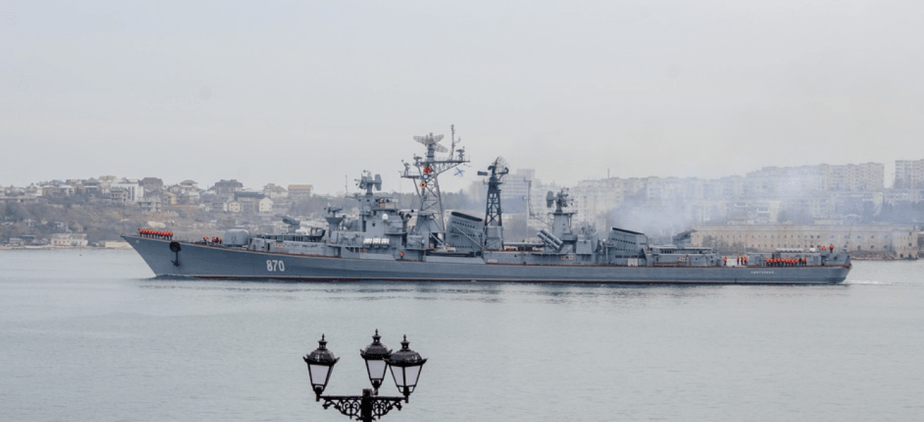
Russia response to NATO Black Sea drills

Brussels 13.11.2021 President Vladimir Putin finds it inappropriate to carry out its drills in the Black Sea in response to NATO exercises there, there is no need to escalate the situation, he explained it in an interview with Pavel Zarubin.

“I should say that our Defense Ministry also came up with a proposal to hold its own unplanned exercises in this water area, but I believe that this is inappropriate and there is no need to further escalate the situation there. Therefore, the Russian Defense Ministry does not go further than escorting aircraft and ships,” Putin said.

The President drew attention to the fact that now the United States and its NATO allies are now conducting unplanned exercises in the Black Sea.

Moreover, “not only they formed a fairly powerful naval group there, but they also use aviation, including strategic aviation, in the course of these exercises,” Putin noted.