Kissinger: U.S. on brink of war

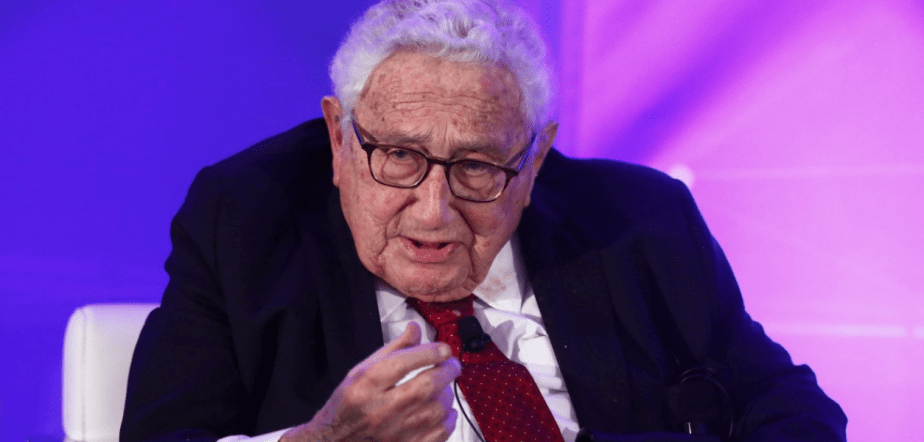
Brussels 14.08.2022 Former U.S. Secretary of State Henry Kissinger believes that Washington is currently on the brink of war with Moscow and Beijing, he said in an interview with the Wall Street Journal.

“We are at the edge of war with Russia and China on issues which we partly created, without any concept of how this is going to end or what it’s supposed to lead to,” he underscored.

“You can’t just now say we’re going to split them off and turn them against each other. All you can do is not to accelerate the tensions and to create options, and for that you have to have some purpose,” Kissinger added.

USA-Russia: prisoners exchange talks

Brussels 06.08.2022 Russia is ready to discuss the exchange of prisoners with the US, but only within the channel, negotiated by Russian President Vladimir Putin and US President Joe Biden. If the Americans resort to public diplomacy, its’ “their problem,” Foreign Minister Sergey Lavrov said to reporters Friday, August 5. (Image above: Viktor Bout)

The top diplomat said that Washington’s logic in the situation around House Speaker Nancy Pelosi’s visit to Taiwan is “strange,” and noted that US Secretary of State Antony Blinken displayed no interest in contacts with his Russian counterpart during the ASEAN events in Phnom Penh.

“If the Americans once again decide to resort to public diplomacy and to make loud announcements that they plan to take some steps, then that is their business, and I would even say, their problem. The Americans often do not comply with agreements on a quiet professional work on this and many other topics.”

Russia-Africa Summit announcement

Brussels 27.07.2022 Russia’s second-largest city of Saint Petersburg will host the 2023 Russia-Africa Summit, Russian Foreign Ministry spokesperson wrote on her Telegram channel on Wednesday, July 27.

“We are leaving the African continent under a heavy rain and this is a good sign,” she stated. “Thank you, friends, and we are waiting for you in Saint Petersburg next year at the Russia-Africa summit.”

The inaugural Russia-Africa summit was hosted by the Russian Black Sea resort city of Sochi in 2019. The summit was organised between October 22 and 24, 2019 and its slogan read as ‘For Peace, Security and Development.’

Within the framework of the African tour earlier this week, Foreign Minister Lavrov visited Egypt, the Republic of the Congo, Uganda and Ethiopia between July 24 and 27.

The visit to Ethiopia on Wednesday July 27 was be the final stop in Lavrov’s African tour, after which the Russian top diplomat will travel to the Foreign Ministers’ Meeting of the Shanghai Cooperation Organization (SCO) in the Uzbekistani capital of Tashkent.

The food crisis caused by the Ukraine conflict took the center stage during Lavrov’s previous negotiations and press conferences in African countries.

Putin vows to overcome hardships

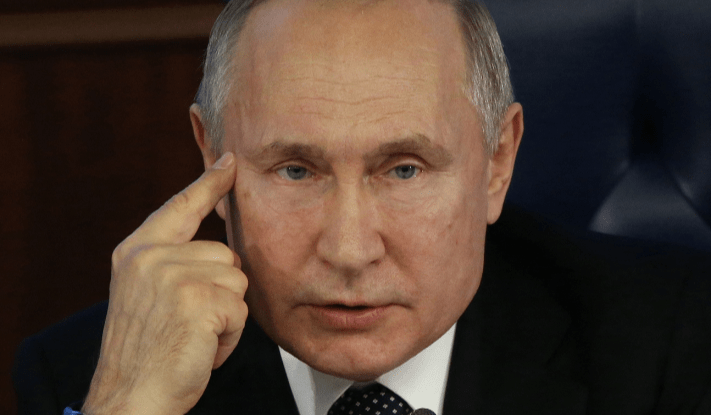
Brussels 18.07.2022 Russia is not going to lose heart or have decades of its progress reversed, despite inhospitable forecasts from opponents, President Vladimir Putin told the Council for Strategic Development at a meeting on Monday.

The president said Russia was being completely denied access to foreign hi-tech products.

“We understand that this is a major challenge to our country, however we are not going to lose heart or have decades of our progress reversed, despite predictions from a number of our ill-wishers, the opposite is true,” Putin insisted.

“[We are] aware of the huge amount of obstacles” being put up, so Russia will be “looking for new solutions while making effective use of its own technological capacities available in the country and research by innovative Russian companies,” Putin explained.

“I understand that this is a complicated task. All of us are perfectly aware of that. And it’s also clear that we cannot and will not live in isolation from the rest of the world,” the Russian president pledged.

The head of state stressed that Russia cannot be isolated from the rest of the world, or fenced off from it.

“Obviously, we cannot develop in isolation from the rest of the world. And we won’t. It is impossible in the present-day world to merely issue as decree and erect a huge fence. It is simply impossible,” he said and outlined top priority tasks.

According to the president, one of such tasks is to develop end-to-end technologies, which have major influence on structural changes in the economy.

Borrell: views on Ukraine conflict shift

Brussels 11.07.2022 The G20 Foreign Ministers Meeting in Bali opened to Josep Borrell the different perspectives around the world on the situation in Ukraine and its consequences, the The European Union top diplomat said, pointing at the evolution of views on the conflict.

“In the March vote at the UN General Assembly, 140 states condemned the Russian aggression and no member of the G20, apart from the aggressor, opposed this Resolution. But on how to move forward and on the consequences of the war, views differ sharply,” Borrell said in a statement published on the EU’s website on Sunday. “The G7 and like-minded countries are united in condemning and sanctioning Russia and in trying to hold the regime accountable. But other countries, and we can speak here of the majority of the `Global South’, often take a different perspective,” he concluded.

“The global battle of narratives is in full swing and, for now, we are not winning,” Borrell underlined.

The G20 foreign ministerial sessions held in Bali on July 7-8 were attended by Russia’s Foreign Minister Sergey Lavrov, who held a number of bilateral meetings on the sidelines of the G20 Foreign Ministers Meeting.

On February 24, Russian President Vladimir Putin launched a “special military operation” in response to a request by the heads of the two Donbass Republics. The U.S., the EU, the UK and a number of NATO allies retaliated with sweeping sanctions against Russia and have been ramping up their weapons supplies to Ukraine.

“In the March vote at the UN General Assembly, 140 states condemned the Russian aggression and no member of the G20, apart from the aggressor, opposed this resolution. But on how to move forward and on the consequences of the war, views differ sharply,” Borrell said in a statement published on the EU’s website on Sunday. “The G7 and like-minded countries are united in condemning and sanctioning Russia and in trying to hold the regime accountable. But other countries, and we can speak here of the majority of the `Global South’, often take a different perspective,” the EU diplomat concluded.

“The global battle of narratives is in full swing and, for now, we are not winning,” Borrell continued.

The G20 foreign ministerial sessions held in Bali on July 7-8 were attended by Russia’s top diplomat Sergey Lavrov. The Russian foreign minister held a number of bilateral meetings on the sidelines of the G20 Foreign Ministers Meeting.

On February 24, Russian President Vladimir Putin launched a special military operation in response to a request by the heads of the two Donbass republics. The US, the EU, the UK and a number of other countries retaliated with sweeping sanctions against Russia and have been ramping up their weapons supplies to Ukraine.

NATO MADRID PIVOTAL SUMMIT

Brussels 25.06.2022 NATO Leaders are meeting in Madrid at a pivotal time for our security. Russia’s war against Ukraine has shattered peace in Europe, caused far-reaching energy and food crises, and shaken the rules-based international order. NATO’s response has been swift and united.

How has Russia’s brutal and unprovoked invasion of Ukraine and the new security reality in Europe affected NATO’s approach to deterrence and defence?

What is the Alliance doing to address other challenges, like China’s growing influence and assertiveness or the security consequences of climate change?

What will be included in NATO’s next Strategic Concept, the blueprint for the Alliance’s future adaptation to a more competitive world where authoritarian powers try to push back against the rules-based international order?

These are just some of the important questions that NATO Leaders will discuss during the Madrid Summit.

More than ever, NATO is the indispensable platform for transatlantic consultations and cooperation on security and defence. At the Madrid Summit, Allies will continue to adapt, taking decisions to keep NATO strong and ready in a more dangerous world. Heads of State and Government will agree to strengthen deterrence and defence, and support Ukraine for the longer term. They will agree the 2022 Strategic Concept, which will be a roadmap for the Alliance in the years to come. Allies will also boost cooperation with partners, enhance resilience and sharpen NATO’s technological edge – all underpinned by the necessary investments in our collective defence.

NATO Leaders are gathering in Madrid, Spain to discuss important issues facing the Alliance. The Madrid Summit will set NATO’s strategic direction for the next decade and beyond, ensuring that the Alliance will continue to adapt to a changing world and keep its one billion people safe.

Russia declines to join Nuclear weapons Treaty

Brussels 25.06.2022 Moscow declines to join the Treaty on the Prohibition of Nuclear Weapons (TPNW), Russian Foreign Ministry spokeswoman Maria Zakharova said on Friday, Juin 25.

The diplomat commented in the aftermath of the first conference of states-participants of the Treaty on the Prohibition of Nuclear Weapons.

The assertive advancement of the process deepens the disunity between states and undermines the regime of the Treaty on the Non-Proliferation of Nuclear Weapons.

“In connection with the desire to put on a permanent basis the efforts to universalise the TPNW, as recorded in the final documents of the conference, we emphasise: Russia does not intend to join this agreement and believes that the treaty does not establish any universal standards: neither now nor in the future,” she said.

Moscow continues to firmly adhere to the position that the development of the TPNW was premature, erroneous and, in fact, counterproductive. This agreement does nothing to reduce the growing nuclear risks and does not bring humanity one step closer to the goal stated in it, and the approach laid down in the TPNW only leads to an increase in contradictions between nuclear and non-nuclear states, the spokesperson continued.

“It does not take into account the military-political and military-strategic situation and runs counter to the principle that nuclear disarmament should be carried out in such a way that it would lead to “an increase in the level of security for all.” We do not see realistic ways to implement any – or practical measures to directly reduce nuclear weapons,” the diplomat said.

“Russia, like all other states with military nuclear potential, did not take part in the conference of states-participants of the TPNW and does not intend to do so in the future. We also do not plan to build joint work with auxiliary structures created as part of the interaction of the participants of the TPNW to implement it,” she added.

Assertive advancement of the treaty deepens disunity between states and undermines the regime of Treaty on the Non-Proliferation of Nuclear Weapons, Russian Foreign Ministry Spokeswoman Maria Zakharova said.

Defense: Russia blames U.S. fake news campaign

Brussels 12.06.2022 The United States is trying to justify its unseemly military biological activities in the post-Soviet space with fake news, official representative of the Russian Foreign Ministry Maria Zakharova TASS reports.

The diplomat drew attention to the “Fact Sheet on WMD Threat Reduction Efforts with Ukraine, Russia and Other Former Soviet Union Countries” published on June 9 on the website of the US Department of Defense, which contains statements about the allegedly peaceful nature of US activities in the biological sphere on post-Soviet space.

“We consider this material to be fake news and part of an information campaign launched by Washington to justify the United States’ military biological activities in the post-Soviet space in order to divert international attention away from their true non-transparent and unseemly nature, which contradicts Washington’s international obligations, including those under the Biological and Toxin Weapons Convention (BTWC),” Zakharova stressed.

Zakharova underscored that the numerous explanations that the United States is collecting biomaterial and monitoring the epidemiological situation “only reinforce and strengthen the fears of the Russian Federation in the context of compliance with the BTWC, including the facts revealed in Ukraine”

“For obvious reasons, the United States prefers to remain silent about ongoing work in the post-Soviet space and does not provide information as part of the Biological and Toxin Weapons Convention (BTWC). Assertions that the activity of the Pentagon and related structures is focused exclusively on health issues, are not true. Obviously, health care does not require the participation of the US military,” she said.

Zakharova stressed that the numerous explanations that the United States is collecting biomaterial and monitoring the epidemiological situation “only reinforce and strengthen the fears of the Russian Federation in the context of compliance with the BTWC, including the facts revealed in Ukraine”.

TAG”For obvious reasons, the United States prefers to remain silent about ongoing work in the post-Soviet space and does not provide information as part of the Biological and Toxin Weapons Convention (BTWC). Assertions that the activity of the Pentagon and related structures is focused exclusively on health issues, are not true. Obviously, health care does not require the participation of the US military,” she said.

For obvious reasons, the United States prefers to remain silent about ongoing work in the post-Soviet space and does not provide information as part of the Biological and Toxin Weapons Convention (BTWC). Assertions that the activity of the Pentagon and related structures is focused exclusively on health issues, are not true. Obviously, health care does not require the participation of the US military,” she said.

Zakharova pointed out that the numerous explanations that the United States is collecting biomaterial and monitoring the epidemiological situation “only reinforce and strengthen the fears of the Russian Federation in the context of compliance with the BTWC, including the facts revealed in Ukraine”.

Putin follows Peter the Great footsteps

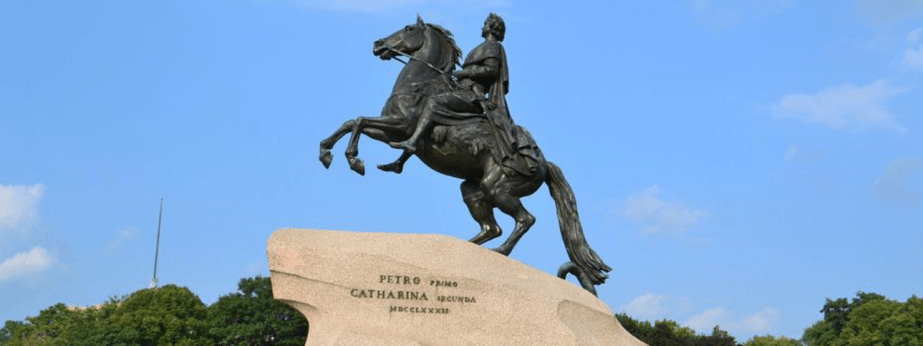
Brussels 11.06.2022 President Vladimir Putin compared himself to the country’s Emperor, Peter the Great (pictured), in a speech marking the 350th anniversary of the figure’s birth.

Putin made the comments while visiting a multimedia exhibit about the 18th-century tzar, who led a conquest of the Baltic region while at war with Sweden. Putin remarked that Peter the Great viewed the land as rightfully Russian, drawing a connection to the current war Russia is waging against Ukraine.

“He was returning it and strengthening it,” Putin said, according to Russian media. “Well, apparently, it has also fallen to us to return and to strengthen.” Putin also underlined that when Peter founded the city of St. Petersburg, “none of the countries of Europe recognized it as Russian.”

“It is impossible — do you understand — impossible to build a fence around a country like Russia,” Putin added. Putin has repeatedly attempted to justify Russia’s invasion of Ukraine since the Feb. 24 beginning of the war, which has since resulted in thousands of deaths and millions of displaced people. Shortly after he launched the invasion, Putin said he was “forced” to attack Ukraine due to Western “intransigence” over security issues.

The Russian president’s comments occurred after the war in Ukraine surpassed 100 days last week.

“Peter the Great fought the Northern War for 21 years. It would seem that he fought with Sweden and rejected something there. He didn’t reject anything! He returned,” the head of state explained.

Putin noted that the fate of modern Russia also fell to “return and strengthen” its sovereignty and territories.

Russian Ambassador Antonov on food crisis

Brussels 28.05.2022 Russian ambassador to Washington Anatoly Antonov on Friday, May 28, said the food crisis, which had been unfolding for the past couple years, worsened due sanctions on Russia by the U.S. and its allies.

“The crisis was further exacerbated due to the introduction by Washington and its satellites of illegitimate sanctions against Russia,” the diplomat said in statement released by the Russian Embassy in Washington. “Despite the references of the U.S. officials to exemptions from the restrictions, which allegedly provide for the opportunity for our country to trade in farm goods, domestic exporters often don’t have a chance to make shipments.”

“They face blocked payments, denials of loans and insurance, problems with booking freight ships, purchase of farm equipment and even seeds,” he went on to say. “In addition, the US continues to increase import taxes on our fertilizers.”

Antonov described such actions as “the utmost hypocrisy” and called the US attempts to blame Russia for the food crisis as absolutely unfounded.

“We urge a halt to shifting the blame,” he continued. “Russia is committed to its export obligations and is ready for negotiations to resolve this most serious problem, including through the UN.”

The diplomat also said that difficulties in the food market have been building up for a long time, at least over the past two years. “They are associated with miscalculations and systemic errors in the macroeconomic policy – primarily financial and foreign trade policies – and energy and food policies of Western countries,” he said. “At the same time, the COVID-19 pandemic has led to significant disruptions of supply chains.”

“Freight costs have almost doubled,” he continued. “Naturally, all this couldn’t not fail but lead to a sharp increase in food prices. Wheat prices increased by a quarter over 2021.”

The Wall Street Journal earlier reported that UN Secretary General Antonio Guterres is negotiating with Russia and Ukraine to unblock the export of Ukrainian grain through the Black Sea in exchange for the lifting of a number of sanctions that hinder the export of Russian fertilizers. Permanent Representative of the Russian Federation to the UN Vasily Nebenzya and Permanent Representative of the United States Linda Thomas-Greenfield confirmed that there are talks on resuming the exports of Ukrainian grain and Russian fertilizers to the global market. However, the sides insists that these issues are discussed separately from each other and don’t assume any exchanges.