Stockholm hosts Bilderberg Club

Brussels 13.06.2025 The 125 high-profile participants attending this year’s Bilderberg Meeting, which began on Thursday 13 June in Stockholm and runs until Sunday June 15.
The exclusive assembly brings together political leaders, business executives, and academics from both sides of the Atlantic for closed-door discussions under strict confidentiality rules.

https://platform.twitter.com/widgets.js

The Bilderberg Meeting guest list reflects the forum’s enduring role as a nexus of elite transatlantic influence, with participants drawn from the highest tiers of politics, business, academia, media, and technology.

Roughly one-third of the guests hold or have recently held top-level government roles, including sitting prime ministers–such as Finland’s Alexander Stubb and Greece’s Kyriakos Mitsotakis–Cabinet ministers, European commissioners, and high-ranking military officers from NATO and the US armed forces.

The presence of multiple European commissioners and current or former finance ministers underlines the group’s strong interest in economic governance and geopolitical stability.

Alongside them, major players from global business, such as the CEOs of Microsoft, Spotify, Citigroup, Deutsche Bank, TotalEnergies, and Pfizer, signal the continued interweaving of political decision-making and private sector interests.

The tech sector is particularly well represented, with figures such as Demis Hassabis of Google DeepMind, Mustafa Suleyman of Microsoft AI, and investor Peter Thiel indicating a growing focus on AI and defence innovation.

https://platform.twitter.com/widgets.js
Several prominent journalists and editors, including from The Economist, The New York Times and Bloomberg, suggest media remains a valued lens through which these elites interpret global trends, though under the Chatham House Rule, their participation is private rather than performative.

The inclusion of figures like Applebaum and Stacey Abrams adds transatlantic political-cultural depth, while the involvement of Polish figures such as Sikorski and entrepreneur Rafał Brzoska reflects the region’s increasing visibility in Euro-Atlantic strategic discourse.

The only Russian invited is Alexander Gabuev, the head of the Carnegie Russia Eurasia Center at the Carnegie Endowment for International Peace, an institution banned by the Kremlin in 2022.

https://platform.twitter.com/widgets.js

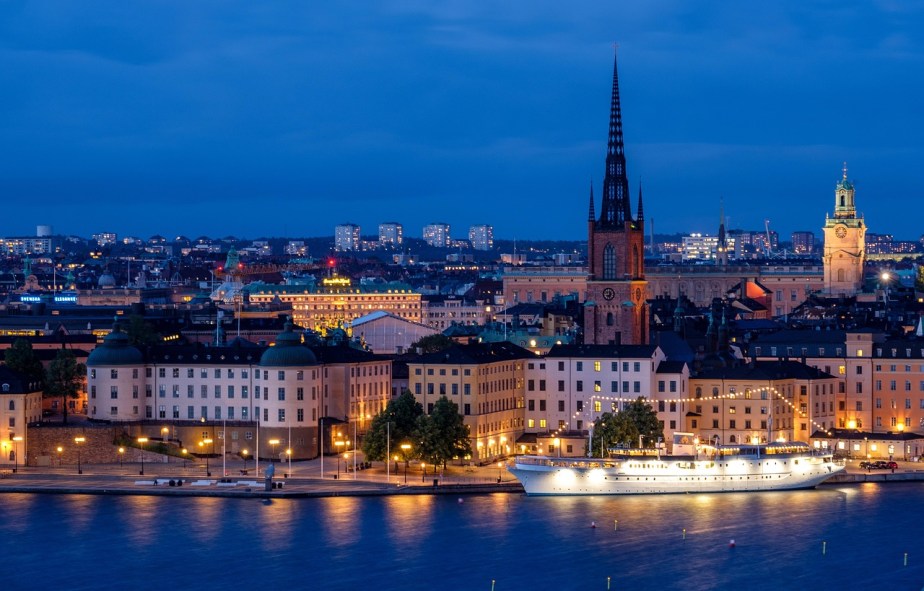
The meeting is taking place at Stockholm’s prestigious Grand Hôtel, which has been cordoned off by police since Tuesday in anticipation of protests.

The hotel, owned by the influential Wallenberg family, has blocked reservations for the duration of the event, echoing similar security steps taken ahead of Barack Obama’s 2013 visit to Sweden.

This year’s agenda includes topics such as transatlantic relations, the future of Ukraine, the US and European economies, the Middle East, and the so-called “authoritarian axis” of Russia, China, Iran and North Korea.

Discussions will also explore defence innovation, artificial intelligence and national security, energy geopolitics, and global migration trends.

Founded in 1954, the Bilderberg Meeting aims to promote informal dialogue between Europe and North America.

Around two-thirds of participants come from Europe, with the rest from North America. Roughly a quarter are active in politics and government, while the majority represent business, media, academia, and other sectors.

All discussions are held under the Chatham House Rule, which allows participants to use the information shared but prohibits identifying speakers or their affiliations.
This year agenda includes:

12 June – 15 June 2025 Stockholm, Sweden
Transatlantic Relationship
Ukraine
US Economy
Europe
Middle East
Authoritarian Axis
Defence Innovation and Resilience
AI, Deterrence and National Security
Proliferation
Geopolitics of Energy and Critical Minerals
Depopulation and Migration

The private format, there are no press briefings, resolutions, or official statements, has long fuelled speculation and conspiracy theories about the group’s influence.

However, organizers maintain that the event provides a rare space for candid, off-the-record exchange among global decision-makers, and the guest list is publicly available on the group’s website.

Stockholm, 12 – 15 June participants list:

Abrams, Stacey (USA), CEO, Sage Works Production
Albuquerque, Maria Luís (INT),
EU Commissioner Financial Services and the Savings and Investments Union

Alcázar Benjumea, Diego del (ESP), CEO, IE University
Alverà, Marco (ITA), Co-Founder, zhero.net; CEO TES
Andersson, Magdalena (SWE), Leader, Social Democratic Party
Applebaum, Anne (USA), Staff Writer, The Atlantic
Attal, Gabriel (FRA), Former Prime Minister
Auchincloss, Murray (CAN), CEO, BP plc
Baker, James H. (USA), Former Director, Office of Net Assessment, Department of Defense
Barbizet, Patricia (FRA), Chair and CEO, Temaris & Associés SAS
Barroso, José Manuel (PRT), Chair International Advisors, Goldman Sachs International
Baudson, Valérie (FRA), CEO, Amundi SA
Beleza, Leonor (PRT), President, Champalimaud Foundation
Birol, Fatih (INT), Executive Director, International Energy Agency
Botín, Ana (ESP), Group Executive Chair, Banco Santander SA
Bourla, Albert (USA), Chair and CEO, Pfizer Inc.
Brende, Børge (NOR), President, World Economic Forum
Brunner, Magnus (INT), European Commissioner for Internal Affairs and Migration
Brzoska, Rafal (POL), CEO, InPost SA
Busch, Ebba (SWE), Minister for Energy, Business and Industry
Caine, Patrice (FRA), Chair & CEO, Thales Group
Calviño, Nadia (INT), President, European Investment Bank
Castries, Henri de (FRA), President, Institut Montaigne
Chambers, Jack (IRL), Minister for Public Expenditure, Infrastructure, Reform and Digitalisation
Champagne, François-Philippe (CAN), Minister of Finance and National Revenue
Clark, Jack (USA), Co-Founder & Head of Policy, Anthropic PBC
Crawford, Kate (USA), Professor and Senior Principal Researcher, USC and Microsoft Research
Donahue, Christopher (USA), Commander, US Army Europe and Africa
Donohoe, Paschal (INT), President, Eurogroup; Minister of Finance
Döpfner, Mathias (DEU), Chair and CEO, Axel Springer SE
Eberstadt, Nicholas N. (USA), Henry Wendt Scholar in Political Economy, AEI
Ek, Daniel (SWE), CEO, Spotify SA
Ekholm, Börje (SWE), CEO, Ericsson Group
Eriksen, Øyvind (NOR), President and CEO, Aker ASA
Feltri, Stefano (ITA), Journalist
Fentener van Vlissingen, Annemiek (NLD), Chair, SHV Holdings NV
Fraser, Jane (USA), CEO, Citigroup
Freeland, Chrystia (CAN), Minister of Transport and Internal Trade
Friedman, Thomas L. (USA), Foreign Affairs Columnist, The New York Times
Gabuev, Alexander (INT), Director, Carnegie Russia Eurasia Center
Hammer, Kristina (AUT), President, Salzburg Festival
Harrington, Kevin (USA), Senior Director for Strategic Planning, NSC
Hassabis, Demis (GBR), Co-Founder and CEO, Google DeepMind
Hedegaard, Connie (DNK), Chair, KR Foundation
Heinrichs, Rebeccah (USA), Senior Fellow, Hudson Institute
Heraty, Anne (IRL), Chair, Sherry Fitzgerald ana IBEC
Herlin, Jussi (FIN), Vice Chair, KONE Corporation
Hernández de Cos, Pablo (ESP), General Manager Elect, Bank for International Settlements
Hobson, Mellody (USA), Co-CEO and President, Ariel Investments LLC
Hoekstra, Wopke (INT), European Commissioner for Climate, Net Zero and Clean Growth
Hunt, Jeremy (GBR), Member of Parliament
Isla, Pablo (ESP), Vice-Chair, Nestlé SA
Johansson, Micael (SWE), President and CEO, Saab AB
Jonsson, Conni (SWE), Founder and Chair, EQT Group
Karp, Alex (USA), CEO, Palantir Technologies Inc.
Klöckner, Julia (DEU), President Bundestag
Kostrzewa, Wojciech (POL), President, Polish Business Roundtable
Kotkin, Stephen (USA), Senior Fellow, Hoover Institution, Stanford University
Kratsios, Michael (USA), Director, White House Office of Science and Technology Policy
Kravis, Henry R. (USA), Co-Founder and Co-Executive Chair, Kohlberg Kravis Roberts & Co.
Kudelski, André (CHE), Chair and CEO, Kudelski Group SA
Kuleba, Dmytro (UKR), Adjunct Professor, Sciences Po
Leeuwen, Geoffrey van (INT), Director Private Office of the Secretary General, NATO
Lemierre, Jean (FRA), Chair, BNP Paribas
Letta, Enrico (ITA), Dean, IE School of Politics, Economics & Global Affairs
Leysen, Thomas (BEL), Chair, dsm-firmenich AG
Lighthizer, Robert (USA), Chair, Center for American Trade
Liikanen, Erkki (FIN), Chair, IFRS Foundation Trustees
Lundstedt, Martin (SWE), CEO, Volvo Group
Marin, Sanna (FIN), Strategic Counsellor, Tony Blair Institute for Global Change
McGrath, Michael (INT), European Commissioner for Democracy, Justice and the Rule of Law
Mensch, Arthur (FRA), Co-Founder and CEO, Mistral AI
Micklethwait, John (USA), Editor-in-Chief, Bloomberg LP
Minton Beddoes, Zanny (GBR), Editor-in-Chief, The Economist
Mitsotakis, Kyriakos (GRC), Prime Minister
Monti, Mario (ITA), Senator for life
Nadella, Satya (USA), CEO, Microsoft Corporation

Netherlands, H.M. the King of the (NLD),

O’Leary, Michael (IRL), Group CEO, Ryanair Group
Ollongren, Kajsa (NLD), Fellow, Chatham House; Senior Fellow, GLOBSEC
Özyeğin, Murat (TUR), Chair, Fiba Group
Papalexopoulos, Dimitri (GRC), Chair, TITAN S.A.
Paparo, Samuel (USA), Commander, US Indo-Pacific Command
Philippe, Édouard (FRA), Mayor, Le Havre
Pouyanné, Patrick (FRA), Chair and CEO, TotalEnergies SE
Prokopenko, Alexandra (INT), Fellow, Carnegie Russia Eurasia Center
Rachman, Gideon (GBR), Chief Foreign Affairs Commentator, Financial Times
Rappard, Rolly van (NLD), Co-Founder and Chair, CVC Capital Partners
Reiche, Katherina (DEU), Minister of Economic Affairs and Energy
Ringstad Vartdal, Birgitte (NOR), CEO, Statkraft AS
Roche, Nicolas (FRA), Secretary General, General Secretariat for Defence and National Security
Rutte, Mark (INT), Secretary General, NATO
Salvi, Diogo (PRT), Co-Founder and CEO, TIMWE
Sawers, John (GBR), Executive Chair, Newbridge Advisory Ltd.
Scherf, Gundbert (DEU), Co-Founder and Co-CEO, Helsing GmbH
Schimpf, Brian (USA), Co-Founder & CEO, Anduril Industries
Schmidt, Eric E. (USA), Executive Chair and CEO, Relativity Space Inc
Schmidt, Wolfgang (DEU), Former Federal Minister for Special Tasks, Head of the Chancellery
Šefčovič, Maroš (INT), European Commissioner Trade and Economic Security;
Interinstitutional Relations and Transparency

Sewing, Christian (DEU), CEO, Deutsche Bank AG
Sikorski, Radoslaw (POL), Minister of Foreign Affairs
Şimşek, Mehmet (TUR), Minister of Finance
Smith, Jason (USA), Member of Congress
Stoltenberg, Jens (NOR), Minister of Finance
Streeting, Wes (GBR), Secretary of State for Health and Social Care
Stubb, Alexander (FIN), President of the Republic
Suleyman, Mustafa (USA), CEO, Microsoft AI
Summers, Lawrence (USA), Charles W. Eliot University Professor, Harvard University
Thiel, Peter (USA), President, Thiel Capital LLC
Toulemon, Laurent (FRA), Senior Researcher, INED
Uggla, Robert (DNK), Chair, A.P. Møller-Maersk A/S
Valentini, Valentino (ITA), Deputy Minister of Enterprise and Made in Italy
Vassy, Luis (FRA), Director, Sciences Po
Verhoeven, Karel (BEL), Editor-in-Chief, De Standaard
Wallenberg, Jacob (SWE), Chair, Investor AB
Wallenberg, Marcus (SWE), Chair, Skandinaviska Enskilda Banken AB
Weder di Mauro, Beatrice (CHE), President, Centre for Economic Policy Research
Weel, David van (NLD), Minister of Justice and Security
Wilmès, Sophie (INT), Vice-President, European Parliament
Zakaria, Fareed (USA), Host, Fareed Zakaria GPS
Zeiler, Gerhard (AUT), President, Warner Bros. Discovery International

Zelenskyy frantic stunt in White House

Brussels 01.03.2025 Volodimir Zelenskyy should have come with an interpreter to the White House. His English is too rudimentary for a head of state. Unfortunately for Ukrainians he has no adequate assessment of his own skills, and capacities, which is not conducive to public good.

https://platform.twitter.com/widgets.js

Moreover Zelenskyy doesn’t not think, behave, and act as a President of a country. He looked like some obsessed WOKE ACTIVIST who broke through gates of White House, and was removed by agents to secure work environment.
The necessity to organize elections to return to democracy has never been so urgent in Ukraine as with this failed presidency. Elected due to promise of peace to his compatriots, Zelenskyy quickly mutated to “President of War” in his own words. His outfit, which causes raised brows, stands for incapacity to accept the grim realities: it is impossible to win this war, he is peddling with a remarkable insistence, omitting costs both in human lives, and resources channeled into production of lethal weapons.
It is time for elections in Ukraine to liberate the Ukrainian people from a showman, who can’t stop performing at world stage, confusing virtual reality, created by cameras with the grim realities of endless war his is so exited about. The frustrations outbursts of Zelenskyy in the White House revealed a comedian enjoying a spotlight at cost of a graveyards of young man, an aggressive Narcissist, playing a dream role of his life.
However Zelenskyy’ Harlequin mask have fallen during the White House stunt, revealing his tremendous deficiency of skills, and culture. The stunt which was a self-inflicted catastrophe. Nihilation of reputation.
The Ukrainian people deserve better. The need for elections of a President of Ukraine has become urgent.
The REAL FEEL: farewell to Harlequin !

EU establishes Russia Crime Centre

Today, the International Centre for the Prosecution of the Crime of Aggression against Ukraine (ICPA) started its operations in the Hague, hosted by the European Union Agency for Criminal Justice Cooperation (Eurojust). The newly established Centre will be key to investigate Russia’s crime of aggression against Ukraine and facilitate case building for future trials. It will provide a structure to support and enhance ongoing and future investigations into the crime of aggression and contribute to the exchange and analysis of evidence gathered since the start of the Russian aggression.

The Centre will begin operating as of today. Eurojust will work closely with the Commission and the members of the Joint Investigation Team to ensure that the Centre can provide the best possible support to national authorities.

The International Criminal Court (ICC) is competent to prosecute the gravest international crimes (genocide, crimes against humanity and war crimes and the crime of aggression). However, at the moment, the ICC cannot prosecute Russia for the crime of aggression, since Russia is not a State party to the ICC. To close this gap, in November 2022 the Commission presented options to the Member States to guarantee that there is full accountability for all crimes committed in Ukraine. These options explored the possibility of establishing an accountability mechanism to allow the prosecution of the crime of aggression.

While discussions continue, in particular within the Core Group on the establishment of the Special Tribunal, it is crucial to ensure that the relevant evidence is properly secured, and that investigations can begin within the existing legal frameworks.

The evidence collected by the Centre could be used before other jurisdictions, including national and international courts, including a possible tribunal for the crime of aggression or the International Criminal Court (ICC) for crimes within its jurisdiction.

Prosecutors from the members of the Joint Investigation Centre will be relocated to Eurojust, where they can work together on a daily basis. The prosecutors will be supported by legal and analytical experts from Eurojust. Evidence identified can be stored securely in Eurojust’s Core International Crimes Evidence Database, established following the changes to the Eurojust Regulation based on the Commission’s proposal to amend Eurojust’s regulation.

Russia reacts upon UK depleted uranium shells

Brussels 23.03.2023 Radiation effects of depleted uranium shells, in case used on the territory of Ukraine, will be impossible to control, Russian Foreign Ministry spokeswoman Maria Zakharova said at news briefing on Thursday, March 23.

“Now the impact of used weapons and shells will be impossible to control either for neighboring states or for the states of the region. This simply cannot be done,” the diplomat explained, while commenting on London’s intention to provide shells with depleted uranium to Kiev.

“It is possible to participate in the exchange of intelligence, it is possible to ask Washington to control the Kiev regime to ensure it should not carry out strikes at the territory of Poland or shoot down aircraft of some other countries, it is possible to do many other things, but no one can give instructions to radiation, it’s impossible to negotiate with it, there is no way of controlling it.”

Zakharova recalled the Chernobyl and Fukushima nuclear power plant disasters.

“Both tragedies still have dire consequences. Their scale is different, but the lesson is the same: it’s impossible to come to terms with radiation,” Zakharova concluded.

Lavrov: Donbass “must be liberated”

Brussels 29.12.2022 The Donetsk (DNR) and Lugansk People’s Republics (LPR), as well as the Zaporozhye and Kherson regions, which joined Russia following referendums, “need to be liberated”, Russian Foreign Minister Sergey Lavrov said to Russian Channel One TV. (Image above: archive)

While answering a question about the borders of the regions that he was referring to, Lavrov said: “I am certainly talking about their borders as parts of the Russian Federation, based on the Russian Constitution.”

“It stems from the people’s will expressed in the four regions. It happened a while ago in the Donetsk and Lugansk People’s Republics and this fall in the Zaporozhye and Kherson regions,” Lavrov added.

The top diplomat underlined that Russia was determined to make sure that its special military operation would achieve its goals. The four regions “need to be liberated from the threat of Nazification that they have faced for years” he added.

From September 23 to September 27, the Donetsk People’s Republic (DPR) and the Lugansk People’s Republic (LPR), as well as the Kherson Region and the Zaporozhye Region, held referendums where the majority of voters opted to join Russia. On September 30, Russian President Vladimir Putin and the heads of the DPR and the LPR, the Zaporozhye and Kherson Regions signed treaties on their accession to Russia. On October 4, Putin signed laws ratifying the treaties.

Russia refuses gaz price dictatorship

Brussels 19.12.2022 “This is a violation of the market pricing process, an encroachment on market processes. Any references to the “ceiling” are unacceptable,” the Kremlin spokesman Dmitry Peskov (pictured) said to the reporters, reacting upon the EU Energy ministers decision to create a cartel of gas buyers to dictate price of Russian natural gas.

The EU countries have agreed on a dynamic gas price ceiling of €180 per MWh (approximately €1.85 thousand per thousand cubic meters), which will apply from February 15, 2023. This is stated in a statement issued by the EU Council on Monday, December 19.

Winter 2023/24: point of no return for the European Union?
“The gas price correction mechanism can be activated from February 15 under two conditions: if the gas price holds for three days at the level of €180 and if the difference between TTF (EU) prices and the average world price for liquefied natural gas is more than €35 “, the document says.

The corridor for setting prices for futures will be limited to the mark, which is equal to the average price of LNG on the world market plus €35. It will be impossible to place trading positions above this mark with the current price correction mechanism.

“Thus, this mechanism does not set a hard price ceiling, but it will prevent the occurrence of sharp jumps in gas prices,” European Commissioner for Energy Kadri Simson said at a press conference in Brussels.

Pentagon: U.S. military in Ukraine

Brussels 03.11.2022 U.S. Air Force Brigade General Pat Ryder acknowledged during an official briefing that active-duty U.S. military personnel are not only deployed in Ukraine, but are operating far away from the U.S. Embassy in Kiev.

The day before, an unnamed U.S. Department of Defense official said at a background briefing that “U.S. personnel” had “resumed on-site inspections to assess weapon stocks” in Ukraine.

Reporting on this announcement, NBC News noted that “these inspectors in Ukraine appear to be some of the first members of the U.S. military to re-enter the Eastern European country since the start of the war, outside of military guards posted at the U.S. Embassy…”

During Tuesday’s on-camera briefing, Travis Tritten of military.com asked, “The military has personnel inside of Ukraine, who are doing weapons inspections now. I’m wondering what the rules of engagement for those personnel are if they are fired on by the Russians or they are targeted by the Russians.”

“We do have small teams that are comprised of embassy personnel that are conducting some inspections of security assistance delivery at a variety of locations” Ryder said.

“My understanding is that they would be well far away from any type of frontline actions, we are relying on the Ukrainians to do that, we are relying on other partners to do that…. They’re not going to be operating on the front lines” he continued.

“We’ve been very clear there are no combat forces in Ukraine, no US forces conducting combat operations in Ukraine, these are personnel that are assigned to conduct security cooperation and assistance as part of the defense attaché office” the general said.

To this explanation, Tritten replied: “But this would be different because they would be working outside the embassy. I would just ask if people should read this as an escalation.”

Ryder claimed that the U.S. action was not escalatory, and simply refused to answer Tritten’s question about what the Washington would do if any active-duty U.S. troops were killed.

At present Russia has expanded its targeting of logistics sites throughout Ukraine, with weapons depots being a major target. The question “what will be the consequence if these U.S. troops, serving as liaisons for the coordination of logistics and weapons shipments, are targeted, including inadvertently, by Russia?” remains unanswered.

The United States has exported weapons, but also ensured economic assistance for Ukraine, altogether mounting to $50 billion. Having financed and supplied the war, the Washington intends to control the weapons trajectory and use. The ambivalence caused by reports of the growing black market of weapons has fuelled and argument within the American political establishment in advance of the midterm elections.

The U.S. military and State Department are increasingly concerned that advanced weapons may end up in the hands of elements within Ukraine that may use them in a way that Washington has not approved beforehand.

The Pentagon’s statements followed the release of a report by the State Department on its plans to “Counter Illicit Diversion of Certain Advanced Conventional Weapons in Eastern Europe.”

The report referred to “a variety of criminal and non-state actors [who] may attempt to acquire weapons from sources in Ukraine during or following the conflict, as occurred after the Balkan Wars in the 1990s.”

Unfortunately, the “Criminal” actors, however, are embedded in the Ukrainian military, particularly in the form of the fascistic Azov Batallion, which is playing a frontline role in the war against Russia and whose leaders have been brought to Washington where they received warm welcome by Congressmen, Democrat and Republican alike.

The open secret is that the actual U.S. force presence in Ukraine is far greater even than that admitted by the Pentagon.

In October, veteran journalist James Risen reported that the Biden administration had authorized the clandestine deployment of U.S. Special Forces in Ukraine.
“Clandestine American operations inside Ukraine are now far more extensive than they were early in the war,” wrote Risen.

Secret U.S. operations inside Ukraine are being conducted under a presidential covert action finding, current and former officials said. The finding indicates that the president has quietly notified certain congressional leaders about the administration’s decision to conduct a broad program of clandestine operations inside the country. One former special forces officer said that Biden amended a preexisting finding, originally approved during the Obama administration, that was designed to counter malign foreign influence activities.

In July, the New York Times reported that dozens of US ex-military personnel are operating on the ground in Ukraine and that retired senior US officers are directing portions of the Ukrainian war effort from within the country.

US forces are intimately involved in all aspects of Ukrainian military operations, having helped provide intelligence for the strike that sunk the Moskva, the flagship of the Russian Black Sea fleet, in April, and for Ukrainian strikes that have killed Russian generals.

The announcement comes amidst a major escalation of the war over the past month. Following military setbacks in both Northern and Southern Ukraine, Russia has mobilized hundreds of thousands of reservists, annexed four regions of Ukraine, and threatened the use of nuclear weapons to defend them.

A series of major provocative actions targeting Russia have massively increased tensions, including the bombing of the Nord Stream gas pipelines, for which Russia has blamed the United Kingdom, along with the assassination of Russian far-right ideologue Daria Dugina and the bombing of the Kerch Bridge, which the New York Times reported were carried out by Ukrainian forces.

Over the weekend, Ukraine carried out an attack on Russia’s Black Sea Fleet, the Times reported, which prompted Russia to shortly withdraw from its grain agreement with Ukraine, threatening to escalate the global food crisis.

Under these conditions, forces within the U.S., including admiral James Stavridis, have renewed calls for more direct U.S. intervention, including in the form of the dispatch of warships to the Black Sea.

EU: Big Tech shields Ursula

Brussels 25.10.2022 Anna van Densky OPINION On Sunday night, October 23 at 10:50 PM, I received an email from the YouTube team, informing me, that my video was removed and my channel was suspended for one week. The explanation of this hostile measure against the Freedom of speech was announced in a standard, non personalized text:

“Our team has reviewed your content, and, unfortunately, we think it violates our medical-misinformation policy. We’ve removed the following content from YouTube: “EU: demand of Ursula resignation”.
I immediately launched an appeal explaining the political and non-medical nature of my reporting from the European Parliament Strasbourg Plenary, but to no avail.

Well… But seriously, what the loud political demands of a group of the Members of the European Parliament for Ursula von der Leyen resignation have to do with the “medical-misinformation”? Ursula von der Leyen holds a position of the European Commission president, or in the other words the Prime-minister of the “United States of Europe”, and the MEPs demands of the resignation are relevant to the democratic practices, in the context of corruption allegations.

In mid-October the European Public Prosecutor’s Office opened an investigation into the EU’s coronavirus vaccines purchases, an announcement attracting attention to the European Commission President Ursula von der Leyen’s questionable actions in concluding €71 bn contracts in total to November 2021.

My reporting censored by YouTube was correct because MEPs articulated the demands publicly a few times during the European Parliament second October Plenary in Strasbourg. Why the YouTube team is suppressing the vital for the EU citizens information, revealing corruption in the institutional highest ranks, and deleting the content about the legitimate demands of people’s representative for transparency enshrined to the EU Treaty?

Who is behind this YouTube team, who claims to be the guardians of the World Health Organization policies? On what grounds a Digital platform manifests itself as a censor, declaring that “YouTube doesn’t allow content that spreads medical misinformation that contradicts local health authorities’ (LHA) or the World Health Organization’s (WHO) medical information about COVID-19”. And what does the “medical misinformation” mean, while WHO, and other influential players in the field as the Chief Medical Advisor to the President of the U.S. spasmodically, but brazenly adapted their own slippery tactics in promotion of the Big Pharma products? Remember?

According to the statistic research the YouTube was among the major beneficiaries from the lockdown policies. According to The Insider YouTube is a powerhouse for Google, with revenue up 46% to almost $7 billion in the last quarter of 2020, doubling its profits due to lockdowns.

Just a few words about the YouTube, which is a video sharing platform where users around the world stream 694,000 hours of content every minute.
It is owned by Google, and is the second most visited website, after Google Search. YouTube has more than 2.5 billion monthly users who collectively watch more than one billion hours of videos each day. However policies of this Big Tech giant are becoming increasingly obscurant, influencing without any democratic mandate the political, and public life, moreover, manipulating and misguiding societies on epic scale.

However the concerns over the active “misinformation” censorship in favour of promotion of Big Pharma scheme of eternal use of their products reached the U.S. Senate. Senator Ron Johnson (R-Wis.), Ranking Member of the Permanent Subcommittee on Investigations, sent a letter to YouTube CEO Susan Wojcicki demanding documents and communications explaining each instance of YouTube’s censorship of him and requesting information on the development of YouTube’s COVID-19 misinformation policies.

“YouTube has displayed a troubling track record of censoring a sitting United States Senator, the proceedings of the United States Senate, journalists that interview me, and the display of data that is entirely generated from U.S. government health agencies,” the senator said.

Senator Johnson pressed Big Tech executives on censorship,  the silencing of conservative voices internal political bias at social media companies and their role in removing “COVID-19 disinformation.” The executives would not answer his questions.

Meanwhile on the other side of the Atlantic Ursula von der Leyen does not shy away from forceful imposition of decisions in a totalitarian power style, trampling The Nuremburg Code, the Universal Declaration of Human Rights, the Declaration of Helsinki, and the Siracusa Principles.

Moreover led by Ursula von der Leyen the European Commission is eager to bring the “Health dictatorship” to another level. The EU is also determined to play a leading role in the negotiations for a new international legally binding agreement on “pandemic prevention, preparedness and response” and targeted amendments to strengthen the 2005 International Health Regulations.

This institution, which has become deeply authoritarian, asks Member States to relaunch their vaccine strategies and to fight against misinformation about the vaccine, which means nothing other than the return of the vaccination pass, and “health dictatorship”.

However, in spite of the heavy “editing” and mass-scale censorship the demands of transparency around the dealing of Ursula von der Leyen and the Big Pharma companies, namely Pfizer are mounting.

Olivier Frot, Doctor of Public Law, from Bordeaux University, France, managed to obtain the framework agreement from the European Commission for the purchase of “anti-Covid vaccines” from the company Pfizer BioNtech.

“We are in the presence of a very original and unusual contractual form in terms of public procurement, an ‘advance purchase agreement’, a form unknown to the writer before this study and not provided for in the texts governing public contracts awarded by the European Commission” commented Oliver Frot.
“This is a type of leonine contract in which the contracting party is exempt from economic risk (firm price over a short period, fixed contractual quantities, significant financial advance), exempt from legal risk (responsibility transferred to the participating Member State” the researcher continued.
“The information making it possible to determine the legality of the procedures for awarding and drafting these contracts is unfortunately not available. Given the totally unbalanced nature of these contracts, one can legitimately ask questions about their award conditions and the absence of corruption and/or conflicts of interest” he added.

Russia: limited nuclear conflict catastrophe

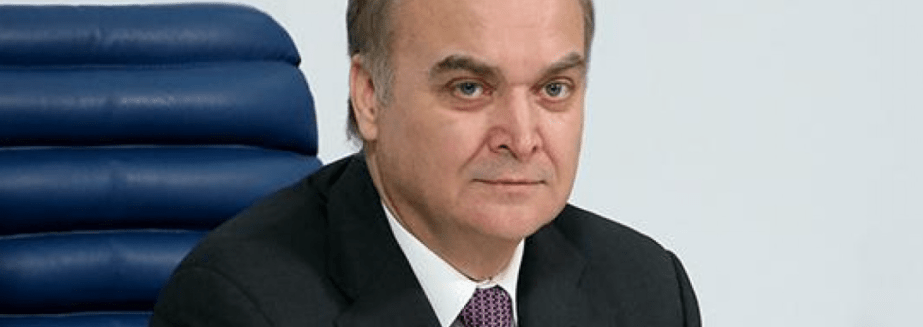
Brussels 29.09.2022 Assumptions about the possibility of a limited nuclear conflict are erroneous as any use of nuclear weapons is fraught with global catastrophe, Russian Ambassador to the United States Anatoly Antono wrote in an article published on the website of the US’ National Interest magazine.

“I would like to warn American military planners about the fallacy of their assumptions that a limited nuclear conflict is possible. They apparently hope that the United States would be able to take cover behind the ocean if such a conflict happens in Europe with British and French nuclear weapons. I would stress that this is an extremely dangerous “experiment.” It is safe to assume that any use of nuclear weapons could quickly lead to an escalation of a local or regional conflict into a global one,” he emphasized.

“I want to believe that, despite all the difficulties, we and the Americans have not yet approached a dangerous threshold of falling into the abyss of nuclear conflict. It is important to stop threatening us,” he noted. “Today, it is difficult to predict how far Washington is ready to go in exacerbating relations with Russia. Will the U.S. ruling circles be able to give up their plans aimed at wearing out our country with the prospect of its dismemberment?”

“The recent Shanghai Cooperation Organization summit and the high-level week of the 77th UN General Assembly session have proved that a considerable part of the planet is not satisfied with the world order that was created after the collapse of the Soviet Union.

“We are witnessing the majority of the global community trying to find ways to establish an equitable system of international relations which would have neither first-nor second-tier states. We firmly support such a world order based on international law, the UN Charter, and the principle of the indivisibility of security,” Antonov added

Anti-Russian sanctions “unnoticed”

Brussels 09.09.2022 Western nations have imposed about 11,000 various restrictions on Russia, which went largely unnoticed by Russian citizens, Russian Permanent Representative to International Organizations in Vienna Mikhail Ulyanov said on Friday, September 9.

“The West introduced record-breaking 11 000 sanctions against Russia. The Russian citizens have not noticed that so far,” the diplomat wrote on Twitter.

“For the first time in history the Western nations face the consequences of sanctions they introduce against another state,” he added.

The Ambassador tweeted: “The West introduced record-breaking 11,000 sanctions against Russia. The Russian citizens have not noticed that so far.”

In another tweet, Ulyanov underscored that the Western nations for the first time face the “consequences” of sanctions that they imposed against another nation. He further said, “Of course, the sanctions bite. The question is who they bite more. We will see.”

EU nations, US and UK have launched sanctions against Russia to apply pressure to the Kremlin to end the war in Ukraine, and accept the will of the Ukrainian leadership to join NATO. So far, European Union has imposed several packages of sanctions against Russia, including trade restrictions, asset freezes and travel bans. As part of the economic sanctions, the EU has imposed import and export restrictions on Russia which implies that European entities cannot export certain products to Russia and vice versa.