Western Balkans Pandora box Summit

Anna van Densky OPINION.

Western Balkans Summit is a lively event in Bulgarian capital Sofia,  assembling leaders from the EU member states, and the countries (and disputed territories) of colorful and rich in diversity mountain region, sometimes even too diverse for achieving the integration and cohesion promoted by Brussels strategists. In essence the Western Balkans represent a permanent challenge for the EU, regarding the inclusion into the bloc as the final chapter, closing the entire book of Yugoslav wars, which shook the continent two decades ago. Happy end. However there are some elements, indicating that Brussels plans  to integrate Western Balkans in the bloc is nothing more than a fata morgana, a vision of an exhausted traveller of an oasis with green palm trees in the sands of a desert…

Approaching the painful ‘divorce’ with the UK, the second largest net contributor to the EU purse, Brussels started to look at #WestBalkans with a special warmth in the eyes and voice, diverting public attention from #Brexit as the major failure to another direction –the enlargement project ‘of a great potential’ for the ‘old and tired’ Western Europe. We are loosing in the north, but winning in the south, so nevertheless the EU is ‘up and running’ reads the message of the Eurocentrics, attempting to preserve the fading image of the European project by ignoring losses and focusing on the wins. But are there any?..

It has been some time already that the European citizens have an opportunity to enjoy the enchanting resorts of Croatia, regarding the country as a ‘success model’ of the EU Enlargement policy in the Western Balkans. And now : Albania, Bosnia and Herzegovina, Serbia, Montenegro, the former Yugoslav Republic of Macedonia and disputed Kosovo – are the ones to integrate, the WB6. However, even if putting aside the problems of rise of Albanian mafia,  or the drug trafficking, indicating that the most heroin reaching the EU from Afghanistan flows through Kosovo.

Even if  putting aside the problems of illegal mass migration exploiting the  routes for Middle East strangers entering Bosnia from Serbia as the result of a visa-free regime introduced last year between Serbia and Iran. Even if excluding the West Balkans role in the human trafficking, being both destination and transit place. And also if we drop the issues of corruption. If one regards only  a political dimension, the Western Balkans represent a Pandora box for the EU. From a first glance it is clear that the Sofia Summit represents a high risk project to an extend the Spanish prime minister Mariano Rajoy prefered to leave the scene even before the launch of the event to avoid the parallels between Kosovo and Catalonia claims of independence.

Just passing by to say ‘hello’, prime minister Rajoy prefers not to enter the Summit to avoid the confrontation with the sui generis case of unilateral independence of Kosovo. However will the diplomatic maneuver save Spain from Balkanization? Jure humāno…
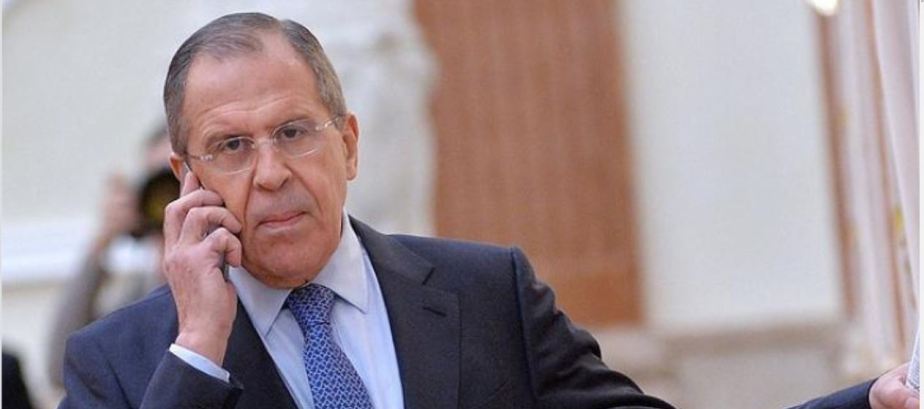
Lavrov hopes for “genuine unification” of Europe

Moscow is ready to search for ‘generally acceptable approaches’ together with its Western partners, including Germany. However, the prospects for cooperation continue to be marred by the situation that emerged through “no fault of Russia”, top Russian Foreign minister Sergey Lavrov said, quoted by TASS agency, while opening talks with his German counterpart Heiko Maas.

We are ready to look for generally acceptable approaches with our German and Western partners even under the current situation, which we find utterly unsatisfactory, that has been created through no fault of ours. It continues to cast a shadow over any prospects for cooperation both in Europe and on the global stage as a whole,” Lavrov underlined.

Russia’s top diplomat reminded that the historic reconciliation between Russian and German people, which took place, in a very large measure, thanks to Russia’s country’s “active support” for German unification, and it is of “paramount importance” for European destiny.” “It was hoped that this would be followed by a genuine unification of Europe, that the common European home based on equal and indivisible security will be built,” Lavrov continued. “Unfortunately, this did not happen, but we do bear in mind that strategic objective.”


Putin’s Firebird versus Chinese Dragon

Anna van Densky. OPINION.

The predictions are plentiful at the IV inauguration of the very same Russian ruler. However only few are optimistic ones, the majority is fearing the deepening schism between Russia and the West, the revival of the Cold War modus operandi, and even risk of the accidental eruption of the III World war. But if not following the extreme scenarios, what the EU can expect from the IV mandate of Vladimir Putin? Clearly not much in terms of science, progress or respect of human rights, but highly likely the continuation of stagnation  with the subsequent loss of traditional Russian spheres of influence like Balkans, Caucasus, and Central Asia.

The recent events in Armenia showed the fragility of the only ally in the Caucasus, and the switch of Kazakh alphabet to Latin letters indicated to direction of the development the leadership has chosen, clearly not impressed by Kremlin’s achievements. For traditional allies and neighbours Russia is not an attractive construct: rusting vertical of power, causing corruption at all levels, elite openly preferring to keep their fortunes and families abroad; economy firmly becoming a global supplier of raw materials; and declining population. The latter deserves some special attention, because with the current trends Siberia is rapidly inhabited by Chinese neighbours, hardworking and politically inactive, filling working places of those Russians who leave for the European part of the country, or void of many of extinct villages. The process called by the Siberians themselves as ‘Chinese colonisation‘.

When voting Putin for the fourth time, Russian have chosen for a traditional biologic cycle of political power change, it means that the current model will come to a natural end in 15  year from now, when Putin‘s close cercle reaches the age it would be physically unable to keep a grip on power, and even on their own fading away lives. No one is immortal. But what kind of Russia will the West encounter then?..

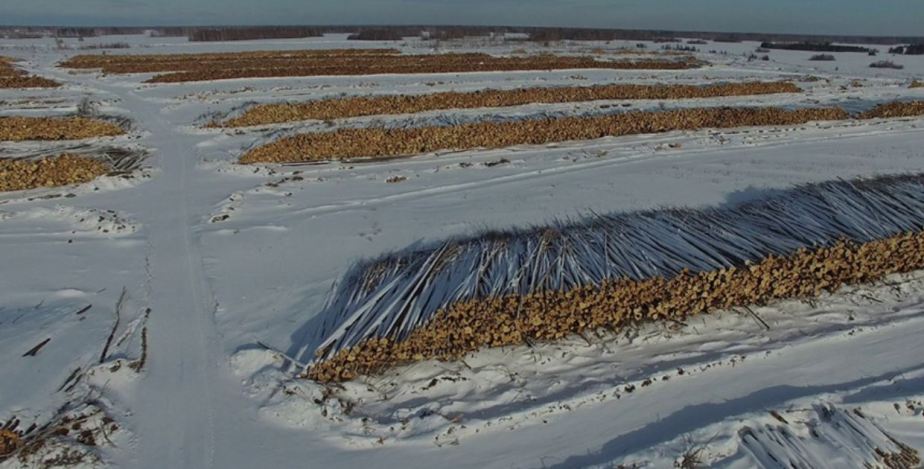
Culturally in 15-20 years Russia will be a different place. At present 38 million Chinese live in bordering Heilongjiang province, while in the entire Siberia just 36 million, and lately in the province the Communist party allowed to have a third child to the couples with the higher income. Growing population with growing needs, and limited resources, but remembering Deng Xiaoping advise they keep low profile, while “aiming to do something big.” In social media Russians share posts about Chinese taking over enterprises and territories. Siberians have collected 140 000 signatures under petition to Putin, asking him to stop the commercial destruction of forests, but in vain.

Cornered by the Western sanctions, Kremlin has little choice to turn to the East, selling natural resources, and welcoming Chinese workers to cope with the economic trouble caused by the stance of the West. Above it all the Chinese are so much friendlier to Kremlin, never reminding about Human rights, Freedom of speech, or requesting the liberation of political prisoners. What a stark contract with the West!

However the Chinese factor is not the only one, the other element is rapid spreading of Islam over Russian territory. In case the current trends stay in 20 year from now the country’s population will transform from predominantly Orthodox to Muslim. One more challenge for Europe, desperate to cope with radical Islam and home-grown terrorists.

In his inauguration speech Vladimir Putin compared Russia to Phoenix – magic Firebird, living rebirth. However even a very myopic observer could notice, that after each crisis Russian Firebird comes smaller in size, with further shrinking population. Would it come back as a Firebird after a quarter of a century of Putin‘s uninterrupted rule? Or will it be consumed by the Chinese Dragon? (The President himself has well prepared his children, who learned Chinese language at school:)

To conclude, the fourth inauguration of Vladimir Putin is a turning point, a clear choice for decline and Russia’s disintegration. Subsequently the EU needs to adjust its four road maps with Moscow, conducting its foreign policy having in view the upcoming Russia‘s ethnic, and religious change. Abyssus abyssum invocat! (One abuse leads to another).

Image: Siberia becoming a desert, while the forests are cut out in barbaric way, and sold to Chinese companies. Source: social media.

Siberian forest cut out

#FutureofEurope: MEPs fail to show up

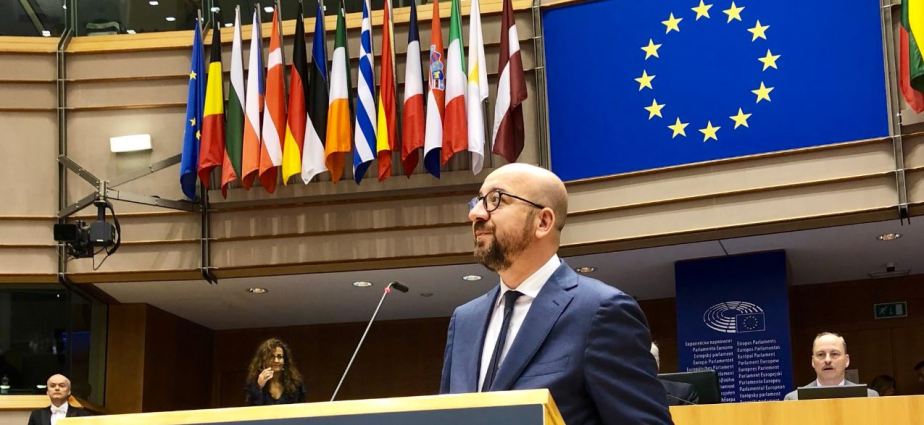
Belgium Prime Minister Charles Michel received warm welcome from European Parliament’s President Antonio Tajani,  who stressed the importance of these debates on #FutureofEurope with European leaders, which ‘enable us to look ahead at what we can do together: member states, Commission and European Parliament”. However we did not receive any confirmation for the ‘importance of the debate’ from the behalf of the overwhelming  majority of MEPs, who simply failed to show up.

A few of Parliament’s group leaders praised Michel’s commitment to a strong Europe that delivers  added value to citizens, referring to the city of Brussels not only as the capital of Belgium, but also as the heart of the Europe. However, their compliments did not sound very convincing in a big void space.

One can question if the idea to give the PM speech of such a paramount significance in Brussels during mini-plenary was such a good idea, and wouldn’t it be better to follow the established format of presenting Belgium in Strasbourg? But this thought by no means diminishes criticism towards MEPs who regard their participation in mini-plenary as ‘benevolat‘. It is definitely not.

The nonchalant attitude is especially detrimental in view of upcoming European elections. In case the citizens will adopt the symmetrical attitude towards MEPs and ignore polling stations, the European Parliament would simply suffer lack of legitimacy, dramatically affecting the #FutureofEuope, at least its #EU dimension.

Armenia political crisis deepens

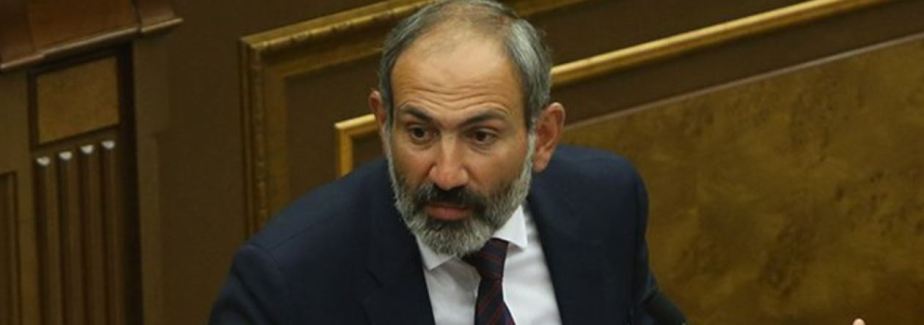
Armenian opposition leader Nikol Pashinyan has failed in his bid to become interim prime minister short of eight votes. The next step in legal procedure is the second Parliament sitting in a week time, expected to end in the similar stalemate, leading to dissolving of the institution, and snap elections. However, Republicans hope to organise the process, continuing to cling to power against all odds.

After a day of debate in the Parliament, Pashinyan  didn’t receive enough support despite being the only candidate for the post, while collecting 45 votes, eight short of the 53 he needed to have a majority in the 105-seat legislature. 

In  a very intense and sharp debate all parties had a consensus on keeping the matter as ‘interior policy problem’, without challenging any issues of foreign policy, and respecting international agreements and obligations, namely vis-à-vis Russia, the European Union, the Council of Europe and the other international organisations. They also agreed that the only way of the impasse lies though general elections.

However  the ruling Republican party was not willing to abandon power without resistance, motivating their disagreement to endorse the candidacy of Pashinyan as interim PM in his lack of a governing experience, especially taking into consideration complexity of military-political situation with  the frozen conflict in Nagorno-Karabakh. The denial allowed Pashinyan to remind to his opponents that  Nelson Mandela became South African President after long stay in prison brought to power by will of people, which is a decisive force in a democratic process. In his exchange with MP he also presented his views on a broad spectrum of issues, including Nagorno-Karabakh conflict, relations with Russia, Georgia, and denied any personal contacts with Russian opposition politician Alexei Navalny and Georgia’s Mikhail Saakashvili.

“Grilled” in a tough American style by MPs  Pashinyan said he would increase defence budget, blaming that last 15 years government failed to level military might with Azerbaijan. He also vowed to create conditions for repatriating Armenians from abroad, including those who would bring investments, linking the process to a substantial reform of system of justice, liberating it from its ‘totalitarian mentality‘. He put to shame Republicans, blaming them temptation to curb the judiciary to serve their political interests, even degrading to keeping ‘prisoners of thought’. The substantial amount invested in judiciary was spent on exterior – buildings and judges outfits, but not on establishing of its independence, he added.

An issue of ethnic minorities took a special place in a debate: Pashinyan insisted they don’t have political freedoms, and are almost obliged to be loyal to a dominant political force, the practise he would certainly end, opening to them an opportunity to join political life, and to choose freely, including joining the opposition.

However it was the question of children and youth that fueled most anger from the Republicans who considered Pashinyan  crossed red lines, inviting schoolchildren to join the protests. They received an answer that it is an experience, and education of civility, which would stay with them, and hopefully pass on to the future generations. The position forced one of the MPs to leave the audience in a protest for 10 minutes.

The rejection of Republicans to accept  the will of people, endorsing the only candidate as an interim PM to organise snap elections, caused the continuation of protests.

Pashinyan called the citizens to go on with actions of civil disobedience, he also addressed transport workers asking to join the strike to ensure a total paralysis, forcing ruling party of Republicans to accept the democratic transition without further delay.


.


Europarl: Tajani in Salvini’s shadow…

With Matteo SALVINI, MEP, leaving the European Parliament (EP) to lead one of the key economies of the European Union as a prime minister, the EU Institutions face one more set back. However in this particular case with Lega Nord chair ascendance, an extra turmoil is left behind in the Europarliament. 

The incumbent president of the EP Antonio Tajani lost his bid for premiership in Italy, after a short involvement in election at the side of Silvio Berlusconi, his former boss and powerful friend. Many ask, if the EU institution head should demonstrate such a passionate involvement in national politics, ready to ditch his office in Brussels for a glimpse of hope to become a national leader, to succumb to magnetic powers of the Eternal City…

However one can’t step into the same waters twice, Tajani returned to Brussels ‘on his shield’. An initial concept to ‘civilize’ far right Lega Nord in alliance with Forza Italia is in tatters –  it is Salvini, who surfaced as a victor, returning to European Parliament “with his shield”.

And now… There is the ‘loser’ of EP president from a  party, which scored so low in the elections; roughly half of Italy is in Eurosceptic camp, and another congregation which he treated like a nuisance ascended to command. Tajani compromised himself, demonstrating his EU office is his ‘second to best choice’  to his own detriment, and what a disservice to declining European project! Vanitas vanitatum!

#RoadToBrexit as a daydream

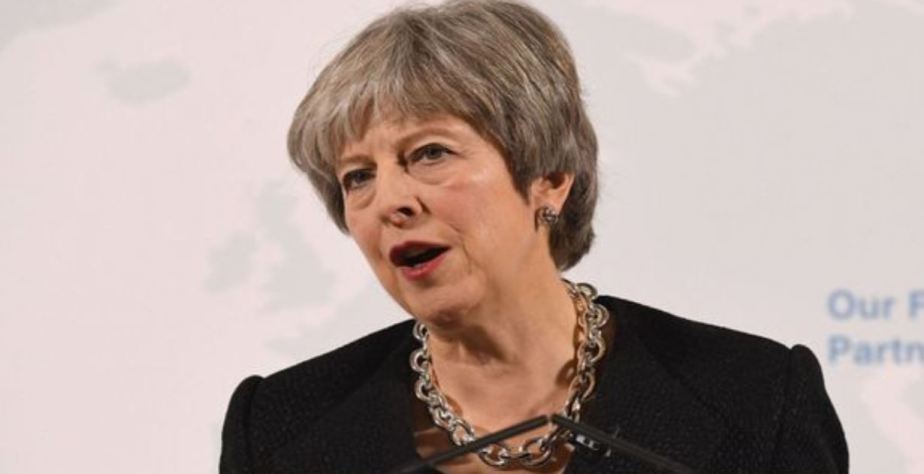
Undoubtedly the Manson House speech of the Prime Minister Theresa May has many virtues, offering constructive proposals for Article 50 agreement.  In general it is also attempts to appeal to common sense of the EU leaders, and is reflecting an intense search for the best possible new formula for matching interests of both parties, instead of fitting into old EU dogmas of ‘four freedoms’. May’s vision of the basis of post-Brexit engagement is orientated towards future: robotics and artificial intelligence, the new technologies and most of all the British genius, which brought the nation to the forefront of the Digital Revolution. But can this dazzling and dynamic new engagement attract Brussels?..

If we agree on the leading role of the “outstanding individuals” in sculpturing history, and take a close-up on European Union protagonists influencing Brexit negotiations, we’ll see that they function in totally different modus operandi than the looking forward British PM. The European Commission president (the ‘Prime Minister of Europe’) Jean-Claude Juncker is concerned with keeping the EU project intact in its original form, repeatedly referring to the forefathers – Robert Schuman and Jean Monnet who resurrected Europe from the ashes of the WWII on entirely new basis. Devoting his life to the ideas of the United States of Europe, Juncker’s major preoccupation is the risk of Brexit provoking a collapse of the entire 70 years old architecture, erected gradually after the European Coal and Steel Community united in 1950 in order to secure lasting peace.

Ideologically Juncker faces similar problems in dealing with Brexit as the Pope, who faced unpleasant news from a rebellious English King, rejecting to acknowledge his authority, and thus pay tribute to the Holy See. Juncker’s preoccupation is not to let the heresy to spread, subsequently the creation of a new ‘dynamic and vibrant’ engagement with London would be detrimental to the original project, showing to the other member-states, that life outside the EU can be so much better than inside.

In this case May’ appeal to embrace together the wonders of Digital Revolution falls on deaf ears: Juncker, as usual, is looking backward, contemplating ashes of the WWII. Keeping in mind the origins of the European project, the protection of its ‘sacred’ four freedoms from British ‘heresy’ becomes paramount. Allowing the new engagement to be a success means to give in to those, who ‘betrayed’ the great idea of Schuman, and  ‘tricked’ Britons into the trap of leave vote – an unthinkable compromise for such a ‘guardian’ of the EU Treaties as Jean-Claude Juncker.

In this context one can not exclude the ‘no-deal’ scenario, when the UK faces Brexting on WTO rules. Anyway, when dealing with dogmatics, it would be useful to keep an ace up the sleeve:)


The Cheat La Tour

Citizens versus ‘United States of Europe’

According to the YouGov poll published 30% of Germans and 28% of French support the idea of the United States of Europe, while 33% and 26¨% respectively, disagree. In other countries, such as Sweden, Finland, Denmark, Norway and the UK, the population largely opposed the proposal, with around half of the respondents speaking against the idea.

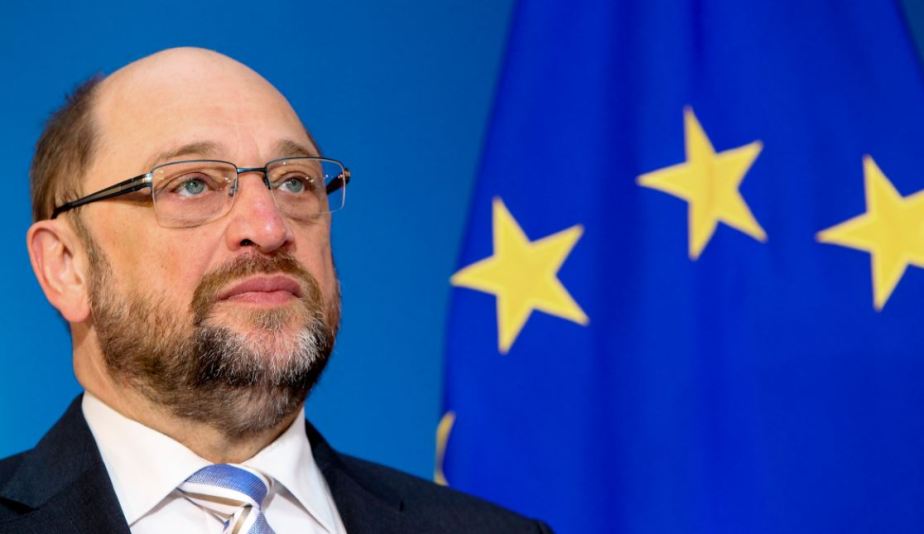
Earlier this month in Germany an SPD party convention  former president of European parliament Schulz suggested transformation the European Union  into a the “United States of Europe” by 2025 and adopting a constitution, realising the dream of the block’s forefathers: Robert Schuman and Jean Monnet.


Saint-Petersburg bomb explosion named “incident”

The victims of the bomb explosion in Saint-Petersburg supermarket are ironic about the qualifying of the blast as a “murder attempt in public place”: “Assassinating us for food baskets?!”. The official version is obviously doubtful, taking into consideration the fact of the home-made engine spreading shrapnel or “frag” – fast-moving pieces of metal thrown off by a detonation, leaving 10 people seriously injured, and one in a critical condition. Among wounded is also a pregnant women.

The investigation is led by the National anti-terrorist committee, however the word “terrorism” is avoided in public discourse; the video with major suspect entering the supermarket, and some other images of the interior with damages were published by the anti-terrorist committee as well. The obvious official hypocrisy has political  reasons.

Petersburg media interpreted the approach of the authorities as an attempt to play down the gravity of the situation, damaging New Year celebrations atmosphere in town. The issue is particularly delicate, because the blast happened in the home city of the incumbent and future President of Russia Vladimir Putin, who will be re-elected on 18 March under slogans of “stability” (read “stagnation”). The terrorist act during festivities, committed by an individual of “non-Slavic” appearance, as the investigators stated, is seriously undermining the Disney-land image of happy and stable Russia the clans at power are attempting to project, justifying their choice for continuity of Putin’s unchallenged reign.

The rise of Islamists in Russia is aggravated by open border with the Central Asian countries, influenced by Islamic State radicals, who are constructing a belt from Iraq to Afghanistan, via Central Asian countries, regrouping their forces after the major defeat of the Caliphate in the Middle East.

Leonardo as a Gastarbeiter

Josef et Mary

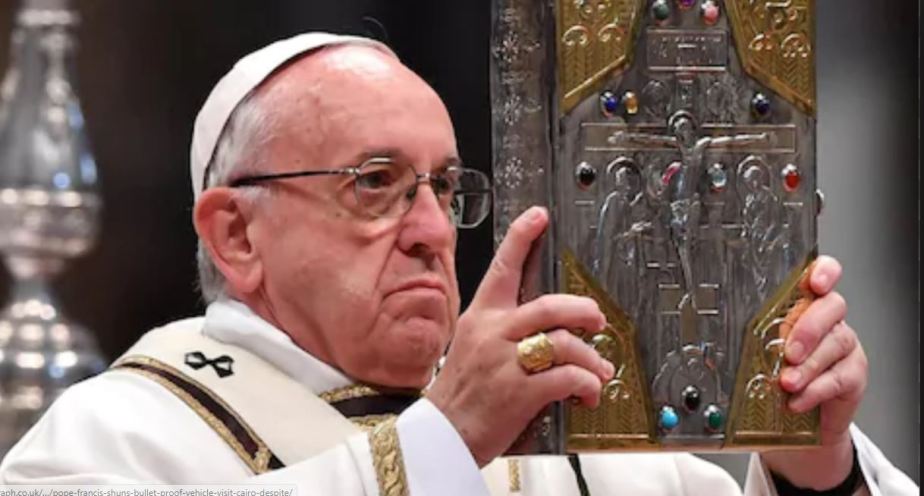
The comparison of modern asylum-seekers and migrants to Holy family, fleeing King Herod 2017 years ago, pronounced in the Christmas Eve prayer of Pontifex is at most extravagant allusion even in terms of Jorge Mario Bergoglio’s atypical for high clergy personality.

In first place as the ultimate authority in interpretation of The Bible, Pontifex should have known, that Jesus, Mary and Joseph were not looking for an asylum abroad, but were moving within the Kingdom of Herod, although this is not the essential criticism.

The Biblical episode can not serve as a model delivering a solution of a problem of refugees, because first of all they became too numerous in modern word to accommodate in ‘rich’ countries. Pontifex continuous reproaches of Europeans for not doing ‘enough’ for asylum-seekers and migrants do not lead to the root problems resolution – the poverty in the countries of origin, and protracted conflicts, some of which date to epoch prior to  Jesus birth.

A simple gesture of kindness of good Samaritans does not offer a key to the complex phenomenon of mass migration to Europe, neither does it help in their further integration. On contrary its simplification leads away from the effective answers.

The example of Sweden is a convincing evidence that the kindness Pontifex requires as a solution is an illusion.

Praised for its hospitality, receiving more than 160 000 migrants from Africa and Middle East since 2015, Sweden has been rapidly degrading into a Third world country, with a correlating  rate of crimes, and growing no-go zones.  Apparently Pontifex omitted that nowadays migrants do not always have the gentle nature of Joseph!

“The integration [of immigrants]  does not go as it should. We had a problem with it before the autumn of 2015, when Sweden accepted a wave of migrants. For me it is obvious that we cannot accept more asylum seekers than we can integrate. It will not be good either for people who come here or for the whole society,” said the Swedish Finance minister Magdalena Andersson. Her words are the epilogue to the mass-scale experiment of a promoted by Pontifex model.

Joseph, Mary and Jesus as a son of asylum-seekers. The parallels are far to simplistic and linear to respond to the unfolding demographic crisis in Africa with eight children per women born in poverty. The allusion  would sound grotesque if articulated by someone else than the Bishop of Rome: asylum-seeker Joseph… And Leonardo as a Gastarbeiter.

Welcome Gastarbeiters they will paint you smile of Mona Lisa! 🙂

Mona Lisa Duchamp