Gen.Clark: Ukraine can regain control over Crimea

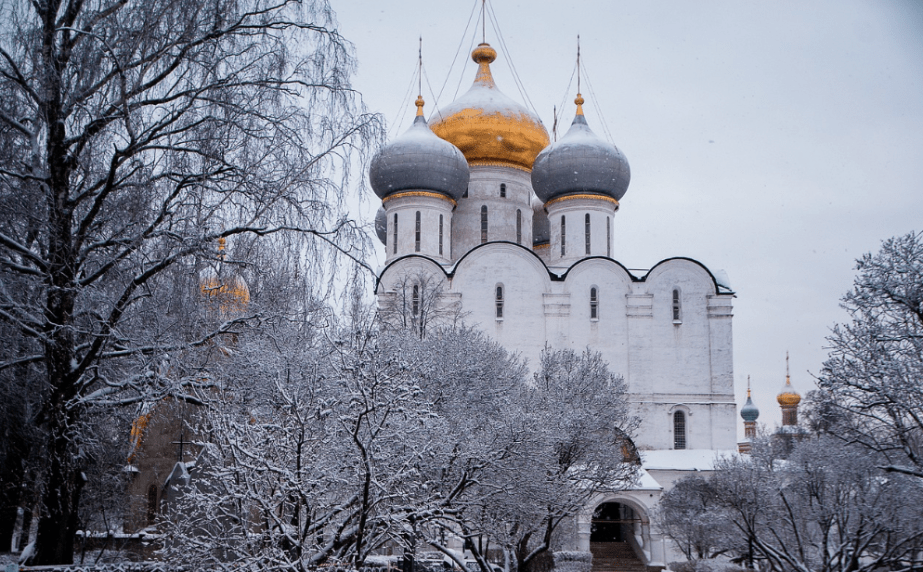
Brussels 12.01.2023 Since August, Ukraine has conducted successful counteroffensives in the north and south, taking back over 50 percent of the territory that Moscow seized after the full-scale invasion on February 24, 2022. Ukraine has also conducted successful strikes on Russian military bases in Crimea and on Black Sea Fleet near Sevastopol (pictured).

Some experts have argued that now is the time for Ukraine to retake Crimea, nine years after Vladimir Putin’s annexation in 2014. Were Ukraine to move in the south and break the land Kerch bridge running from Russia to Crimea, Moscow’s hold on the peninsula would be in danger.

Ukraine can regain control over Crimea, said Gen.Wes Clark, on condition it would be given the offensive weapons. The retired general expressed his opinion of a strong possibility of such a scenario on condition of the U.S. military support in the various fields, including intelligence.

https://youtu.be/AB8emsKoyW0

Image: social media.

Putin announces Xmas cease-fire

Brussels 05.01.2023 Russian President Vladimir Putin on Thursday ordered a 36-hour cease-fire in Ukraine over Orthodox Christmas, the first major truce of the more than 10-month war that has killed tens of thousands and devastated swaths of Ukraine.

Putin ordered the cease-fire to begin on January 6, the Kremlin said. Many Orthodox Christians, including those living in Russia and Ukraine, celebrate Christmas on January 6-7.

Putin did not appear to make his conditional on Ukrainian agreement to follow suit.

But it wasn’t clear whether hostilities would actually halt on the 684-mile front line. Ukrainian officials have previously dismissed Russian peace moves as playing for time to regroup their forces and prepare for additional attacks. A senior Ukrainian official quickly dismissed the proposal.

“The Russian Federation must leave the occupied territories — only then will it have a ‘temporary truce.’ Keep hypocrisy to yourself,” presidential adviser Mykhailo Podolyak wrote on Twitter.

Patriarch Kirill of Moscow, the head of the Russian Orthodox Church, called earlier Thursday for both sides of the war in Ukraine to observe a Christmas truce.

Paris Mosque versus writer Houellebecq

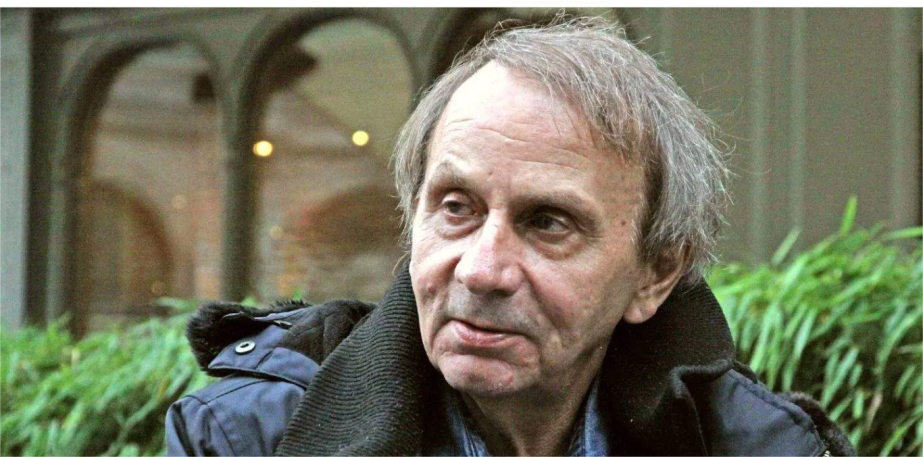
The rector of the Grand Mosque of Paris has filed a complaint against award-winning French writer Michel Houellebecq over “staggeringly brutal” comments made during a recent interview in which the author drew divisions between “native French people” and “the Muslims” responsible for “robbing and assaulting them”.

In a statement published on Twitter, the Grand Mosque of Paris announced it had filed a complaint against Michel Houellebecq following “very grave comments he had made about Muslims in France”.

The statement referred to a “long conversation” between Houellebecq and philosopher Michel Onfray – the founder of “anti-system” magazine Front Populaire – published in November.
The wish of the native French population, as they say, is not that Muslims assimilate, but that they stop robbing and assaulting them. Or else, another solution, that they leave,” Houellebecq is quoted as saying.

The statement, signed by the mosque’s rector Chems-Eddine Hafiz reads:

“When entire territories are under Islamic control, I think that acts of resistance will take place. There will be attacks and shootings in mosques, in cafés frequented by Muslims, in short Bataclan in reverse,” referring to the 13 November 2015 terrorist attack on the Paris concert hall.

“The wish of the native French population, as they say, is not that Muslims assimilate, but that they stop robbing and assaulting them. Or else, another solution, that they leave,” Houellebecq is quoted as saying.

Houellebecq, one of France’s most renowned authors, has written fictionalised accounts of the “Islamisation” of France, but the Paris Mosque claims his comments in a published interview infringe France’s anti-discrimination laws.

Houellebecq, one of France’s most renowned authors, has written fictionalised accounts of the “Islamisation” of France, but the Paris Mosque claims his comments in a published interview infringe France’s anti-discrimination laws.

The rector of the Grand Mosque of Paris has filed a complaint against award-winning French writer Michel Houellebecq over “staggeringly brutal” comments made during a recent interview in which the author drew divisions between “native French people” and “the Muslims” responsible for “robbing and assaulting them”.

In a statement published on Twitter on Wednesday, the Grand Mosque of Paris announced it had filed a complaint against Michel Houellebecq following “very grave comments he had made about Muslims in France”.

The statement referred to a “long conversation” between Houellebecq and philosopher Michel Onfray – the founder of “anti-system” magazine Front Populaire – published in November.

The statement, signed by the mosque’s rector Chems-Eddine Hafiz, quotes an extract:

“When entire territories are under Islamic control, I think that acts of resistance will take place. There will be attacks and shootings in mosques, in cafés frequented by Muslims, in short Bataclan in reverse,” referring to the 13 November 2015 terrorist attack on the Paris concert hall.

“The wish of the native French population, as they say, is not that Muslims assimilate, but that they stop robbing and assaulting them. Or else, another solution, that they leave,” Houellebecq is quoted as saying.

The Grand Mosque described the remarks as “unacceptable” and implied that Muslims were “not real French people”.

It wrote that the comments constitute “an incitement to hatred against Muslims” and “a call to reject and exclude the Muslim component as a whole”.

The statement cites a recent decision by the European Court of Human Rights (ECHR) which upheld the conviction of former far-right French presidential candidate Eric Zemmour for “inciting discrimination and religious hatred” over comments targeting France’s Muslim community.

“The court held that the interference with the applicant’s right to freedom of expression had been necessary in a democratic society to protect the rights of others that were at stake,” the ECHR wrote in a statement on 20 December.

Houellebecq won the Goncourt Prize – France’s highest literary honour – in 2010.

But he is no stranger to controversy.

His 2015 fictional novel Submission, about the rise to power of an Islamist president in France, won acclaim but also sparked concern over fomenting anti-Muslim sentiment.

The philosopher, Robert Redeker, who was the victim of a fatwa forcing him to live for a time under police protection, supports Michel Houellebecq, targeted by a complaint from the Great Mosque of Paris for “provoking hatred against Muslims”

Lavrov: Donbass “must be liberated”

Brussels 29.12.2022 The Donetsk (DNR) and Lugansk People’s Republics (LPR), as well as the Zaporozhye and Kherson regions, which joined Russia following referendums, “need to be liberated”, Russian Foreign Minister Sergey Lavrov said to Russian Channel One TV. (Image above: archive)

While answering a question about the borders of the regions that he was referring to, Lavrov said: “I am certainly talking about their borders as parts of the Russian Federation, based on the Russian Constitution.”

“It stems from the people’s will expressed in the four regions. It happened a while ago in the Donetsk and Lugansk People’s Republics and this fall in the Zaporozhye and Kherson regions,” Lavrov added.

The top diplomat underlined that Russia was determined to make sure that its special military operation would achieve its goals. The four regions “need to be liberated from the threat of Nazification that they have faced for years” he added.

From September 23 to September 27, the Donetsk People’s Republic (DPR) and the Lugansk People’s Republic (LPR), as well as the Kherson Region and the Zaporozhye Region, held referendums where the majority of voters opted to join Russia. On September 30, Russian President Vladimir Putin and the heads of the DPR and the LPR, the Zaporozhye and Kherson Regions signed treaties on their accession to Russia. On October 4, Putin signed laws ratifying the treaties.

Russia refuses gaz price dictatorship

Brussels 19.12.2022 “This is a violation of the market pricing process, an encroachment on market processes. Any references to the “ceiling” are unacceptable,” the Kremlin spokesman Dmitry Peskov (pictured) said to the reporters, reacting upon the EU Energy ministers decision to create a cartel of gas buyers to dictate price of Russian natural gas.

The EU countries have agreed on a dynamic gas price ceiling of €180 per MWh (approximately €1.85 thousand per thousand cubic meters), which will apply from February 15, 2023. This is stated in a statement issued by the EU Council on Monday, December 19.

Winter 2023/24: point of no return for the European Union?
“The gas price correction mechanism can be activated from February 15 under two conditions: if the gas price holds for three days at the level of €180 and if the difference between TTF (EU) prices and the average world price for liquefied natural gas is more than €35 “, the document says.

The corridor for setting prices for futures will be limited to the mark, which is equal to the average price of LNG on the world market plus €35. It will be impossible to place trading positions above this mark with the current price correction mechanism.

“Thus, this mechanism does not set a hard price ceiling, but it will prevent the occurrence of sharp jumps in gas prices,” European Commissioner for Energy Kadri Simson said at a press conference in Brussels.

Lavrov: Russia resists sanctions

Brussels 19.12.2022 Russian Foreign Minister Sergey Lavrov and his Belarusian counterpart Sergey Aleinik discussed the Ukrainian crisis and ways to resist the West’s waves of sanctions pressure at a meeting on Monday, the Russian Foreign Ministry said in a statement, TASS news agency reports.

“The parties exchanged views on international and regional issues, including the situation around the Ukrainian crisis. They reaffirmed their determination to coordinate steps on international platforms and efforts to resist the political and illegal sanctions pressure that Russia and Belarus have been facing from unfriendly countries,” the statement reads.

According to the Russian Foreign Ministry, the parties also discussed pressing bilateral issues, interaction within the Union State and other Eurasian organisations. “Special attention was paid to ensuring diplomatic support for the implementation of Union State programs concerning the economic integration of the two countries, cooperation within the CIS [Commonwealth of Independent States], Russia’s upcoming chairmanship of the EAEU [Eurasian Economic Union] and Belarus’s chairmanship of the CSTO [Collective Security Treaty Organization],” the statement added.

The diplomats also discussed upcoming foreign policy events, including preparations for a joint board meeting of the Russian and Belarusian foreign ministries.

Ukraine: Orban warns EU of consequences

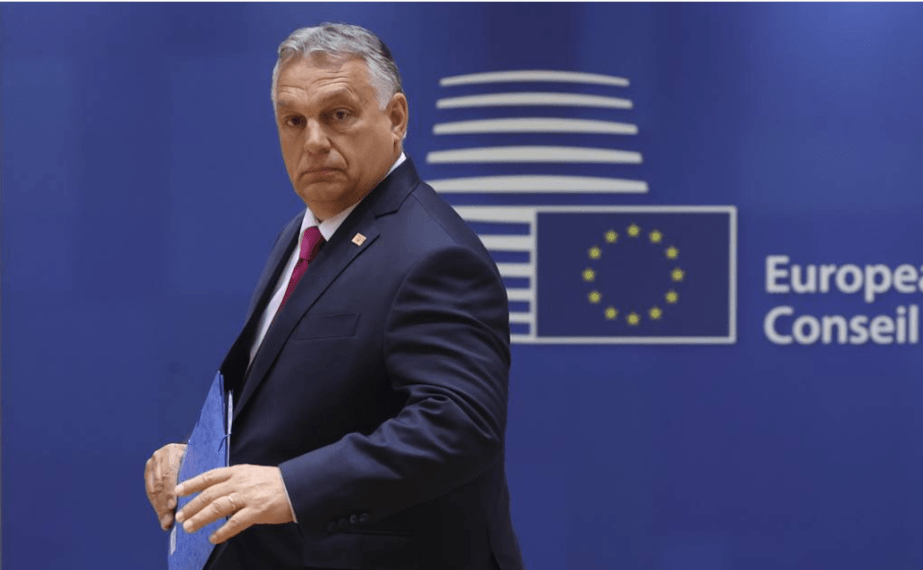
Brussels 07.12.2022 The Hungarian leader Viktor Orban told “Good morning, Hungary!” that EU sanctions on Russian energy are bound to fail, and that “not only our children, but also our grandchildren will suffer the consequences” of a mass borrowing scheme proposed by the EU, adding that potentially insolvent states will require support as well.

Orban reiterated Hungary’s opposition, and suggested that agreements to support Ukraine should be at the national level via bilateral agreements between individual countries, ReMix reports.

He highlighted that Ukraine has now found itself in a situation whereby it is incapable of functioning as an independent nation because of the ongoing conflict, and while it needs help from its neighbors and allies in the short-term, it is not for Brussels to speak on behalf of all member states.

What’s more, Orban believes that any further sanctions on Russian gas or nuclear energy would have “tragic consequences,” and argued that Hungary should be exempt from such a decision.

“We are facing a difficult winter, Ukraine is in an increasingly difficult situation, Russia is suffering difficulties, but its revenues from energy carriers are at their peak, so the policy of sanctions has not achieved its goal,” he said, explaining that while Hungary won’t be subject to an upcoming ban on European imports of Russian oil, it will still be affected by the “price-inflating effect of the sanctions.”

“We have always achieved our own national goals in the negotiations on sanctions, so we are participating in the discussion of the ninth package with good hopes,” Orban concluded, while noting that the “pressure is constant,” and that Hungary must “constantly fight to protect our interests.”

Brussels bailing out Ukraine will ruin Europe for generations, Hungary’s Orban warns.

EU regrets Russian LGBT law

Brussels 24.11.2022 “The EU regrets further repressive measures adopted by the Russian State Duma, related to the so-called “foreign agents” legislation and the LGBTI legislation. The recently proposed amendments to the citizenship legislation are also deeply worrying” the European External Action service press person said.

“These legislative developments fuel homophobia and further deepen the harsh repression of any critical and alternative discourse in the context of Russia’s illegal, unprovoked and unjustified war of aggression against Ukraine, which the EU continues to condemn in the strongest possible terms”.

“The European Union stands in solidarity with Russian citizens who are prevented from exercising their human rights”.

NATO: Russia as “terrorist state”

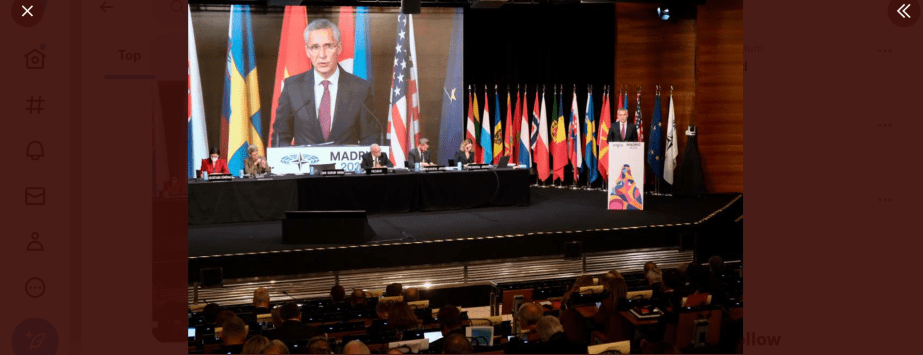
Strasbourg 22.11.2022 The North Atlantic Treaty Organisation Parliamentary Assembly (NATO PA) on Monday 21 November supported the proposal of the Ukrainian delegation and adopted a unanimous resolution defining Russia as a “terrorist state” during its 68th Annual Session.

The PA passed a series of resolutions calling on the 30 NATO allies to intensify support to Ukraine’s resistance and assistance to the country’s integration into Euro-Atlantic institutions. The PA announced to the allies that the “Russian state under the current regime is a terrorist one.”

President of the PA Joëlle Garriaud-Maylam condemned Russia´s war on Ukraine and noted that “Western allies had failed to listen to the warnings of their Eastern partners before President Vladimir Putin ordered Russian troops into Ukraine.”

“Now, no doubt is possible, Russian leaders, are acting like real terrorists, showing unprecedent barbarism by attacking civilians and civilian infrastructure. We must act, and they must be judged as terrorists in front of international tribunals. As NATO parliamentarians, we must support Ukraine, we must support its people. People who are everyday showing courage and resilience in the service of our values of Freedom, democracy and sovereignity”, the president Garriaud-Maylam declared.

Ukrainian President Volodymyr Zelenskyy addressed the Assembly through video conferencing and called the NATO Allies to stand firm against Russian aggression and step up support to Ukraine.

“Ukrainians are sure we can defend ourselves in this war, we can reinstate our borders, European borders, along the full length of our southern and eastern flanks. The power of our democracy will be a guarantee that no tyranny to the east of us will be able to threaten Europe.

Other international bodies have also condemned Russia’s war in Ukraine.On October 13, the Parliamentary Assembly of the Council of Europe. (PACE) unanimously adopted a resolution calling the Russian Federation a terrorist regime. PACE became the first international organisation to recognise Russia as a terrorist state. PACE passed another resolution on November 16 to recognise Russia as a state sponsor of terrorism. On November 14, the United Nations General Assembly passed a resolution stating that Russia must be held accountable for international law violations during its war in Ukraine and must pay war reparations.

Pentagon: U.S. military in Ukraine

Brussels 03.11.2022 U.S. Air Force Brigade General Pat Ryder acknowledged during an official briefing that active-duty U.S. military personnel are not only deployed in Ukraine, but are operating far away from the U.S. Embassy in Kiev.

The day before, an unnamed U.S. Department of Defense official said at a background briefing that “U.S. personnel” had “resumed on-site inspections to assess weapon stocks” in Ukraine.

Reporting on this announcement, NBC News noted that “these inspectors in Ukraine appear to be some of the first members of the U.S. military to re-enter the Eastern European country since the start of the war, outside of military guards posted at the U.S. Embassy…”

During Tuesday’s on-camera briefing, Travis Tritten of military.com asked, “The military has personnel inside of Ukraine, who are doing weapons inspections now. I’m wondering what the rules of engagement for those personnel are if they are fired on by the Russians or they are targeted by the Russians.”

“We do have small teams that are comprised of embassy personnel that are conducting some inspections of security assistance delivery at a variety of locations” Ryder said.

“My understanding is that they would be well far away from any type of frontline actions, we are relying on the Ukrainians to do that, we are relying on other partners to do that…. They’re not going to be operating on the front lines” he continued.

“We’ve been very clear there are no combat forces in Ukraine, no US forces conducting combat operations in Ukraine, these are personnel that are assigned to conduct security cooperation and assistance as part of the defense attaché office” the general said.

To this explanation, Tritten replied: “But this would be different because they would be working outside the embassy. I would just ask if people should read this as an escalation.”

Ryder claimed that the U.S. action was not escalatory, and simply refused to answer Tritten’s question about what the Washington would do if any active-duty U.S. troops were killed.

At present Russia has expanded its targeting of logistics sites throughout Ukraine, with weapons depots being a major target. The question “what will be the consequence if these U.S. troops, serving as liaisons for the coordination of logistics and weapons shipments, are targeted, including inadvertently, by Russia?” remains unanswered.

The United States has exported weapons, but also ensured economic assistance for Ukraine, altogether mounting to $50 billion. Having financed and supplied the war, the Washington intends to control the weapons trajectory and use. The ambivalence caused by reports of the growing black market of weapons has fuelled and argument within the American political establishment in advance of the midterm elections.

The U.S. military and State Department are increasingly concerned that advanced weapons may end up in the hands of elements within Ukraine that may use them in a way that Washington has not approved beforehand.

The Pentagon’s statements followed the release of a report by the State Department on its plans to “Counter Illicit Diversion of Certain Advanced Conventional Weapons in Eastern Europe.”

The report referred to “a variety of criminal and non-state actors [who] may attempt to acquire weapons from sources in Ukraine during or following the conflict, as occurred after the Balkan Wars in the 1990s.”

Unfortunately, the “Criminal” actors, however, are embedded in the Ukrainian military, particularly in the form of the fascistic Azov Batallion, which is playing a frontline role in the war against Russia and whose leaders have been brought to Washington where they received warm welcome by Congressmen, Democrat and Republican alike.

The open secret is that the actual U.S. force presence in Ukraine is far greater even than that admitted by the Pentagon.

In October, veteran journalist James Risen reported that the Biden administration had authorized the clandestine deployment of U.S. Special Forces in Ukraine.
“Clandestine American operations inside Ukraine are now far more extensive than they were early in the war,” wrote Risen.

Secret U.S. operations inside Ukraine are being conducted under a presidential covert action finding, current and former officials said. The finding indicates that the president has quietly notified certain congressional leaders about the administration’s decision to conduct a broad program of clandestine operations inside the country. One former special forces officer said that Biden amended a preexisting finding, originally approved during the Obama administration, that was designed to counter malign foreign influence activities.

In July, the New York Times reported that dozens of US ex-military personnel are operating on the ground in Ukraine and that retired senior US officers are directing portions of the Ukrainian war effort from within the country.

US forces are intimately involved in all aspects of Ukrainian military operations, having helped provide intelligence for the strike that sunk the Moskva, the flagship of the Russian Black Sea fleet, in April, and for Ukrainian strikes that have killed Russian generals.

The announcement comes amidst a major escalation of the war over the past month. Following military setbacks in both Northern and Southern Ukraine, Russia has mobilized hundreds of thousands of reservists, annexed four regions of Ukraine, and threatened the use of nuclear weapons to defend them.

A series of major provocative actions targeting Russia have massively increased tensions, including the bombing of the Nord Stream gas pipelines, for which Russia has blamed the United Kingdom, along with the assassination of Russian far-right ideologue Daria Dugina and the bombing of the Kerch Bridge, which the New York Times reported were carried out by Ukrainian forces.

Over the weekend, Ukraine carried out an attack on Russia’s Black Sea Fleet, the Times reported, which prompted Russia to shortly withdraw from its grain agreement with Ukraine, threatening to escalate the global food crisis.

Under these conditions, forces within the U.S., including admiral James Stavridis, have renewed calls for more direct U.S. intervention, including in the form of the dispatch of warships to the Black Sea.