Philadelphia: PM May on EU

may-in-phila

“…Nations, accountable to their populations – “deriving” as the Declaration of Independence puts it “their just powers from the consent of the governed” – can choose to join international organisations, or not. They can choose to cooperate with others, or not. Choose to trade with others, or not.

Which is why if the countries of the European Union wish to integrate further, my view is that they should be free to do so. Because that is what they choose.

But Britain – as a sovereign nation with the same values but a different political and cultural history – has chosen to take a different path.

Because our history and culture is profoundly internationalist.

We are a European country – and proud of our shared European heritage – but we are also a country that has always looked beyond Europe to the wider world. We have ties of family, kinship and history to countries like India, Pakistan, Bangladesh, Australia, Canada, New Zealand, and countries across Africa, the Pacific and Caribbean.

And of course, we have ties of kinship, language and culture to these United States too…”

UK PM Theresa May’s speech to Republicans, Philadelphia, 26 January 2017

EC: Leviathan gas ranks high

Today high-level contacts between Israel and European countries on laying a gas pipeline from the Leviathan natural gas reservoir are about to take place. Reportedly the Ministry of National Infrastructure, Energy, and Water Resources director general Shaul Meridor will travel to Brussels  on Monday 23/01 to meet his counterparts from Italy, Greece, Cyprus, and the European Commission officials. The meeting is arranged to prepare for a summit between the four countries’ energy ministers next month in Israel.

However the issue of its economic viability of the Leviathan has been debated for some time without any definite outcome. Gas experts express doubts about the project’s benefits: transporting gas over such distances would increase the price by $3-4 per heat unit. The same time such a projet fits into the energy diversificaiton policy of the EU, aiming at independence, or at least lesser dependence  from Russian gas imports.

PM May: UK surfs global

SAM_5363.JPG
In a comprehensive and inspirational speech Prime Minister Theresa May has sketched a framework for Brexit goals and future of the UK-EU relations. In a way she picked up a glove of those sceptics, including recently quit ambassador to EU Ivan Rogers, who were hinting the government had no plans, no clarity, and even suggested that it will take a decade to Brexit due to ‘mission impossible’.
However now there are concepts both for the post-Brexit UK surfing in the global world and relations with the EU as ‘strategic partner’, but no attempts to get anything close to membership. No Single Market, but an ambitious free trade agreement with the EU, and customs deal, ‘keeping open mind’. Indeed, no sense to start everything from a scratch.
Although May used as a refrain the suggestion of partnership  with the EU in many areas, she made it clear-cut, that no deal is better than a bad deal, which should go for endorsement by the UK Parliament in case of achievening a result.
For the EU institutions this means an additional bitter pill to swallow, because the UK departure without ‘a deal’ means not only leaving mandarins with a considerable hole in the pockets depriving of handsome British contribution to the EU budget, but a heavvy loss of workplaces related to trade and services, adding steam to Euro scepticism, already blaming EU austerity politics for sluggish economic growth.
The ‘hard’ #Brexit is on the cards, and ‘no deal’ is a real perspective in case British negotiators will be confronted with dogmatism which became a visit card of Juncher’s Commission, prescribing ‘more Europe’ as a universal remedy for all kind of problems to occur.
However it is an image of the UK ‘global’ which is the most catchy for many who aspire liberation from the EU ‘directives’ and ‘regulations’, ‘more Europe’ and ‘4freedoms’, which became inseparable like 10 commandments of Christ, without being so highly contribution to public mores, observing new realities of workers from different European member states receiving different salaries for the same job. Times of sweeping changes are coming. Who  is the next caught in the UK whirlwind of ‘global surging’?
Anna van Densky,  OPINION,  17/01/2017, Brussels
(Photo: illustration)

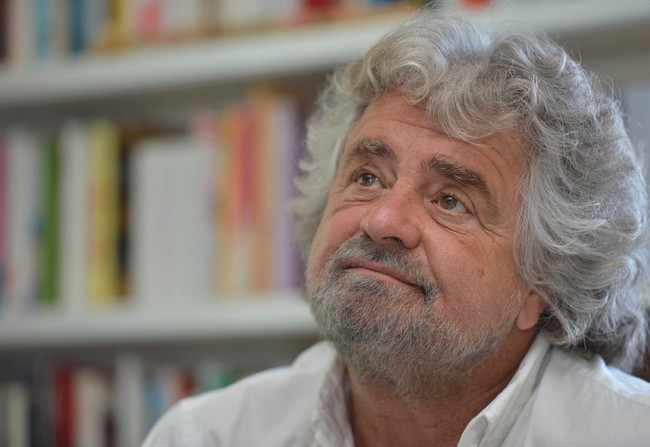
‘Five Stars’ MEPs to join Liberals

beppe-grillo

Today he Italian Five Star movement  launches negotiations over joining ALDE group in the European Parliament, meaning an enlargement of the EP Liberals by 17 MEPs. Certainly a hight tight for Guy Verhofstadt, who recently launched campaign #guy4president, wishing to chair the institution.

The decision of abandoning the Europe of Freedom and Direct Democracy (EFDD) group appeared after on-line Five Star party vote concluding 80% of participants supportive of the idea of joining the European Liberals.

Apparently,  for Five Star leader and former Italian comedian Beppe’s Grillo ALDE is ‘second to best’ choice, because initially he attempted to join the Greens, but has not found reciprocity. The necessity of leaving of the EFDD group lead by #Brexit ideologist MEP Nigel Farage became obvious immediately after the UK referendum when the major political objective was attained, said Grillo, commenting the anticipated change. However the independent experts noticed , that at the moment there is no clarity how the Five Star will harmonise its political programme with the Liberals in view of many incompatible positions.

(Source: ‘5 Stars movement’)


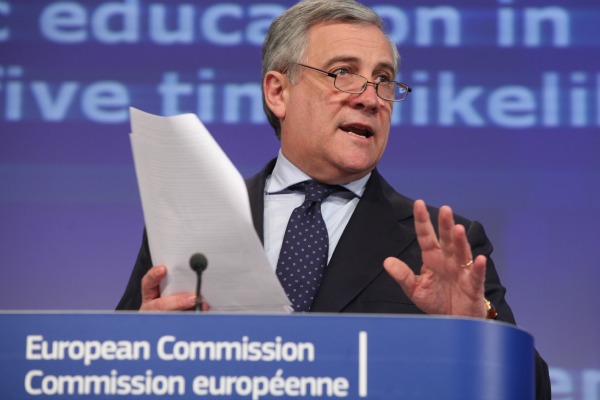
MEP Tajani for European Parliament President

tajani-commissioner

The promotion of the former EU Industry top civil servant Antonio Tajani (Italy, EPP) from Barroso’s Commission to the position of the European Parliament president, once again demonstrates the failure of the institution to  renew. The civil servants becoming politicians and politicians styled into mandarins, surfing freely between  Schuman and Luxembourg squares, just hanging backdrop of the official photos, do not inspire confidence of the EU citizens, trying to figure out a raison d’être of the EU costly project, while getting increasingly confused between loyalties and separations of powers.

Nobody is going to held Antonio Tajani (63) responsable for a move of his former boss José-Manuel Barroso accepting a chairmanship at Goldman Sachs, however the maneuvering of Tajani as the Industry Commissioner to Member of the  European Parliament (MEP), with a view of ascending to the top of the latter, makes the whole intrigue look more as a part of a chess game, than a progressive political process, reflecting public interest.
Once the spokesperson of Silvio Berlusconi, Tajani made a spectacular career in the EU institutions, coming just as a replacement of a departing for a national appointment college. With zero chance to receive a second mandate as a civil servant to ‘reign’ over the EU industry while rival party gained power at home, he returned to active politics in European elections to mold into a Member of the European Parliament immediately after
the end of his mandate in the Commission.
At present a much-anticipated farewell of twice a president of the European Parliament Martin Schulz (61),(Germany, S&D) evoked European People’s Party (EPP) to claim its rights, indicating that the second mandate of Schulz was already against all the odds, because according to the  major agreement the five years Parliamentary term was divided between representatives of two biggest political groups EEP  and Socialists and Democrats.
However the double mandate of five years  of a Socialist did not become a window of opportunity to new political actors. No new generation, no new member-states, no new leaders, but the former Commission apparatchik from fading ‘Forza Italia’ party, claiming to be a brand new political group, led  by one of the most controversial figures of Italian politics, four times Prime Minister – Silvio Berlusconi (80), whose lucky star is at decline.
Reportedly Tajani is campaigning, looking for support at home and among the other political groups in the European Parliament. The situation should be clarified mid-January, because Social democrats leader Gianni Pittella (IT, S&D) does not accept EEP president bid, claiming it will ruin the fine balance among the EU institutions, leaving socialists in minority in position of leadership.
The beginning of this year a long standing leader of EP Liberals – Guy Verhofstadt (63) (ALDE, Belgium) entered the presidential race, in hope for tactical votes.
However the chances of Mr.Tajani to raise to the summit remain high, thanks to support of his own political group – the most representative in the EP.
Still it looks the idea of renewal remains foreign to the Europarl, along with the idea of gender equality  largely remaining a rhetoric exercise: since Simone Veil (1979-1982) no one women-politician ascended the president’s position, acutely no women before either.
The true impact of institutional stagnation expressed in reshuffling the very same people over and over again will be concluded at next Parliament elections, when the European citizens will come to drop their ballots, or will not come. So far last two decades the turnouts for European elections are in study decline.
#Anna van Densky

Sir Rogers: adieu to ‘belle époque’

sam_3924

The stepping down of the UK’s ambassador to the EU, Sir Ivan Rogers continues a ‘natural’ process of  replacement of Eurocentrics by Europscpetics, namely ‘remainers’ for ‘brexiters’. If in times of his appointment in 2013 the enthusiasm for common European future was an asset,  as much as along  the ‘StrongerIn’ campaign,  in post-Brexit vote period it is a handicap. The times are changing, but not everyone is ready to change with times, some prefer to keep their personal integrity, speaking their ‘truth’ to those at power. Their choice should be respected.

But the ‘remainers’- poor losers they are – hurried to use to political ends the personal decision of ambassador, instead of accepting it as a part of a logical renewal. The type of a damaging for the common interest frenzy as both the UK and EU27 need pragmatic approach to diminish the emotional element and to implement the will of British people in a constructive way without lyrics and laments.
With a pinch of English humor in a Swiftian style, Sir Rogers hinted on an “exiting” year in Brussels ahead of his stuff, the experience he has no intention to share. However he kindly leaves some guidelines formally to his staff, but in reality to his bosses in London, the element many ‘remainers’ hurried to present as a ‘blow’ to the PM Theresa May. In vain. It is not ‘indecisive’ government, it is a EU project on the crossroads.
From the first lines Rogers admits the need to form a stable and devoted new team to follow the process from evocation of Article 50 through the negotiations to the end.
He also advises the replacement of his deputy to create an entirely new leadership for the diplomatic crew to engage fully in the future negotiations as one team.
Complaining about absence of clarity for Brexit negotiation objectives, the same time Rogers looks beyond his Brussels ‘situ’ to acknowledge the fact of changing political environment the UK is facing while departing from the project.  Indeed, the UK government has no crystal ball to guess the outcome of the multiple elections taking place in EU27 in 2017. The national elections that might create a political environment  from ‘favorable’ to ‘fair’ for Brexit negotiators. Why hurry to push the Article 50 button?..
Sir Rogers departs in a firm belive that the future of his country depends on skills of technocrats, negotiating every detail in trade agreements, but the history shows that the future is sculptured by multiple factors, among which the political will has a prior place. Europeans have witnessed a whirlwind of changes since the collapse of the fall of Berlin Wall, reminding that treaties can be abandoned not only by negotiations but also under clausual rebus sic stantibus,   or because of  a total change of the context.
The European institutions employees made us think that the threads for the future are in eurocrat’s hands. One of the evaporating myth of  ‘la belle époque’ of the EU, that will never come back, because its beauty and glamour touched just a few, and made unhappy too many.

Merry Christmas!

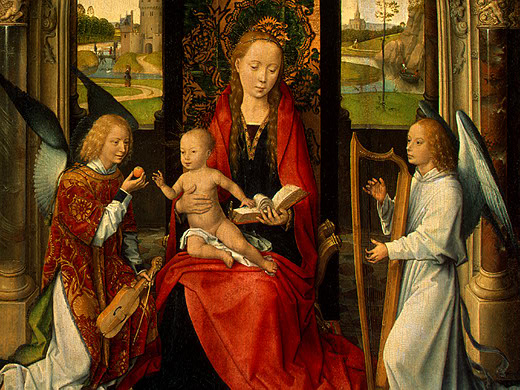
memling-madonna

Hans Memling (Memlinc) (c. 1430 – 11 August 1494) was an Early Netherlandish painter, born in Seligenstadt/Germany, who was the last major fifteenth century artist in the Low Countries, the successor to Jan van Eyck and Rogier van der Weyden, whose tradition he continued with little innovation. Born in Seligenstadt, near Frankfurt in the Middle Rhein region,  it is believed that Memling served his apprenticeship at Mainz or Cologne, and later worked in the Netherlands under Rogier van der Weyden (c. 1455-1460).

(Hans Memling source: Artmight)

Iran nuclear deal in calamity

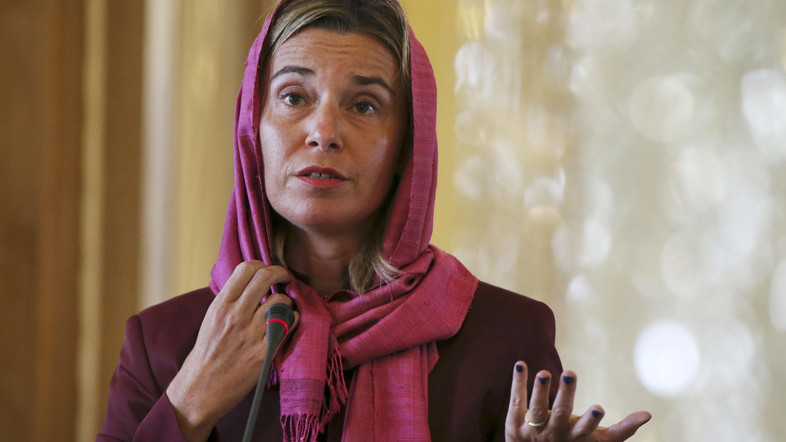
Federica Mogherini

The Joint Commission of the Joint Comprehensive Plan of Action (JCPOA), composed by the E3/EU+3 and Iran, will convene on 10 January in Vienna. The meeting will review the implementation of the agreement and discuss the issues raised in the letter Foreign Minister Zarif addressed on 16 December to the High Representative, Federica Mogherini, as coordinator of the Joint Commission. The Joint Commission will be preceded by a meeting of the sanctions working group, – according to the European External Action Service (EEAS) announcement.

Many experts relate the interest in the upcoming assessment of the Iranian nuclear deal with the recent statements of the upcoming US administration, indicating it will attempt to abandon the  multilateral agreement and reinforce the US nuclear capabilities.

Communicating via Twitter, the president-elect Donald Trump declared his intention to “expand” US nuclear arsenal.

A number of previously classified documents were published on the site of the International Atomic energy agency (IAEA) as a gesture of increasing transparency necessary to convince general public in validity of the agreement. The move came after a wave of criticism of the agreement by the USA Republican congressmen.

The agreement allows Iran to  possess only low-enriched uranium, limited to an amount inferior to 300 kilograms at any moment in time.


Dutch Parliament to decide EU future of Ukraine


dutch-tulipe

The awaited decision on the fate of the EU-Ukraine Association Agreement is now at the hands of the Dutch Parliament. The European Council stated that they ‘noted carefully’ the   referendum outcome in The Netherlands, however following the existing legal procedures the Agreement has to be endorsed/adopted by all 28 member states according to national relevant procedures. In case one of the states denies the ratification, the entire Agreement dissolves.

The debate and vote in Dutch Parliament will take place before the election on 15th March 2017.

‘The European Council notes that the Decision set out in the Annex is legally binding on the 28 Member States of the European Union, and may be amended or repealed only by common accord of their Heads of State or Government. It will take effect once the Kingdom of the Netherlands has ratified the agreement and the Union has concluded it. Should this not be the case, the Decision will cease to exist’  (Source: European Council Conclusions on Ukraine 15 December 2016, Brussels).